Bangladesh Layer Cage Cost per Bird: Inputs Beyond the Frame Price
Key Takeaways
- How to use auto parts sourcing intelligence to assess supplier riskAutomotive Tech Analyst
- How to choose fiber optic equipment for long-haul telecom linksIT & Security Director
- Which farm robotics innovations are ready for field-scale weeding?Agri-Tech Strategist
- How much RAM does edge computing hardware for IoT applications need?IT & Security Director
- How to evaluate precision livestock farming companies for grazing herdsAgri-Tech Strategist
- Comparing Battery Cage Quotes for Open-Sided Layer HousesAgri-Tech Strategist
- How to assess an agricultural machinery manufacturer's parts supportAgri-Tech Strategist
- What drives industrial automation cost in a new production line?Chief Civil Engineer
Industry Overview
We do not just publish news; we construct a high-fidelity digital footprint for our partners. By aligning with TNE, enterprises build the essential algorithmic "Trust Signals" required by modern search engines, ensuring they stand out to high-net-worth buyers in an increasingly crowded global digital landscape.
Why the Per-Bird Figure Can Mislead a Capital Review
A layer cage proposal may appear easy to compare when suppliers quote a cost per bird. For a finance approver, however, that figure is only useful when it describes the same scope, capacity basis, material specification, and delivery condition across all quotations. A lower frame price can become the more expensive project if it excludes feeding lines, manure handling, electrical work, spare parts, site supervision, or the modifications needed to fit an existing poultry house.
In Bangladesh, cage investments also need to be assessed against local operating realities: humid conditions, transport constraints, variable site preparation quality, power reliability, labour availability, and the practical ability of farm staff to maintain moving equipment. The aim is not to find the lowest nominal rate. It is to establish the installed, usable, and maintainable cost of housing one productive bird over the expected life of the system.
That distinction changes the approval process. Instead of asking, “What is the cage price per bird?”, a finance team should ask, “What expenditure is required to put each saleable bird place into operation, what costs remain outside the quotation, and what technical risks could shorten the system’s useful life?”
Define the Unit Before Comparing Supplier Quotes
“Per bird” is not a universal purchasing unit. It may refer to the designed bird capacity of a cage bank, the number of birds expected to be placed, or a theoretical capacity based on cage dimensions. These are not always identical. A house may be designed for a stated number of birds but operated below that level because of welfare practices, flock management, ventilation limitations, disease-control spacing, or a decision to reserve capacity for future expansion.
For approval purposes, the denominator should be clearly stated in the comparison sheet. A useful approach is to calculate two figures:
- Installed cost per designed bird place: total project expenditure divided by the capacity the completed equipment is designed to hold.
- Cost per planned placed bird: total project expenditure divided by the flock size the farm expects to place under its operating plan.
The first figure helps compare equipment configurations. The second is more relevant to cash deployment and expected early-stage utilisation. If a project is deliberately understocked at commissioning, treating theoretical capacity as immediate productive capacity can make the investment look cheaper than it is in the first operating cycles.
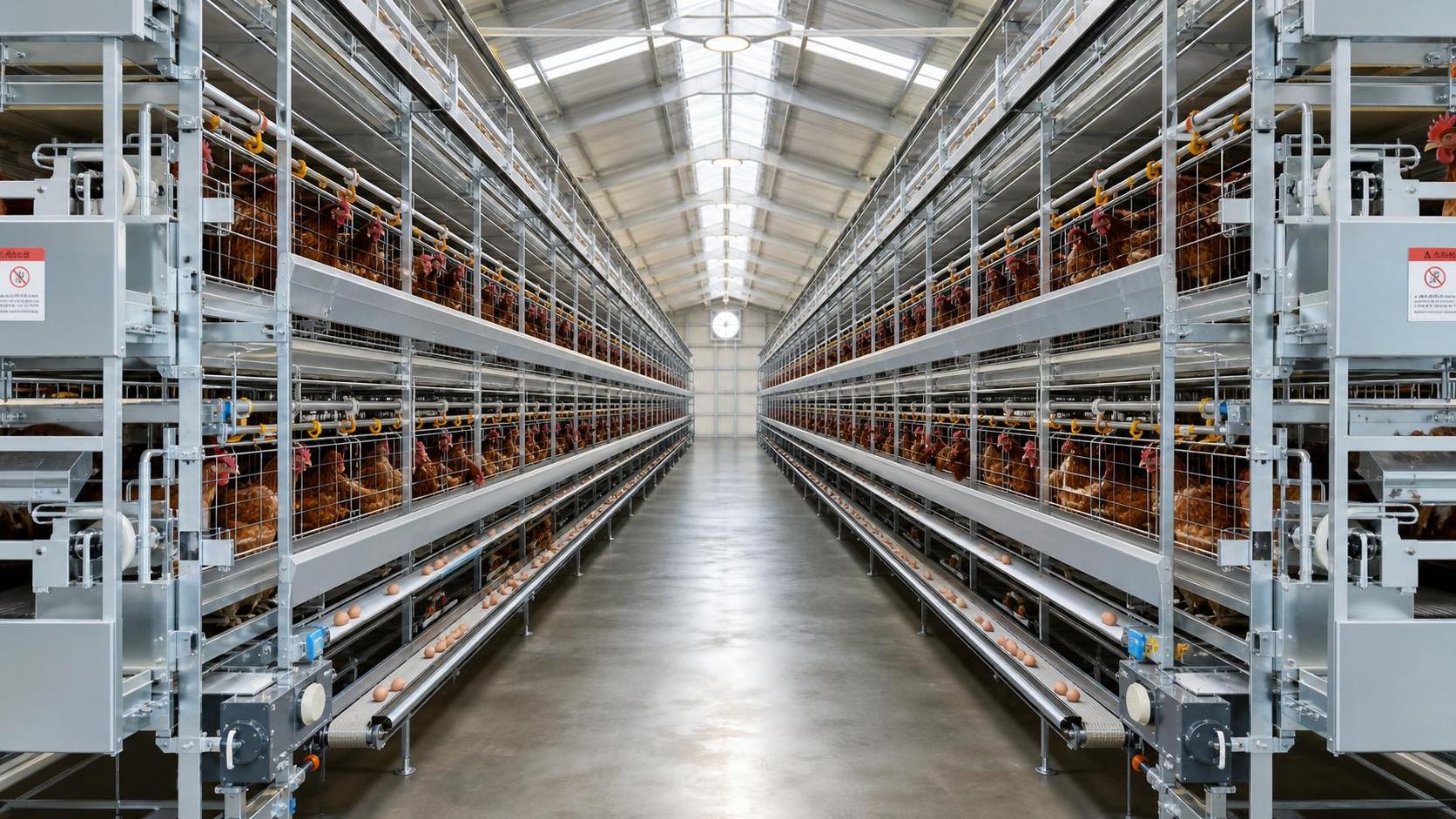
Capacity also needs to be checked against the actual cage layout. The count of rows, tiers, cages per row, birds per cage, and number of usable sections should reconcile with the supplier’s stated capacity. End sections, access aisles, egg collection transitions, service spaces, and damaged or reserved cages can affect usable capacity. A total that cannot be traced back to a layout drawing should not be treated as a firm financial input.
The Cage Frame Is Only One Part of the Capital Cost
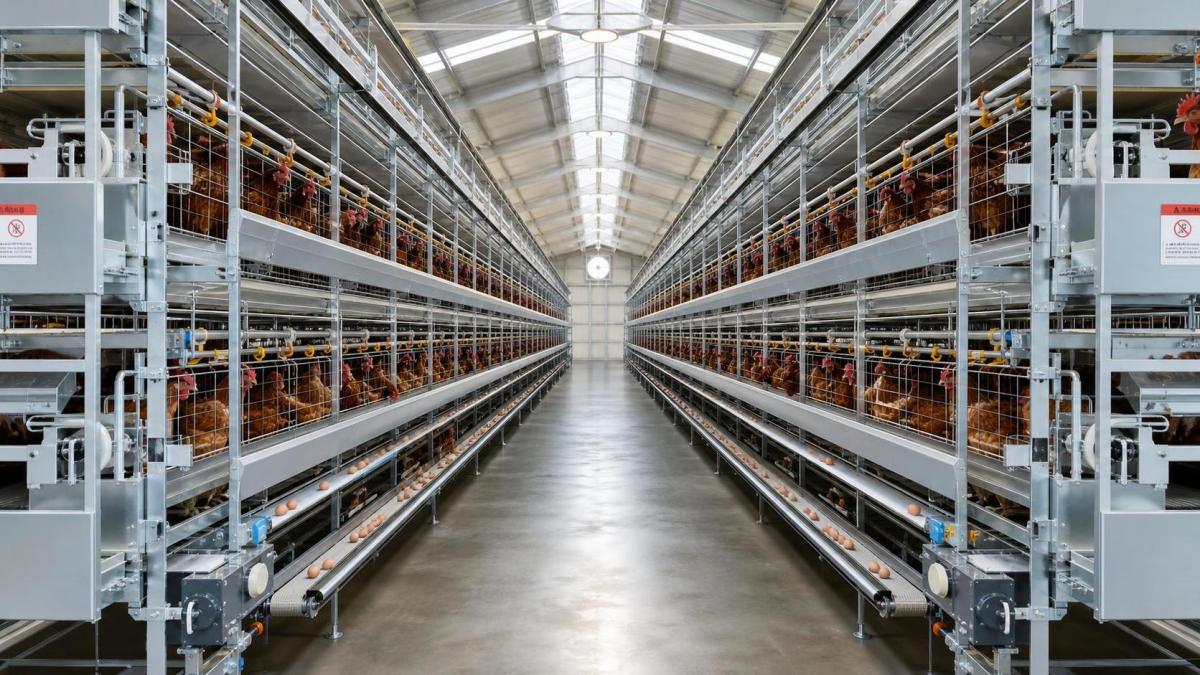
The galvanized wire and structural frame are visible, so they often dominate early price discussions. Yet a functioning battery cage installation is a connected system. Its commercial value depends on whether birds can receive feed and water consistently, eggs can be collected with acceptable breakage, manure can be removed safely, and workers can inspect and maintain the equipment without excessive disruption.
Finance teams should ask suppliers to separate these elements rather than accept a single bundled number with unclear boundaries. A scope schedule does not need to be complicated, but it should identify equipment, quantities, interfaces, exclusions, and the party responsible for each task. This becomes especially important where the poultry house already exists and the cage layout must work around columns, drains, roof heights, sidewall openings, and access routes.
Material and Fabrication Choices Affect Future Spend
Two systems with similar dimensions can have very different long-term cost profiles. The main issue is not simply whether a cage is described as galvanized. Procurement teams need to understand where corrosion is most likely, what coating treatment applies to the relevant components, and whether the design permits cleaning and maintenance without damaging protective surfaces.
Moisture, manure gases, washdown practices, water leaks, and poor airflow can accelerate deterioration. Areas around drinker lines, manure zones, floor wire, joints, fasteners, and lower tiers deserve specific attention. A stronger initial material specification may carry a higher upfront price, but a low-cost cage that requires early repair, creates sharp edges, loses floor integrity, or develops unreliable doors can create welfare, labour, and production-management problems well before full depreciation.
Fabrication details matter as much as the base material. Finance reviewers can ask for drawings or samples that show wire joining, support spacing, cage-floor construction, door latches, trough supports, and the connection between cage banks and main structural elements. The purpose is not to prescribe engineering design from an office. It is to verify that the quoted system has enough information behind it to support an expected operating life.
For imported equipment, the quotation should also distinguish factory-supplied components from locally sourced additions. Local fabrication can be practical for some site-specific items, but substitution should be controlled. A change in wire quality, motor type, connector, belt material, or fastener specification may make a quoted configuration difficult to compare with the delivered system.
Automation Should Be Judged as an Operating Model
Automation can reduce repetitive handling, but it introduces motors, controls, belts, sensors, alignment requirements, and spare-part dependencies. The right level depends on flock size, available labour, management discipline, house design, maintenance capacity, and the reliability of the farm’s electrical supply. More automation is not automatically the lower-risk financial choice.
A manual or semi-automatic arrangement may require more routine labour but can be easier to understand, repair, and operate during a power interruption. A more automated configuration may improve consistency in feeding, egg collection, or manure movement when it is properly installed and managed. Its capital request should include the cost of protective electrical equipment, backup arrangements where appropriate, commissioning, staff familiarisation, and a realistic spare-parts allowance.
When reviewing references to bangladesh layer cage price per bird 2025, it is useful to separate the cage frame from the degree of automation attached to it. A quoted per-bird amount that includes only cages cannot be compared directly with one that includes feeding, drinking, egg collection, manure removal, and associated controls. The comparison must be brought back to the same functional scope.
Freight, Tax, Currency, and Site Readiness Can Move the Budget
For equipment sourced across borders, the ex-factory amount is rarely the final capital cost. Freight, inland transport, insurance, import documentation, duties or taxes where applicable, port handling, unloading, and currency movement can all alter the approved budget. These costs should be assigned to the project owner’s estimate even if a supplier quotation does not include them.
Packaging deserves more than a cursory check. Cage equipment often consists of many bundles, motors, belts, fittings, pipes, electrical items, and small hardware. Incomplete packing lists can make it difficult to verify receipt or identify missing parts until installation is underway. The purchase file should require a detailed packing list tied to the bill of materials, together with instructions for identifying major assemblies on arrival.
Site readiness is another common blind spot. Cage systems require a house that can accept the planned loads, layout, drainage, service lines, and access needs. A low equipment price loses relevance if the project later requires floor strengthening, electrical upgrades, water storage changes, additional drainage, ventilation modifications, or alterations to doors and service corridors. These are not necessarily defects in the cage offer; they are project interface costs that need to be visible before approval.
A prudent budget may include a clearly identified contingency for scope uncertainty rather than an unexplained percentage added to every line. The contingency should be reduced as drawings, site measurements, transport terms, and installation responsibilities become more certain.
Supplier Questions That Produce Comparable Answers
Generic requests for a “best price” tend to produce generic quotations. A better request package states the house dimensions, intended number of birds, desired tier arrangement, available power and water conditions, required level of automation, delivery location, and whether installation is expected. It also asks suppliers to identify every exclusion.
The following questions are particularly useful during financial review:
- What exact bird capacity is used to calculate the quote, and how does it reconcile with the layout drawing?
- Which components are included per cage row or per house, rather than per bird place?
- What are the material and coating specifications for cage wire, supports, troughs, and parts exposed to moisture?
- Which motors, electrical controls, water-regulation parts, belts, and accessories are included, and which are excluded?
- What civil, electrical, plumbing, unloading, and erection work must be completed by the buyer?
- What documents accompany the shipment: layout, bill of materials, packing list, assembly guidance, operating instructions, and spare-parts list?
- Which consumable or wear components should the farm hold locally to avoid a prolonged interruption?
- What acceptance process confirms that capacity, alignment, feeding, drinking, and collection functions match the agreed scope?
Answers should be incorporated into a comparison matrix, not left in email correspondence. This makes deviations visible. One supplier may include installation hardware and another may not; one may price a full manure-removal path while another stops at the belt discharge point. A single per-bird column will conceal these differences.
Use Acceptance Criteria Before the Purchase Order Is Issued
Approval is stronger when payment milestones are connected to verifiable deliverables. Before placing an order, the buyer can define the approved layout, component list, delivery terms, inspection method, and commissioning responsibilities. On arrival, the receiving team can check quantities and visible damage against the packing list. During installation, the focus shifts to dimensions, alignment, secure supports, water-line integrity, movement of mechanical parts, safe electrical connections, and access for routine work.
Acceptance should reflect the system purchased, not merely the presence of cartons on site. If the project includes automated feed, egg, or manure equipment, functional checks should be planned before final handover. If certain work is excluded, the project budget should show who will complete it and what evidence confirms completion.
For financial modelling, it is also helpful to keep capital cost and operating cost separate while connecting the two. The capital model covers equipment, logistics, installation, and site interfaces. The operating model considers labour, power, water treatment, maintenance, cleaning, replacement parts, and expected downtime exposure. A lower capital option may remain appropriate where management can support it; another option may justify its additional cost where daily handling, labour constraints, and process consistency support the expenditure.
A Defensible Approval Is Based on Scope, Not a Headline Rate
The most useful per-bird comparison is a disciplined internal calculation, supported by drawings and a clear list of inclusions. It should show whether the project budget covers a bare cage structure, a semi-automated house, or a complete operating system ready for flock placement. It should also identify assumptions about capacity utilisation, imported components, installation responsibility, and future maintenance.
For Bangladesh layer projects, the frame price remains relevant, but it is only one input in a larger decision. Finance approvers can reduce avoidable budget pressure by requiring comparable scopes, testing the capacity denominator, examining material and automation choices, and assigning every interface cost to an accountable party before funds are committed.
Deep Dive
Related Intelligence
 Smart Livestock & Poultry TechHow poultry housing systems improve flock health and reduce labor costs in commercial farmsAnalyst:Agri-Tech Strategist
 Smart Livestock & Poultry TechWhat livestock management features matter most when scaling a multi-site poultry operation in 2026Analyst:Agri-Tech Strategist
 Smart Livestock & Poultry TechCan automated farming solutions integrate with existing ventilation and feeding hardware on legacy poultry farmsAnalyst:Agri-Tech Strategist