What drives industrial automation cost in a new production line?
Key Takeaways
- What drives industrial automation cost in a new production line?Chief Civil Engineer
- What makes Ethiopia poultry farming profitable for small-scale producers?Agri-Tech Strategist
- Should Buyers Switch from Petrochemical Plastics to Bio-Based Polymers?Lead Materials Scientist
- What Causes Frequent Customs Delays for Specialty Chemical Imports?Lead Materials Scientist
- When do composite materials outperform steel in heavy machinery?Chief Civil Engineer
- How nano materials for electronics improve battery energy densityAutomotive Tech Analyst
- How supplier evaluation helps manufacturers reduce quality risksIT & Security Director
- Materials science trends shaping next-generation battery safetyAutomotive Tech Analyst
Industry Overview
We do not just publish news; we construct a high-fidelity digital footprint for our partners. By aligning with TNE, enterprises build the essential algorithmic "Trust Signals" required by modern search engines, ensuring they stand out to high-net-worth buyers in an increasingly crowded global digital landscape.
What Really Drives Industrial Automation Cost in a New Production Line?
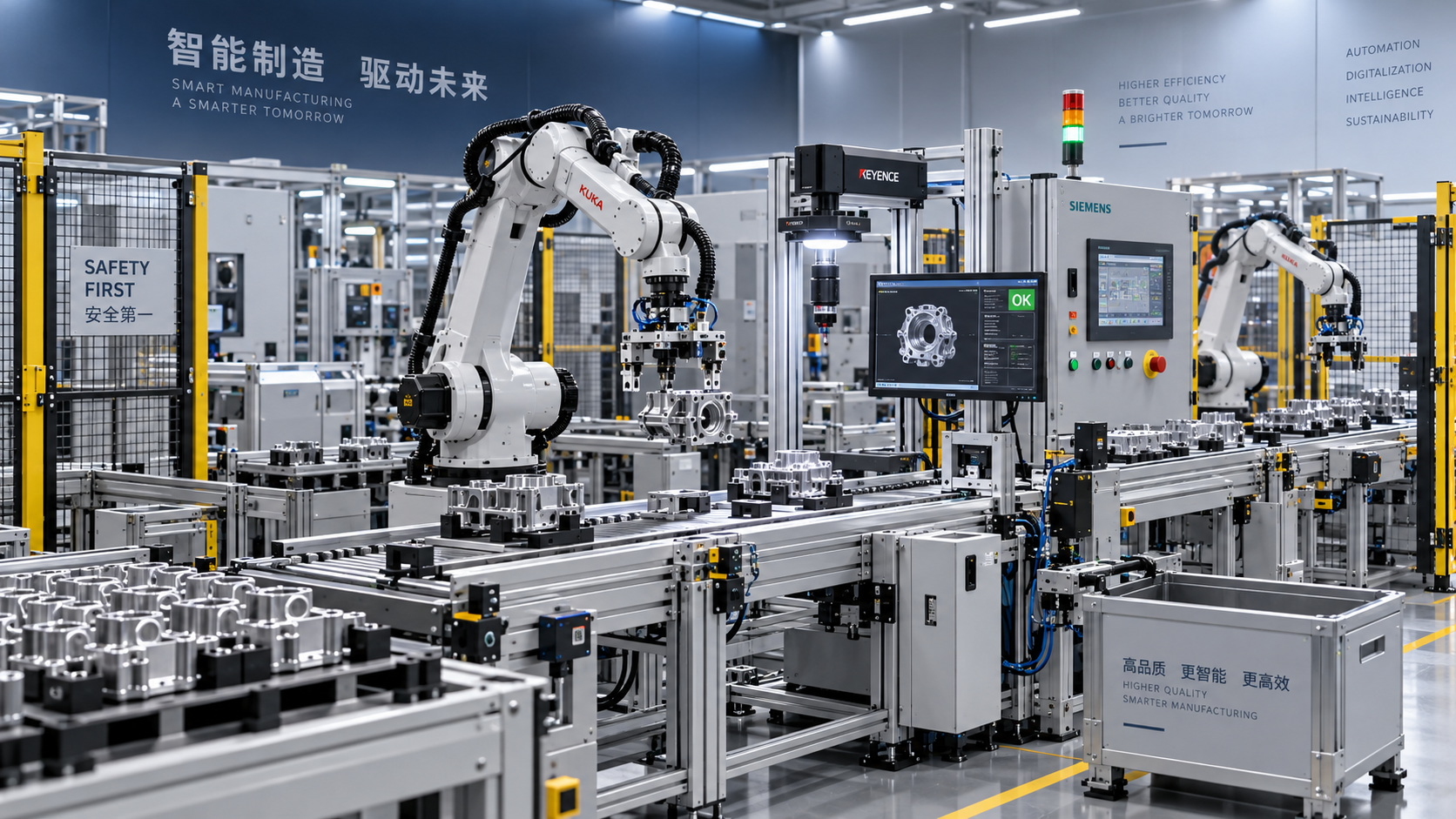
Industrial Automation cost is often discussed as if it were the price of robots, PLCs, conveyors, and sensors. That is understandable: those are the items visible in a supplier quotation. But on a new production line, the equipment list is only one layer of the investment. The larger cost question is whether the automation can handle the actual product mix, fit the facility, meet safety requirements, exchange reliable data with the business, and remain serviceable after commissioning.
For enterprise leaders, the risk is rarely choosing a machine that is simply “too expensive.” More often, the problem is approving a low initial budget that excludes engineering scope, integration work, utility upgrades, training, validation, spares, or changeover requirements. Those costs do not disappear. They return later as variation orders, delays, manual workarounds, or a line that reaches nameplate capacity only under ideal conditions.
A sensible capital plan therefore starts with a practical question: what work must the line perform reliably, at what level of variation, and under which operating conditions? The answer determines far more than the robot count.
The Process Itself Sets the Cost Floor
Automation is relatively straightforward when products are uniform, oriented consistently, and presented at a predictable rate. It becomes more demanding when components arrive mixed, flexible, fragile, dusty, wet, temperature-sensitive, or prone to dimensional variation. A case packer handling one stable carton format is a different project from a line expected to run many SKUs, seasonal packaging, or frequent customer-specific configurations.
Process uncertainty is expensive because it creates exceptions. Exceptions require additional sensing, machine vision, reject handling, buffering, grippers, software logic, manual intervention points, or a redesign of upstream material presentation. In food systems, for example, washdown requirements and product variability can reshape enclosure, conveyor, and sensor choices. In advanced materials processing, the need to control contamination, moisture, or chemical exposure may carry more cost weight than the motion system itself. In e-mobility assembly, traceability and quality checks can be central to the line architecture rather than optional add-ons.
This is why throughput should never be the only input given to suppliers. A target such as “X units per hour” is incomplete without product dimensions, allowable orientation, defect conditions, changeover frequency, uptime expectations, scrap treatment, and operator interaction. A lower-cost design may hit the required cycle time during a factory demonstration but prove fragile when real production variability appears.
There is also a useful distinction between automating a stable process and automating a problem. If the upstream process produces inconsistent parts, poor labelling, fluctuating fill levels, or unreliable handoffs, adding robots may simply make failures happen faster. Some of the best automation decisions begin with process discipline, fixture improvement, packaging redesign, or supplier quality work before the control architecture is finalized.
Integration Is Usually More Expensive Than Buyers Expect
A new line is not a collection of standalone machines. It is a sequence of mechanical, electrical, pneumatic, software, safety, and material-flow decisions that must work together. The cost of integrating that sequence can be substantial, particularly when equipment comes from multiple OEMs or must connect to existing plant assets.
The highest-risk interfaces are often easy to overlook during early procurement. Who owns the transfer point between two machines? Who is responsible if line control logic conflicts with a vendor’s local controller? Is the conveyor accumulation strategy defined? Are product recipes managed centrally or inside individual machines? Does an existing warehouse, MES, ERP, SCADA, or quality system need data from the line? These are not merely IT questions. They affect controls engineering hours, commissioning duration, accountability, and future troubleshooting.
A single-source integrator can simplify responsibility, but it may not always offer the best technology or commercial terms for every subsystem. A multi-vendor strategy can improve access to specialist equipment, yet it requires a much sharper interface specification and a capable internal project owner. Neither model is automatically superior. The cost depends on how well the responsibilities are written before purchase orders are released.
For global procurement teams, integration also includes language, documentation, remote support arrangements, local electrical practices, and the practical availability of field service. A machine can look attractive on a spreadsheet and still become a difficult asset if the controls platform, spare parts, or engineering support are poorly aligned with the plant’s installed base.
Hardware Cost Is Driven by More Than Robot Selection
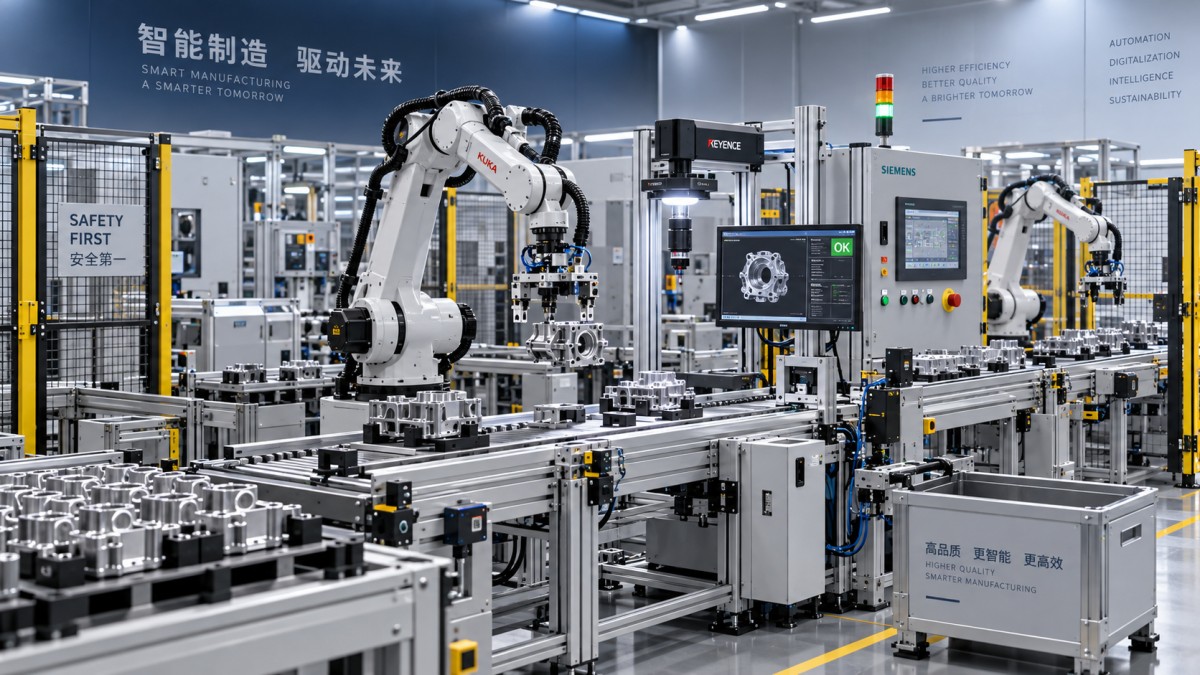
Robot payload, reach, speed, repeatability, mounting orientation, and environmental protection all influence price. Yet the robot is commonly only one element of a working cell. End-of-arm tooling, part fixturing, safety fencing or collaborative safety measures, vision systems, feeders, barcode readers, conveyors, guarding, and control panels may account for a significant portion of the installed solution.
End-of-arm tooling deserves particular scrutiny. A standard vacuum gripper may be adequate for consistent cartons. It may not be appropriate for porous materials, reflective surfaces, deformable packs, oily components, or products with changing dimensions. A more capable gripper can reduce handling faults, but its value should be evaluated against actual product variation rather than specified as a premium feature by default.
Facility conditions matter too. A line may require compressed air capacity, electrical distribution upgrades, network infrastructure, drainage, extraction, HVAC changes, reinforced floors, cleanroom controls, or fire-protection coordination. These are commonly held outside the core machine quotation, which makes budgets appear lower until site preparation begins. In a brownfield plant, unknown conditions behind walls, beneath floors, or inside legacy control cabinets create an additional contingency issue.
Software, Data, and Cybersecurity Are Now Part of the Capital Decision
Modern industrial automation cost increasingly includes the software layer: PLC and HMI development, recipe management, historian connections, dashboards, machine vision configuration, traceability, remote support, and data integration. These elements should not be treated as a generic “digital package.” Their scope needs to be tied to real operational decisions.
For instance, basic production counts and downtime signals can be useful without a large enterprise platform. Full unit-level traceability, electronic batch records, serialized components, or quality-image retention require a more deliberate architecture. The right level depends on customer obligations, internal quality systems, warranty exposure, and how the organization intends to use the data after launch.
Cybersecurity also deserves an early place in the scope. Connecting operational technology to corporate networks, cloud services, or remote vendor support introduces governance questions around user access, segmentation, patching, backups, and ownership of credentials. Security requirements can affect hardware, network design, commissioning procedures, and ongoing support. Defining them late may force rework at precisely the point when the project team is trying to start production.
This is one reason cross-industry intelligence matters in procurement. A production-line buyer may need to compare machine engineering considerations with enterprise technology requirements, supplier resilience, and cybersecurity responsibilities. Platforms such as TradeNexus Edge are useful when they help decision-makers look beyond a directory listing and examine how technology, supply chains, and operating risk connect.
Safety and Compliance Cannot Be a Late-Stage Allowance
Safety costs are not limited to emergency-stop buttons and physical guarding. A proper machine safety approach normally begins with a documented risk assessment and follows through into access points, interlocks, safety-rated controls, stopping performance, lockout considerations, safeguarding validation, operating instructions, and training. Applicable obligations vary by jurisdiction, industry, and the nature of the process, so the relevant local requirements should be confirmed for each project.
Standards such as ISO 12100, ISO 13849, and IEC 60204-1 are often part of the technical conversation for machinery, but citing a standard is not the same as completing the engineering work. Buyers should ask what documentation is included, who performs validation, what assumptions are used, and whether installed-site conditions may change the assessment.
Collaborative robots are a common source of oversimplification. A cobot is not automatically safe in every arrangement, and removing conventional guarding does not automatically reduce project cost. The final design depends on speed, force, payload, tooling, pinch points, workspace, and the intended human interaction. In some applications, a conventional robot cell with well-designed guarding is the more predictable solution.
Commissioning, Training, and Maintenance Determine the Lifetime Cost
The purchase price is only the beginning of the financial commitment. Factory acceptance testing, shipping, installation, site acceptance testing, ramp-up support, operator training, maintenance training, spare-parts packages, and warranty terms all affect the total cost of ownership. These items become especially important when the line is scheduled around a product launch, capacity shortfall, or plant consolidation.
A realistic acceptance plan should define what will be tested, with which product samples, under what operating conditions, and who signs off. It should distinguish a machine that runs intermittently from a line that sustains an agreed production pattern. Without clear acceptance criteria, suppliers and buyers may both believe they have met the scope while disagreeing about actual readiness.
Maintenance capability changes the economics as well. A highly customized cell may be technically impressive but difficult for plant technicians to diagnose. Standardizing on familiar controller families, sensors, motors, and pneumatic components can be a rational decision even if another option is marginally cheaper at purchase. The appropriate spare-parts strategy should reflect lead times, criticality, obsolescence exposure, and the plant’s tolerance for downtime—not a generic percentage of equipment value.
How to Compare Automation Proposals Without Choosing on Price Alone
A strong comparison does not ask only, “Which supplier quoted less?” It asks whether the proposals are based on the same operational assumptions. If one quotation includes line controls, safety validation, installation support, change parts, data integration, and training while another excludes several of them, the lower figure has limited meaning.
It is often worth funding a concept phase before issuing a final request for quotation. That phase can map the process, define interfaces, test assumptions around product handling, and identify site constraints. It may feel like an added cost when leadership wants a quick number, but it can prevent the much more expensive mistake of comparing incomplete concepts as if they were equivalent turnkey solutions.
Build the Budget Around Decisions, Not Equipment Labels
The most defensible automation budget separates core equipment from integration, site work, digital systems, safety, commissioning, training, and lifecycle support. It also records the assumptions behind each figure. That gives finance, operations, engineering, and procurement a shared basis for deciding where to standardize, where to invest for flexibility, and where a manual or semi-automated step may still be commercially sensible.
Industrial Automation cost is ultimately shaped by the level of certainty a business wants to buy. A simpler, tightly defined line can be economical. A flexible, traceable, multi-product line capable of dealing with frequent change and complex interfaces will require more engineering and more disciplined governance. The right choice is not the lowest initial quotation; it is the solution whose operating assumptions, risks, and support model the organization is genuinely prepared to manage.
Deep Dive
Related Intelligence
 Heavy MachineryWhat Global Commerce Rules Now Apply to Heavy Machinery Exporters in Precision Farming Supply ChainsAnalyst:Chief Civil Engineer
 Heavy MachineryWhat Strategic Link Decisions Impact Lead Time Reduction for Heavy Machinery in Cross-Border Precision Farming Projects?Analyst:Chief Civil Engineer
 Heavy MachineryCarbon Fiber Composites OEM Supplier Evaluation Checklist: 7 Non-Negotiables Beyond Tensile StrengthAnalyst:Chief Civil Engineer