How to use auto parts sourcing intelligence to assess supplier risk
Key Takeaways
- How to use auto parts sourcing intelligence to assess supplier riskAutomotive Tech Analyst
- How to choose fiber optic equipment for long-haul telecom linksIT & Security Director
- Which farm robotics innovations are ready for field-scale weeding?Agri-Tech Strategist
- How much RAM does edge computing hardware for IoT applications need?IT & Security Director
- How to evaluate precision livestock farming companies for grazing herdsAgri-Tech Strategist
- Comparing Battery Cage Quotes for Open-Sided Layer HousesAgri-Tech Strategist
- How to assess an agricultural machinery manufacturer's parts supportAgri-Tech Strategist
- What drives industrial automation cost in a new production line?Chief Civil Engineer
Industry Overview
We do not just publish news; we construct a high-fidelity digital footprint for our partners. By aligning with TNE, enterprises build the essential algorithmic "Trust Signals" required by modern search engines, ensuring they stand out to high-net-worth buyers in an increasingly crowded global digital landscape.
A competitive quote can conceal a supplier that cannot maintain quality, finance production, or recover from a factory shutdown. Auto parts sourcing intelligence helps expose those risks by connecting supplier records, operating performance, financial signals, and supply-chain dependencies to the specific components you intend to buy.
The useful output is a sourcing decision: approve the supplier, limit its allocation, require corrective action, or qualify another source. To reach that decision, assess the manufacturing site and part together, separate verified evidence from supplier claims, and judge disruption risk against the time needed to recover.
Start with the part and the consequence of failure
A supplier can be acceptable for one component and unsuitable for another. A standard fastener with several approved alternatives presents a different exposure from a custom casting, brake component, or battery connector that requires dedicated tooling and lengthy validation.
Before reviewing supplier data, establish what failure would mean for the part under consideration. Include production interruption, assembly defects, field performance, service availability, and the effort required to switch sources. A low purchase value does not imply low operational risk: an inexpensive connector can still stop vehicle assembly.
Record the following in the sourcing brief:
- Application and failure consequence: Where the part is used and what happens if it fails or arrives late.
- Manufacturing constraints: Dedicated tooling, special processes, material requirements, and validation needs.
- Replacement options: Which alternatives are approved, available, and capable of accepting volume.
- Recovery exposure: Usable inventory coverage compared with the time required to restore supply.
This establishes how deeply to investigate. A readily replaceable catalog item may justify a lighter review. A custom component with difficult requalification deserves detailed checks even when the supplier has a strong reputation.
Build an evidence base around the actual manufacturing site
Company-level information is a starting point. Your purchase order may go to a trading company, while production takes place at a separate legal entity or subcontractor. A parent company’s capabilities do not establish what a particular plant can manufacture.
Identify the contracting entity, manufacturing location, ownership, and outsourced operations. Match these details across quotations, quality documents, audit reports, and shipping records. Where names differ, establish the relationship before treating the records as evidence about the same supplier.
Combine internal operating records with supplier documents and external intelligence:
Record the source, date, scope, and confidence level for each finding. A recent site audit carries different weight from an undated presentation. Missing information should remain an explicit uncertainty; it should not silently become a favorable score.
Industry intelligence resources such as TradeNexus Edge can provide context on automotive materials, supply-chain developments, and technology changes. That context helps direct questions toward potential pressure points. Supplier-specific decisions still need evidence tied to the entity, site, and component being evaluated.
Read quality and delivery data together
A supplier may report strong delivery performance while relying on expensive freight, repeated sorting, or shipments made before inspection is complete. Reviewing delivery and quality separately can hide this pattern.
Compare receipts against the original agreed delivery dates, quantities, and acceptance requirements. If dates are repeatedly revised before shipment, performance measured only against the latest promise can look healthier than the experience on your production line.
For quality, examine both frequency and consequence. A cosmetic defect on a noncritical trim part and a dimensional error affecting a sealing surface should not receive identical treatment simply because each counts as one rejection. Also distinguish incoming defects, problems found during assembly, and field issues; each exposes a different gap in detection or control.
Corrective-action records reveal more than a closed status. Look for an identified cause, a process change addressing that cause, and evidence that the change prevented recurrence. Repeated containment—such as additional inspection—can protect shipments temporarily while leaving the underlying process unstable.
Check whether automotive quality certifications and production approvals cover the relevant site and activity. Certification supports an assessment of the quality system, but does not establish that a particular drawing revision, material specification, or process is approved for your application. Production part approval process documentation, where required, should correspond to the intended production conditions.
Test capacity and financial resilience against your demand
Installed equipment is not the same as available capacity. The constraint may be a heat-treatment furnace, plating subcontractor, inspection station, tool-maintenance schedule, or shortage of trained operators. Ask the supplier to explain capacity at the limiting operation under the product mix it actually runs.
A useful review connects cycle time, shifts, planned downtime, yield losses, and existing commitments. Spare capacity that depends on continuous overtime or postponed maintenance provides little protection during a demand increase.
For a new program, request evidence of production under representative conditions. Prototype output made with extra engineering attention may not demonstrate stable production at the planned rate. The evidence should reflect the intended tooling, material, inspection method, and manufacturing route.
Financial review should examine how the supplier funds your orders. Long material lead times, inventory commitments, and delayed customer payments can strain cash even when reported sales are growing.
Look for connected signals: requests for unusually large advances, repeated changes in payment instructions, material shortages despite confirmed orders, or increasing dependence on customer-funded inventory. Any one signal can have a legitimate explanation. Several appearing alongside deteriorating deliveries warrant a closer review of cash availability and production continuity.
If advance payments are commercially necessary, tie them to clear milestones and documented material or tooling arrangements. Obtain the appropriate legal review for ownership and recovery provisions. Paying earlier only reduces supply risk when the arrangement actually secures the resources needed for production.
Find shared dependencies behind apparent alternatives
Two approved suppliers do not provide independent supply if both rely on the same casting foundry, resin producer, coating facility, or logistics route. Supplier count can therefore overstate resilience.
Map the upstream operations most likely to stop supply. For a machined aluminum part, that might include the casting source and heat-treatment provider. For an electrical connector, it could include the resin grade, stamping tools, and plating operation. Focus on dependencies that are difficult to replace; a complete list of every upstream business is rarely necessary.
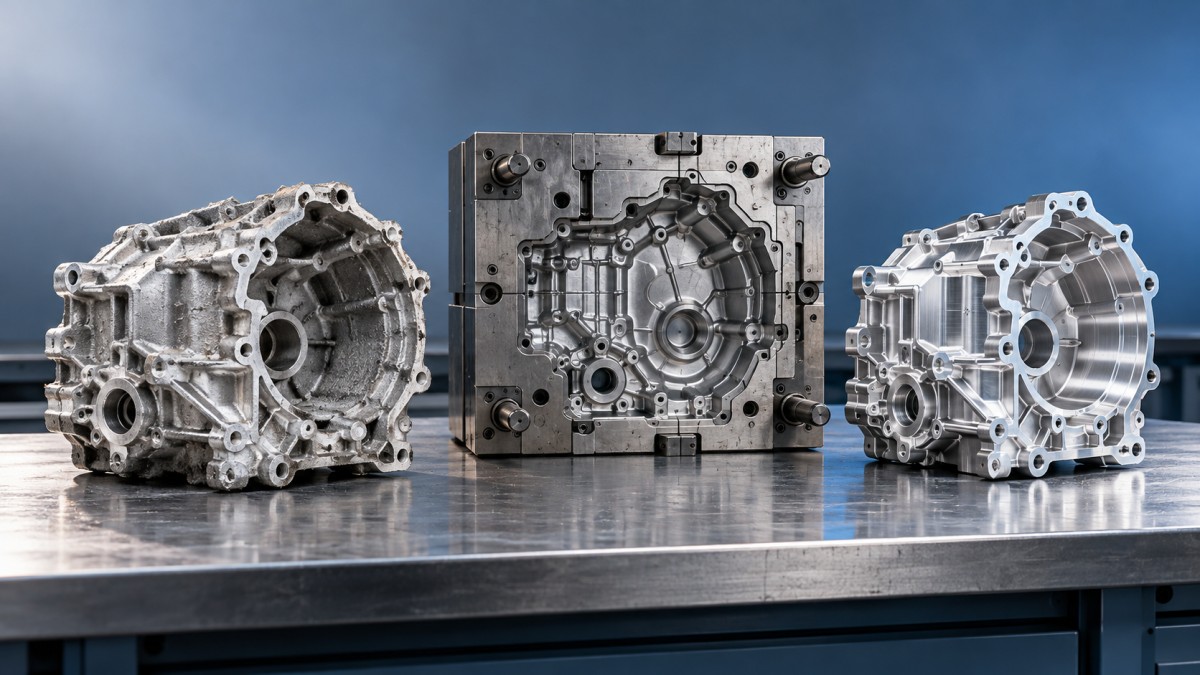
Tooling deserves particular attention. Record where it is held, who owns it, whether it is maintained, and what would be needed to move it. Ownership alone does not make a tool transferable. Another factory may lack compatible equipment, process knowledge, fixtures, or approval to use the resulting parts.
Ask what would happen if the main site became unavailable. A credible recovery plan identifies an alternative location, available equipment, accessible tooling, material supply, and the approval work required before shipments resume. A backup factory named in a presentation is only a potential option until those conditions are addressed.
Turn sourcing intelligence into a decision with clear limits
Use a risk assessment that keeps three judgments visible: the likelihood of disruption, its operational consequence, and the strength of the available controls. Track evidence confidence separately. A supplier with incomplete records should not appear equivalent to one whose performance has been demonstrated.
Weighted scores can help compare candidates, but averages can conceal unacceptable conditions. Set approval gates for issues that must be resolved before award, such as an unapproved critical process, unexplained manufacturing location, or inability to trace material where traceability is required. A low price or strong delivery score should not cancel such a gap.
Then assign a practical decision:
- Approve: Evidence supports the application, with routine performance monitoring.
- Approve with conditions: Identified gaps have defined controls, owners, deadlines, and allocation limits.
- Hold approval: Missing evidence or unresolved process issues prevent a sound award decision.
- Reduce dependency: Continuity concerns require another qualified source, redesigned supply arrangements, or a controlled exit.
Consider a hypothetical supplier offering a custom housing at an attractive price. Its machining performance is acceptable, but all castings come from one foundry and the casting tool has no validated alternative location. The unresolved exposure concerns recovery from a foundry interruption. Conditional approval might require additional casting stock and qualification of another foundry before the supplier receives the full allocation.
The same controls would be excessive for a standard item with interchangeable, approved stock available elsewhere. Mitigation should address the actual failure mechanism and its consequence.
Choose controls that buy enough recovery time
Compare how long production can continue without deliveries against how long recovery would take. Include material procurement, tool transfer, process setup, testing, approval, and transport in the recovery estimate. A replacement supplier’s quoted manufacturing lead time covers only part of that sequence.
Safety stock can bridge a short interruption when parts remain usable and demand is reasonably predictable. It offers less protection against a persistent quality defect affecting the stock itself, or against a recovery period longer than the buffer. Extra inventory also needs traceability and suitable storage.
Dual sourcing is valuable when both sources can make approved parts and retain practical capacity. A dormant supplier with obsolete tooling or no recent production may require substantial work before it can help. Maintaining readiness can involve periodic orders, current documentation, and planned capacity discussions.
Some risks call for supplier development: stronger process control, preventive maintenance, or an alternative subcontractor. Others justify moving volume. Assess whether the supplier has the capability, resources, and willingness to complete the improvement before relying on it.
Monitor changes that could alter the sourcing decision
A supplier assessment loses value when it becomes a static onboarding document. Set review frequency according to component criticality and supplier stability, then define events that trigger an earlier review. These can include ownership changes, factory moves, material substitutions, recurring defects, worsening delivery, or new subcontractors.
Every alert needs an owner and a possible response. Repeated expedites might trigger a capacity review; a proposed resin substitution might require engineering approval; financial deterioration might prompt a check on material availability and contingency stock.
Begin with components that combine serious disruption consequences and slow replacement. For each, establish the production site, critical upstream dependency, usable inventory coverage, and realistic recovery time. Those findings give auto parts sourcing intelligence its practical value: a clear basis for deciding where to place orders, which conditions to impose, and what must improve before exposure grows.
Deep Dive
Related Intelligence
 Aftermarket PartsWhat Strategic Link Gaps Are Slowing Down Aftermarket Parts Distribution in Agri-Drones Service Networks?Analyst:Automotive Tech Analyst
 Aftermarket PartsCan aftermarket auto parts meet OEM durability standards without voiding vehicle warranties in 2026?Analyst:Automotive Tech Analyst
 Aftermarket PartsHow do aftermarket auto parts impact fleet maintenance costs for construction equipment operators?Analyst:Automotive Tech Analyst