How to evaluate precision livestock farming companies for grazing herds
Key Takeaways
- How to evaluate precision livestock farming companies for grazing herdsAgri-Tech Strategist
- How to assess an agricultural machinery manufacturer's parts supportAgri-Tech Strategist
- What drives industrial automation cost in a new production line?Chief Civil Engineer
- What makes Ethiopia poultry farming profitable for small-scale producers?Agri-Tech Strategist
- Are Cloud Procurement Platforms Worth It for Chemical Sourcing?IT & Security Director
- How to Verify a New Materials Supplier’s Technical DocumentationLead Materials Scientist
- Should Buyers Switch from Petrochemical Plastics to Bio-Based Polymers?Lead Materials Scientist
- What Causes Frequent Customs Delays for Specialty Chemical Imports?Lead Materials Scientist
Industry Overview
We do not just publish news; we construct a high-fidelity digital footprint for our partners. By aligning with TNE, enterprises build the essential algorithmic "Trust Signals" required by modern search engines, ensuring they stand out to high-net-worth buyers in an increasingly crowded global digital landscape.
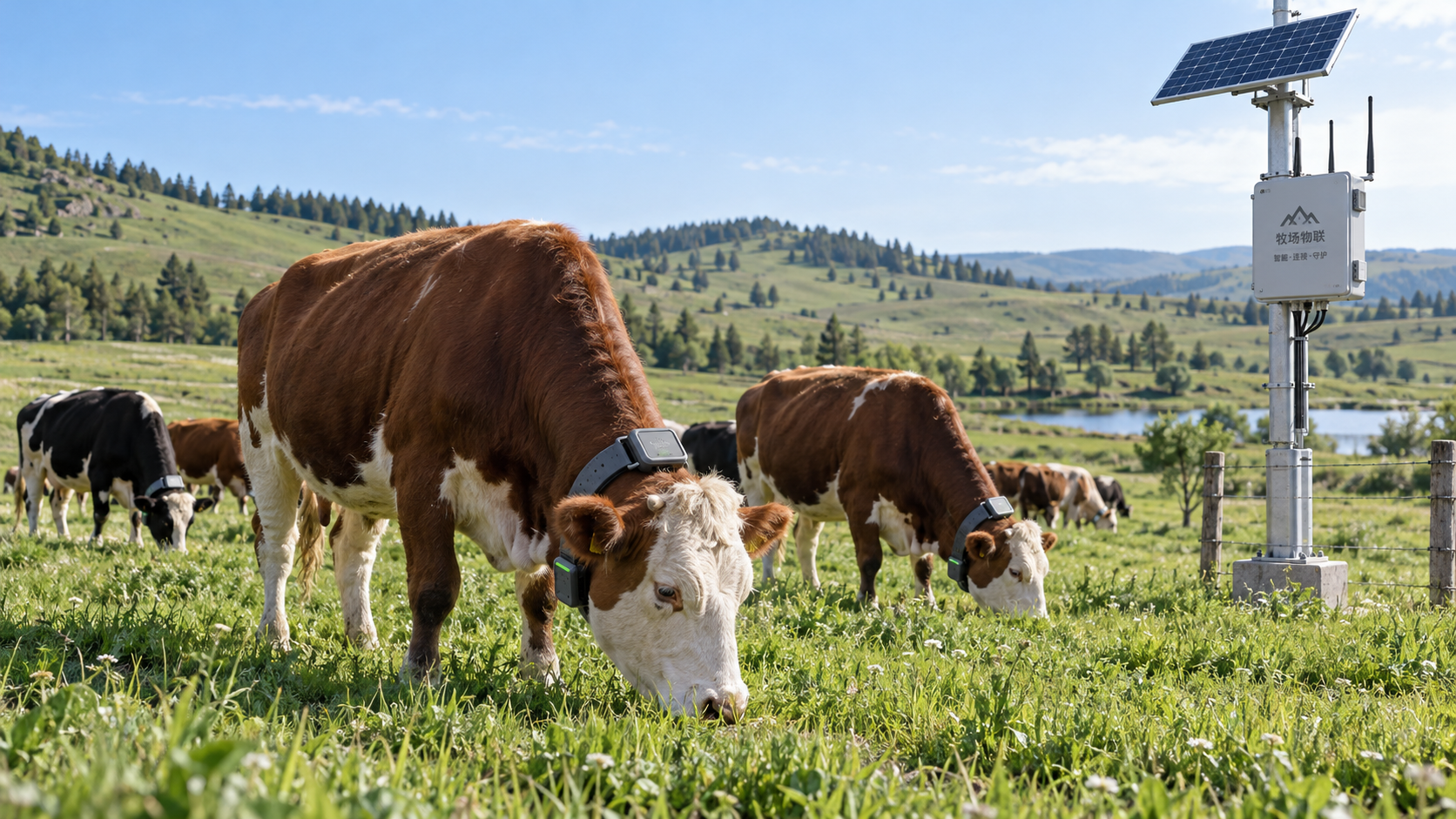
Shortlist precision livestock farming companies by the evidence they can provide from grazing conditions comparable to your own. A system that performs well near a gateway or inside a barn still needs to prove that it delivers timely, usable information across distant paddocks, wooded slopes, and seasonal pasture changes. Selection should start with the management decision the system must support, then test the complete path from animal-mounted device to actionable alert.
Define acceptance criteria before comparing demonstrations. Locating missing cattle, identifying possible illness, monitoring grazing distribution, and supporting virtual fencing impose different requirements on sampling frequency, connectivity, and response time. A strong candidate should explain where its system works reliably, what happens when conditions deteriorate, and how those limitations affect daily herd management.
Translate the intended use into measurable requirements
For locating animals, the useful measure is whether a position is recent and precise enough to direct a search. For detecting behavioral changes, the requirement is a dependable stream of observations that distinguishes an unusual animal from a herd responding normally to heat, weather, or a pasture move. These functions deserve separate acceptance criteria even when they share the same collar.
Record the operating conditions alongside each requirement: species, herd size, paddock layout, tree cover, terrain, seasonal movements, handling frequency, and available power or backhaul. A claim about device capacity has little meaning without the reporting interval and network configuration used to achieve it. Likewise, “continuous monitoring” needs an explanation of how often sensing, analysis, transmission, and dashboard updates actually occur.
Set practical failure boundaries. If an animal crosses into a neighboring paddock, determine how quickly that movement must become visible. If a health alert requires a physical inspection, decide how much delay still permits a useful response. These boundaries establish whether an occasional communication gap is tolerable or defeats the purpose of the deployment.
Ask for field evidence that exposes missing data
Request validation from herds with comparable grazing conditions, including the device version, firmware, mounting method, and monitoring period. A trial on open, level pasture does not establish performance under dense canopy or behind ridgelines. Evidence collected during one season also leaves questions about changing forage, coat condition, wet weather, and animal behavior.
The strongest evidence connects system outputs to independently recorded observations. Location testing needs reference positions with adequate accuracy. Behavior validation needs a clear observation protocol and definitions for activities such as grazing, walking, and rumination. Health-alert evaluation needs documented assessment of the animal and a defined event window; agreement with another automated score alone does not establish clinical usefulness.
Ask how excluded animals and missing records were handled. Reporting performance only for devices that remained connected hides the operational cost of outages, broken attachments, and unsuccessful installations. Results should distinguish usable records, delayed records, rejected measurements, and periods with no observations. The denominator should cover the deployed herd and trial duration, with exclusions explained.
Also separate algorithm development from validation. Results obtained on animals used to tune an algorithm provide weaker evidence of transfer to a new herd. Seek testing on separate animals or farms, and ask whether installation settings were adjusted after the trial began. Such adjustments affect how much configuration work a commercial rollout will require.
Separate position accuracy from information freshness
A location marker can be spatially accurate and operationally useless because it is old. Evaluate position error, fix success, sampling interval, transmission delay, and displayed data age separately. An average accuracy figure conceals occasional large errors, which matter when an animal appears outside a boundary or beside a hazardous area.
Test locations under open sky, near trees, on slopes, and around water points where animals congregate. Satellite positioning quality changes with visibility and device orientation. Systems using proximity or gateway-based estimates need different interpretation: presence within a receiver’s coverage area does not necessarily identify a precise point within a paddock.
For boundary alerts, establish whether the system requires several observations before triggering and how it handles positions close to the boundary. Filtering reduces nuisance alerts but adds delay. Where virtual fencing is included, evaluate its animal-control function separately from dashboard tracking, including training requirements and behavior when positioning or communications fail.
A useful interface displays the observation timestamp, uncertainty where available, and connection status. It should distinguish a stationary animal from a device that has stopped reporting. Otherwise, a stale marker can create false confidence during a search.
Test the whole communications path across the pasture
Map the route from each device through gateways, cellular services, or other links to the application. Coverage at the farmhouse does not establish coverage at collar height in a low paddock. Survey the actual grazing area with devices mounted as intended, including places where the herd shelters, drinks, or passes through narrow terrain.
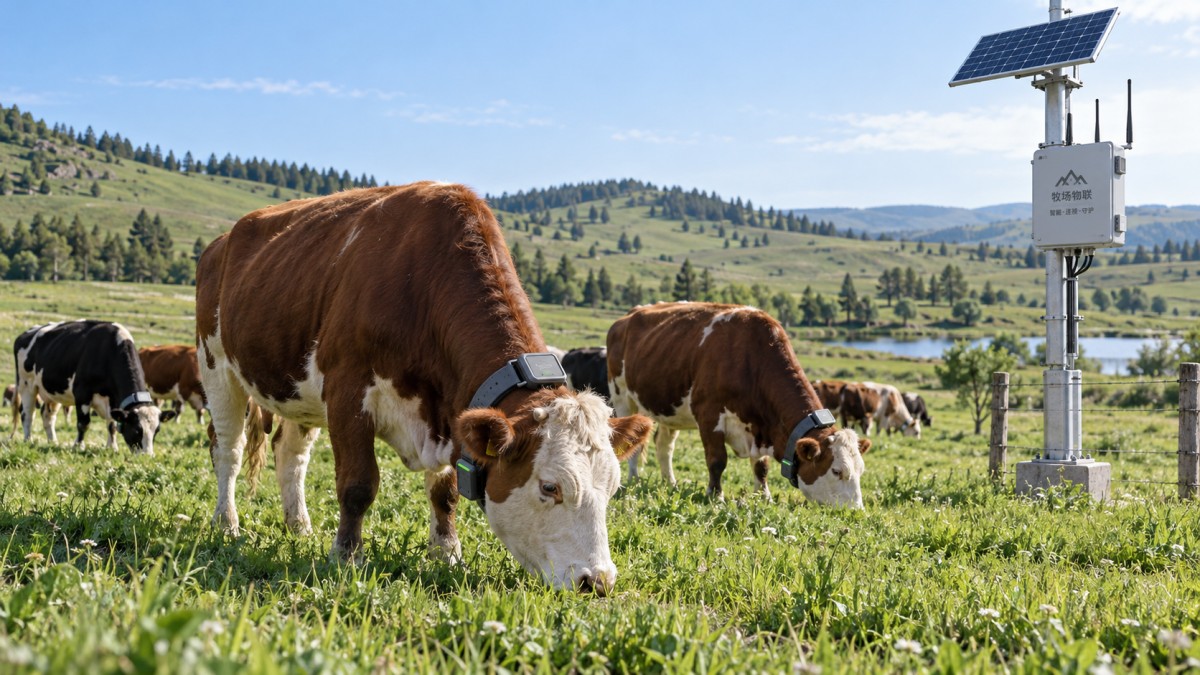
Evaluate gaps by their consequences. Buffered data uploaded after reconnection can support retrospective grazing analysis, while a delayed escape or illness alert loses operational value. Ask where observations are stored during an outage, how much history the device retains, and whether original timestamps survive synchronization. Historical readings should not appear as current observations when connectivity returns.
Gateway placement introduces installation and maintenance obligations. Confirm power availability, mounting access, lightning protection, backhaul reliability, and the ability to service equipment after severe weather. Moving herds between grazing blocks can require additional infrastructure or reconfiguration. Establish whether the quoted deployment includes those locations.
Network capacity also needs testing with realistic traffic. A few demonstration devices do not reproduce a full herd reconnecting after an outage. Examine how queued data affects delivery of new alerts and whether the application makes delayed information obvious.
Make battery and attachment claims survive the handling calendar
Battery-life claims are meaningful only with an operating profile. Obtain the sensing rate, location-fix interval, transmission schedule, temperature assumptions, and retry behavior behind the estimate. Frequent location updates and repeated connection attempts consume energy, so the configuration used for a long-life claim might not support the required alert timing.
Compare maintenance intervals with scheduled handling opportunities. A replaceable battery that lasts until routine yarding has a different labor burden from one that requires locating and restraining individual animals in pasture. For rechargeable or solar-assisted devices, examine the effects of shading, mud, orientation, and the practical charging process. Ask how declining power changes sensing and reporting before shutdown.
Attachment deserves its own trial. Assess collar fit, device rotation, snag points, retention, skin condition, and growth-related adjustment. Ear-mounted equipment presents different weight and retention considerations. Changes in orientation also affect the sensor signal, so physical fit and analytical performance cannot be evaluated independently.
Track each device’s maintenance history during the pilot. Record replacements, lost units, battery warnings, attachment adjustments, and time spent resolving faults. These observations reveal whether the advertised service interval translates into manageable work for the herd.
Judge alerts by the work they create and the events they miss
Alert accuracy requires clear definitions. Sensitivity describes the share of relevant events detected; precision describes the share of alerts associated with the defined event. Both need an event definition and time window. A warning of behavioral change is different from a diagnosis, and its value depends on whether inspection reveals something worth acting on.
Low event frequency makes nuisance alerts especially important. Even a system that separates normal and abnormal behavior reasonably well can generate substantial inspection work when genuine events are uncommon. Request results showing alerts per animal over time, confirmed events, missed events, and detection delay. A single overall “accuracy” percentage cannot resolve those questions.
Interpret behavior against grazing conditions. Reduced movement might reflect illness, abundant forage, heat avoidance, or time spent near water. A pasture move can shift the entire herd’s activity baseline. Ask whether the algorithm accounts for herd-wide changes, how long a new animal’s baseline takes to establish, and whether baseline adaptation could obscure a slowly developing problem.
During the pilot, record alerts before their outcomes are known and investigate them through a consistent process. Include unalerted animals in routine observations to identify missed events. Document acknowledgment, repeat notifications, and escalation behavior. Repeated alerts about the same unresolved animal should remain traceable without overwhelming the response workflow.
Inspect the data contract before accepting the dashboard
Request sample exports and API documentation early. Useful integration requires stable animal identifiers, device identifiers, timestamps, units, quality flags, and clear definitions of calculated measures. A grazing-duration estimate needs a stated observation period and a way to identify incomplete data. Without that context, apparently comparable records can represent different amounts of observation.
Test an actual exchange with the herd-management or analysis system that will receive the data. Examine how device reassignment, animal sales, duplicate identifiers, and historical corrections are handled. Linking a device to the wrong animal can turn an otherwise accurate observation into a misleading management record.
Confirm ownership, export rights, retention periods, API limits, and access after subscription termination. Distinguish raw observations from derived scores; access to one does not imply access to the other. Firmware and model updates also need version records so a change in reported behavior can be investigated rather than mistaken for a change in the herd.
Remote configuration and account security affect operations directly. Establish who can change reporting intervals or alert thresholds, whether those changes are logged, and how access is removed. A configuration change that reduces battery life should be attributable and reversible.
Use a representative pilot to settle the commercial decision
Design the pilot around the conditions most likely to alter the selection: weak coverage, challenging terrain, realistic herd density, and the intended handling routine. Include representative animals and attachments. Agree on acceptance thresholds before installation, then retain timestamped evidence of outages, interventions, alerts, and maintenance. A short pilot cannot substantiate a full battery lifespan, but it can test consumption assumptions and warning behavior.
Calculate total cost using the configuration that passed the pilot. Include devices, subscriptions, gateways, installation, replacement units, connectivity, integration, and labor for maintenance and alert investigation. State assumptions about losses and service intervals explicitly. Cost per animal is misleading if the denominator includes animals or pasture areas that receive inadequate monitoring.
Finally, put demonstrated requirements into the agreement: supported configuration, support response, replacement arrangements, data access, and notification of material changes. If rollout expands into terrain or operating conditions absent from the pilot, stage that expansion with further acceptance testing. The purchase decision should remain tied to evidence that the deployed system can sustain the required management function.
Deep Dive
Related Intelligence
 Smart Livestock & Poultry TechHow poultry housing systems improve flock health and reduce labor costs in commercial farmsAnalyst:Agri-Tech Strategist
 Smart Livestock & Poultry TechWhat livestock management features matter most when scaling a multi-site poultry operation in 2026Analyst:Agri-Tech Strategist
 Smart Livestock & Poultry TechCan automated farming solutions integrate with existing ventilation and feeding hardware on legacy poultry farmsAnalyst:Agri-Tech Strategist