Comparing Battery Cage Quotes for Open-Sided Layer Houses
Key Takeaways
- Which farm robotics innovations are ready for field-scale weeding?Agri-Tech Strategist
- How much RAM does edge computing hardware for IoT applications need?IT & Security Director
- How to evaluate precision livestock farming companies for grazing herdsAgri-Tech Strategist
- Comparing Battery Cage Quotes for Open-Sided Layer HousesAgri-Tech Strategist
- How to assess an agricultural machinery manufacturer's parts supportAgri-Tech Strategist
- What drives industrial automation cost in a new production line?Chief Civil Engineer
- What makes Ethiopia poultry farming profitable for small-scale producers?Agri-Tech Strategist
- How Does Technology Forecasting Improve Raw Material Purchasing Cycles?Lead Materials Scientist
Industry Overview
We do not just publish news; we construct a high-fidelity digital footprint for our partners. By aligning with TNE, enterprises build the essential algorithmic "Trust Signals" required by modern search engines, ensuring they stand out to high-net-worth buyers in an increasingly crowded global digital landscape.
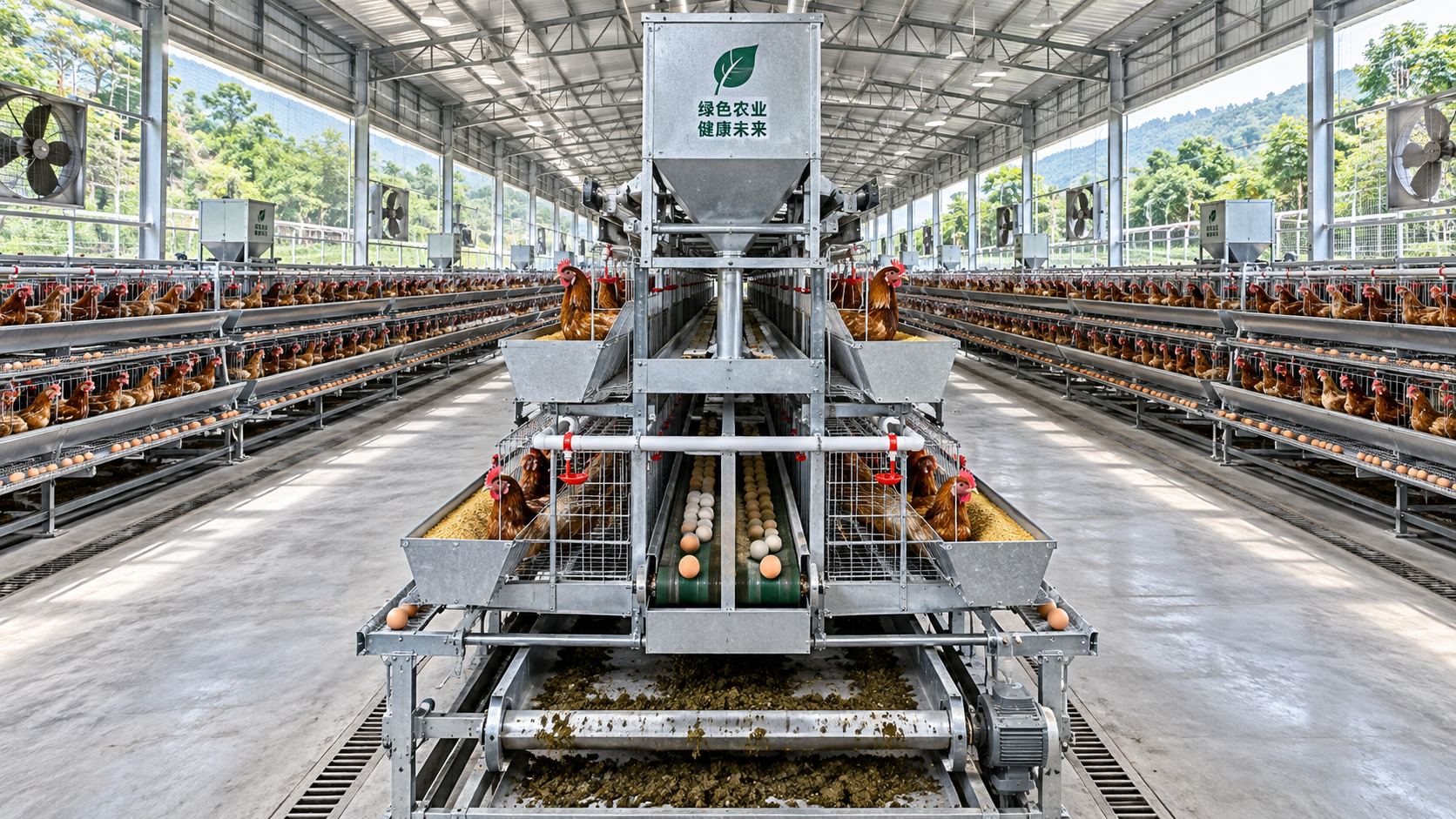
A low cage quotation can become an expensive purchase when it excludes manure handling, assumes more birds than the buyer can legally house, or leaves installation work to an unprepared local contractor. For an open-sided layer house, the useful comparison is not the price of cage frames alone. It is the cost of a defined, installable system matched to the building, operating conditions, and intended flock.
Before ranking suppliers, put their offers on the same basis: usable bird capacity, equipment scope, site responsibilities, delivery terms, and acceptance requirements. Any difference that remains should be traceable to a specification, a service obligation, or a clearly identified commercial risk.
Define the house before requesting the price
“Open house” is not a complete design specification. Suppliers need to know whether the building is fully open-sided or uses curtains, how it is oriented, where columns interrupt the floor plan, and whether supplementary ventilation is available. Provide measured internal dimensions, roof clearance, access openings, floor levels, and the proposed locations of water, electricity, and manure discharge.
Climate matters to the equipment arrangement, not just to the building envelope. FAO’s Poultry Development Review explains the importance of housing and ventilation in managing poultry conditions, including the limitations of naturally ventilated housing in hot climates. A procurement implication is that fitting more cage tiers into a house should not be treated as proof that the house can support the proposed flock under its hottest operating conditions. Ask for the ventilation assumptions behind the layout rather than accepting maximum capacity as the design objective.
The buyer’s request should also state the intended flock type, applicable housing requirements, available workforce, and preferred level of automation. A supplier designing around manual egg collection is answering a different brief from one supplying collection belts, elevators, and a central transfer conveyor.
Where information is uncertain, record it as an open item. A provisional drawing based on an assumed floor level should not quietly become the contractual installation drawing.
Compare usable capacity, not the advertised bird count
A price-per-bird figure is meaningful only when every quotation uses the same capacity definition. Request the number of compartments, usable floor area per compartment, proposed birds per compartment, and the resulting total capacity. Keep aisle widths, end clearances, and maintenance access visible on the layout.
Check legal eligibility before negotiating equipment details. In the European Union, Council Directive 1999/74/EC prohibits the use of unenriched cages for laying hens from 1 January 2012 and establishes separate requirements for enriched cages. That directive is jurisdiction-specific; buyers elsewhere need to verify their own applicable rules. Customer welfare policies may also impose purchasing conditions beyond local legal requirements.
Consequently, a supplier’s nominal capacity is not automatically the buyer’s permitted capacity. Recalculate it against the requirements applicable to the project and the housing design actually offered. If the intended market or customer contract excludes cage-produced eggs, a cheaper cage quotation does not resolve that commercial constraint.
Use two separate measures in the bid comparison: equipment price per compliant bird place and total installed cost per compliant bird place. The first helps identify equipment differences. The second exposes offers that look inexpensive because they transfer substantial work or expense to the buyer.
Make the quotation boundaries visible
A useful review of open house battery cage system cost starts by separating cage construction from the systems required to operate it. Cage-design reference material can help frame those distinctions, but the purchase decision still needs project-specific drawings, an itemized equipment schedule, and explicit exclusions.
Request quantities as well as descriptions. “Complete drinking system” is less useful than a schedule identifying its components and where the supplier’s responsibility ends. The same applies to electrical panels: a panel supplied with equipment does not necessarily include incoming power, field wiring, earthing, or site installation.
Specify the delivery term and named place precisely. If an offer uses Incoterms, require the edition to be stated. The International Chamber of Commerce’s Incoterms 2020 rules allocate delivery-related obligations, costs, and risks; they do not replace the equipment specification or define every aspect of the sales contract. Compare freight, insurance, customs clearance, taxes, and inland transport separately where responsibility differs.
Inspect the specifications that affect replacement and maintenance
Descriptions such as “heavy-duty” and “high-quality galvanized” provide little basis for comparison. Ask suppliers to identify wire dimensions, structural member dimensions, material grades where specified, and the coating process for each major component. Clarify whether the stated coating applies to wire, fabricated panels, frames, or all of them.
If a supplier claims compliance with a coating or material standard, request the exact standard, the components covered, and supporting inspection records. A certificate should be traceable to the supplied material or production batch; a generic brochure is not equivalent evidence. Do not infer an equipment service life from a coating description alone.
Open-sided houses may present different exposure conditions across the same building. Ask how the proposed specification addresses rain entry, cleaning practices, and any known coastal or otherwise corrosive site conditions. Those conditions should be disclosed in the inquiry so that competing suppliers price the same requirement.
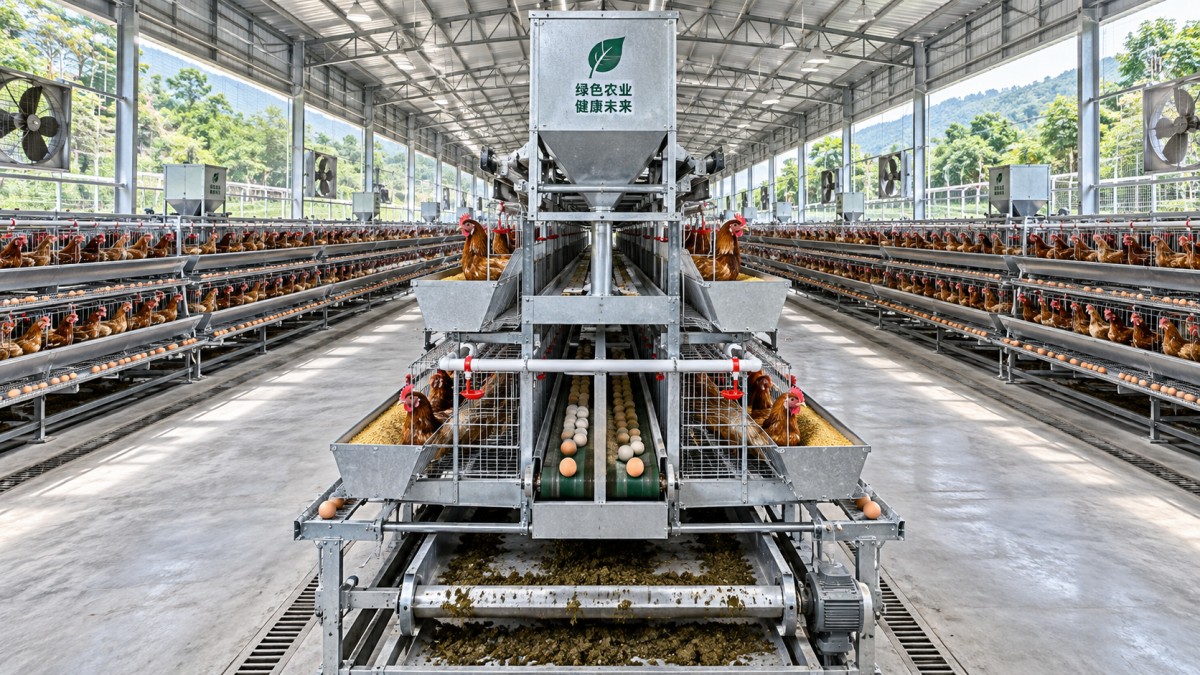
For moving equipment, identify motor and gearbox models, belt specifications, bearing arrangements, and adjustment points. Ask which replacement parts are commercially available locally and which must come from the supplier. An apparently inexpensive drive assembly may create a costly dependency if its replacement dimensions or controls are proprietary.
Maintenance access deserves a drawing review. Can staff reach drinker connections, tensioning devices, and drive components without dismantling adjacent equipment? Are motors positioned where removal is practical? These questions turn general promises about easy maintenance into details the buyer can assess.
Choose automation around the farm’s operating constraints
Manual, partly automated, and more fully automated quotations should not be ranked as if they provide identical functions. Identify which tasks remain manual in each offer and estimate their workload using the farm’s own staffing assumptions. Feeding, egg collection, manure removal, cleaning, and fault checks should be considered separately.
Automation changes the work rather than removing every operating obligation. Powered equipment introduces inspection, adjustment, spare-parts, and electrical-support requirements. Ask suppliers to describe normal operating tasks and provide proposed maintenance schedules before estimating any labor benefit.
For a site with uncertain electricity supply, request the consequences of an outage for each powered function. Which tasks can continue manually? Does equipment restart automatically or require operator intervention? What backup power provision is assumed? Electrical protection and backup arrangements should be reviewed by a qualified local electrical professional against applicable requirements, rather than accepted from a generic equipment description.
Water deserves a similar interface review. Give the supplier available water-quality information and ask for the required inlet conditions and treatment assumptions. FAO’s Poultry Development Review identifies drinking-water quality and availability as poultry-management concerns. A quotation containing drinkers should therefore not be mistaken for a complete site water solution.
Choose the automation level that the farm can operate and maintain reliably. A more sophisticated offer may be appropriate where labor availability is constrained and technical support is accessible. A simpler arrangement may suit a different operating model, provided its manual workload has been realistically budgeted.
Build an installed-cost comparison with disclosed assumptions
A practical comparison can use the following structure:
Total installed cost = equipment + delivery and import costs + building adaptations + utilities and interfaces + installation and commissioning + initial spares.
List the buyer’s estimated costs alongside each supplier’s fixed prices. Mark estimates, exclusions, and unresolved items clearly. Otherwise, an incomplete offer can appear competitive simply because its missing scope has been valued at zero.
Keep ongoing costs in a separate schedule covering labor, electricity, water, maintenance, consumables, and replacement parts. Use a common evaluation period and the farm’s own assumptions. If energy consumption is material to the comparison, request installed motor ratings and expected operating schedules, while distinguishing connected load from actual consumption.
Avoid filling the model with unsupported production advantages. Claims about egg output, mortality, or breakage need relevant evidence and defined operating conditions before they can justify a premium. Where evidence is unavailable, compare equipment functions and obligations without converting marketing claims into financial returns.
Test the decision against plausible changes in local labor expense, spare-parts delivery time, freight, and power availability. If a small adjustment reverses the ranking, the result depends heavily on that assumption. Resolve the uncertainty or make the purchasing decision with that dependency explicitly recorded.
Resolve supplier questions before issuing the purchase order
The final clarification round should produce written answers that become part of the agreed scope:
- What capacity assumptions and housing requirements underpin the drawing?
- Which equipment, utilities, civil works, and installation tasks are excluded?
- What happens if the site dimensions differ from the approved layout?
- Which components require supplier-specific replacements, and what are their stated lead times?
- Who handles installation defects, missing items, and transport damage?
- When does warranty coverage begin, and which costs does it exclude?
- What documents, training, and commissioning records will be delivered?
Set acceptance criteria before shipment. A pre-shipment review can check quantities, component identification, dimensions, and available inspection records. Site acceptance should address assembly, alignment, drinking-system checks, drive operation, controls, and the interfaces included in the contract. Define test conditions, responsibilities, and defect-resolution procedures rather than relying on the phrase “working properly.”
Where possible, separate installation completion from operational acceptance. Equipment may be assembled before all utilities or receiving systems are ready for testing. Payment milestones should reflect those distinctions without leaving either party’s obligations ambiguous.
The stronger quotation is the one whose scope, capacity, site assumptions, and performance obligations can be verified. Select on that basis, then negotiate price against a stable specification—not against a bird count or a headline figure that changes once installation begins.
Sources: FAO, Poultry Development Review (2013), sections addressing poultry housing, management, and drinking water; Council Directive 1999/74/EC, Articles 5 and 6; International Chamber of Commerce, Incoterms 2020. Regulatory applicability and contractual requirements should be checked for the project location.
Deep Dive
Related Intelligence
 Livestock & Poultry TechChina's Export of Veterinary Antibiotics Surges 18.7% YoY in Q1 2026: Key Industry Impacts and ResponsesAnalyst:Agri-Tech Strategist
 Livestock & Poultry TechChina Feed Industry Association Initiates Revision of Microbial Fermented Feed Additives Group StandardAnalyst:Agri-Tech Strategist
 Livestock & Poultry TechNational Feed Quality Inspection Center Releases Q1 2026 Feed Safety Report: Key Impacts and Industry ResponsesAnalyst:Agri-Tech Strategist