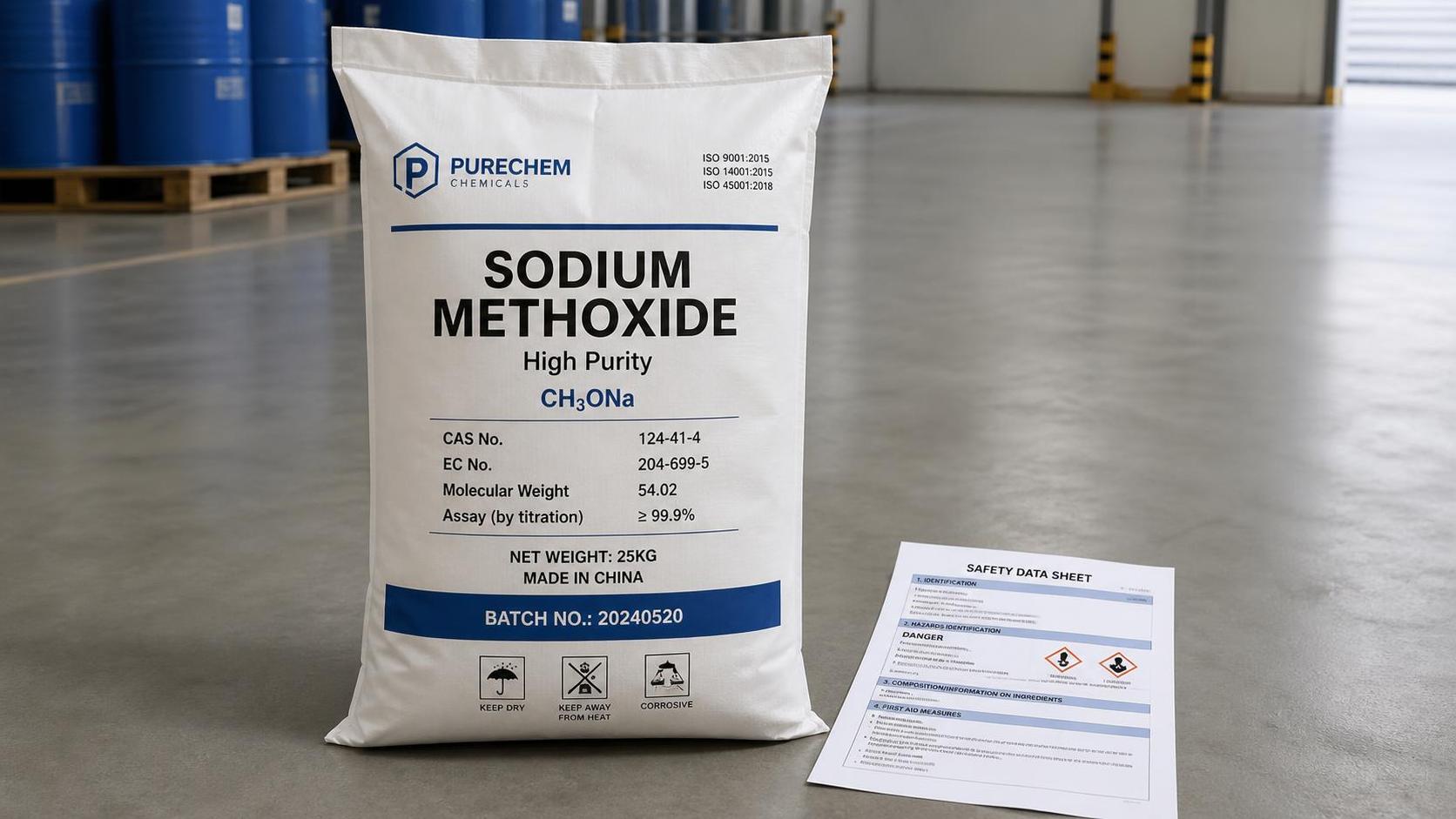
Why Are Chemical Shipments From Southeast Asia Delayed at Customs?
Key Takeaways
- How to use auto parts sourcing intelligence to assess supplier riskAutomotive Tech Analyst
- How to choose fiber optic equipment for long-haul telecom linksIT & Security Director
- Which farm robotics innovations are ready for field-scale weeding?Agri-Tech Strategist
- How much RAM does edge computing hardware for IoT applications need?IT & Security Director
- How to evaluate precision livestock farming companies for grazing herdsAgri-Tech Strategist
- Comparing Battery Cage Quotes for Open-Sided Layer HousesAgri-Tech Strategist
- How to assess an agricultural machinery manufacturer's parts supportAgri-Tech Strategist
- What drives industrial automation cost in a new production line?Chief Civil Engineer
Industry Overview
We do not just publish news; we construct a high-fidelity digital footprint for our partners. By aligning with TNE, enterprises build the essential algorithmic "Trust Signals" required by modern search engines, ensuring they stand out to high-net-worth buyers in an increasingly crowded global digital landscape.
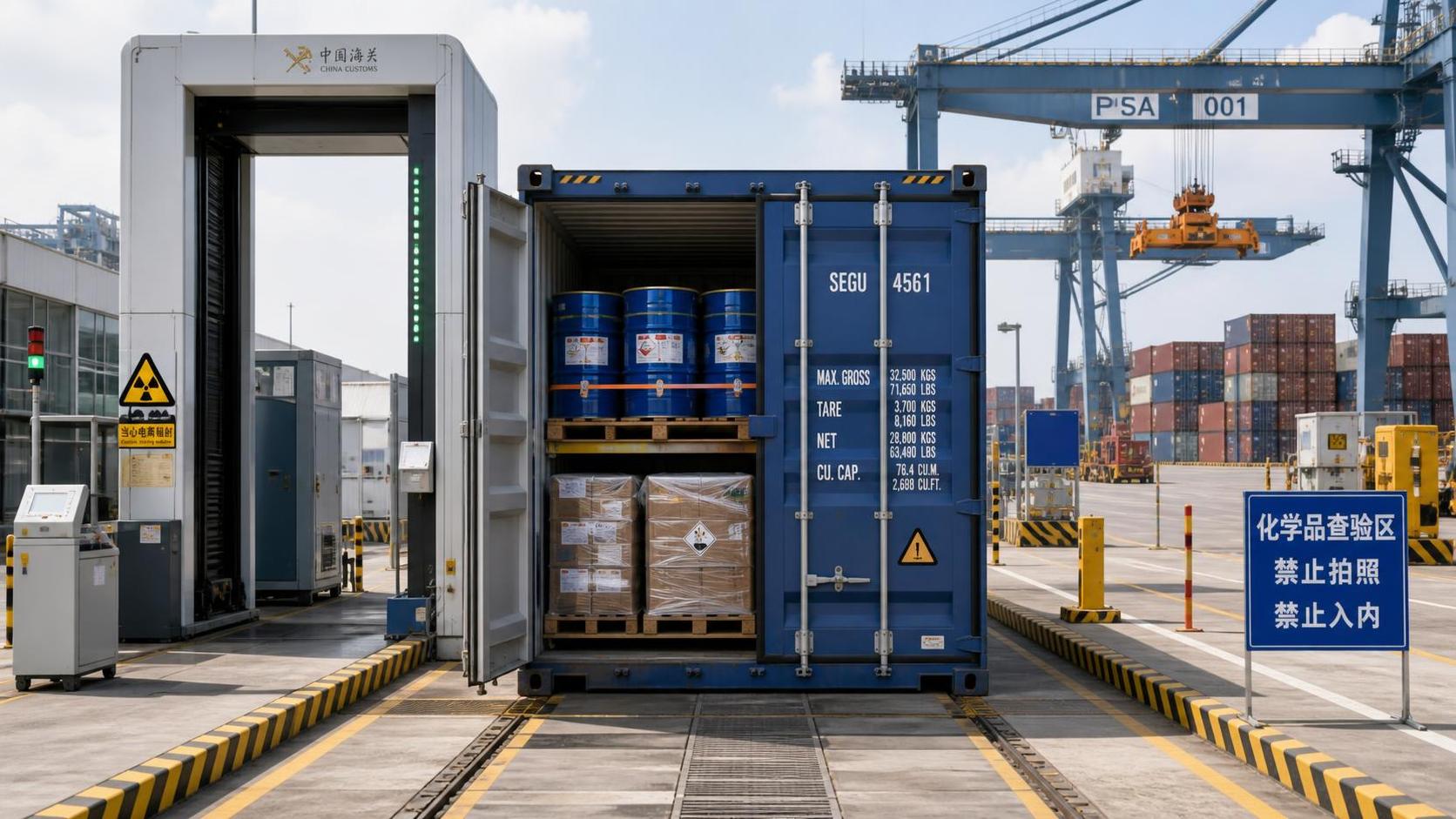
Chemical shipments from Southeast Asia are often delayed at customs because the shipment described in commercial documents does not match the regulatory identity customs authorities need to verify. A container may hold a routine industrial input such as a solvent blend, resin additive, surfactant, pigment dispersion, curing agent, or cleaning compound, yet clearance can stop when its composition, hazard status, tariff treatment, or intended use is unclear.
The issue is rarely limited to the port. A delay may begin when a product is formulated, packed, classified, booked, or declared. By the time a customs officer requests clarification, the vessel may already be discharged and storage, demurrage, or production disruption may be accumulating. The recurring question, why do industrial chemical shipments from Southeast Asia get delayed at customs, usually has several connected answers rather than one missing document.
The declared product name is too broad
Trade names and internal product codes are useful in commercial operations but often insufficient for customs review. Descriptions such as “industrial chemical,” “specialty additive,” “polymer solution,” or “processing aid” give little indication of the substance involved. They may not establish whether the material is hazardous, whether it is a mixture or a pure chemical, or whether a control measure applies.
A useful invoice description identifies the product in terms that can be reconciled with the safety data sheet, packing list, and tariff classification. Depending on the product, that may include its chemical or generic technical name, physical form, concentration range, solvent carrier, and intended industrial function. The description should remain accurate without disclosing unnecessary proprietary formulation detail.
Problems arise when the invoice calls a shipment “coating additive” while the safety data sheet identifies a flammable mixture containing regulated solvents, or when a packing list names a polymer grade that differs from the grade shown on the certificate of analysis. Small naming inconsistencies can trigger questions about whether the records refer to the same material.
Hazard classification and transport classification do not align
Customs controls often intersect with dangerous-goods rules, but the two systems do not use the same purpose or terminology. A product can require a hazard communication label under one framework while being non-dangerous for a particular transport mode. Conversely, a mixture that appears commercially ordinary may require a UN number, proper shipping name, packing group, class label, segregation treatment, or special package configuration during carriage.
Reviewers commonly compare the dangerous-goods declaration, safety data sheet, container placards, packaging marks, and transport booking. A mismatch can lead to a hold even where the cargo itself is lawful. Examples include a flash point that does not support the declared transport category, an outdated safety data sheet carrying a different composition, or a declared non-hazardous status that conflicts with a corrosive or flammable marking on the package.
Temperature-sensitive materials add another layer. Organic peroxides, certain initiators, reactive monomers, adhesives, and some formulated compounds may have storage-temperature limits, emergency-temperature references, or restrictions on exposure to heat. If the booking record, container settings, and product documentation are not consistent, authorities or terminal operators may seek confirmation before releasing cargo.
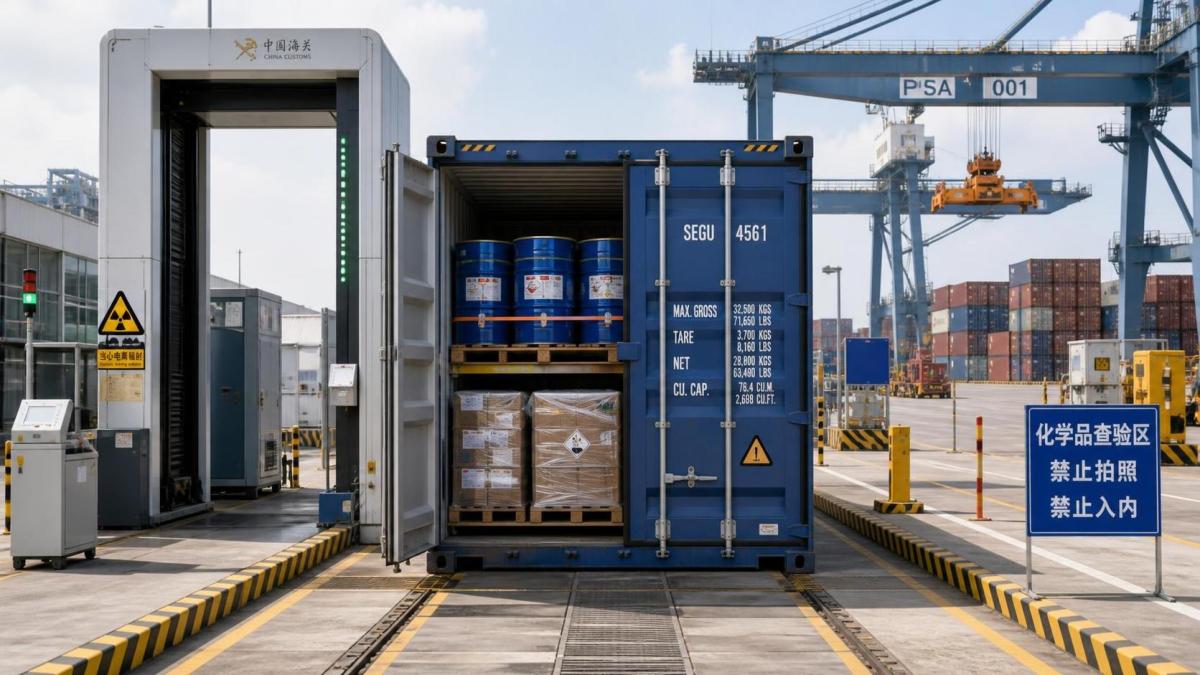
Safety data sheets are incomplete, old, or market-inappropriate
An SDS is often treated as a supporting attachment, but it can become the central document in a chemical inspection. The document needs to correspond to the actual grade and current formulation shipped. A revision that follows a formulation change, a new impurity profile, or a reclassified ingredient may affect transport status, labelling, personal protection guidance, and customs treatment.
Sections concerning composition, hazard identification, transport information, regulatory information, and physical properties receive particular attention. An SDS that lists a generic blend without useful concentration information may prompt questions. So can a document with a missing emergency contact, an unclear country or regional applicability statement, conflicting UN transport data, or a flash point expressed without the relevant test context.
Translation quality also matters. Product names, caution statements, and technical units should be legible and internally consistent. A translated document that changes “not regulated for transport” into “non-hazardous chemical” can create an avoidable contradiction, since the phrases are not interchangeable.
Tariff codes do not reflect the material’s actual form
HS classification for chemicals can be difficult because similar commercial products may fall under different headings based on composition, concentration, preparation status, or primary function. A pure compound, a chemical mixture, a polymer in primary form, a formulated preparation, and an article containing a chemical are treated differently. The fact that a product is used in the same factory process does not establish that it belongs in the same tariff heading.
Classification risk becomes higher for blends and intermediates. A water-based dispersion may be described commercially as a resin, while its customs treatment could depend on the polymer system, the presence of additives, and whether it meets the definition of a preparation under the relevant tariff schedule. A cleaning formulation may be held when the declaration omits the information needed to distinguish a surface-active preparation from a solvent-based product.
Authorities may ask for a technical data sheet, SDS, formulation summary, laboratory analysis, or product literature to substantiate the code. These records should tell the same story. A tariff code selected solely from an abbreviated invoice description is vulnerable to reassessment, especially when the product name is broad or the shipment includes multiple grades under one line item.
Permits, registrations, and restricted-substance controls are identified too late
Some chemicals can cross a border only with a permit, prior approval, registration evidence, quota allocation, end-use statement, or specific declaration. Requirements differ by destination and can change according to concentration, quantity, intended application, or whether the substance appears in a controlled category. Precursors, ozone-depleting substances, persistent chemicals, agricultural inputs, disinfectant actives, and certain industrial gases may receive heightened review.
The control may apply to a component rather than the marketed product name. A shipment described as a formulated additive can still be reviewed if a listed constituent is present above an applicable threshold. This is one reason composition records need enough precision to support screening before goods are loaded.
End use can also alter the clearance path. A technical-grade substance for industrial processing may be treated differently from a material intended for food contact, agricultural treatment, medical use, consumer cleaning, or cosmetics manufacture. Ambiguous documentation invites a request for a use statement, customer specification, or downstream declaration. Describing an intended use accurately at the outset avoids forcing customs to infer it from incomplete records.
Origin evidence is weaker than the commercial claim
Southeast Asia includes interconnected manufacturing, blending, toll-processing, and transshipment routes. The country where a container is loaded may not be the country where the chemical was produced, and the country of final packing may not establish origin for trade-preference purposes. Customs authorities may examine whether processing performed in a location was substantial enough to support the declared origin.
For chemical goods, repacking, relabelling, dilution, simple blending, or storage may not always be treated the same as chemical transformation or manufacturing. The applicable origin rule depends on the product and trade arrangement. A certificate of origin, supplier declaration, bill of materials, production record, and invoice should be capable of supporting the same origin position.
Origin questions can be especially disruptive when a shipment is routed through a regional hub. Bills of lading, warehouse releases, seal records, and transport documents may need to show that the cargo remained under the required level of control during transit. Missing links in this document trail can affect a preferential-duty claim even when the physical goods are unchanged.
Packaging and labelling create a physical-document mismatch
Customs inspections are not conducted only on screens. Officers may compare drums, intermediate bulk containers, sacks, flexitanks, and outer cartons with the submitted declaration. Labels should identify the correct product, batch or lot where applicable, net quantity, hazard information, and handling marks required for the transport arrangement. Faded labels, over-applied stickers, damaged closure seals, or conflicting old labels make verification slower.
Quantity discrepancies are another common source of holds. A commercial invoice may state a net mass while the packing list shows gross mass, or one record may list kilograms while another lists litres. For liquids, the relationship between volume and weight can vary by density and temperature. A discrepancy is not necessarily evidence of a false declaration, but it requires a clear explanation.
Mixed shipments need particular discipline. A container carrying several formulations should not rely on one generic description or one SDS that only applies to part of the load. Line-item records, package counts, and dangerous-goods references must let an inspector connect each package group to the relevant documentation.
Port-level review is not always predictable
Even a well-prepared shipment can be selected for documentary review, scanning, sampling, laboratory examination, or a physical inspection. Selection may reflect the commodity, routing, declaration history, inconsistencies identified by automated systems, or local inspection priorities. The timing and depth of review can differ between ports handling similar cargo.
Sampling introduces operational constraints. The sampling method must be appropriate for the material, especially where a product is volatile, moisture-sensitive, reactive, sterile, temperature-controlled, or supplied in sealed industrial packaging. Opening containers without an agreed procedure can affect safety, quality, or chain-of-custody evidence. A shipment file should therefore identify safe sampling precautions, storage limitations, and a technical contact able to answer composition or handling questions promptly.
Delays lengthen when authority queries move through several parties: the carrier, freight forwarder, customs declarant, exporter, manufacturer, laboratory, and destination-side representative. A technically correct reply sent after several days may still leave the cargo exposed to terminal deadlines. Clear ownership of document release and query response matters as much as document completeness.
Document control should begin before the booking
A disciplined pre-shipment review compares the sales order, invoice, packing list, SDS, technical data sheet, dangerous-goods declaration, tariff code rationale, origin evidence, and any permit references. The aim is not to make every document identical; each serves a different purpose. The aim is to ensure there are no unexplained conflicts in product identity, composition, quantity, hazard status, origin, or use.
- For a mixture, retain a controlled composition summary that can support customs questions without automatically disclosing the complete formula.
- Match the product grade, batch format, package type, and net weight across transactional records before the cargo reaches the terminal.
- Where a classification depends on a physical property, retain the relevant test basis or supplier evidence rather than relying only on a commercial label.
- Set a response path for inspection queries, including technical, logistics, and customs contacts with authority to release supporting records.
When a customs hold has already occurred
The fastest productive response is usually a precise response to the stated discrepancy. Sending a large, unstructured bundle of documents can create additional questions. First establish whether the hold concerns classification, valuation, origin, licensing, dangerous-goods compliance, labelling, or a physical inspection. Then provide the document that directly resolves that point and explain any terminology difference in plain technical language.
Corrections should be controlled. Reissuing an invoice, SDS, or packing list without explaining what changed can appear suspicious when the original is already part of the entry record. Where an error exists, the correction should identify the affected field, give the reason, and remain consistent with the actual goods and shipment timeline.
Chemical customs clearance depends on traceable product identity. When technical files, transport declarations, origin evidence, and package markings describe the same cargo with the same level of precision, most routine questions can be answered before they become extended port delays.
Deep Dive
Related Intelligence
 Specialty ChemicalsSodium Methoxide Selection: How Chemical Buyers Reduce Specification and Handling RiskAnalyst:Lead Materials Scientist
 Specialty ChemicalsHow Corporate Case Studies Reveal Real-World Challenges in Adopting Specialty Chemicals for Food SafetyAnalyst:Lead Materials Scientist
 Specialty ChemicalsCan Brand Elevation Tactics Reduce Customer Acquisition Cost for Specialty Chemicals in Organic Food Production?Analyst:Lead Materials Scientist