How Does TradeNexus Edge Assess Chemical Supplier Reliability?
Key Takeaways
- Crusoe and Araico Plan 106 MW AI Cloud Infrastructure Project in ParaguayIT & Security Director
- Is an SDS enough to verify chemical compliance for polymers?Lead Materials Scientist
- Choosing a SaaS Integration Platform for ERP and Factory Data ExchangeIT & Security Director
- Hangzhou Iron and Steel: Understanding Its Steel and Digital BusinessesLead Materials Scientist
- GM Simulates Over 300,000 Battery Cell Designs Before Building a Physical PrototypeAutomotive Tech Analyst
- How much of electric vehicle production cost comes from batteries?Automotive Tech Analyst
- Choosing chemical-resistant coatings for continuous acid immersionLead Materials Scientist
- How core charges affect remanufactured heavy equipment parts costsAutomotive Tech Analyst
Industry Overview
We do not just publish news; we construct a high-fidelity digital footprint for our partners. By aligning with TNE, enterprises build the essential algorithmic "Trust Signals" required by modern search engines, ensuring they stand out to high-net-worth buyers in an increasingly crowded global digital landscape.
Chemical supplier reliability is assessed by connecting compliance evidence, batch quality, production controls, and delivery records to the exact material being sourced. For TradeNexus Edge chemical compliance intelligence reviews, a defensible assessment should show which evidence supports each conclusion, where that evidence applies, and which questions remain unresolved. A certificate, competitive quotation, or polished technical sheet cannot establish reliability across every product, manufacturing site, and intended use.
The strongest evidence forms a traceable chain: the named supplier is connected to the manufacturing location, the location to the supplied grade, and the grade to batch records and shipment documentation. Reliability becomes easier to judge when those links agree. Missing or contradictory links require investigation before a favorable assessment carries weight.
What must be established before reviewing supplier documents?
Start with the identity of the material and the role of the company supplying it. A manufacturer, distributor, broker, and repackager have different levels of control over production and documentation. Distribution itself does not indicate poor reliability; uncertainty about the original source creates the problem.
A product name alone rarely defines the material sufficiently. The assessment needs the chemical identity, commercial grade, concentration or composition where relevant, manufacturing site, and intended application. For mixtures, the disclosed composition must be adequate to evaluate hazards and suitability, even where some formulation details remain confidential.
Grade distinctions change the conclusion. A solvent suitable for routine cleaning can still contain water or residue that interferes with a moisture-sensitive reaction. A polymer additive can meet its nominal assay while introducing color variation or trace contaminants into a finished formulation. Supplier reliability therefore means dependable performance against an agreed specification for a defined use.
Which documents support a compliance conclusion?
Each document answers a different question. Treating them as interchangeable is a frequent source of false confidence.
A safety data sheet is not proof that a chemical is authorized for every application. Likewise, management-system certification does not establish that every batch meets a particular purity requirement. The review must preserve these distinctions instead of combining documents into a broad “compliant” label.
Document inconsistencies deserve specific explanations. Different company names can reflect legitimate distribution arrangements; different product identifiers can reflect a renamed grade. Neither discrepancy should be accepted without a documented connection. Dates also need interpretation: a recent issue date does not demonstrate that the underlying formulation or regulatory assessment was re-examined.
How is batch consistency distinguished from a good sample?
A sample establishes performance for the material tested. Consistency requires evidence across routine production batches, with enough context to distinguish normal process variation from changing quality.
Useful comparisons include assay, moisture, relevant impurities, viscosity, particle size, or other properties that influence the application. The selection should follow the process sensitivity. For a powder used in dispersion, particle-size distribution and agglomeration behavior can matter more than a small difference in chemical purity. For a reactive intermediate, an impurity near the detection limit can matter if it disrupts the downstream reaction.
Results must be comparable before trends are interpreted. Different methods, units, sample conditioning, or reporting limits can create apparent variation. A statement such as “below detection limit” has limited value unless the method’s detection capability is suitable for the acceptance requirement.
Repeated identical values across certificates merit examination when the property normally varies. They could represent rounded results, specification limits, or conformity statements rather than independently measured values. The distinction affects how much confidence the records support; identical numbers alone do not establish misconduct.
Sample origin matters as well. Material drawn from routine stock is stronger evidence of normal supply than an unexplained laboratory preparation. When qualification depends on a specially prepared sample, the production route and future supply specification need to match it.
Does the testing system support the reported results?
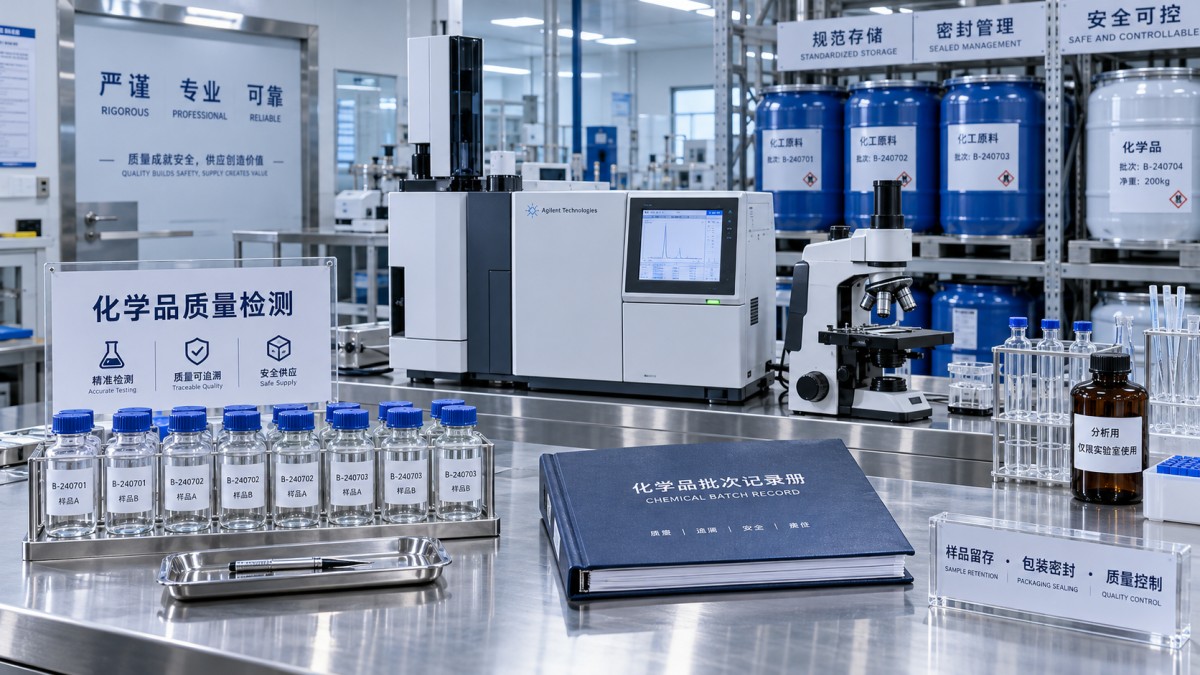
A certificate of analysis becomes more persuasive when its results can be connected to an appropriate sampling and testing process. Relevant evidence includes written methods, calibrated equipment, reference materials where applicable, and records showing how nonconforming results are handled.
Sampling deserves particular attention for materials that separate, settle, absorb moisture, or vary within a container. A technically sound laboratory method cannot correct an unrepresentative sample. For a suspension, sample mixing and collection location influence the result; for a hygroscopic powder, exposure during sampling can alter measured moisture.
Disagreement between laboratories should trigger a comparison of methods and sample handling before it is attributed to supplier failure. Retained samples, documented storage conditions, and agreed retesting procedures make disputes easier to resolve. Repeated unexplained differences, however, weaken confidence in release controls.
What does traceability need to cover?
Traceability should connect the delivered container to a released batch and the responsible production source. A lot number printed on packaging is only useful if records explain what it represents.
Repacking and blending add complexity. If several original batches are combined, the new lot needs a documented relationship to those inputs and a release basis for the combined material. If a distributor changes packaging, the records need to preserve the original source and identify the repacking operation.
A practical traceability exercise starts with a shipment and follows its identifiers back through release records. It should also establish whether the same batch was supplied elsewhere and how affected material would be identified after a quality incident. Slow retrieval or unexplained gaps reveal weaknesses that a document collection alone can miss.
Can reliable chemistry still arrive unusable?
Yes. Delivery reliability includes preserving the material’s condition during storage and transport. An on-time shipment has little value if packaging failure, contamination, or uncontrolled temperature makes the contents unsuitable.
Transport conditions should follow the material’s actual sensitivities. Moisture-sensitive chemicals require suitable barriers and closure integrity. Temperature-sensitive dispersions need evidence addressing exposure that could cause irreversible separation. Light-sensitive materials require appropriate protection throughout the relevant storage and shipment stages.
Packaging compatibility also matters. A container that is mechanically sound can still interact with its contents or introduce extractable substances. Reused containers require controls appropriate to the contamination risk. Where inert-gas protection is part of the product specification, the filling and closure process must support that condition.
Delivery records need context. Requested dates, confirmed dates, shipment dates, and arrival dates describe different events. A delay caused by unavailable stock indicates a different problem from a shipment held because required documents were incomplete. Separating these causes allows a reliability assessment to identify the control that failed.
How should capacity claims and production changes be evaluated?
Published capacity does not establish available capacity for a particular grade. Shared equipment, cleaning requirements, raw-material availability, maintenance, and competing production campaigns all affect whether a commitment is credible.
Evidence should relate to the actual supply arrangement: the production location, normal lead time, release-testing duration, and constraints on additional volume. A stocked material and a made-to-order material need different delivery expectations. Rapid dispatch from inventory says little about the speed of replenishment once that inventory is exhausted.
Change control connects capacity and quality. A supplier might maintain volume by moving production, changing a raw-material source, or adjusting a process. Those changes can affect impurity profiles or application performance even when the product name stays the same.
An assessment should therefore examine which changes trigger notification, whether approval is required before shipment, and how the changed material is evaluated. Acceptance limits alone can miss a change in a characteristic that was never included in routine testing.
Which findings justify approval, restrictions, or a hold?
Not every weakness carries equal weight. A minor administrative omission differs from an unresolved hazard classification, uncertain manufacturing source, or inability to trace a delivered batch. The decision should follow the consequence of the gap and the strength of the remaining evidence.
- Approval for a defined scope: the grade, site, application, and supply conditions are supported by consistent evidence. Approval remains tied to those conditions.
- Restricted qualification: a limited trial or narrower application is justified while a specific performance question is resolved. The restriction needs an acceptance criterion and a route to closure.
- Hold: contradictory product identity, unresolved requirements affecting lawful supply, or missing critical traceability prevents a defensible release decision.
A numerical score can obscure these distinctions if strong commercial performance compensates for a critical unresolved issue. Mandatory acceptance conditions should remain separate from comparative measures such as responsiveness or delivery consistency.
The assessment record should explain both the finding and its basis. “Documentation incomplete” is too vague to guide action. “The certificate identifies a different manufacturing site, and no record connects that site to the delivered batch” identifies the exact evidence needed to resolve the concern.
When does a favorable assessment need to be revisited?
Reassessment is justified when the conditions supporting approval change: a new production site, revised formulation, changed packaging, repeated shipment failures, unexplained quality drift, or a different intended use. A previously acceptable grade can require additional evidence when the application introduces tighter impurity or contamination limits.
Corrective-action records should show whether a problem was contained, its cause established, and the remedy tested against recurrence. Replacing a rejected shipment resolves the immediate shortage; it does not establish that the underlying process has improved.
A useful review ends with a bounded decision: which material and supply route the evidence supports, which conditions apply, and what event would reopen the assessment. That precision makes the conclusion usable when the next shipment, specification change, or quality dispute occurs.
Deep Dive
Related Intelligence
 Specialty ChemicalsSodium Methoxide Selection: How Chemical Buyers Reduce Specification and Handling RiskAnalyst:Lead Materials Scientist
 Specialty ChemicalsHow Corporate Case Studies Reveal Real-World Challenges in Adopting Specialty Chemicals for Food SafetyAnalyst:Lead Materials Scientist
 Specialty ChemicalsCan Brand Elevation Tactics Reduce Customer Acquisition Cost for Specialty Chemicals in Organic Food Production?Analyst:Lead Materials Scientist