Are Southeast Asian Specialty Chemical Suppliers Reliable for Long-Term Contracts?
Key Takeaways
- How to assess price forecasts in chemical market intelligence reportsLead Materials Scientist
- US Announces Higher Tariffs on Chinese EVs, Batteries and Critical MineralsAutomotive Tech Analyst
- How to prevent temperature fluctuations in cold chain storageChief Civil Engineer
- How to use auto parts sourcing intelligence to assess supplier riskAutomotive Tech Analyst
- How to choose fiber optic equipment for long-haul telecom linksIT & Security Director
- Which farm robotics innovations are ready for field-scale weeding?Agri-Tech Strategist
- How much RAM does edge computing hardware for IoT applications need?IT & Security Director
- How to evaluate precision livestock farming companies for grazing herdsAgri-Tech Strategist
Industry Overview
We do not just publish news; we construct a high-fidelity digital footprint for our partners. By aligning with TNE, enterprises build the essential algorithmic "Trust Signals" required by modern search engines, ensuring they stand out to high-net-worth buyers in an increasingly crowded global digital landscape.
Are Southeast Asian Specialty Chemical Suppliers Reliable for Long-Term Contracts?
Yes—Southeast Asian specialty chemical suppliers can support reliable long-term contracts. But reliability belongs to a specific manufacturer, production site, and product grade, not to a region. Competitive pricing means little if batch variability interrupts production or an undocumented formulation change forces a customer to repeat qualification.
This TradeNexus Edge supplier reliability for chemical sourcing guide focuses on the evidence behind a sourcing decision: traceable quality records, usable production capacity, destination-market compliance, financial resilience, and contract terms that work when something goes wrong. The practical question is not whether a supplier can deliver an acceptable sample. It is whether it can keep delivering the same qualified material under changing commercial conditions.
Does the supplier’s country tell you much about reliability?
Country matters for logistics, customs procedures, legal enforcement, utilities, and exposure to local disruptions. It does not establish whether a particular dispersant, resin additive, surfactant, or specialty intermediate will perform consistently.
A sophisticated manufacturing site can still depend on a single imported precursor. A smaller producer may offer strong technical support but have limited backup equipment. An established exporter may sell several grades through a trading company, making the actual production source less visible. These differences deserve more attention than broad claims about regional manufacturing quality.
Identify the legal seller, actual manufacturer, approved site, and party responsible for complaints. If a distributor supplies the material, confirm that it can obtain manufacturing records and communicate changes promptly. A trader is not automatically a poor choice; an unclear chain of responsibility is.
What quality evidence should buyers request before signing?
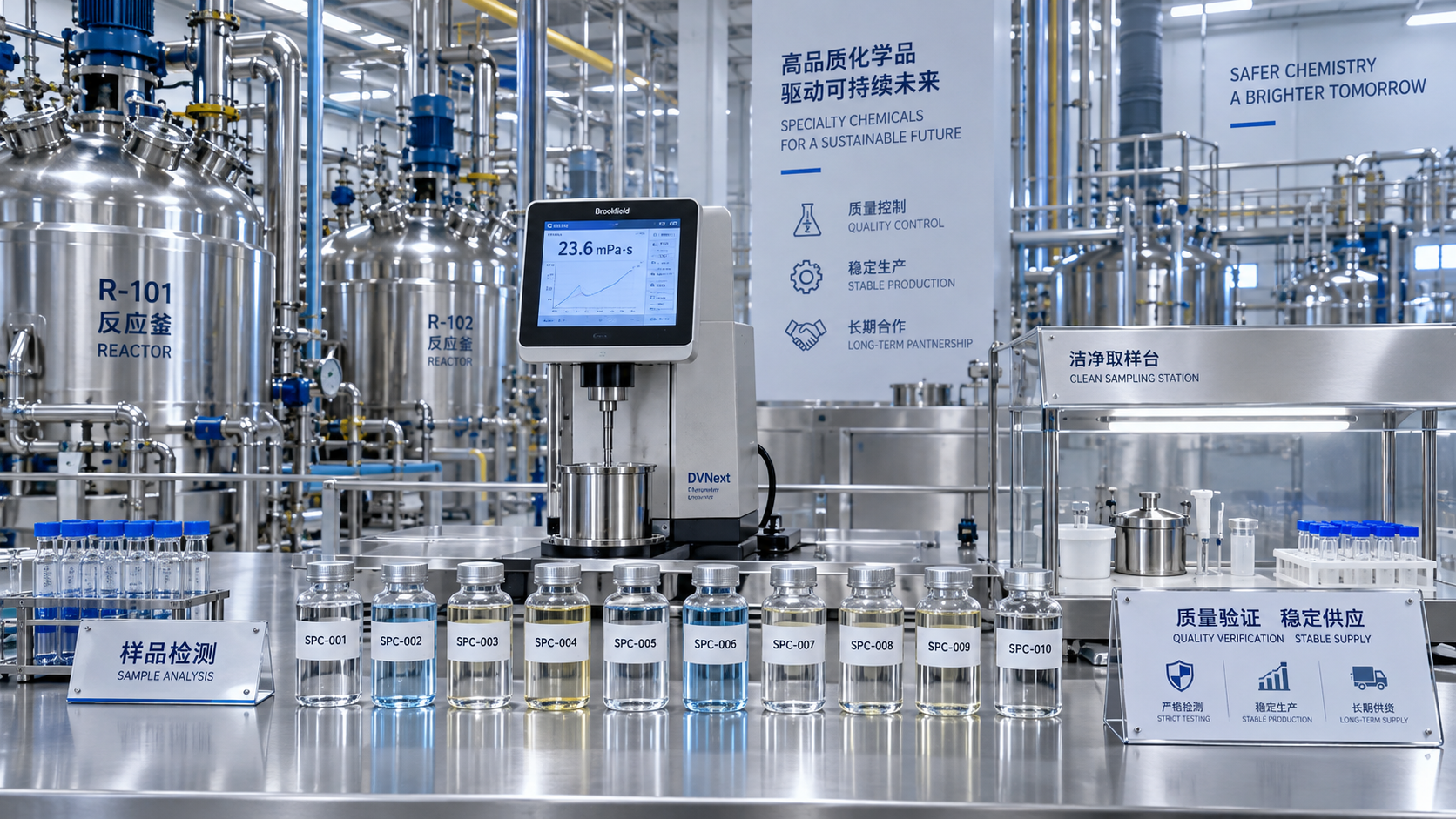
Start with production history for the exact grade under consideration. A technical data sheet describes typical properties. A certificate of analysis, or CoA, records batch results. Neither alone proves that the material consistently meets your application requirements.
Request results from multiple commercial batches, preferably spanning different raw-material deliveries and production campaigns. Look beyond whether every result falls inside the specification. A steady movement toward one limit may indicate process drift worth investigating before committing volume.
The critical measurements depend on the chemistry and application. For a coating additive, viscosity and active content may matter, but application testing might expose compatibility or surface defects that routine release tests miss. For a moisture-sensitive intermediate, water content and packaging integrity can be decisive. An electronics application may require impurity controls that would be unnecessary for a less sensitive industrial use.
- Agree on test methods, units, sample conditioning, and reporting precision.
- Confirm whether CoA values are measured for each batch or reported using another documented basis.
- Review batch traceability, retained-sample arrangements, and out-of-specification handling.
- Ask how raw-material, process, equipment, and site changes trigger customer notification.
ISO 9001 certification can support confidence in a quality management system, but it is not product approval. Check certificate validity, site coverage, and scope. Then inspect the controls relevant to your material rather than treating the certificate as the end of qualification.
Is a successful laboratory sample enough to approve a long-term supplier?
No. A sample establishes technical potential, not routine production capability. Ask whether it came from a laboratory preparation, pilot batch, or normal commercial run. That distinction matters when mixing, heat transfer, filtration, or contamination control changes with scale.
Consider a dispersant that performs well in a bench formulation. During plant use, a small difference in active content or impurity profile could alter foam, milling behavior, or storage stability. This is a qualification scenario, not evidence that any particular supplier is deficient.
A sensible progression is document review, commercial-batch samples, application testing, and a controlled production trial. For business-critical materials, assess more than one batch before awarding a large share of demand. Qualification should also cover the actual shipment packaging and expected storage conditions, not just material delivered in a sample bottle.
How can you tell whether capacity promises are realistic?
Ask about available capacity for your grade, not the plant’s total annual output. Specialty chemical production often uses shared reactors, campaign scheduling, cleaning cycles, and product-specific finishing equipment. A large headline capacity may hide a bottleneck in filtration, drying, testing, or packing.
Discuss normal lead time, peak demand, maintenance shutdowns, and the time needed to restart after an interruption. Request historical order performance where available, with a clear definition of “on time.” Dispatch from the factory is not the same as delivery to your receiving site.
Capacity commitments also depend on your purchasing behavior. A buyer requesting firm availability while offering only irregular forecasts creates avoidable uncertainty. Agree on forecast updates, firm order windows, minimum batch quantities, and allocation rules during shortages. Where reserved capacity is necessary, define what is reserved and what commercial obligation supports it.
Which regulatory and logistics checks cannot be delegated blindly?
Local manufacturing authorization does not automatically establish compliance in the destination market. Obligations vary with substance identity, composition, annual volume, importer arrangements, intended use, and applicable rules.
For EU-bound supplies, REACH obligations may be relevant, while CLP can affect classification, labeling, and packaging. For US imports, TSCA status may require review. Applicability must be checked for the actual substance or mixture and supply arrangement; a general “compliant” statement is not enough.
Obtain a current safety data sheet and reconcile substance identifiers, hazard classification, composition information, and transport documentation. Where proprietary ingredients prevent full disclosure, establish a confidential review route with the appropriate technical or regulatory party. Food-contact, agricultural, and other regulated applications may need additional evidence specific to the intended use.
Logistics can undermine otherwise sound manufacturing. Check temperature exposure, moisture sensitivity, container suitability, and remaining shelf life on arrival. If dangerous-goods rules apply, verify the relevant classification and shipping arrangements. A proposed backup route is only useful if it can legally and practically carry the material.
How much financial and supply-chain visibility is reasonable?
Enough to understand whether the supplier can fund production and absorb disruption. Financial difficulty may first appear operationally: delayed feedstock purchases, reduced inventory, deferred maintenance, or requests for unfamiliar payment arrangements.
Use proportionate checks. These may include available financial statements, credit information, trade references obtained with consent, and confirmation that banking details belong to the contracting entity. Limited disclosure is not proof of instability, but it increases uncertainty and may justify smaller commitments or staged payments.
For continuity, ask which critical inputs have qualified alternatives. Two suppliers are not truly independent if both rely on the same upstream producer. Likewise, a second factory is not an immediate fallback if its output has never passed your qualification process.
Keep buffer-stock decisions tied to realistic replenishment time, demand variability, and usable shelf life. Extra inventory can reduce interruption risk, but unsuitable storage or slow consumption may turn it into a quality problem.
What should a long-term specialty chemical contract actually protect?
A purchase specification needs more than a product name and price. Attach the agreed grade, manufacturing site, acceptance limits, test methods, packaging requirements, and minimum remaining shelf life where relevant. Make clear which document prevails if the purchase order, specification, and supplier terms conflict.
Change control deserves particular care. Define changes requiring notice or prior approval, including changes to raw-material source, formulation, process, and production location. Without this, a supplier may deliver material that meets its standard specification but no longer behaves like the product you qualified.
Other provisions should address rejected batches, investigation timelines, replacement supply, and responsibility for agreed testing. Price adjustments should use a transparent mechanism where possible, with defined review periods and treatment of freight or currency changes. A fixed price offers little protection if it encourages supply withdrawal when costs move sharply.
Have qualified counsel review governing law, dispute resolution, liability, termination, and enforceability across the relevant jurisdictions. Incoterms clarify certain delivery responsibilities, costs, and risks; they do not replace the rest of the commercial agreement.
Which warning signs justify delaying the commitment?
Pause when the seller will not identify the manufacturing site, cannot explain batch numbering, or offers inconsistent documents for the same grade. Repeatedly changing lead times without a credible explanation also merits investigation.
An unusually low quotation is not automatically suspicious. It may reflect a different specification, packaging basis, delivery term, or production economics. Normalize the offers before judging them. A cheaper material that needs additional testing, formulation adjustment, or larger safety stocks may not have the lower landed cost.
The harder warning sign is resistance to reasonable verification. Confidentiality concerns can often be managed through nondisclosure agreements or limited-scope audits. Refusing both disclosure and workable alternatives leaves the buyer carrying an unmeasured risk.
When is a long-term commitment justified?
Commit when technical qualification, operational evidence, compliance review, and commercial protections tell a consistent story. Not every supplier needs to be large, internationally branded, or capable of serving every application. It needs to be demonstrably capable of serving yours.
TradeNexus Edge’s focus on advanced materials and chemicals makes contextual supply-chain intelligence more useful than a directory listing alone. Market research can inform the shortlist, but it cannot replace site-specific evidence or application testing.
For an unproven partner, begin with controlled volume and agreed performance reviews. Expand the commitment after consistent commercial deliveries, not simply after a persuasive presentation. If the material could stop your production line, resolve the change-control process and qualify the recovery option before increasing dependence.
Deep Dive
Related Intelligence
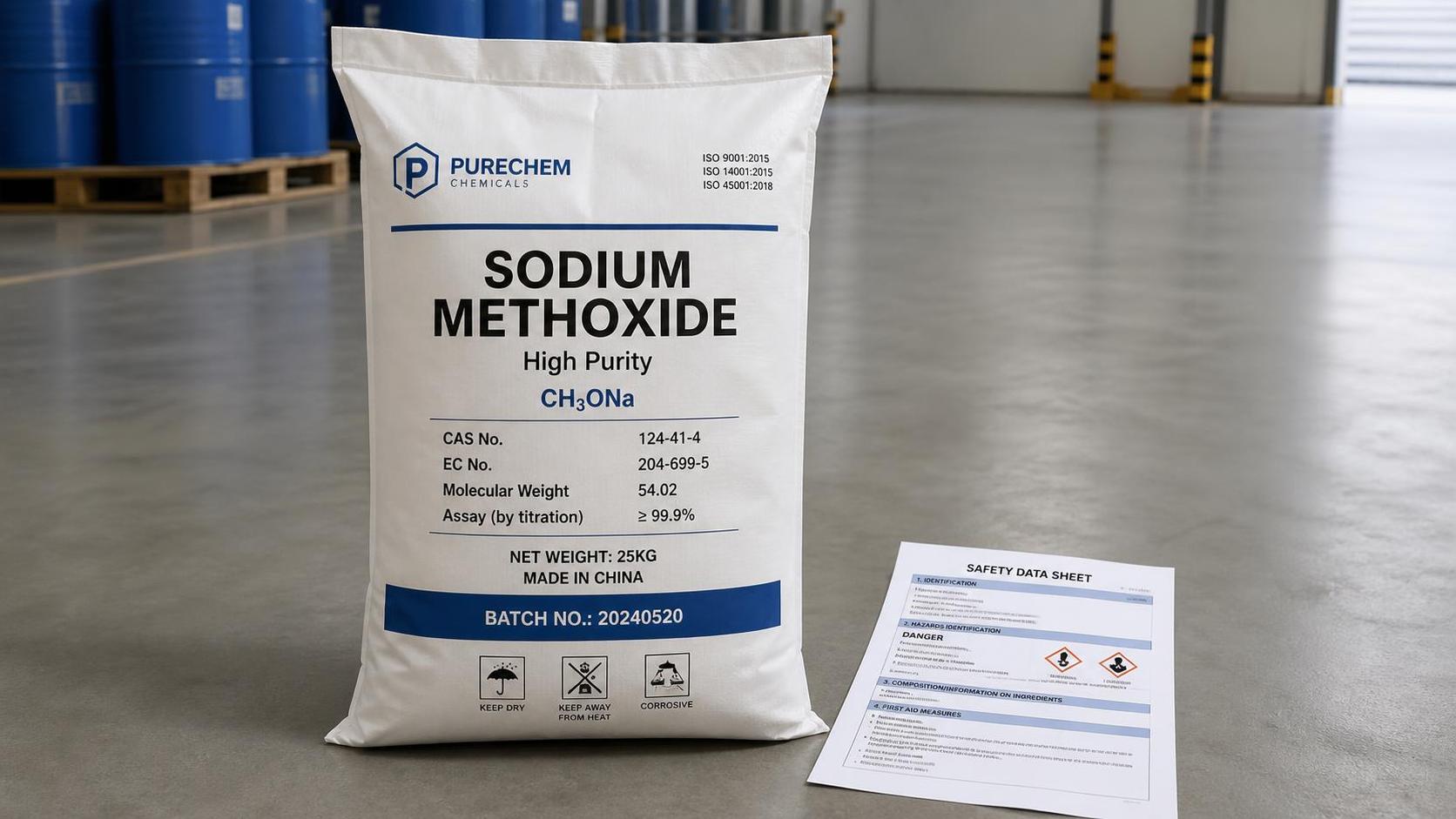
 Specialty ChemicalsSodium Methoxide Selection: How Chemical Buyers Reduce Specification and Handling RiskAnalyst:Lead Materials Scientist
 Specialty ChemicalsHow Corporate Case Studies Reveal Real-World Challenges in Adopting Specialty Chemicals for Food SafetyAnalyst:Lead Materials Scientist
 Specialty ChemicalsCan Brand Elevation Tactics Reduce Customer Acquisition Cost for Specialty Chemicals in Organic Food Production?Analyst:Lead Materials Scientist