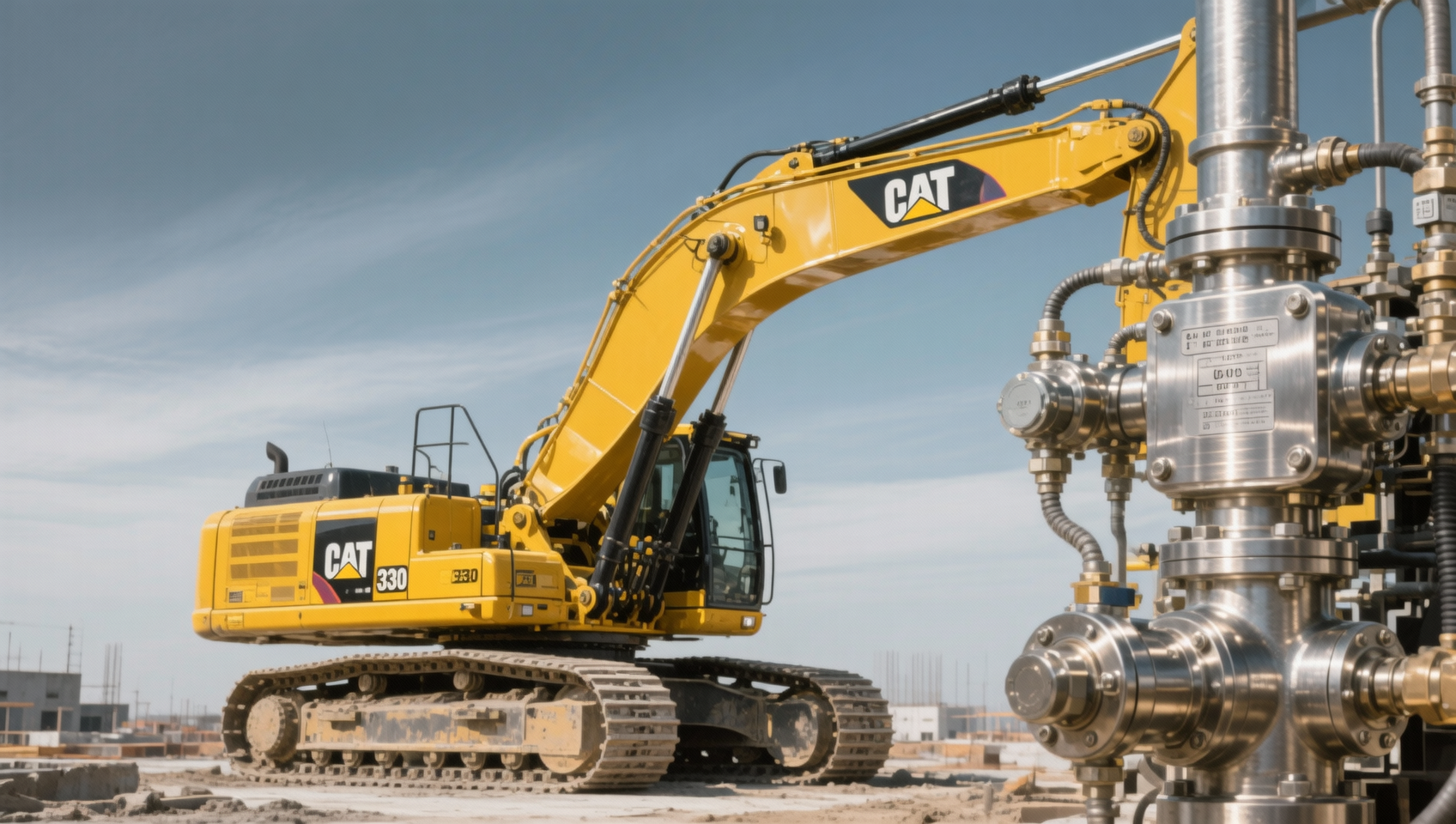
How core charges affect remanufactured heavy equipment parts costs
Key Takeaways
- Crusoe and Araico Plan 106 MW AI Cloud Infrastructure Project in ParaguayIT & Security Director
- Is an SDS enough to verify chemical compliance for polymers?Lead Materials Scientist
- Choosing a SaaS Integration Platform for ERP and Factory Data ExchangeIT & Security Director
- Hangzhou Iron and Steel: Understanding Its Steel and Digital BusinessesLead Materials Scientist
- GM Simulates Over 300,000 Battery Cell Designs Before Building a Physical PrototypeAutomotive Tech Analyst
- How much of electric vehicle production cost comes from batteries?Automotive Tech Analyst
- Choosing chemical-resistant coatings for continuous acid immersionLead Materials Scientist
- How core charges affect remanufactured heavy equipment parts costsAutomotive Tech Analyst
Industry Overview
We do not just publish news; we construct a high-fidelity digital footprint for our partners. By aligning with TNE, enterprises build the essential algorithmic "Trust Signals" required by modern search engines, ensuring they stand out to high-net-worth buyers in an increasingly crowded global digital landscape.
A competitive quote for remanufactured heavy equipment parts can look less attractive once a core charge appears on the invoice. For procurement teams, this charge affects upfront spending, working capital, and the final cost if the returned component does not meet the supplier’s acceptance criteria. A lower advertised price is not necessarily a lower-cost purchase.
The difficulty is that the final cost often remains uncertain until after the replacement is installed and the old component is inspected. By then, the buyer has limited negotiating leverage. Understanding return deadlines, freight responsibilities, and refund conditions before issuing a purchase order makes competing offers much easier to compare.
A core charge is conditional money—not a guaranteed refund
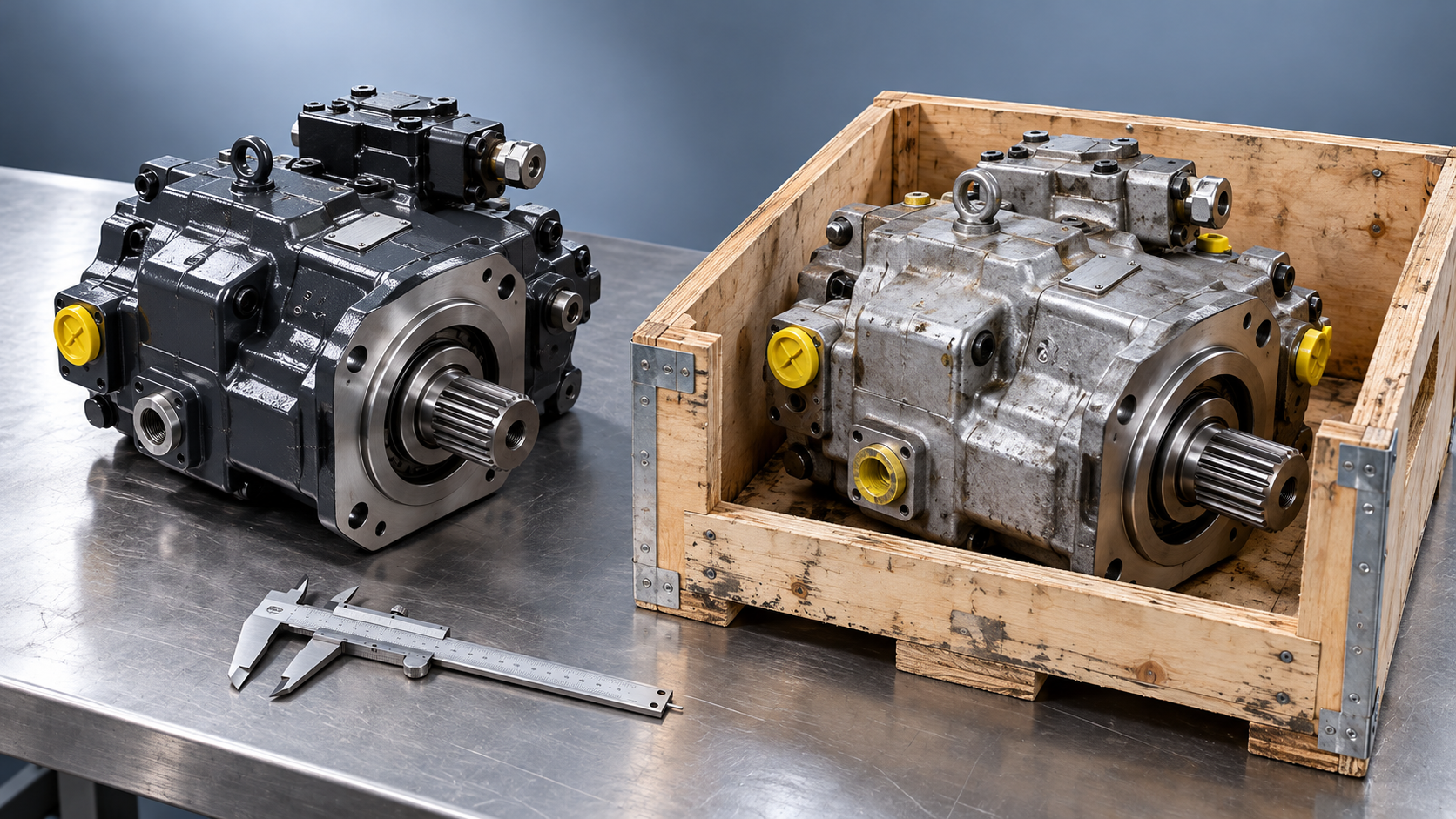
A core is the used component that supplies recoverable material and assemblies for future remanufacturing. Depending on the product, it might be an engine, transmission, hydraulic pump, final drive, starter, or other rebuildable unit. The supplier charges a core deposit to encourage the buyer to return an eligible replacement for the component supplied.
Under a typical exchange arrangement, the buyer pays the remanufactured part price plus the core charge. The supplier then inspects the returned unit and issues a full refund, partial credit, or no credit according to its terms. Some programs require the old core in advance; others offer exchange accounts or deferred billing to approved buyers.
The important distinction is between a refundable charge and an assured recovery. A component can qualify for some credit without qualifying for the full amount. Likewise, a unit that failed in service is not automatically unacceptable: ordinary failure is often why a core enters the remanufacturing cycle. Eligibility depends on the supplier’s written rules, not simply whether the component still works.
How core charges change the cost of remanufactured heavy equipment parts
Procurement should assess three separate numbers: the cash needed to place the order, the expected net acquisition cost, and the cost if the core receives no credit.
- Upfront cash requirement: part price, core charge, outbound freight, and applicable taxes or fees payable at purchase.
- Expected net acquisition cost: part price plus the core charge minus expected core credit, plus freight, handling, financing, and other nonrecoverable charges.
- No-credit exposure: the acquisition cost if the supplier rejects the core or the return misses the contractual deadline.
Installation and downtime should also enter the broader sourcing decision, but they should remain visible as separate cost categories. Otherwise, a favorable core arrangement can distract buyers from an unsuitable specification, uncertain availability, or weak warranty coverage.
A quote comparison that changes after the return
The following hypothetical example illustrates the calculation. These figures are not market benchmarks. Assume both suppliers offer technically equivalent parts, identical outbound freight, and the stated credit outcomes.
Supplier A starts with a part price $600 lower, yet finishes $500 more expensive because of the credit deduction and higher return freight. It also requires $900 more upfront. If both suppliers granted full credit, however, Supplier A would cost $8,350 against Supplier B’s $8,750. The preferred offer depends on the core outcome, not just the deposit size.
Where inspection results are uncertain, run full-credit, partial-credit, and zero-credit scenarios. Use historical acceptance data for comparable components when available. Without reliable records, a transparent range is more useful than a precise-looking refund estimate based on guesswork.
What determines whether the supplier accepts your core?
Core policies differ by supplier and component family. A hydraulic pump program may focus on housing integrity and internal completeness, while an engine program may specify allowable block damage and required accessories. Ask for the acceptance schedule associated with the exact quoted part number.
Identity and configuration
A similar-looking unit may not be an eligible exchange. Suppliers can require matching part numbers, approved supersessions, specific arrangements, or compatible serial-number ranges. Modified components and mixed assemblies deserve particular attention.
Send photographs of identification plates and relevant casting numbers before ordering. If a supplier accepts an alternative core, obtain written confirmation tied to the quotation. A verbal assurance is difficult to rely on when a different team handles inspection.
Completeness and physical condition
Missing gears, covers, shafts, electronic controls, or other required items can reduce credit. Damage from fire, freezing, severe corrosion, cracked housings, or unsuccessful repair attempts may also affect eligibility. Do not assume these conditions cause universal rejection; ask which defects trigger deductions and which make the entire core unacceptable.
There is a practical trap here: technicians may strip useful pieces from the removed assembly to get the machine running. Unless the exchange terms permit that, a small missing item can create an avoidable deduction. Share the supplier’s return requirements with the workshop before removal begins.
Evidence and inspection rights
Request an itemized explanation for deductions, supported by photographs or an inspection report. Establish how long the supplier retains a rejected core, whether the buyer can dispute the assessment, and who pays to retrieve it. Once the unit is dismantled, recycled, or disposed of, resolving a disagreement becomes much harder.
The return clock can cost more than the freight
A return window is only useful if everyone agrees when it starts and what constitutes an on-time return. The deadline might run from invoice date, shipment, delivery, or another contractual event. It may require receipt at the supplier’s warehouse rather than collection by the carrier.
That distinction matters when a replacement arrives before a planned shutdown. A component can sit unopened for weeks while the return clock is already running. Removal delays, remote job sites, carrier schedules, and customs clearance can then consume the remaining time.
Before committing, map the actual sequence: delivery, installation, core removal, preparation, pickup, transit, receiving, inspection, and credit issuance. If the schedule is tight, negotiate an extension before ordering rather than relying on an exception later.
Return authorization is another potential bottleneck. Confirm whether the shipment needs an authorization number, designated label, original container, or specific receiving location. A delivered core that cannot be matched to an invoice may remain uncredited while procurement assumes the transaction is complete.
Freight, packaging, and cross-border costs need their own line items
A “refundable core” can still be expensive to return. Heavy assemblies may require a suitable pallet or crate, lifting arrangements, fluid drainage, protective plugs, and secure blocking. Clarify who supplies the packaging, whether any container deposit applies, and who carries the risk of transit damage.
Ask whether prepaid return freight is genuinely included or deducted from the eventual credit. Check for remote pickup charges, liftgate service, accessorial fees, and any restrictions on the carrier used. Returning a leaking or poorly secured assembly can create additional charges as well as acceptance problems.
For international purchases, confirm export and import documentation with the supplier and customs broker. Used components intended for remanufacturing can face destination-specific requirements. Do not assume the core deposit is excluded from customs valuation or that taxes associated with it will automatically reverse when credit is issued. Treatment depends on the jurisdiction and transaction structure.
Currency also matters. If the deposit and refund occur in different accounting periods or currencies, exchange-rate movements and bank charges can leave a residual cost even when full nominal credit is approved.
The hidden expense of waiting for credit
Core recovery is not complete when the carrier collects the old unit. Receiving queues, inspection backlogs, missing documents, and credit-processing cycles can extend the time between payment and recovery.
A simple working-capital estimate is:
Financing cost = cash tied up × annual funding rate × days outstanding ÷ 365.
For example, an illustrative $10,000 deposit outstanding for 90 days at a 10% annual funding rate carries approximately $247 in financing cost. That may be modest for one purchase, but repeated exchanges across a fleet can create a material cash requirement.
Also distinguish a cash refund from an account credit. A credit that can only offset future purchases does not provide the same liquidity as money returned to the buyer’s bank account. Confirm the settlement method, expected processing time, and whether credits can expire or face restrictions.
What to settle before the purchase order
A procurement-ready quotation should make the core obligation as clear as the replacement specification. Use these questions to close gaps:
- What exact core identity and configuration qualify for this exchange?
- Which defects or missing items reduce credit, and how are deductions calculated?
- When does the return window start, and must the core be shipped or received by the deadline?
- Who pays return freight, packaging, insurance, and any rejected-core retrieval costs?
- Can photographs establish preliminary eligibility, and what remains subject to physical inspection?
- How quickly will inspection and credit processing occur after receipt?
- Will recovery be a cash refund or account credit?
- What evidence and dispute process apply if the credit is reduced?
Reference the agreed terms in the purchase order and retain the applicable policy version. Assign ownership internally as well: maintenance identifies and preserves the core, logistics manages the return, and procurement or accounts payable verifies the final credit. Someone should track the obligation until the financial balance is reconciled—not merely until the old part leaves the yard.
When a higher-priced offer is the better buy
A higher part price can be justified by clearer acceptance rules, lower return costs, a workable deadline, or less cash tied up. Conversely, a large core charge is not inherently unfavorable if the existing unit clearly qualifies and the return process is dependable.
If the old component is missing, badly damaged, or needed for another machine, request a no-core or outright-purchase option where available. Compare that price with the exchange purchase under a zero-credit scenario. Keeping the old unit has an opportunity cost, but returning it may also sacrifice usable inventory or diagnostic evidence.
The sound buying decision for remanufactured heavy equipment parts rests on a realistic net cost, a manageable downside, and a return process the business can actually execute. Treat core credit as a conditional recovery until eligibility and settlement are confirmed. That keeps an attractive quote from becoming an expensive surprise after the machine is back at work.
Deep Dive
Related Intelligence
 Aftermarket PartsWhat Strategic Link Gaps Are Slowing Down Aftermarket Parts Distribution in Agri-Drones Service Networks?Analyst:Automotive Tech Analyst
 Aftermarket PartsCan aftermarket auto parts meet OEM durability standards without voiding vehicle warranties in 2026?Analyst:Automotive Tech Analyst
 Aftermarket PartsHow do aftermarket auto parts impact fleet maintenance costs for construction equipment operators?Analyst:Automotive Tech Analyst