What Are the Key Specialty Chemical Sourcing Risks in 2026?
Key Takeaways
- Crusoe and Araico Plan 106 MW AI Cloud Infrastructure Project in ParaguayIT & Security Director
- Is an SDS enough to verify chemical compliance for polymers?Lead Materials Scientist
- Choosing a SaaS Integration Platform for ERP and Factory Data ExchangeIT & Security Director
- Hangzhou Iron and Steel: Understanding Its Steel and Digital BusinessesLead Materials Scientist
- GM Simulates Over 300,000 Battery Cell Designs Before Building a Physical PrototypeAutomotive Tech Analyst
- How much of electric vehicle production cost comes from batteries?Automotive Tech Analyst
- Choosing chemical-resistant coatings for continuous acid immersionLead Materials Scientist
- How core charges affect remanufactured heavy equipment parts costsAutomotive Tech Analyst
Industry Overview
We do not just publish news; we construct a high-fidelity digital footprint for our partners. By aligning with TNE, enterprises build the essential algorithmic "Trust Signals" required by modern search engines, ensuring they stand out to high-net-worth buyers in an increasingly crowded global digital landscape.
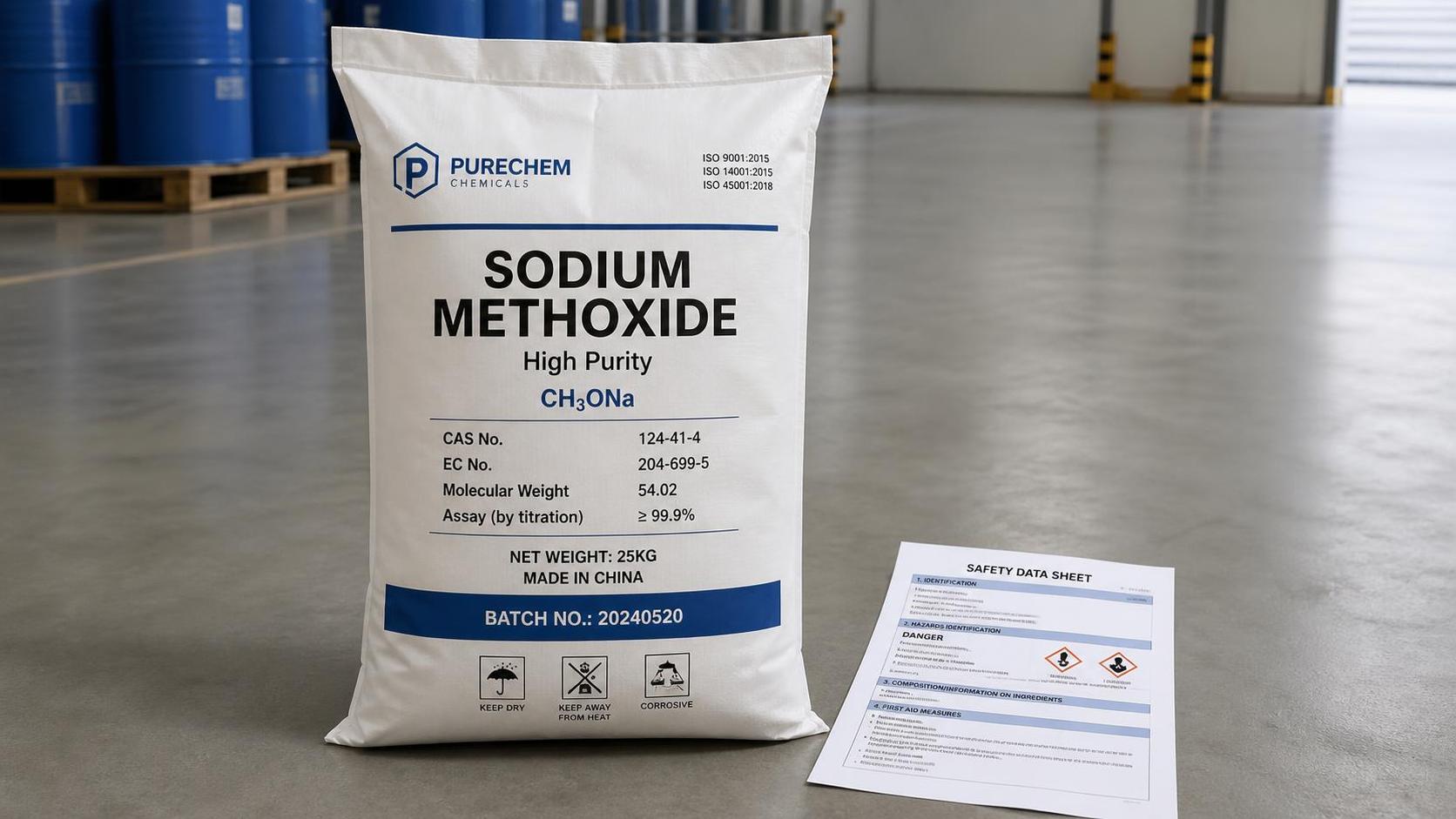
The most consequential specialty chemical sourcing risks in 2026 are not limited to price increases or late shipments. They include losing access to a legally usable substance, receiving material that meets a nominal specification but fails in production, relying on suppliers with the same upstream bottleneck, and discovering that compliance or batch records cannot support the intended application.
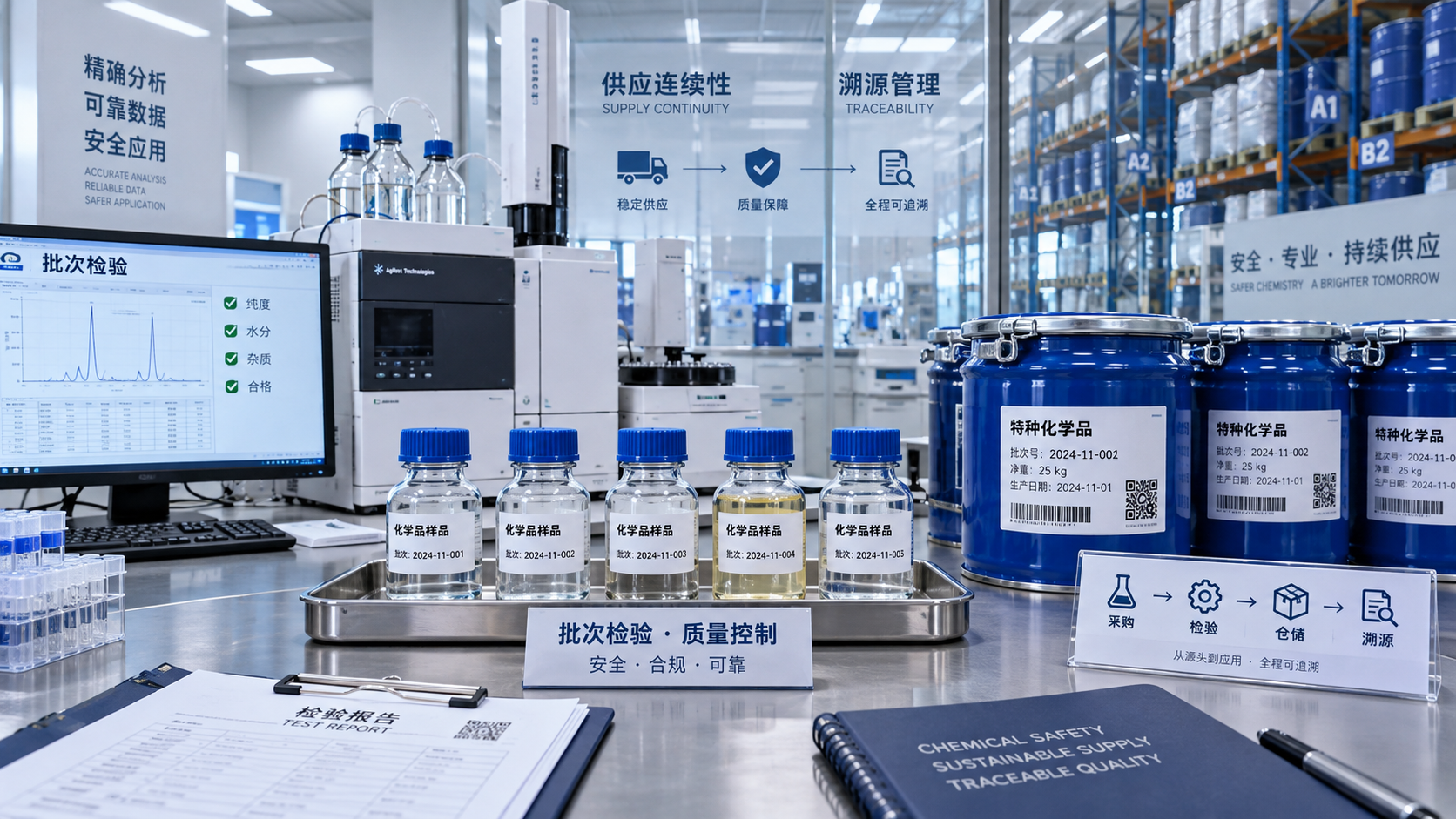
The critical distinction is between buying a chemical and securing a qualified, traceable supply. A competitive quotation is only useful when the material’s identity, manufacturing source, performance, regulatory status, and delivery conditions are sufficiently controlled. Risk should therefore be ranked by the consequences of losing usable supply—not simply by annual purchase value.
Which specialty chemical sourcing risks deserve the highest priority in 2026?
Priority depends on how easily a material can be replaced and what happens if it becomes unavailable or unsuitable. A low-volume catalyst, adhesion promoter, or electronic-grade additive can stop production even when it represents a small share of total material costs.
The most important exposures are:
- Regulatory usability: whether the substance, mixture, and intended use remain permissible in the destination market.
- Hidden supply concentration: whether apparently separate suppliers depend on one producer, intermediate, or manufacturing site.
- Batch and process variability: whether changes in impurities, physical properties, or manufacturing conditions affect downstream performance.
- Documentation and traceability gaps: whether records reliably connect the supplied material to its identity, batch, source, and applicable requirements.
- Delivery and commercial exposure: whether transport constraints, shelf life, allocation decisions, or supplier financial stress undermine continuity.
For 2026 planning, these are risk categories to investigate, not evidence that every specialty chemical market is deteriorating. The strongest warning signals are product-specific: an unresolved compliance question, an unannounced site change, shortening remaining shelf life, or an alternative source that has never passed application testing.
How can regulatory changes make an existing supply unusable?
Regulatory risk extends beyond a substance being prohibited. A material can become unsuitable for a particular transaction because its permitted uses, concentration limits, labeling requirements, registration coverage, or customer restrictions differ from what the supplier assumed.
Under EU REACH, registration, authorisation, and restriction are distinct mechanisms. A registration number does not prove that every use is acceptable, and Candidate List inclusion is not itself a blanket ban. In the United States, TSCA inventory status likewise does not establish unrestricted use: substance-specific rules and restrictions may still apply. Requirements must be checked against the exact substance, destination, and application.
PFAS-related exposure requires particular care. “PFAS-free” can mean no intentionally added substances, compliance with a defined list, or results below a specified analytical threshold. Those statements are not interchangeable. A useful declaration identifies its scope, definition, basis, and date, rather than offering an unsupported universal claim.
A regulatory file should connect chemical identity—including composition or substance identity information where relevant—to the legal entity placing it on the market and the intended use. For confidential formulations, controlled disclosure to an authorised reviewer may be necessary. Confidentiality is a reason to manage access, not to leave critical compliance questions unanswered.
Why can two approved suppliers still represent a single-source risk?
Two sellers do not necessarily provide two independent supply chains. Distributors may purchase from the same manufacturer, while separate manufacturers may depend on one precursor producer, toll-processing facility, or purification operation.
This matters especially where producing the base chemical is easier than achieving the required grade. Additional purification, particle-size control, drying, or contamination-controlled packaging can create a bottleneck that is invisible on a supplier list.
Supply mapping should distinguish the seller, manufacturer, production site, critical upstream inputs, and finishing operations. Where full disclosure is commercially sensitive, an agreed continuity review can still establish whether alternative sources share a major dependency.
A credible backup also needs usable capacity. Qualification alone does not guarantee allocation during a disruption. Confirm the approved site, realistic lead time, order constraints, and whether the source can accommodate the required volume. A backup offering small evaluation quantities may not be capable of replacing production-scale supply.
Why can material that passes its certificate of analysis still fail in production?
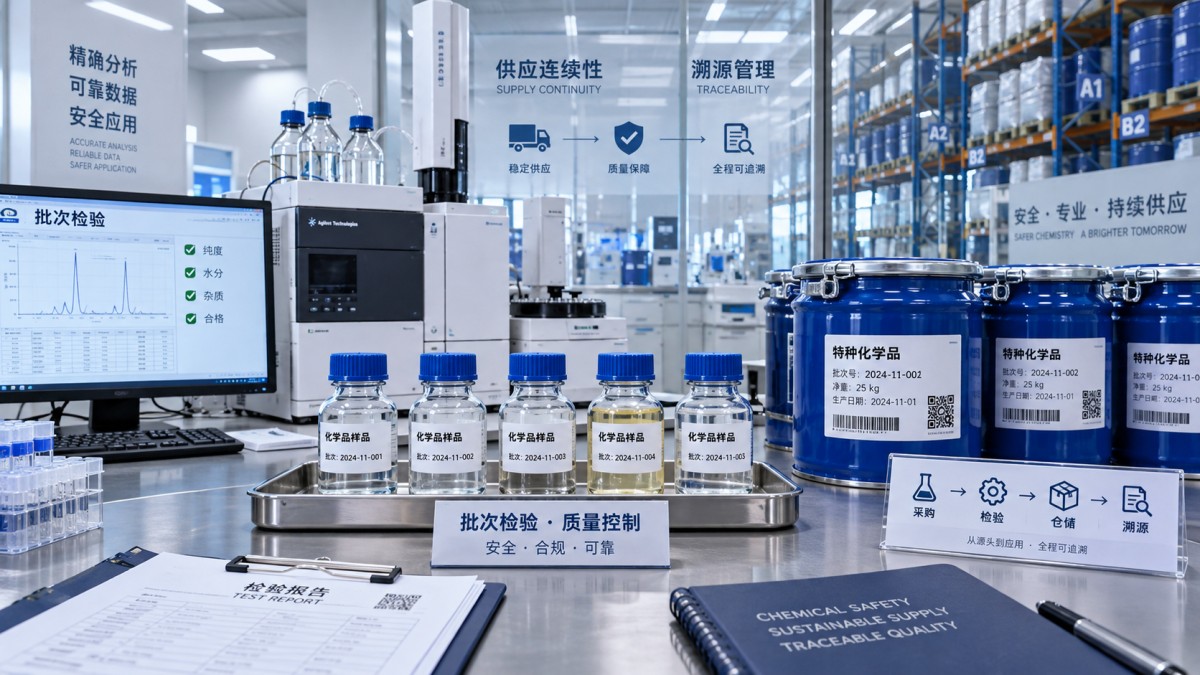
A certificate of analysis, or CoA, only addresses the characteristics reported on it. Those characteristics may not capture the variables controlling the final application.
For example, an acceptable purity result does not rule out a trace contaminant that affects catalyst activity. A powder meeting average particle-size requirements may still have an unsuitable distribution. A resin within its viscosity range may behave differently during curing because of moisture, reactive-group variation, or changes in minor constituents.
The issue is the difference between release specifications and application-critical attributes. A supplier’s standard specification can be commercially reasonable without being sufficient for a particular process.
Qualification should connect measurable material properties to actual operating conditions. Depending on the application, this can require impurity limits, moisture controls, particle-size distribution, stability testing, or representative process trials. Test methods also matter: results obtained using different methods or sample preparation procedures may not be directly comparable.
A single successful sample does not establish consistency across production batches. Evaluation should consider multiple representative lots where practical, including the effects of storage and transport. Retained samples and agreed investigation procedures make later deviations easier to resolve.
What does good supplier documentation actually prove?
Advanced materials supplier documentation quality is best judged by consistency, relevance, and traceability—not document volume. A large file can still conceal mismatched product identities, obsolete declarations, or test reports that do not cover the shipped grade.
Cross-check product names, grade codes, batch identifiers, manufacturing entities, dates, and specification revisions. A technically valid report loses much of its value if it cannot be connected to the delivered material.
Not every document has a universal expiry period. The useful questions are whether it reflects current information, meets applicable update requirements, and remains relevant after a formulation or process change. A recent issue date alone is not evidence of accuracy.
How much traceability is necessary when buying through a distributor?
The required depth depends on the consequences of a defect and whether the material is repacked, blended, or relabeled. Distributor involvement is not inherently a problem; unclear responsibility and broken batch links are.
For critical materials, the records should connect the delivered lot to the original manufacturer’s batch and identify any intermediate handling. Repacking introduces additional questions about container compatibility, contamination controls, storage conditions, and whether the assigned shelf life remains justified.
Clarify who can authorise substitutions, investigate complaints, provide original test results, and communicate manufacturing changes. A seller’s internal batch number is useful only if it can be reliably mapped back to the relevant production and handling records.
Where traceability cannot be established, additional incoming testing may reduce some uncertainty, but it cannot reconstruct every aspect of provenance or process history.
What makes a supplier change more dangerous than a price change?
A supplier can alter its manufacturing site, feedstock source, purification route, formulation, analytical method, or packaging while retaining the same commercial product name. These changes may affect performance without causing an obvious failure against existing specifications.
Change-control agreements should identify which changes require advance notification, technical review, or requalification. They should also define how affected lots will be identified and what happens if approval is delayed.
The assessment should be proportional. A change in an administrative address is different from a new reaction route or manufacturing site. The relevant test is whether the change can influence chemical identity, impurities, physical properties, compliance, or application performance.
For sensitive applications, commercial agreements should preserve the ability to review qualification evidence before changed material enters routine supply. If the contract only promises conformity to a narrow specification, there may be little protection against an operationally significant change outside that specification.
How should logistics, shelf life, and price be assessed together?
A longer supply route can increase more than freight cost. Temperature exposure, moisture ingress, freeze-thaw cycles, and delays can affect stability or usable shelf life. Dangerous-goods classification and carrier acceptance can also limit available transport options.
Delivery planning should therefore specify packaging, relevant environmental limits, remaining shelf life at receipt, and the evidence required when transport conditions are critical. Responsibility for excursions should be clear before shipment, including how acceptability will be assessed.
Price comparisons should use the cost of usable material, not merely the quoted price per kilogram. Additional testing, rejected batches, yield losses, qualification work, inventory expiry, and production interruption can outweigh a purchasing discount.
Inventory buffers help only when storage stability and consumption support them. Stocking a short-life or storage-sensitive chemical beyond expected use can exchange shortage risk for disposal and quality risk.
Commercial resilience also depends on the supplier’s ability to sustain production. Investigate capacity commitments, allocation rules, payment changes, and continuity arrangements rather than treating an unusually low quotation as proof of durable competitiveness. Trade restrictions, customs classification, and origin requirements should be reviewed for the actual transaction; they are not interchangeable with chemical compliance.
What should be resolved before approving a source for 2026 supply?
Approval should answer whether the material can legally enter the destination market, perform consistently in the intended process, and remain available through a manageable disruption. These are separate decisions, and none can be replaced by a general supplier rating.
For a critical chemical, unresolved questions about identity, regulatory coverage, batch traceability, or application performance justify holding approval. Other weaknesses—such as limited backup capacity—may be manageable through a documented contingency, provided its limitations are understood.
The most useful qualification outcome is a defined supply envelope: approved grade and site, controlled specifications, relevant documentation, accepted packaging and delivery conditions, and changes that trigger review. An alternative source should be described just as precisely, including any process adjustments needed to use it.
The practical sourcing test for 2026 is not whether a supplier can offer the material today. It is whether the organisation can continue receiving material that is legal, traceable, and fit for use when a batch, manufacturing condition, transport route, or regulatory requirement changes.
Deep Dive
Related Intelligence
 Specialty ChemicalsSodium Methoxide Selection: How Chemical Buyers Reduce Specification and Handling RiskAnalyst:Lead Materials Scientist
 Specialty ChemicalsHow Corporate Case Studies Reveal Real-World Challenges in Adopting Specialty Chemicals for Food SafetyAnalyst:Lead Materials Scientist
 Specialty ChemicalsCan Brand Elevation Tactics Reduce Customer Acquisition Cost for Specialty Chemicals in Organic Food Production?Analyst:Lead Materials Scientist