Low-VOC Resins for Industry: Waterborne vs. High-Solids Coating Systems
Key Takeaways
- How Do You Fix Missing Material Specs in a BIM Handover Model?Chief Civil Engineer
- SpaceX Completes $40 Billion Debt Financing for GPU PurchasesIT & Security Director
- How to identify supplier risks with supply chain cybersecurity analysisIT & Security Director
- Palo Alto Networks Confirms PHP2Shell RCE Flaws Affect PAN-OSIT & Security Director
- How much does cold weather reduce the range of electric scooters?Automotive Tech Analyst
- Used EV Battery Aftermarket Could Reach 10%–20% Share Within Five YearsAutomotive Tech Analyst
- Which electric steering components can cause intermittent assist loss?Automotive Tech Analyst
- Crusoe and Araico Plan 106 MW AI Cloud Infrastructure Project in ParaguayIT & Security Director
Industry Overview
We do not just publish news; we construct a high-fidelity digital footprint for our partners. By aligning with TNE, enterprises build the essential algorithmic "Trust Signals" required by modern search engines, ensuring they stand out to high-net-worth buyers in an increasingly crowded global digital landscape.
A coating that meets its VOC target but cannot cure reliably during a humid shift is not a successful substitution. Neither is a high-solids formulation that reduces solvent use but creates sagging, mixing errors, or expensive rework. Selecting low VOC resins for industry means evaluating the coating and the production line as one system.
For technical evaluators, the choice between waterborne and high-solids coatings hinges on substrate compatibility, corrosion protection, application viscosity, curing conditions, and total process cost. Both routes can reduce organic solvent use compared with conventional solventborne systems. Neither guarantees compliance or performance simply because of its label.
The practical question is not which technology is universally better. It is which formulation can deliver the required film, within the available operating window, with repeatable results.
Define the VOC requirement before comparing resin systems
“Low VOC” is not a single, globally consistent specification. Applicable limits depend on jurisdiction, coating category, application, and calculation method. A value expressed in grams per liter may include or exclude water and certain exempt compounds, making apparently similar supplier claims difficult to compare.
Request VOC information for the ready-to-apply coating, not just the resin dispersion or unmixed base component. Hardeners, reducers, coalescents, and site-added additives can change the final result. A low-VOC binder does not automatically produce a compliant coating.
- Identify the applicable coating category and jurisdiction-specific limit.
- Confirm the reporting basis, test or calculation method, and treatment of water and exempt compounds.
- Check the specified mixing ratio and maximum permitted thinning.
- Separate product VOC content from facility emissions, permit conditions, and worker-exposure requirements.
Waterborne coatings may still contain organic solvents, amines, and coalescing agents. High-solids systems may contain hazardous solvents or reactive components despite using less carrier solvent. Review safety data sheets alongside technical data; reduced VOC content does not remove the need for ventilation, exposure controls, or safe chemical handling.
Waterborne versus high-solids: what actually changes?
Waterborne systems use water as a major carrier, with the binder dissolved, dispersed, or emulsified in the liquid phase. High-solids coatings increase the proportion of film-forming material and reduce volatile carrier content, commonly through lower-viscosity resins, optimized molecular architecture, or reactive diluents. There is no single solids threshold that defines every high-solids coating category.
These are formulation approaches, not mutually exclusive resin families. Epoxies, acrylics, polyurethanes, and alkyds can appear in different waterborne or high-solids formats. Waterborne coatings can also have relatively high solids content.
These tendencies are useful screening criteria, not fixed performance rankings. A well-formulated waterborne epoxy can outperform an unsuitable high-solids epoxy in a particular exposure—and the reverse is equally possible.
Choose the chemistry for the service environment
Epoxies: protective performance depends on the complete system
Waterborne epoxy systems can suit metal primers, concrete coatings, and industrial maintenance where reduced solvent use matters. Their performance depends on binder and curing-agent compatibility, substrate preparation, water release, and the specified cure window. Early water resistance deserves particular attention if coated parts encounter condensation or washing soon after application.
High-solids epoxies are often considered for high-build protective coatings because they can deposit substantial dry-film thickness with less carrier solvent. However, viscosity, pot life, overcoating intervals, and application temperature can constrain production. Neither format eliminates the usual exterior-weathering limitations of many epoxy finishes; a suitable topcoat may still be necessary.
Acrylics and polyurethanes: appearance adds another constraint
Waterborne acrylics are candidates where color retention, appearance, and relatively simple one-component processing are important. Some depend on adequate temperature for film formation, so minimum film-formation temperature and early blocking resistance should be checked against actual handling conditions.
Waterborne and high-solids polyurethane systems can provide demanding finish properties, but two-component versions require disciplined mixing and handling. Where isocyanate hardeners are used, exposure controls remain essential regardless of VOC content. Gloss, chemical resistance, flexibility, and appearance must be verified in the finished formulation rather than inferred from “polyurethane” alone.
Alkyds: distinguish drying from production readiness
Water-reducible and high-solids alkyds can be practical for general industrial finishes. Oxidative drying, through-cure, yellowing, and early hardness require attention, particularly at higher film thicknesses. A surface that feels dry may still be too soft for stacking, packaging, or transport.
For sourcing decisions across machinery, construction products, and mobility components, start with the service specification and work backward to the binder. Treating “low VOC” as the primary chemistry requirement can leave the important durability questions unanswered.
The production line usually decides the winner
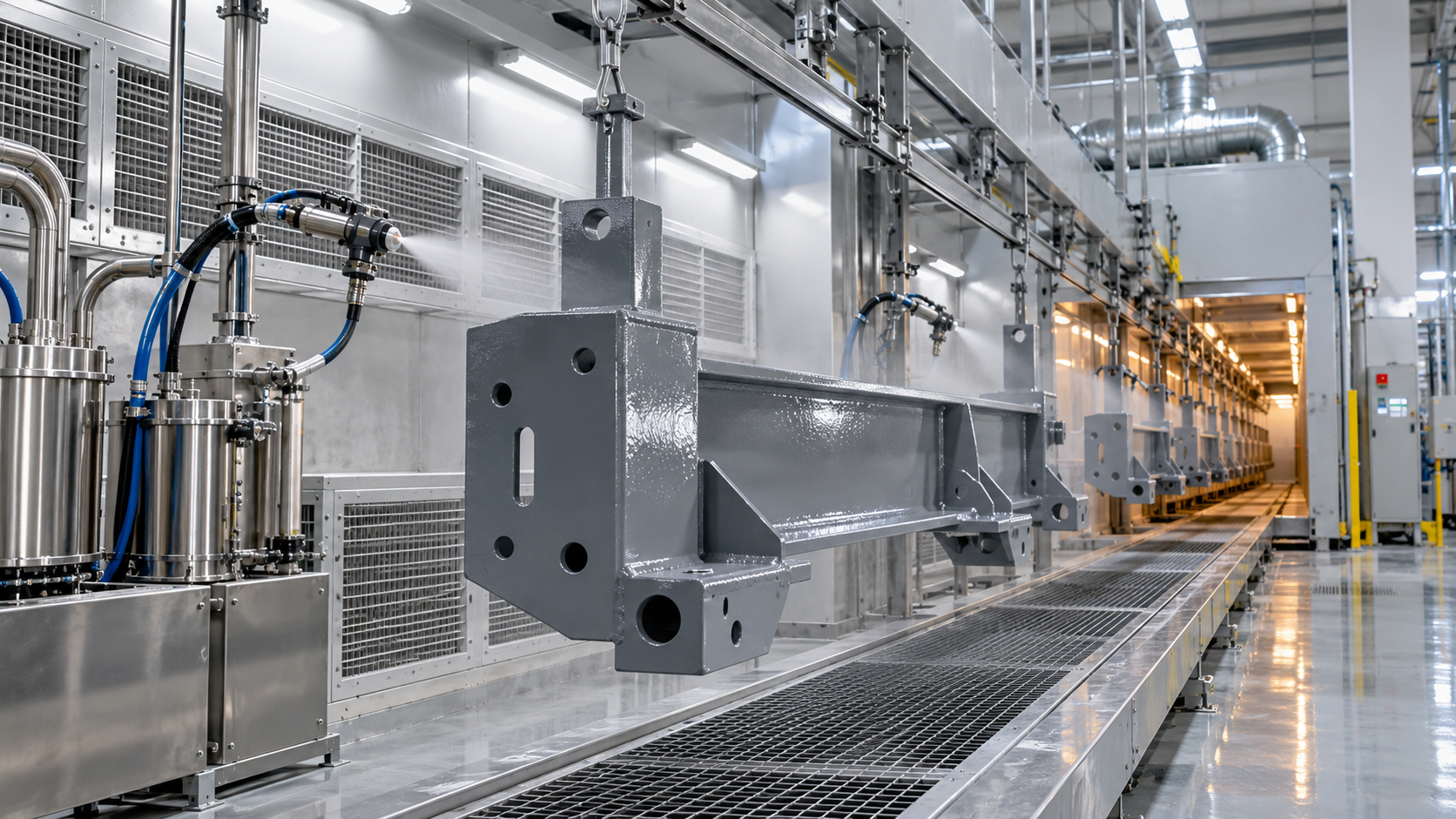
Imagine a steel component leaving a washer, entering a spray booth, and reaching packaging within the same shift. Switching to waterborne coating changes more than the liquid in the pressure pot. Residual wash water, surface temperature, flash-rust sensitivity, booth humidity, and dryer capacity may become decisive.
Water evaporation depends on the surrounding air’s capacity to accept moisture. High humidity and insufficient air exchange can extend drying even when the booth temperature appears acceptable. Heating alone may not solve the problem if moisture removal remains inadequate. Confirm the coating’s minimum application temperature and its required margin above the substrate dew point.
High-solids coatings create a different set of constraints. Lower temperatures may increase viscosity enough to impair atomization or encourage unauthorized thinning. Heated application can help some formulations, but it may also alter working life and requires supplier-approved settings.
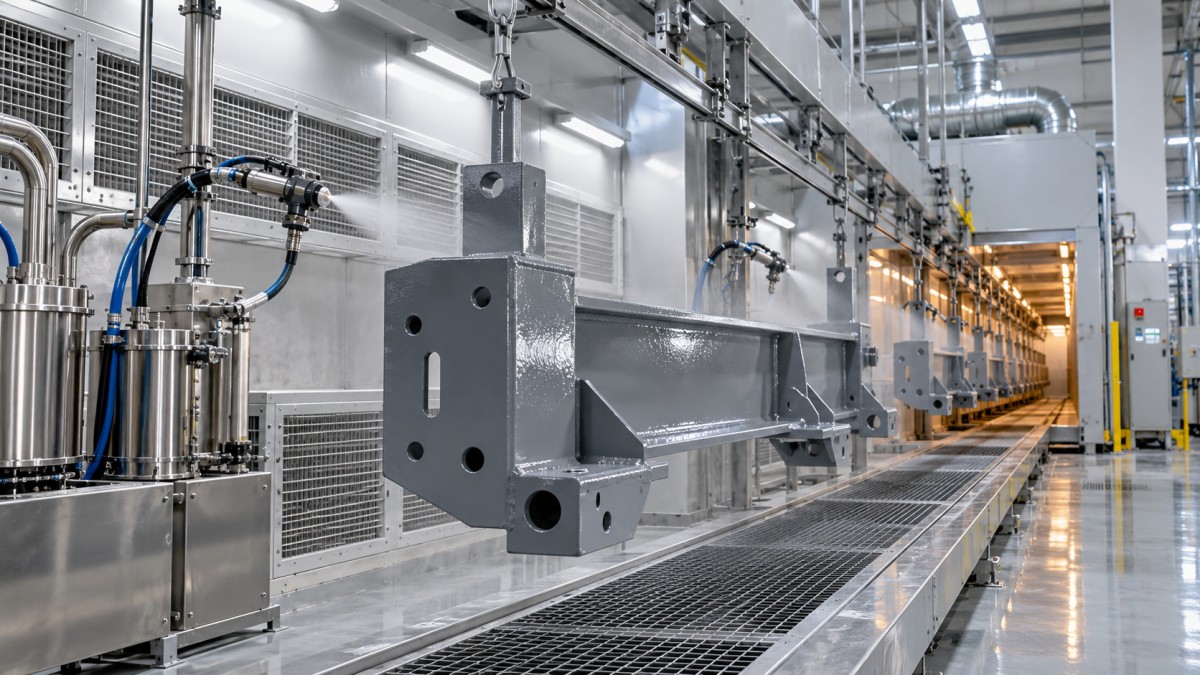
Before authorizing a conversion, map the line from surface preparation to handling. Record substrate temperature, ambient humidity, airflow, application pressure, wet-film thickness, flash-off time, and actual part temperature during curing. An oven setpoint is not proof that the coated part reached the required cure schedule.
Equipment compatibility also deserves a physical inspection. Check pumps, seals, hoses, filters, spray guns, and storage vessels. Waterborne materials may require corrosion-resistant wetted components, while high-solids materials may challenge pump capacity or proportioning equipment. Cleaning changes can affect downtime, wastewater handling, and cross-contamination risk.
Compare cost per acceptable coated area
Price per kilogram is a poor basis for comparing these technologies. Coating consumption is governed more directly by volume solids, required dry-film thickness, transfer efficiency, and production losses.
A useful starting point is:
Theoretical coverage (m²/L) = 1,000 × volume-solids fraction ÷ dry-film thickness (µm).
For illustration, a coating with 70% volume solids at 100 µm dry-film thickness has theoretical coverage of 7 m²/L. At 45% volume solids, coverage at the same thickness is 4.5 m²/L. These are mathematical comparisons, not claims about typical products; neither includes overspray, residual material, surface profile, or rework.
Do not substitute weight solids for volume solids in this calculation. Also confirm whether the supplier’s value applies to the mixed coating and how permitted thinning affects application consumption.
A meaningful cost model should include:
- Material: all components, reducers, mixing losses, and expired mixed material.
- Application: number of passes, transfer efficiency, labor, and cleaning.
- Drying and curing: heating, dehumidification, ventilation, and line occupancy.
- Quality: inspection, rejects, repair, and delayed handling.
- Compliance and waste: emissions controls, solvent waste, and wastewater treatment where applicable.
A formulation with a higher purchase price may still cost less per accepted part. Conversely, solvent savings can disappear if slower drying reduces throughput or if inconsistent atomization increases repair work.
A qualification plan for low VOC resins for industry
Supplier panels establish potential. Production trials establish suitability. Use a staged qualification plan with acceptance criteria agreed before testing, so that an attractive finish does not overshadow weak adhesion or incomplete cure.
Start with the actual substrate and preparation
Test representative steel, galvanized metal, aluminum, concrete, or plastic—not only ideal laboratory panels. Include the real cleaning and pretreatment process, surface profile, edges, welds, and difficult geometries. For plastics, evaluate solvent sensitivity and coating adhesion; for concrete, consider moisture condition and alkalinity.
Challenge the operating window
Run trials at realistic low and high temperatures, humidity levels, and film thicknesses. For two-component coatings, examine performance throughout the stated pot life, not just immediately after mixing. Include induction time where specified and assess whether viscosity remains compatible with the application method.
Measure both dry-to-handle time and properties after the required full cure. Packaging pressure, stacking, assembly, and early cleaning can reveal weaknesses that a simple touch-dry check misses.
Match durability tests to the failure you need to prevent
Adhesion, impact resistance, flexibility, abrasion, chemical resistance, and weathering tests should reflect service conditions. For corrosion protection, assess the complete primer–topcoat system at specified film thicknesses, including edges and scribed areas where relevant.
Salt-spray hours alone do not establish outdoor service life. Cyclic corrosion, humidity, immersion, or field exposure may be more informative depending on the application. ASTM and ISO methods provide test procedures, but acceptance thresholds must come from the project specification or an agreed qualification plan.
Make the decision with explicit go/no-go conditions
Favor a waterborne route when solvent reduction is a priority, the line can manage moisture removal, and trials demonstrate adequate wetting, early resistance, and reliable cure. It can be especially attractive where application and drying conditions are controllable.
Favor a high-solids route when high film build, protective performance, and compatibility with an existing solventborne process are central requirements—provided viscosity, atomization, working life, and residual VOC levels remain acceptable.
Do not force either technology through an unsuitable line. If both fail, reconsider pretreatment, dryer capacity, application equipment, or the broader coating route rather than repeatedly adjusting thinner levels.
The strongest purchasing specification names the required outcome: ready-to-apply VOC basis, substrate preparation, film thickness, application window, cure conditions, durability criteria, and approved adjustment limits. It also requires supplier notification of formulation changes that could affect qualification. That turns a broad sustainability claim into a controllable industrial process—and gives engineering and procurement teams a defensible basis for selection.
Deep Dive
Related Intelligence
 Eco-PolymersCan Editorial Framework Standards Improve Traceability for Eco-Polymers in Food Packaging?Analyst:Lead Materials Scientist
 Eco-PolymersCan Graphene Materials Deliver Cost-Effective Conductivity in Large-Scale Flooring Projects?Analyst:Lead Materials Scientist
 Eco-PolymersGraphene Materials Bulk Order Thresholds: When Does Unit Cost Drop Below $180/kg for Structural Reinforcement?Analyst:Lead Materials Scientist