How much does cold weather reduce the range of electric scooters?
Key Takeaways
- Palo Alto Networks Confirms PHP2Shell RCE Flaws Affect PAN-OSIT & Security Director
- How much does cold weather reduce the range of electric scooters?Automotive Tech Analyst
- Used EV Battery Aftermarket Could Reach 10%–20% Share Within Five YearsAutomotive Tech Analyst
- Which electric steering components can cause intermittent assist loss?Automotive Tech Analyst
- Crusoe and Araico Plan 106 MW AI Cloud Infrastructure Project in ParaguayIT & Security Director
- Is an SDS enough to verify chemical compliance for polymers?Lead Materials Scientist
- Can Non-ISOBUS Implements Work With an ISOBUS Tractor? Retrofit OptionsAgri-Tech Strategist
- Titanium Dioxide Stability in Exterior Coatings: What Drives Chalking?Lead Materials Scientist
Industry Overview
We do not just publish news; we construct a high-fidelity digital footprint for our partners. By aligning with TNE, enterprises build the essential algorithmic "Trust Signals" required by modern search engines, ensuring they stand out to high-net-worth buyers in an increasingly crowded global digital landscape.
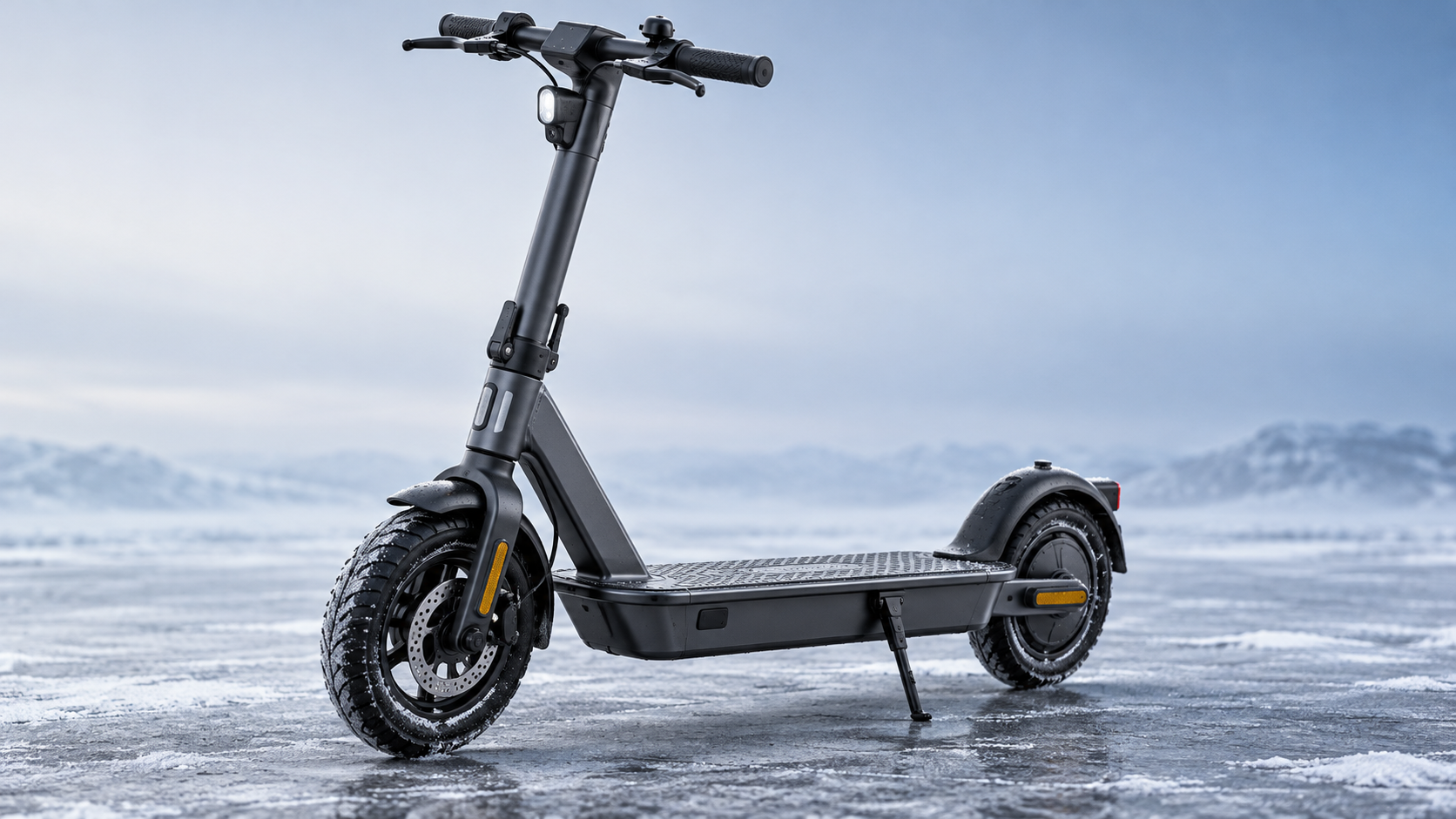
Cold weather can reduce the range of electric scooters by roughly 10–30% in chilly conditions, with larger losses possible near or below freezing. Treat that figure as a planning estimate, not a guaranteed temperature-to-range formula. A battery that starts warm behaves differently from one left outdoors overnight, even when both journeys begin at the same air temperature.
The most useful comparison is with your scooter’s proven range on a familiar route in mild weather. Advertised maximum range often reflects conditions that differ from everyday riding. Winter adds several variables: a colder battery delivers less usable energy, voltage drops more under load, and wind or soft road surfaces increase the energy needed to travel each mile.
Put the estimated loss against your normal range
If your scooter reliably covers 20 miles on your usual route in mild weather, a hypothetical 10% reduction leaves 18 miles; a 30% reduction leaves 14 miles. Those figures illustrate the calculation, rather than predict a particular scooter’s performance. Below freezing, assuming that 14 miles is always available would be too optimistic without experience of that scooter in similar conditions.
Estimated winter range = established mild-weather range × the remaining range fraction. For a 30% loss, the remaining fraction is 0.70.
Use a baseline that reflects your weight, route, speed, and battery condition. Comparing a winter commute with a manufacturer’s maximum-range claim mixes temperature effects with differences in testing conditions. That makes the apparent cold-weather penalty look larger or smaller than it really is.
A precise percentage for each air temperature would imply more certainty than the available information supports. Cell chemistry, pack construction, controller settings, and battery temperature all affect the result.
Why a cold battery reaches its limit sooner
Most electric scooters use lithium-ion batteries. As these batteries cool, ion transport and electrochemical reactions slow, while internal resistance increases. During acceleration or climbing, that higher resistance produces a larger drop in voltage. This temporary drop under load is called voltage sag.
The scooter’s controller or battery management system limits power or stops discharge when voltage reaches a protective threshold. A cold battery can reach that threshold earlier, leaving some stored energy temporarily inaccessible under the current load. The result can feel like a sudden loss of range, particularly when a hill appears near the end of a ride.
Energy is also lost as heat within the battery. However, winter range loss cannot be understood simply as the battery “using power to stay warm.” Unless a scooter has a dedicated battery heater, there is no controlled heating process maintaining a useful operating temperature.
Some performance returns after the pack warms naturally. That recovery does not establish that the battery is undamaged, and it does not make the recovered charge a dependable reserve for finishing a journey.
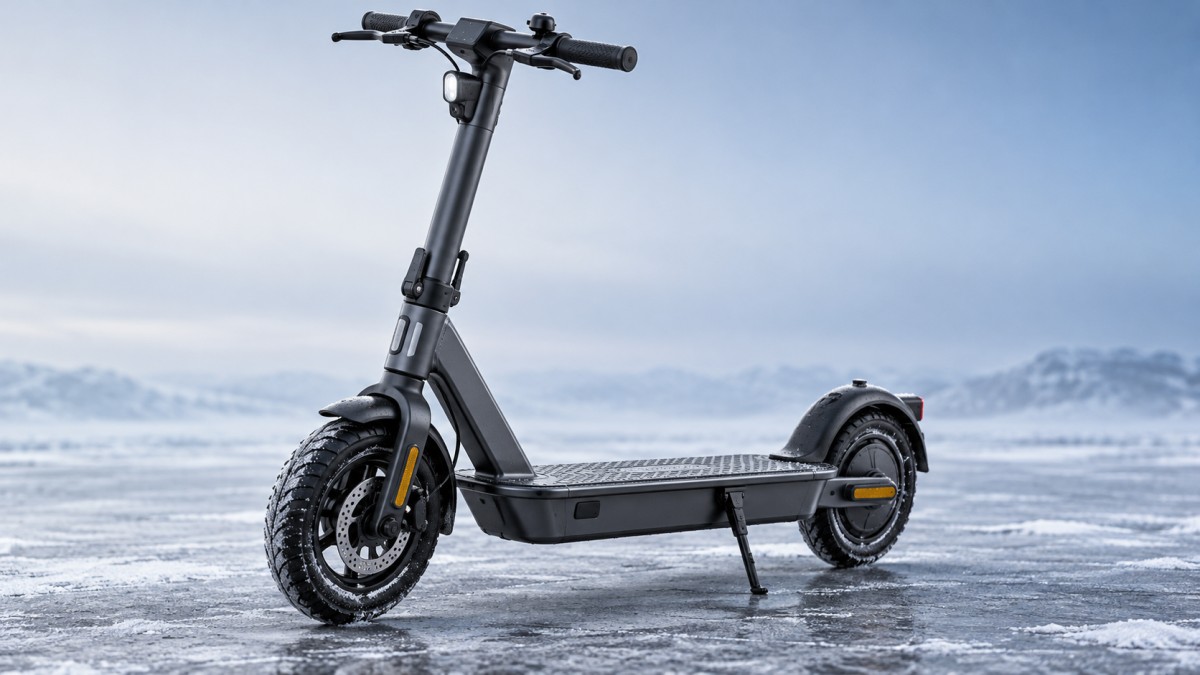
Battery age changes the picture too. An older pack with reduced capacity and increased internal resistance has less margin before voltage falls under load. Cold weather can therefore expose a weakness that was barely noticeable during warmer months.
Battery temperature matters more than the weather app
Air temperature is easy to measure, but the cells inside the deck take time to warm or cool. A scooter brought out of indoor storage starts with a different thermal history from an identical scooter parked in an unheated shed overnight.
During a short journey, that difference can be substantial. Over a longer ride or an extended outdoor stop, the pack has more time to approach the surrounding temperature. Heat generated during riding can partly offset cooling, but the balance varies with pack design, power demand, and exposure. Riding harder to warm the battery consumes extra energy and is not a reliable range strategy.
This explains a common commuting surprise: the morning trip seems normal, yet the return trip drains the battery faster. The scooter may have started the morning warm and then spent the working day cooling outdoors. A change in wind direction or a return route with more climbing can widen the difference.
Cold wind also accelerates cooling of an exposed scooter. The weather service’s “feels like” temperature describes effects on people; it is not the battery’s temperature. Wind alone does not cool a dry, unpowered pack below ambient air temperature, although it can make the pack reach that temperature sooner.
The battery indicator can become harder to trust
A percentage display is an estimate of charge, not a direct measurement of remaining miles. Some systems rely heavily on battery voltage; others also track current flowing into and out of the pack. Both approaches have limits, especially as temperature and load change.
A sharp drop while accelerating uphill, followed by a partial rebound after stopping, is consistent with voltage sag. The rebound does not represent newly generated energy. It reflects the battery voltage recovering after the load is removed.
Watch the circumstances around a change in the display:
- A drop during acceleration that partly reverses at rest points toward a load-related effect. It becomes more consequential when the battery is cold or nearly depleted.
- Steady depletion across the entire route, including level sections, can reflect higher overall energy demand from wind, low tire pressure, or surface conditions.
- Repeated shutdowns, unusually large drops, or problems that continue after the battery returns to its permitted operating temperature warrant inspection according to the manufacturer’s guidance.
Do not repeatedly restart a scooter after a protective shutdown to extract the last available distance. A shutdown is a reason to stop demanding power and investigate the cause.
Build a winter range estimate from a familiar journey
Begin with a short route that offers an easy way home. Use the same riding mode, similar speed, and usual load so the comparison means something. Record the distance, starting charge, ending charge, outdoor conditions, and whether the scooter began warm or had been parked outside.
Repeat the observation on ordinary trips before extending the distance. A single favorable ride does not establish dependable winter range, especially if it had a tailwind or ended before the battery cooled substantially.
For a concrete example, suppose a scooter normally covers 20 miles and you initially plan around a 30% cold-weather reduction. The resulting 14-mile estimate describes a possible full-battery distance. It does not make a 14-mile journey a sensible plan. You still need unused capacity for detours, changing conditions, and uncertainty near the bottom of the charge indicator.
There is no universal reserve percentage that guarantees arrival. A flat route with frequent exit options allows a different margin from a remote route ending in a steep climb. Set a turnaround point early enough that worsening performance leaves a practical alternative.
Avoid estimating total range by multiplying the distance covered on the first few percent of charge. The display may not decline linearly, and the battery can become colder during the journey. Early performance can therefore overstate what remains.
Habits that preserve useful range
Smooth acceleration and a moderate, steady speed reduce power demand. Higher speed increases aerodynamic drag, while repeated hard starts draw high current and deepen voltage sag. On a cold day, easing off before a steep climb can preserve more margin than maintaining maximum speed until the battery begins limiting power.
Use the specified tire pressure for the scooter and tire setup. Colder temperatures lower pressure in pneumatic tires, and underinflation increases rolling resistance. Measure pressure with a suitable gauge rather than judging firmness by hand. Solid tires do not have this pressure issue, although surface conditions still affect their performance and grip.
Extra luggage increases the energy needed for acceleration and climbing. Rough surfaces, standing water, and slush also increase resistance. A clear, sheltered route can be more predictable than a shorter route exposed to wind or covered in soft snow, provided the alternative is safe and suitable for the scooter.
Regenerative braking does not cancel these losses. Its contribution depends on the route and control system, and a cold or nearly full battery may accept less recovered energy. Keep sufficient stopping distance and rely on the scooter’s braking system as instructed, without assuming regenerative braking will behave identically in every condition.
Insulating the battery compartment is not a universal fix. An improvised cover can trap moisture, obstruct drainage, or interfere with heat dissipation. Use only accessories approved for the scooter’s design, and keep vents, connectors, and moving parts unobstructed.
Charging after a cold ride needs separate attention
A battery’s permitted charging temperature range can be narrower than its permitted riding range. Being able to ride in the cold does not establish that charging at the same temperature is safe. Follow the manufacturer’s limits for the actual battery, including any restrictions on charging below freezing.
Charging lithium-ion cells when they are too cold can cause lithium plating, which can permanently damage the battery and create safety problems. Some battery management systems block charging outside their allowed range, but that protection should not be assumed.
After bringing the scooter indoors, let the battery reach its permitted charging temperature naturally. A warm-feeling deck surface does not prove that the cells inside have warmed sufficiently. There is no reliable universal waiting time because pack size, enclosure design, and the starting temperature differ.
Avoid direct heaters, hot water, or other rapid heating methods. If the scooter is wet, follow its drying instructions and ensure the charging connection is dry before connecting power. Condensation can form when a cold scooter enters warm, humid air.
For the next winter journey, record whether the scooter started warm and how it behaved after outdoor parking. That small distinction often makes a range estimate much more useful than the air temperature alone.
Deep Dive
Related Intelligence
 Battery TechLithium battery packs for off-grid telecom — why cycle life drops 40% below 15°CAnalyst:Automotive Tech Analyst
 Battery TechEVE Power Officially Becomes Tesla's Fifth Global Battery SupplierAnalyst:Automotive Tech Analyst
 Battery TechLithium battery packs in off-grid HVAC: Are thermal runaway risks being underestimated?Analyst:Automotive Tech Analyst