How to identify supplier risks with supply chain cybersecurity analysis
Key Takeaways
- How Do You Fix Missing Material Specs in a BIM Handover Model?Chief Civil Engineer
- SpaceX Completes $40 Billion Debt Financing for GPU PurchasesIT & Security Director
- How to identify supplier risks with supply chain cybersecurity analysisIT & Security Director
- Palo Alto Networks Confirms PHP2Shell RCE Flaws Affect PAN-OSIT & Security Director
- How much does cold weather reduce the range of electric scooters?Automotive Tech Analyst
- Used EV Battery Aftermarket Could Reach 10%–20% Share Within Five YearsAutomotive Tech Analyst
- Which electric steering components can cause intermittent assist loss?Automotive Tech Analyst
- Crusoe and Araico Plan 106 MW AI Cloud Infrastructure Project in ParaguayIT & Security Director
Industry Overview
We do not just publish news; we construct a high-fidelity digital footprint for our partners. By aligning with TNE, enterprises build the essential algorithmic "Trust Signals" required by modern search engines, ensuring they stand out to high-net-worth buyers in an increasingly crowded global digital landscape.
How to identify supplier risks with supply chain cybersecurity analysis
A supplier can meet every quality specification and still expose your business to ransomware, data theft, or production disruption. Cybersecurity analysis for supply chains reveals risks that conventional supplier audits may overlook: excessive remote access, insecure software updates, fragile recovery arrangements, and dependencies hidden behind a direct vendor.
The challenge is not collecting more questionnaires. It is deciding which weaknesses could affect your operation, what evidence would confirm them, and whether the remaining risk is acceptable. A useful assessment connects technical findings to purchasing, product integrity, production continuity, and supplier approval decisions.
Start with the failure you cannot afford
Supplier cyber risk extends beyond stolen information. A compromised maintenance provider might offer an entry point into operational technology. An unavailable logistics platform could interrupt dispatch. Unauthorized changes to inspection records could make apparently conforming goods difficult to trust.
Before asking about firewalls or certifications, document what the supplier enables and what would happen if that service became unavailable or unreliable. Ask:
- Which production, quality, financial, or customer processes depend on this supplier?
- What systems, facilities, data, or engineering files can it access?
- How long could the operation continue without its service?
- Could corrupted data or software pass unnoticed into a product or release decision?
- Is an alternative supplier genuinely available, qualified, and ready to operate?
These answers establish inherent risk: exposure before considering safeguards. A low-spend vendor with privileged maintenance access may deserve more scrutiny than a major materials supplier that has no connection to your systems. Contract value alone is a poor way to prioritize cyber reviews.
Map the relationship, not just the supplier name
Create a simple relationship map linking the supplier to your systems, information flows, operational dependencies, and relevant subcontractors. Include service accounts, application programming interfaces, file transfers, support portals, and remote maintenance routes. Procurement records rarely capture all of these connections.
For a connected equipment supplier, trace who can initiate a remote session, how access is approved, and whether that connection reaches only the intended machine. For a cloud quality-management platform, examine where inspection records reside, who administers the environment, and how records can be exported during an outage or contract exit.
Extend the map where a subcontractor could materially affect delivery. Several apparently independent vendors may rely on the same hosting provider, identity service, or specialist software platform. That creates concentration risk even when each direct supplier looks acceptable individually.
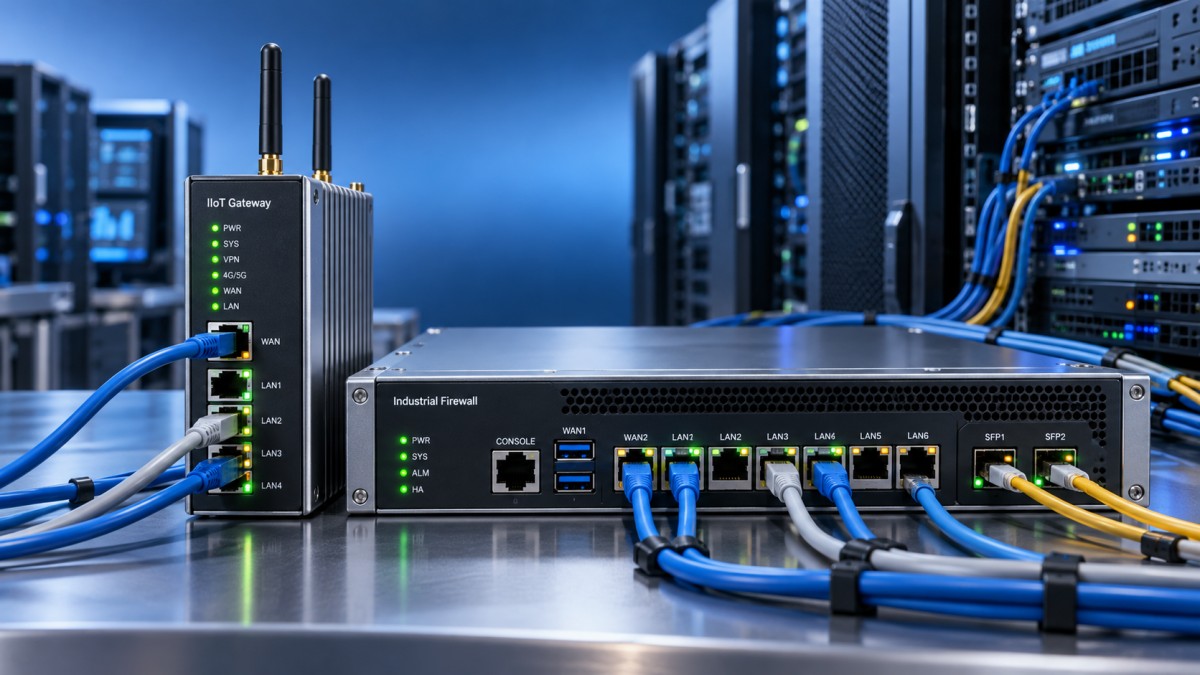
The map does not need to capture every downstream business. It should expose credible paths from a supplier incident to operational harm. Where a critical dependency remains unknown, record the uncertainty rather than silently treating it as low risk.
Ask for evidence that matches the exposure
A questionnaire is useful for screening, but self-reported answers are not proof. Higher-risk relationships need evidence showing that controls cover the actual service, location, and access arrangement under review. Request proportionate documentation, protect confidential material, and allow redacted records or controlled review where appropriate.
Identity and remote access
For suppliers with system access, look for named accounts, multifactor authentication, least-privilege permissions, access expiry, and session logging. Ask how access is removed when staff leave or contracts end. A policy requiring multifactor authentication means little if support accounts or remote maintenance gateways are excluded.
Evidence might include a redacted access review, relevant authentication settings, and records of account removal. Verify your own controls too: a supplier cannot compensate for an unnecessarily broad connection granted by your organization.
Vulnerability handling and software integrity
Ask how the supplier identifies vulnerabilities, determines which products are affected, and communicates remediation. A generic patching target is less useful than evidence that an actively exploited weakness affecting your service receives urgent attention.
For software and connected products, examine update authenticity, support periods, end-of-life notices, and vulnerability disclosure channels. A software bill of materials can help identify components, but it does not establish that a product is secure. Component findings still require version, configuration, exploitability, and deployment context.
In industrial environments, immediate patching may conflict with validation, safety, or uptime requirements. If remediation must wait, assess compensating controls such as isolation, restricted access, or enhanced monitoring. An indefinite exception without an owner is not a remediation plan.
Recovery and trustworthy records
Ask for the scope and outcome of a recent recovery exercise, not simply confirmation that backups exist. Recovery time objectives should be compatible with your outage tolerance; recovery point objectives should reflect how much data loss your process can absorb. Neither is a guarantee of actual recovery performance.
Quality records need particular attention. If inspection results, recipes, calibration records, or certificates of analysis are altered, restoring service alone is insufficient. Establish how changes are traced, unauthorized modifications are detected, and affected batches or decisions can be identified.
Read assurance reports without overestimating them
An ISO/IEC 27001 certificate can support confidence in an information security management system, but its scope matters. Check the covered entity, services, locations, validity, and issuing body. A certificate for corporate office systems may not cover the manufacturing environment or hosted service you depend on.
A SOC 2 Type II report can provide evidence about specified controls over a defined period. Read the system description, exceptions, subservice organization treatment, and complementary user entity controls. Some protections depend on actions your organization must perform.
NIST SP 800-161 Rev. 1 offers a reference for structuring cybersecurity supply chain risk management. It is guidance, not a supplier certification. Use frameworks to organize questions and evidence, rather than turning compliance terminology into an automatic approval.
External security ratings and public exposure scans also have limits. They can highlight issues worth investigating, but asset attribution may be incomplete, and an internet-facing view cannot demonstrate internal segmentation or recovery capability. Confirm material findings with the supplier. Active testing requires appropriate authorization.
Turn findings into defensible supplier decisions
Avoid collapsing everything into one opaque score. Separate business impact, plausible exposure, demonstrated control effectiveness, and confidence in the evidence. A critical supplier with missing evidence should not receive a comfortable rating simply because no breach is publicly known.
Write findings as specific risk statements. For example: “Persistent supplier administrator access could allow a compromised support account to change production settings; access is not time-limited, and session records have not been demonstrated.” This identifies a pathway, a consequence, and an evidence gap.
Then choose a response appropriate to that pathway:
- Approve: Available evidence supports the controls required for the relationship.
- Approve conditionally: Restrict access or data sharing while defined remediation is completed.
- Escalate: A business owner must explicitly accept material residual risk, with security and quality input.
- Pause onboarding or suspend a connection: An unresolved weakness creates exposure that cannot currently be controlled.
Every condition needs an accountable owner, completion date, closure evidence, and consequence if it remains unresolved. Procurement can embed these requirements in the agreement; security can verify technical controls; quality can determine whether record integrity or product release requires additional checks.
Contract terms should also address incident notification, cooperation, evidence preservation, relevant subcontractor changes, and data return or deletion. Set notification requirements according to operational needs and applicable obligations rather than assuming one deadline suits every relationship.
Keep the assessment alive after approval
Annual reviews alone can miss material changes. Reassess when a supplier introduces remote access, moves hosting environments, changes a critical subcontractor, suffers a relevant incident, or announces the end of product support. Review frequency should reflect criticality and exposure.
An incident history is not automatically disqualifying. Examine what happened, how promptly the supplier communicated, what was contained, and whether corrective actions were verified. Equally, “no known incidents” is not evidence of effective detection.
Sector intelligence can help teams recognize emerging dependencies before they appear in audit checklists. TradeNexus Edge (TNE) connects supply chain analysis with developments across materials, food systems, construction, e-mobility, and enterprise technology. That broader context can inform which supplier changes merit investigation; it does not replace service-specific evidence or technical validation.
A practical starting point is to select suppliers with privileged access, sensitive information, or difficult-to-replace services. Map their connections, request evidence against the most consequential failure scenarios, and assign decisions to named owners. Effective cybersecurity analysis for supply chains should leave you knowing which relationship needs action, what must change, and how you will verify that the risk has actually decreased.
Deep Dive
Related Intelligence
 Cyber SecurityDo High-Net-Worth Buyers Prioritize Cyber Security Certifications When Sourcing Smart HVAC Controllers?Analyst:IT & Security Director
 Cyber SecurityWhat cybersecurity risks arise when integrating POS systems with building management platforms?Analyst:IT & Security Director
 Cyber SecurityHow do cyber security frameworks like NIST CSF apply to smart HVAC control networks in high-rise buildings?Analyst:IT & Security Director