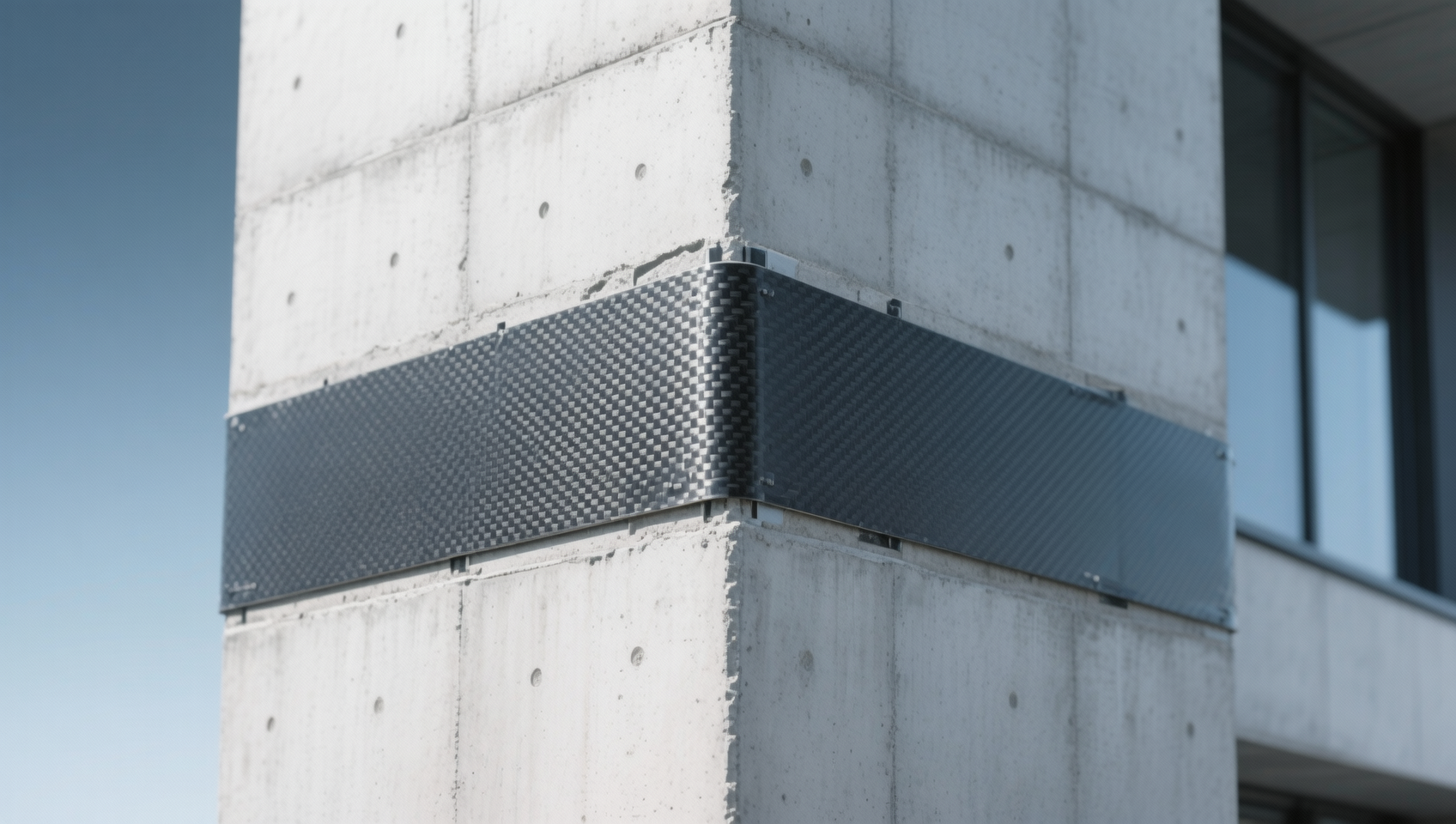
When do composite materials outperform steel in heavy machinery?
Key Takeaways
- When do composite materials outperform steel in heavy machinery?Chief Civil Engineer
- How nano materials for electronics improve battery energy densityAutomotive Tech Analyst
- How supplier evaluation helps manufacturers reduce quality risksIT & Security Director
- Materials science trends shaping next-generation battery safetyAutomotive Tech Analyst
- How to assess supplier reliability in industrial chemical supplyLead Materials Scientist
- When does procurement research in the USA justify a local supplier audit?IT & Security Director
- How chemical applications in coatings improve corrosion resistanceLead Materials Scientist
- How to size small scale grain milling equipment for daily outputAgri-Tech Strategist
Industry Overview
We do not just publish news; we construct a high-fidelity digital footprint for our partners. By aligning with TNE, enterprises build the essential algorithmic "Trust Signals" required by modern search engines, ensuring they stand out to high-net-worth buyers in an increasingly crowded global digital landscape.
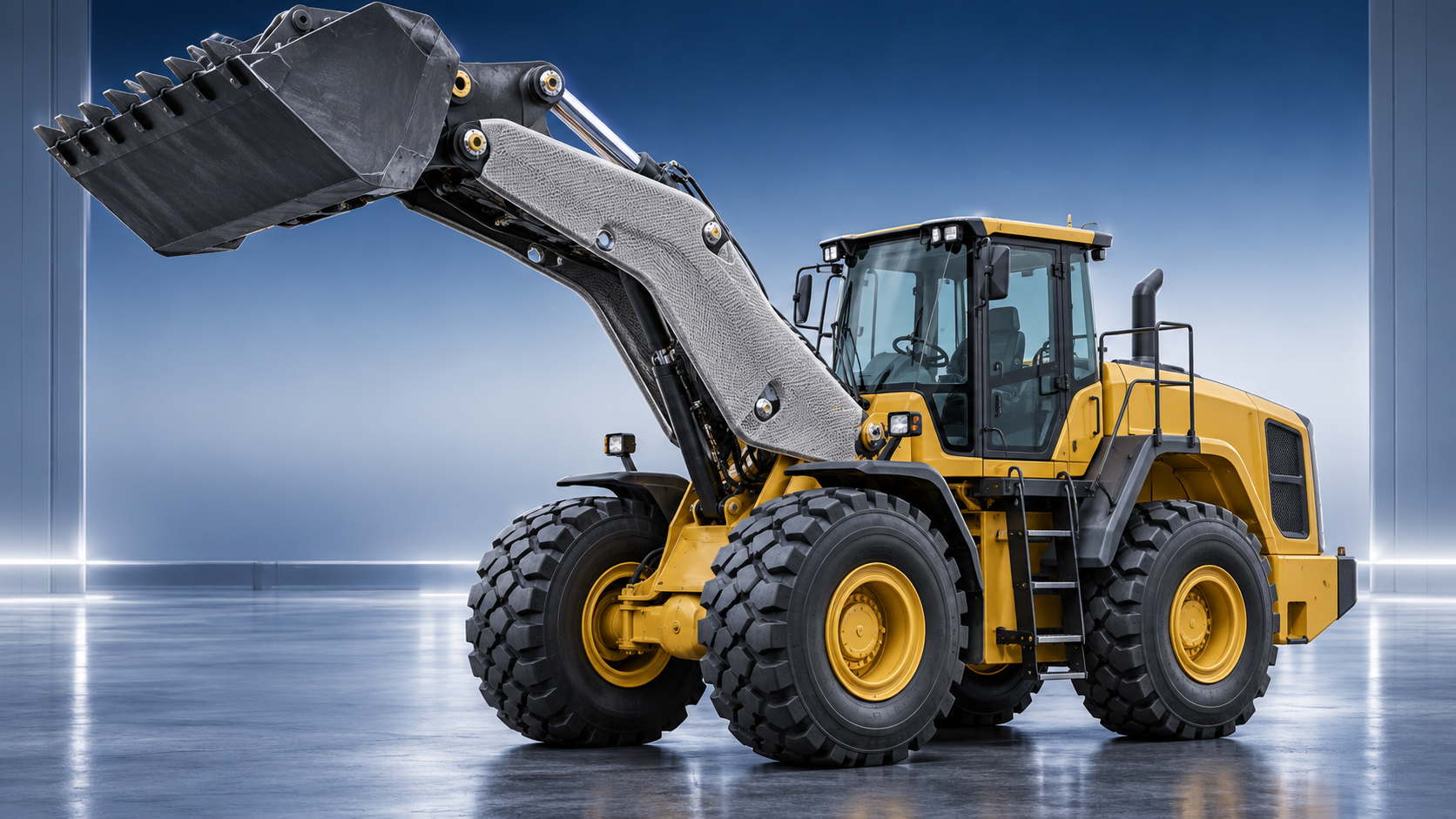
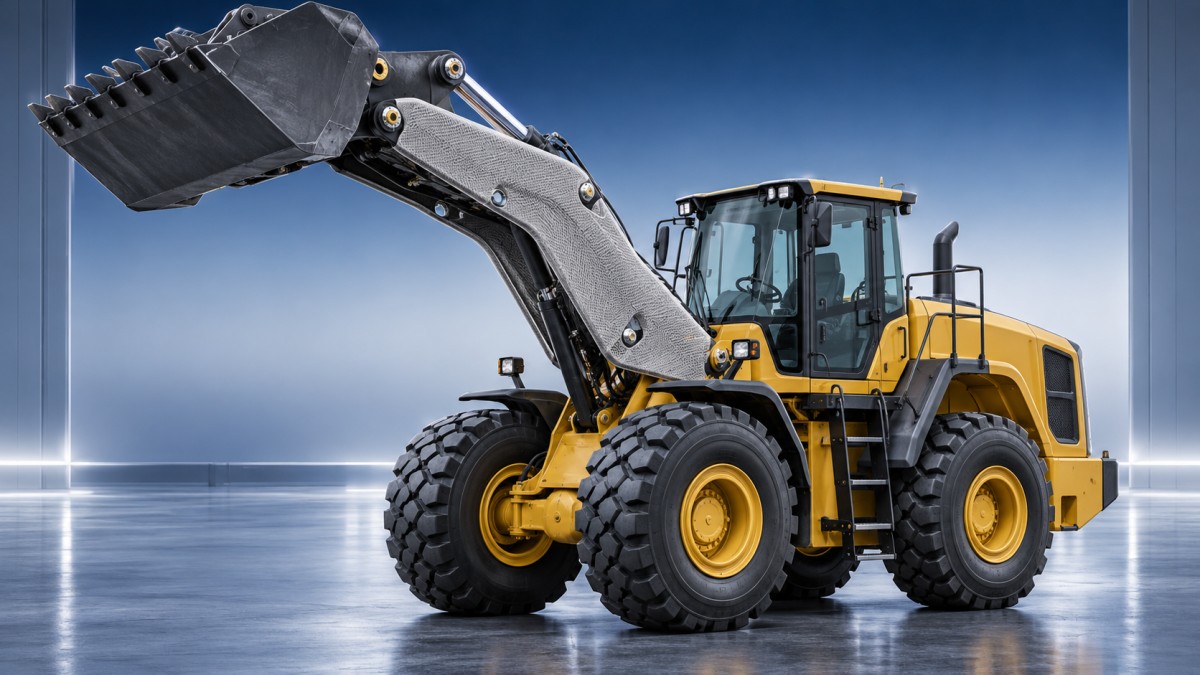
A boom guard on a loader, a corrosion-prone enclosure on a dredge, or a rotating cover on a forestry machine can look like straightforward steel parts until their weight begins to affect handling, fuel use, maintenance access, or fatigue life. In these situations, composite materials outperform steel when the component’s value is governed by more than static strength: lower mass, resistance to corrosion, better fatigue behavior, vibration damping, electrical isolation, or the ability to integrate several parts into one molded structure may matter more than steel’s familiar stiffness and low initial material cost.
The decision should not start with “Is composite stronger than steel?” That comparison is too broad to guide a heavy-equipment design. Steel remains the better choice for highly concentrated loads, severe abrasion, elevated temperatures, rigid precision interfaces, and impact zones where ductile deformation is preferred. Composites become a practical advantage when the load path can be engineered, the operating environment is understood, and lifecycle savings outweigh the added work of material selection, tooling, joining, and inspection.
Start with the component’s failure mode, not its material label
Heavy machinery rarely fails because a material’s catalog tensile strength was too low. Parts fail because a local connection crushes, a panel vibrates until a fastener loosens, water enters a sandwich structure, abrasive fines wear through a surface, or repeated loading creates damage that was not visible during routine inspection. A useful evaluation begins by defining what the part must survive over its service life.
Steel is isotropic: its mechanical properties are broadly similar in every direction. Fiber-reinforced composites are directional. Their fibers carry load very efficiently along selected orientations, while resin-rich zones and through-thickness properties can be comparatively weak. This is a limitation when a part sees unpredictable loading from every direction, but an advantage when its major loads are known. Fibers can be aligned with bending, tension, torsion, or pressure paths instead of carrying unnecessary material in low-stress directions.
Before comparing options, identify whether the component is governed primarily by:
- static bending, tension, compression, or torsion;
- repeated cyclic loads and vibration;
- stone strikes, dropped tools, debris impact, or rollover-related loads;
- abrasion from soil, aggregate, slurry, grain, or other media;
- chemical exposure, moisture, salt spray, washdown fluids, or fertilizers;
- heat near engines, exhaust systems, brakes, hydraulic lines, or process equipment;
- dimensional stability at mounting faces, bearing seats, rails, or alignment points; or
- access requirements, including whether a technician must remove or lift the part repeatedly.
A composite enclosure may be excellent in a salt-laden environment yet unsuitable as a direct mounting platform for a hydraulic cylinder pin. A carbon-fiber structure may provide high specific stiffness but be a poor choice near galvanically sensitive aluminum fittings unless the interface is electrically isolated. The material decision is therefore often made at the feature level rather than for the entire assembly.
Where lower mass creates a real machinery advantage
The most visible benefit of composite materials is weight reduction, but weight only has value when it changes machine behavior or service work. Replacing a stationary steel plate on a large fixed frame may not justify a redesign. Replacing a high-mounted access panel, engine hood, boom cover, cab roof, counterweight-adjacent fairing, or rotating guard can have a more meaningful effect.
Mass reduction is especially valuable where it lowers inertia. A lighter moving cover needs less force to open and close. A reduced mass on a boom or articulated arm lowers actuator demand and can reduce the dynamic load transferred to pivots. In rotating assemblies, it may help balance and reduce the energy required for acceleration. On transportable machinery, mass savings can also be allocated to payload, protective features, or emissions-control equipment rather than simply making the machine lighter.
Yet a weight comparison based only on density is misleading. Steel is much denser than glass-fiber or carbon-fiber laminates, but a composite panel may need greater thickness to meet stiffness targets. The correct question is whether a redesigned composite part can meet deflection, buckling, vibration, attachment, and impact requirements at lower mass. Sandwich construction is often relevant here: thin fiber-reinforced skins separated by a lightweight core can provide high bending stiffness for doors, covers, hoods, roof modules, and non-primary structural panels. The core must be protected from water intrusion and local crushing at fasteners.
Corrosion and chemical exposure can shift the lifecycle calculation
Steel performs well in demanding equipment when coatings, drainage, sealing, and maintenance are properly managed. The problem is that heavy machinery often operates where these protections are compromised: chipped paint, standing water, chloride exposure, fertilizer dust, cleaning chemicals, slurry, and trapped debris around joints. Corrosion is not only cosmetic. It can reduce section thickness, seize fasteners, contaminate adjacent components, and turn a minor repair into a difficult field intervention.
Glass-fiber-reinforced polymer systems are frequently attractive for covers, tanks, ducts, guards, cable-management structures, and external panels exposed to moisture or chemicals. Their resistance depends on the resin system, fiber type, temperature, fluid concentration, exposure duration, and surface finish. A composite described as “corrosion resistant” still needs chemical compatibility review. Some resins may soften, swell, crack, or lose bond strength under sustained exposure to particular fuels, solvents, acids, alkalis, or hot cleaning agents.
Composite construction also changes the corrosion problem rather than eliminating it entirely. Metallic inserts, hinges, fasteners, and brackets remain potential corrosion sites. Carbon fiber is electrically conductive and can accelerate galvanic corrosion when coupled to certain metals in the presence of an electrolyte. Isolating layers, compatible fasteners, sealed interfaces, and drainage details are necessary where such combinations occur. A well-designed hybrid assembly often uses steel only at highly loaded interfaces and composites across the broad, corrosion-exposed geometry.
Fatigue performance favors composites in some load paths
Steel components can provide excellent fatigue performance when stress concentrations are controlled and the design remains below the relevant fatigue limits. Weld toes, holes, sharp transitions, and corrosion pits often determine actual life more than the base metal itself. Machinery frames and brackets with variable-amplitude loading demand careful fatigue assessment because real operating cycles are rarely neat or uniform.
Fiber-reinforced laminates do not behave like steel under fatigue. They may retain useful load-carrying capability through many cycles, particularly when fibers are aligned with the dominant load direction and strain levels are controlled. They also avoid the corrosion-fatigue interaction associated with unprotected steel. However, composite fatigue damage can include matrix cracking, fiber-matrix debonding, delamination, and progressive stiffness loss. These mechanisms may develop without the obvious crack growth that inspectors expect in metal parts.
A composite is therefore a strong candidate for repeated bending panels, leaf-like spring elements, guards subjected to vibration, and structures where damping is important. It should be approached more cautiously in parts exposed to unpredictable point impacts or frequent overloads. Damage tolerance, not just nominal fatigue strength, should drive the choice. Consider whether the part can be inspected, whether internal damage is detectable, and whether limited damage can be repaired without replacing the assembly.
Do not treat impact resistance and abrasion resistance as the same property
A common selection error is to assume that a tough composite skin will also withstand abrasive service. Impact resistance concerns how a material responds to a sudden strike: cracking, puncture, denting, delamination, or energy absorption. Abrasion resistance concerns gradual material loss caused by sliding or flowing particles. A loader bucket liner, crusher chute, track guard, and exterior machine panel may all see “wear,” but their dominant mechanisms differ.
Steel is often difficult to displace in high-abrasion zones, particularly where replaceable wear plates can be welded or bolted on. Specialty alloys and hard-facing methods are established, field-repairable options. Composites can still contribute in these assemblies as low-friction liners, corrosion barriers, sacrificial outer panels, or non-load-bearing shrouds, but they need a wear system designed for the actual media and contact pressure.
For impact-prone covers and guards, thermoplastic composites or toughened thermoset laminates may be considered where resilience and low weight are important. The evaluation should include low-temperature behavior, repeated impact, edge damage, and what happens after a strike. A steel panel may dent visibly and remain functional; a composite panel may look intact while having hidden delamination. That distinction affects inspection procedures and acceptable risk.
Temperature often establishes a hard boundary
Many heavy-equipment components operate far from engine and exhaust heat, making polymer-matrix composites entirely feasible. Others sit close to heat shields, turbochargers, braking systems, hot hydraulic circuits, or process equipment. Here, temperature is more than a strength question. It can affect resin stiffness, creep, dimensional stability, adhesive durability, coating adhesion, and resistance to thermal cycling.
Use the maximum continuous temperature, peak excursions, heating rate, cooling rate, and duration of exposure rather than a single nominal operating temperature. A part can be acceptable during normal operation but fail after a prolonged stationary regeneration event, a blocked ventilation path, or a nearby hydraulic fault. Steel may retain a decisive margin in hot zones, while composites may require thermal barriers, increased clearance, alternative resin chemistry, or relocation of the component.
Thermal expansion must also be considered at hybrid joints. A large composite panel attached rigidly to a steel frame may expand differently as temperatures change. Slotted holes, compliant adhesive layers, floating mounts, and controlled fastener preload can prevent distortion and local stress buildup.
Manufacturing and joining can determine whether the concept is viable
A composite part rarely succeeds as a direct copy of a steel fabrication. Steel assemblies are often made from flat stock, bent sections, welded brackets, and separate reinforcements. A molded component can combine several of those features into one structure, eliminating weld seams and reducing part count. But this benefit requires early design work. Simply reproducing every steel flange and bracket in laminate form usually creates excessive thickness, difficult molds, and weak attachment zones.
Manufacturing route matters. Open molding, resin infusion, compression molding, pultrusion, filament winding, and thermoplastic forming each impose different limits on fiber orientation, thickness control, cycle time, surface finish, repeatability, and feasible geometry. The expected production volume influences tooling economics, but so do repair requirements and the size of the part. A very large molded structure may reduce assembly labor while becoming difficult to transport, inspect, or replace.
Joining deserves the same level of scrutiny as the laminate itself. Mechanical fasteners introduce holes, bearing stresses, and local stress concentrations. Adhesive bonding spreads load and can improve sealing, but requires controlled surface preparation and clear quality assurance. Hybrid joints often work well: bonded flanges carry distributed load while bolts provide positioning, peel resistance, or service disassembly. Where high clamp loads are required, use engineered inserts, local reinforcement, and load-spreading washers rather than tightening directly onto a thin laminate.
A practical comparison for common machinery components
Use a staged selection process before committing to a redesign
First, separate the part into functional zones. Mark primary load paths, mounting interfaces, impact surfaces, cosmetic surfaces, thermal zones, and corrosion-prone regions. This frequently reveals that the best answer is not an all-composite replacement. A composite shell with steel hard points, replaceable wear strips, and protected inserts may offer a better balance than either material alone.
Next, establish design allowables that reflect the proposed manufacturing method and environment. Coupon properties from a generic data sheet are not enough for a critical component. Fiber architecture, resin cure, void content, thickness transitions, holes, bonded joints, moisture absorption, and temperature exposure can materially change performance. Evaluate stiffness and deflection alongside ultimate load, because excessive movement can damage seals, misalign interfaces, or create objectionable vibration long before structural failure.
Then review serviceability. Ask how field crews will identify cracks, delamination, loose inserts, water ingress, and impact damage. Define an acceptable repair method before launch, including surface preparation, patch access, curing conditions, and inspection after repair. A lightweight part that cannot be reliably assessed or repaired in its operating environment may create more downtime than it saves.
Composite materials outperform steel in heavy machinery when the component can exploit their directional strength, low mass, corrosion resistance, and geometric freedom without exposing their weaker through-thickness, thermal, abrasion, or inspection characteristics. The strongest candidates are not necessarily the biggest steel parts. They are the parts where reduced weight, fewer joints, lower corrosion burden, or improved functional integration changes how the machine operates and is maintained.
Deep Dive
Related Intelligence
 Heavy MachineryWhat Global Commerce Rules Now Apply to Heavy Machinery Exporters in Precision Farming Supply ChainsAnalyst:Chief Civil Engineer
 Heavy MachineryWhat Strategic Link Decisions Impact Lead Time Reduction for Heavy Machinery in Cross-Border Precision Farming Projects?Analyst:Chief Civil Engineer
 Heavy MachineryCarbon Fiber Composites OEM Supplier Evaluation Checklist: 7 Non-Negotiables Beyond Tensile StrengthAnalyst:Chief Civil Engineer