When does industrial IoT for factories reduce unplanned downtime?
Key Takeaways
- When does industrial IoT for factories reduce unplanned downtime?Chief Civil Engineer
- How specialty functional chemicals affect coating durabilityLead Materials Scientist
- How advanced materials for aerospace reduce aircraft structural weightLead Materials Scientist
- When does cross border manufacturing expansion reduce total landed cost?IT & Security Director
- How technological forecasting helps manufacturers time automation investmentsChief Civil Engineer
- How food traceability solutions help contain recall risks fasterAgri-Tech Strategist
- What low-light performance should an OEM night vision dash cam meet?Automotive Tech Analyst
- Adipic Acid CAS 124-04-9 Market Trends: Why Buyers Are Rebuilding Supply PlansLead Materials Scientist
Industry Overview
We do not just publish news; we construct a high-fidelity digital footprint for our partners. By aligning with TNE, enterprises build the essential algorithmic "Trust Signals" required by modern search engines, ensuring they stand out to high-net-worth buyers in an increasingly crowded global digital landscape.
Industrial IoT reduces unplanned downtime only when it shortens the interval between an emerging fault and a correct maintenance decision. Connecting more equipment does not achieve that on its own. A vibration sensor that detects bearing deterioration has little operational value if the signal is noisy, no one owns the alert, the required spare is unavailable, or the production plan leaves no safe maintenance window.
The practical test is straightforward: can the factory identify a developing failure early enough to intervene during a planned stop, a changeover, or another controllable window? If the answer is yes for a high-consequence asset, industrial IoT for factories can convert disruptive breakdown work into scheduled work. If not, the deployment may improve visibility while leaving downtime largely unchanged.
Downtime falls when the monitored asset has a detectable failure path
Not every failure is predictable, and not every machine deserves the same monitoring effort. The strongest IIoT applications involve assets whose degradation produces observable changes before functional failure. These changes may appear in vibration, temperature, electrical current, pressure, flow, ultrasonic emissions, lubricant condition, cycle time, or control-system alarms.
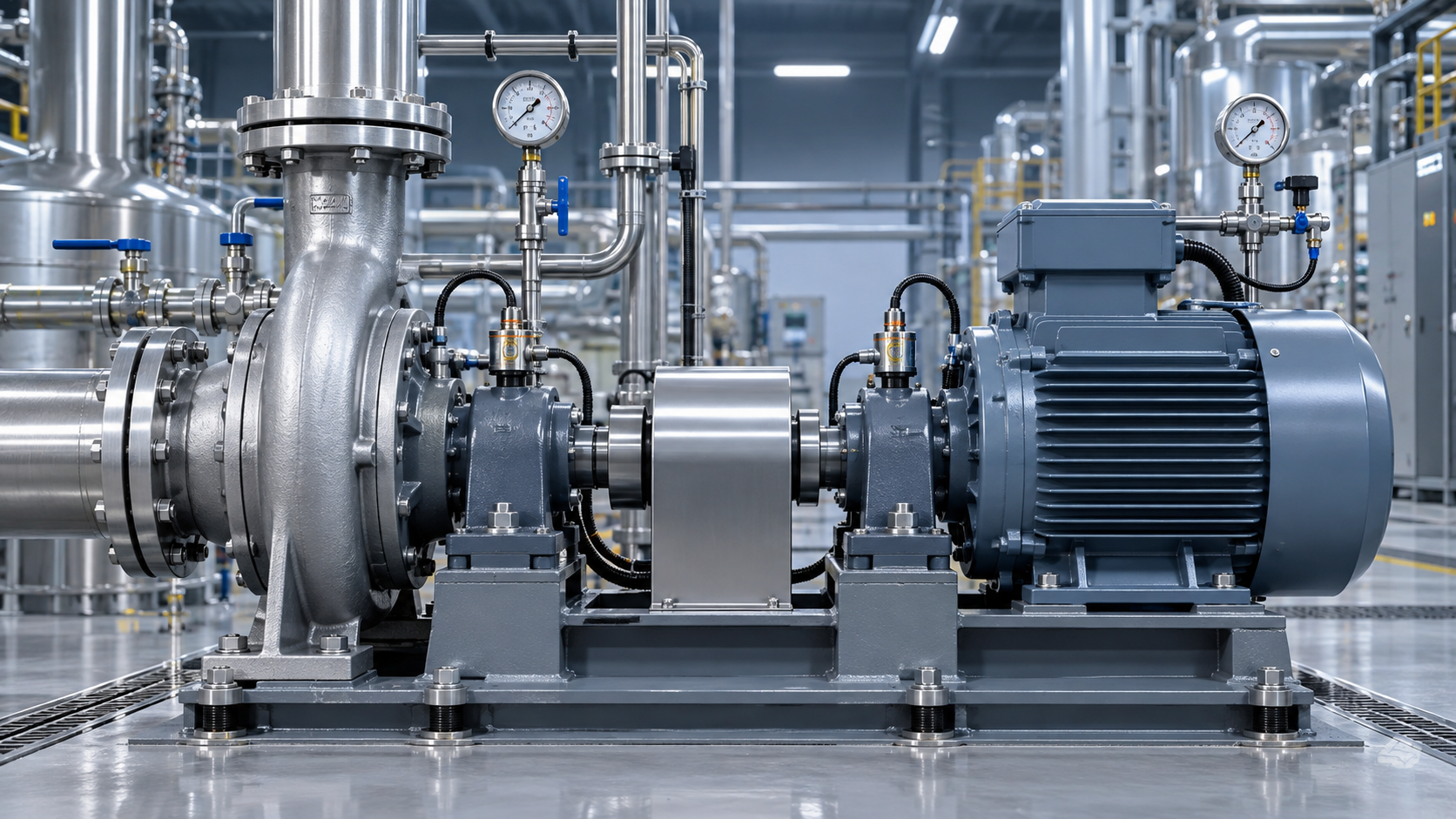
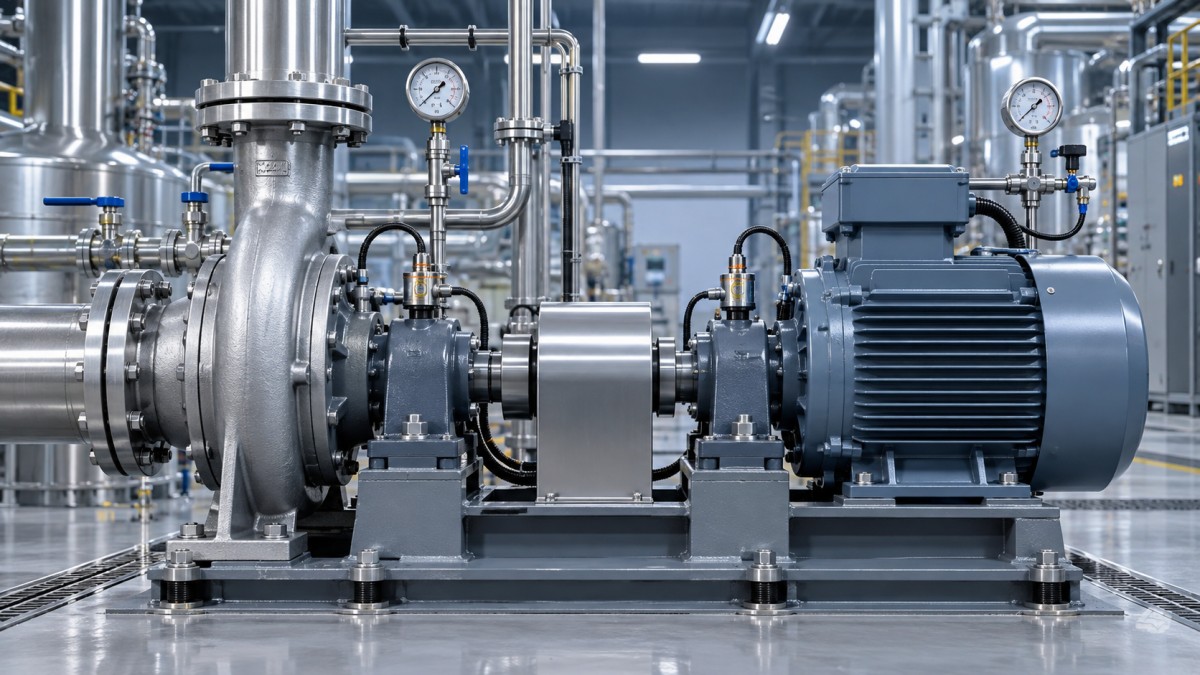
A motor-driven pump is a common example. Bearing damage, misalignment, imbalance, cavitation, seal wear, or blocked suction can create patterns in vibration, temperature, pressure, or motor load. A well-designed monitoring arrangement can reveal that the machine is moving away from its normal operating condition. That creates an opportunity to inspect, diagnose, and schedule corrective work before the pump trips or fails.
The same principle applies to compressed-air systems, fans, gearboxes, conveyors, chillers, hydraulic power units, mixers, extrusion lines, packaging machinery, and certain furnace subsystems. The condition must be both measurable and actionable. A variable that changes without pointing toward a useful maintenance response may be interesting process data, but it is not necessarily a downtime-reduction tool.
Some faults offer little warning. A sudden electronic component failure, accidental damage, a utility interruption, a poorly executed changeover, or a control logic error may not be prevented by condition monitoring. Industrial IoT should therefore be positioned as one layer in an uptime strategy, alongside preventive maintenance, spare-parts management, equipment design, operator practices, power-quality controls, and recovery planning.
Asset criticality determines where connected monitoring pays off
A project often loses focus when sensors are installed across every available machine because connectivity is relatively easy. The more useful starting point is an asset-criticality review tied to production consequences.
An asset is a serious candidate for IIoT monitoring when its failure can stop a production line, constrain throughput, create a quality hold, cause safety exposure, damage upstream or downstream equipment, or require a long repair lead time. Redundancy matters as much as importance. A small utility pump with no standby unit can be more operationally critical than a large machine with fully functional backup capacity.
Criticality also changes by operating mode. A machine may be tolerable to lose during low-volume production but unacceptable during a contract-sensitive run, a peak seasonal period, or a batch where interruption creates costly scrappage. Static asset rankings should be reviewed against actual production dependencies rather than copied from an equipment register.
A useful decision is to distinguish between three situations:
- Failure is acceptable or quickly recoverable: basic alarms and routine inspection may be sufficient.
- Failure is disruptive but manageable: connected condition monitoring can help reduce repair urgency and improve maintenance scheduling.
- Failure has severe operational consequences: monitoring should be paired with defined escalation, verified spares, shutdown criteria, and contingency arrangements.
This prevents a common mistake: treating sensor coverage as a proxy for risk control. A factory can have a visually impressive dashboard while its true bottlenecks remain unmonitored or unsupported by any response plan.
The data chain must be reliable before analytics can be trusted
Industrial IoT depends on a chain of measurement, transmission, storage, contextualization, and interpretation. Downtime reduction is constrained by the weakest part of that chain.
At the measurement level, sensor selection must match the failure mechanism and machine environment. A surface temperature sensor may detect abnormal heat but cannot reliably distinguish between several mechanical causes. A vibration sensor may offer earlier detection for rotating equipment, but its placement, mounting method, sampling rate, and orientation influence signal quality. Current monitoring can be useful for electric motors, yet changes in load may reflect normal process variation rather than an equipment defect.
Baseline data is equally important. A machine’s “normal” condition is not one fixed number. It may differ by product recipe, speed, ambient temperature, load, shift pattern, or start-up phase. An alert rule based on a single generic threshold can generate repeated false alarms. Maintenance teams then learn to ignore alerts, which is one of the fastest ways to destroy confidence in the system.
Context turns a measurement into a maintenance signal. Sensor readings should be associated with the specific asset, component, operating state, production order where relevant, and maintenance history. A rise in gearbox vibration means something different when the line is running at maximum speed than when it is idling. A pressure drop may indicate a filter problem, a process change, an open bypass, or a sensor fault. Without operating context, even sophisticated analytics can misclassify normal variation as degradation.
Data infrastructure also needs practical resilience. Gateways, network connections, time synchronization, edge devices, and cloud or on-premise storage must be designed for the plant environment. A system that loses data during network disruption, produces inconsistent timestamps, or cannot distinguish missing values from actual zero readings undermines both diagnosis and accountability.
An alert reduces downtime only when it produces a controlled workflow
The decisive point is not when an anomaly appears on a dashboard. It is when the anomaly becomes a verified work decision. That requires clear ownership across operations, maintenance, reliability engineering, and planning.
For each meaningful alert class, the workflow should answer a few operational questions: Who reviews the alert? How quickly? What evidence is needed to confirm it? What inspection is appropriate? Under what condition is the asset allowed to continue operating? Who can authorize a planned intervention? How is the event recorded after the work is complete?
Different alerts need different response times. A gradual shift in pump vibration may justify inspection during the next available maintenance window. A rapidly increasing bearing temperature on a critical fan may require immediate load reduction, standby activation, or a controlled shutdown. Treating both events as generic “red” alerts is not enough.
Integration with the computerized maintenance management system (CMMS) or enterprise asset management process is valuable when it preserves this chain of action. An alert should not automatically become a work order without review; that can flood the system with low-value tasks. But validated alerts should be converted into traceable work, linked to the asset, observed condition, likely failure mode, required parts, and target intervention window.
Closure codes also matter. If maintenance records only say “repaired” or “checked,” the organization cannot determine whether the alert was accurate, whether the diagnosis was correct, or whether the intervention prevented a failure. Structured feedback improves alarm thresholds, inspection routes, and future maintenance decisions.
Production planning is where predictive insight becomes uptime
Condition information creates value when production can use it. A maintenance team may know that a component is deteriorating, but the production schedule may still force operation until failure because no downtime window has been negotiated. In that situation, IIoT has identified risk without changing the outcome.
The connection between maintenance and scheduling should be established early in the project. For critical assets, the relevant planning horizon may be days or weeks rather than the next shift. If the estimated condition trend indicates that intervention is needed soon, planners need enough lead time to sequence production, arrange labor, isolate equipment, and ensure that material already in process will not be compromised.
This is particularly important where downtime has secondary effects: temperature-controlled processes, continuous production, tightly coupled packaging lines, batch manufacturing, or operations where restart requires cleaning, calibration, warm-up, or quality validation. The cost of a failure is not merely lost machine hours. It can include rejected material, delayed shipments, overtime, energy losses, and unstable restart conditions.
Connected monitoring can also support more disciplined decisions about whether to continue operating. A condition trend should not lead automatically to immediate shutdown. The decision depends on the rate of deterioration, the likely failure consequence, availability of backup equipment, repair readiness, and whether a short production extension materially increases risk. The purpose is not to eliminate all intervention risk; it is to make the trade-off visible before it is dictated by a breakdown.
Spare parts and repair capacity set the limit of achievable improvement
An early warning has limited value if the needed bearing, seal kit, drive, coupling, gearbox, or specialist service cannot be obtained in time. In some plants, IIoT reveals a supply-chain weakness rather than a sensor problem: the factory learns about a developing failure but has no practical way to act on that knowledge.
Critical-spares policy should therefore be reviewed alongside the monitoring plan. This does not mean stocking every possible component. It means identifying which parts have a combination of long lead time, high failure consequence, uncertain availability, or installation-specific specifications. The same analysis should cover repair tools, lifting access, contractor availability, and the lead time for technical diagnosis when specialized equipment is involved.
For imported machinery, part numbers and interchangeability require particular care. A component that appears standard may have a manufacturer-specific variant, firmware dependency, lubrication requirement, or mounting arrangement. Connecting failure prediction to an inaccurate bill of materials creates avoidable delay at precisely the point the system is meant to protect.
Implementation should prove one operational decision before scaling
A contained deployment on a defined failure problem is usually more informative than a broad rollout with vague success criteria. The selected use case should have a critical asset, a known or plausible degradation mechanism, an available maintenance response, and a way to compare outcomes against the previous process.
The initial design needs to capture the current state honestly: how failures are detected now, how long diagnosis takes, which production consequences occur, what data exists, and where decisions are delayed. The goal is not to prove that sensors generate data. It is to determine whether the new signal changes inspection timing, repair preparation, maintenance scheduling, or operating decisions.
Early deployments should expect adjustment. Thresholds may need refinement as operating modes become clearer. Sensors may require relocation. A supposed equipment signal may turn out to be process-driven. This is not evidence that the concept has failed; it is the normal work of converting raw telemetry into an asset-specific maintenance method. What matters is whether the system has a disciplined route for correcting those assumptions.
Scale should follow demonstrated repeatability, not dashboard coverage. Once a monitoring-and-response pattern works for a class of assets, it can be extended to comparable equipment with appropriate adaptation. Copying settings from one machine to another without accounting for duty cycle, load, environment, and failure history can reintroduce false alarms and missed detections.
Measure avoided disruption, not just connected devices
The most useful performance measures are linked to the business event the project is intended to change. Depending on the asset and process, these may include unplanned downtime hours, emergency maintenance work, mean time to diagnose, schedule compliance for condition-based interventions, repeat failures, production losses attributed to equipment stoppage, or the proportion of validated alerts that resulted in justified action.
Alert volume is not a success metric. A rising number of alerts can reflect improving visibility, poor threshold design, changing operating conditions, or a growing equipment problem. Likewise, a period with no failures does not by itself prove that a monitoring system prevented downtime. Evaluation should examine the sequence: detected condition, validation, maintenance action, observed defect, and resulting production outcome.
Industrial IoT for factories delivers dependable uptime when it is treated as an operational control system rather than a data-collection project. The essential conditions are selective monitoring of consequential assets, measurements tied to credible failure mechanisms, reliable contextual data, disciplined alert ownership, production windows for intervention, and repair resources ready to act. Where those conditions exist, early warning can materially change the timing and quality of maintenance. Where they do not, connected equipment may provide more information without providing more uptime.
Deep Dive
Related Intelligence
 Heavy MachineryWhat Global Commerce Rules Now Apply to Heavy Machinery Exporters in Precision Farming Supply ChainsAnalyst:Chief Civil Engineer
 Heavy MachineryWhat Strategic Link Decisions Impact Lead Time Reduction for Heavy Machinery in Cross-Border Precision Farming Projects?Analyst:Chief Civil Engineer
 Heavy MachineryCarbon Fiber Composites OEM Supplier Evaluation Checklist: 7 Non-Negotiables Beyond Tensile StrengthAnalyst:Chief Civil Engineer