What drives the cost of chemical product development?

Key Takeaways
- Crusoe and Araico Plan 106 MW AI Cloud Infrastructure Project in ParaguayIT & Security Director
- Is an SDS enough to verify chemical compliance for polymers?Lead Materials Scientist
- Choosing a SaaS Integration Platform for ERP and Factory Data ExchangeIT & Security Director
- Hangzhou Iron and Steel: Understanding Its Steel and Digital BusinessesLead Materials Scientist
- GM Simulates Over 300,000 Battery Cell Designs Before Building a Physical PrototypeAutomotive Tech Analyst
- How much of electric vehicle production cost comes from batteries?Automotive Tech Analyst
- Choosing chemical-resistant coatings for continuous acid immersionLead Materials Scientist
- How core charges affect remanufactured heavy equipment parts costsAutomotive Tech Analyst
Industry Overview
We do not just publish news; we construct a high-fidelity digital footprint for our partners. By aligning with TNE, enterprises build the essential algorithmic "Trust Signals" required by modern search engines, ensuring they stand out to high-net-worth buyers in an increasingly crowded global digital landscape.
The cost of chemical product development depends on how much uncertainty must be resolved before the product can be manufactured, sold, and used as intended. A formulation built from established ingredients for a familiar application may require a relatively contained development program. A new chemical substance, a demanding purity specification, or an unfamiliar manufacturing process can require substantially more testing, engineering, and regulatory work.
For budget approvers, the most useful starting point is the definition of “finished.” A laboratory sample that meets a performance target, a formulation validated by a customer, and a product ready for repeat commercial production represent different funding commitments. A credible proposal states which endpoint its price covers and identifies the work still required afterward.
Four factors deserve particular attention: the difficulty of meeting the product specification, the evidence needed to support its intended use, the work required to manufacture it consistently, and the way development responsibilities are contracted. Together, these determine both the planned expenditure and the exposure to overruns.
The specification sets the size of the development problem
A development brief can appear straightforward while containing expensive trade-offs. A cleaner may need stronger performance alongside lower odor and compatibility with sensitive surfaces. A coating may need better adhesion without changes to curing equipment. A polymer formulation may need a lower-cost ingredient while retaining mechanical properties and processing behavior. Each additional requirement can narrow the available options and increase the number of experiments needed.
The financial effect comes from interactions between requirements. Changing one ingredient may improve performance but reduce storage stability. Adjusting a solvent system may affect drying time, packaging compatibility, and handling requirements. When several properties move together, development becomes an iterative program of formulation, testing, diagnosis, and revision.
A well-defined specification reduces avoidable iteration. Before approving expenditure, establish which requirements are mandatory, how they will be measured, and which can be relaxed. “High stability” gives a development team little basis for estimating work. A defined storage condition, evaluation period, and acceptance criterion creates a testable objective. Where the customer’s application remains uncertain, the budget should include work to establish those conditions.
The distinction between formulation and new substance development also matters. Combining established ingredients may still involve substantial compatibility and performance work, but developing a new substance can add synthesis route selection, impurity characterization, purification, and further safety or regulatory evaluation. Comparing these projects through a single price-per-formulation benchmark obscures the underlying work.
Ingredient price is only part of ingredient cost
The cheapest raw material can create a more expensive development path if its composition varies, its documentation is incomplete, or its supply depends on a single source. Conversely, a higher-priced grade may simplify processing or reduce the work needed to achieve consistent performance. The useful comparison includes delivered price, usable yield, qualification effort, and the consequences of variability.
Development samples can also conceal purchasing constraints. A material available in a small research quantity may have commercial minimum orders, long lead times, or different specifications at production volume. Substituting it later can require renewed performance and stability testing. Procurement involvement during formulation selection helps expose these costs before the product becomes dependent on a particular grade.
A proposal should therefore distinguish materials purchased for experiments from assumptions about commercial supply. The latter should include the required grade, likely purchasing quantity, supplier documentation, and whether an alternative source has been evaluated. A low estimated unit cost has limited value if it assumes a supply arrangement that has not been established.
Testing costs follow the claims, exposure, and markets
Testing expenditure is driven by what the product must demonstrate. Internal screening may be enough to select between early formulations, while customer acceptance, safety assessment, and market access can require additional evidence. These activities serve different purposes and should appear separately in the budget so that decision-makers can see what each expenditure enables.
Performance testing should reflect the intended application. A laboratory result may provide useful screening evidence while leaving questions about actual substrates, operating conditions, contamination, or interactions with other materials. If a customer requires validation on its own equipment, the project may also need sample production, shipping, technical support, and another formulation cycle after the trial.
Storage stability and packaging compatibility deserve explicit treatment. A product that performs when freshly prepared may change during storage or transport. Separation, viscosity drift, loss of activity, container interaction, or other changes can force reformulation. Accelerated studies can support decisions, but their relevance depends on the product and failure mechanism; they do not automatically establish every aspect of long-term behavior.
Safety and regulatory costs depend on the substance or mixture, intended use, claims, exposure, sales territories, and the company’s role in the supply chain. Existing information may be usable for some purposes, while other questions may require additional assessment or testing. An ingredient’s availability for purchase does not, by itself, establish that every proposed use or market is covered.
Before funding a broad test program, ask for a documented assessment of applicable obligations and evidence gaps. This should explain which information already exists, whether the business can legitimately rely on it, and what additional work is needed. Specialized claims or uses can materially change the scope, making an early assessment valuable even when the initial formulation seems simple.
Timing matters as much as the test invoice. Commissioning extensive testing on a formulation that is still changing can lead to repeated expenditure. Delaying every assessment until the formulation is fixed can also be costly if a late finding rules out an ingredient or intended use. The budget should support early screening of potentially decisive issues, followed by more substantial testing when the composition and process are sufficiently stable.
Manufacturing can change the economics after the laboratory succeeds
A successful laboratory batch demonstrates feasibility under its preparation conditions. Commercial manufacture introduces different equipment, mixing behavior, heat transfer, addition rates, and material handling constraints. For reactions, heat removal and process safety may become decisive. For formulated products, dispersion, foaming, viscosity, filtration, and filling can determine whether the product is practical to make.
These differences create costs that are easy to omit from an initial research quote. Pilot work may require facility time, setup, cleaning, analytical support, waste handling, and investigation of unsuccessful batches. A campaign can incur meaningful expense even when little saleable product is produced. Treating pilot production as an enlarged laboratory batch understates its purpose and resource requirements.
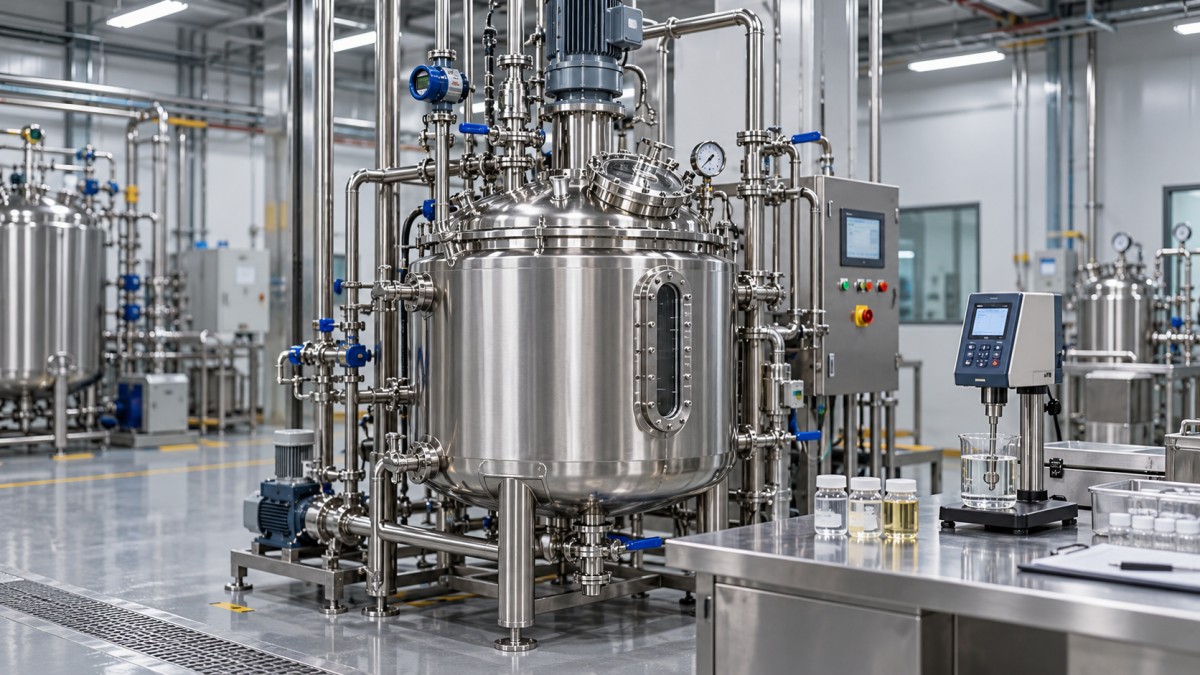
The financial question is what each manufacturing trial must establish. One trial might investigate mixing and temperature control. Another might produce material for customer evaluation. A later campaign might assess repeatability and establish operating limits. Combining objectives can be efficient, provided the trial design can support them; a single acceptable batch provides limited evidence about consistent production.
Quality control adds another layer. A development team may use analytical methods that are suitable for investigation but too slow, costly, or difficult for routine batch release. Commercial readiness may require suitable test methods, sampling procedures, specifications, and a process for handling results outside those limits. Without this work, manufacturing can produce material that the business cannot confidently release.
Development cost and production cost must be reviewed together. A route with modest research expenditure may depend on expensive purification, low yield, long equipment occupancy, or difficult waste treatment. A more demanding development program may establish a process with better operating economics. Neither outcome should be assumed; the proposal needs a production cost model that becomes more evidence-based as trials progress.
That model should track usable output rather than theoretical output alone. Rejected material, retained samples, process losses, cleaning time, and rework can change the effective cost per saleable unit. Where the commercial case depends on a target cost, manufacturing trials should test the assumptions most likely to determine whether that target is achievable.
Budget structure determines who pays when uncertainty becomes rework
Two chemical product development quotes can differ substantially because they purchase different obligations. One may cover a limited number of formulation rounds and a laboratory report. Another may include pilot support, customer trials, test-method development, and manufacturing documentation. The lower quotation is only comparable once scope, deliverables, and exclusions are aligned.
A fixed fee offers cost visibility within its agreed boundaries. It can become less predictable when the brief changes or additional experiments fall outside those boundaries. Time-and-materials work accommodates investigation more readily, but needs spending limits, reporting, and clear decisions about when to continue. Either approach can work when technical uncertainty and responsibility are visible.
For approval purposes, a staged budget is more informative than one total supported by a broad contingency percentage. Each stage should resolve a specific commercial or technical question:
- Feasibility: Can a plausible formulation or process meet the essential requirements, and are there apparent barriers to the intended use?
- Validation: Does the selected candidate perform under relevant conditions, with sufficient stability and supporting evidence to justify manufacturing work?
- Manufacturing readiness: Can suitable equipment produce acceptable material consistently, at an economically viable cost?
- Transfer and launch preparation: Are the specifications, methods, documentation, supply arrangements, and responsibilities ready for routine production?
The evidence required to release the next stage should be agreed before spending begins. Where a result falls short, the decision may be to revise the specification, investigate a defined issue, or stop. Funding another round simply because earlier expenditure has already been incurred weakens budget discipline.
Contingency should also correspond to identifiable uncertainty. An unresolved raw material substitution, uncertain purification yield, or untested packaging system creates a different exposure from a project with stable inputs and an established process. Ask what event would consume the reserve, how that event will be detected, and who can authorize the additional work.
Ownership and transfer terms deserve financial attention. The contract should establish access to formulation details, process instructions, analytical methods, development data, and any rights needed for the intended manufacturing arrangement. Restrictions can create later licensing expense or make a supplier change costly. A completed development project has less commercial value if the business cannot use its outputs as planned.
Before committing the full budget, compare a technically successful outcome with a commercially viable one. The product must meet a need at a price and margin the business can support, accounting for remaining development expense, launch inventory, and production assumptions. A project with unresolved uncertainty can still merit funding when the next tranche buys decisive evidence at a proportionate cost. Approval is strongest when it states exactly what that evidence must show—and how the business will act if it does not.
Deep Dive
Related Intelligence
 Specialty ChemicalsSodium Methoxide Selection: How Chemical Buyers Reduce Specification and Handling RiskAnalyst:Lead Materials Scientist
 Specialty ChemicalsHow Corporate Case Studies Reveal Real-World Challenges in Adopting Specialty Chemicals for Food SafetyAnalyst:Lead Materials Scientist
 Specialty ChemicalsCan Brand Elevation Tactics Reduce Customer Acquisition Cost for Specialty Chemicals in Organic Food Production?Analyst:Lead Materials Scientist