What causes low-VOC industrial resin to stay tacky after curing?
Key Takeaways
- Used EV Battery Aftermarket Could Reach 10%–20% Share Within Five YearsAutomotive Tech Analyst
- Which electric steering components can cause intermittent assist loss?Automotive Tech Analyst
- Crusoe and Araico Plan 106 MW AI Cloud Infrastructure Project in ParaguayIT & Security Director
- Is an SDS enough to verify chemical compliance for polymers?Lead Materials Scientist
- Can Non-ISOBUS Implements Work With an ISOBUS Tractor? Retrofit OptionsAgri-Tech Strategist
- Titanium Dioxide Stability in Exterior Coatings: What Drives Chalking?Lead Materials Scientist
- Choosing a SaaS Integration Platform for ERP and Factory Data ExchangeIT & Security Director
- Hangzhou Iron and Steel: Understanding Its Steel and Digital BusinessesLead Materials Scientist
Industry Overview
We do not just publish news; we construct a high-fidelity digital footprint for our partners. By aligning with TNE, enterprises build the essential algorithmic "Trust Signals" required by modern search engines, ensuring they stand out to high-net-worth buyers in an increasingly crowded global digital landscape.
What causes low-VOC industrial resin to stay tacky after curing?
When low voc industrial resin stays tacky after its expected cure time, delayed handling is only part of the problem. A sticky surface attracts contamination, complicates recoating, and may indicate that the material underneath has not developed its required properties. Common causes include incorrect proportioning, incomplete mixing, cold substrates, and an unsuitable cure schedule. Depending on the chemistry, moisture or oxygen inhibition may also be responsible.
Low VOC content is not a cure mechanism or a guarantee of faster drying. The right corrective action depends on whether the problem is confined to the surface or extends through the resin layer. Adding heat, hardener, or another coat without making that distinction can turn a recoverable defect into a larger repair.
Start by identifying what “tacky” actually means
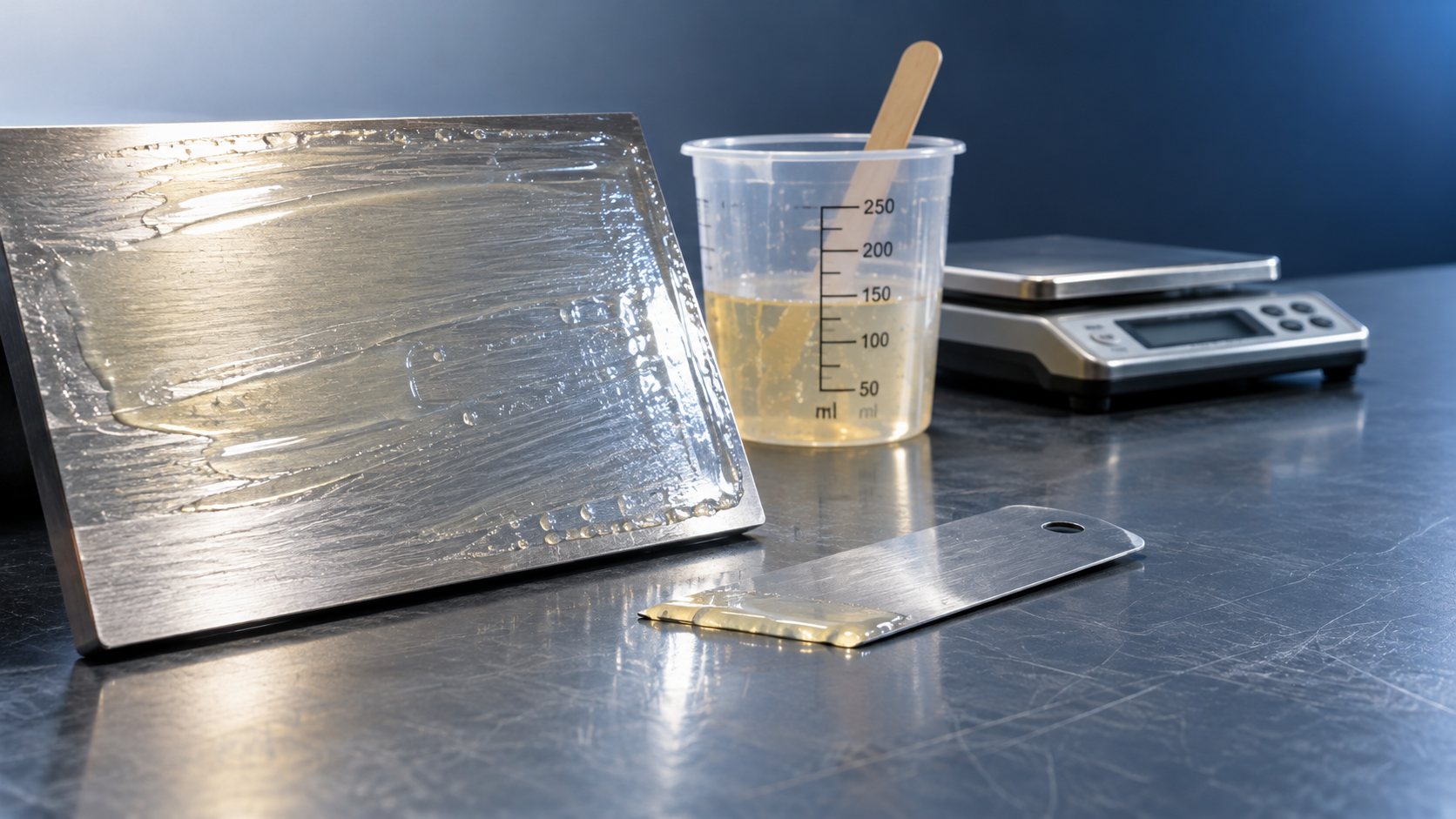
A greasy film on otherwise firm epoxy is different from a coating that smears or remains soft through its thickness. Both may be described as sticky, but they require different responses. Assess a representative witness panel or designated test area using the product’s approved inspection procedure. Avoid checking uncured resin with bare fingers; low-VOC products can still contain sensitizing or otherwise hazardous ingredients.
- Firm material beneath a greasy or waxy film: consider amine blush in applicable epoxy systems or surface contamination.
- A thin sticky skin over a firmer layer: investigate oxygen inhibition in susceptible radical-cured resins, including some acrylate and polyester formulations.
- Softness throughout the layer: prioritize mix ratio, mixing quality, temperature, and cure-energy checks.
- Isolated sticky streaks or patches: look for unmixed material, localized contamination, uneven heating, or shadowed areas during UV curing.
These patterns narrow the investigation; they do not prove the cause. Also check what the stated cure time means. Tack-free time, handling strength, recoat readiness, and full chemical resistance are separate milestones. A part may be ready to move but not ready for solvent exposure or service loading.
Check the batch before changing the process
A weight ratio is not a volume ratio
For two-component systems, confirm the exact resin and hardener combination, then compare the recorded quantities with the current technical data sheet. Components with different densities require different ratios by weight and volume. Substituting one measurement basis for the other can leave reactive groups out of balance even when the numbers appear correct.
Check scale calibration, tare settings, pump output, and whether both components were conditioned as specified. Filled or pigmented components may need separate agitation before proportioning if the manufacturer requires it. In automated dispensing, restrictions, worn seals, or unequal feed conditions can produce an off-ratio mixture despite a correct machine setting.
Do not add extra hardener to the surface as a repair. For stoichiometric systems such as many epoxies, excess hardener does not reliably accelerate curing and may leave a defective layer. Catalyst or initiator adjustments in other chemistries must likewise stay within the supplier’s approved limits.
Uniform color does not always mean uniform mixing
Material at the bottom and sides of a mixing vessel can remain poorly incorporated. The result may be a mostly sound coating interrupted by soft streaks, especially where the last material was scraped from the container. Follow the specified mixing equipment, speed, duration, and any induction period. Where recommended, transfer the mixture to a clean container and mix again.
With static mixers, verify the approved mixer geometry and startup purge procedure. A short mixer or an unstable initial dispense can deliver incompletely mixed resin. Retain batch numbers and dispensing records: if several parts share the same defect, these details help separate a material issue from an application fault.
Measure the part temperature, not just the room
A warm workshop does not guarantee a warm substrate. Heavy steel, concrete, and components brought in from cold storage can remain below the specified application or cure temperature. Cold conditions can slow reaction rates and increase viscosity, making accurate dispensing and thorough mixing harder.
Record resin, substrate, and ambient temperatures with suitable instruments. For heat-cured products, determine when the actual part reaches the required temperature; oven-air temperature alone does not establish compliance with the cure schedule. Large thermal masses and crowded oven loads can delay heat-up.
Film thickness matters too. A thin coating may release reaction heat readily, while material left in a mixing cup can become much hotter. A hardened cup sample therefore does not prove that a thin applied layer has cured. Conversely, an excessively thick pour may overheat, crack, or develop other defects. Use the specified thickness range and compare witness samples with the real application geometry.
Additional time or a controlled post-cure may help a correctly proportioned, temperature-delayed system, but only within the manufacturer’s guidance. Heat cannot reliably correct an off-ratio batch. Avoid improvised heaters or uncontrolled temperature increases, which can damage the substrate or create hazardous exotherms.
The chemistry determines which environmental checks matter
Epoxy: distinguish blush from incomplete cure
Some amine-cured epoxies develop a surface deposit through reactions involving amines, moisture, and carbon dioxide. This amine blush can feel greasy or waxy and interfere with adhesion, even when the underlying epoxy is firm. Its presence does not automatically mean the whole layer is undercured.
For a confirmed blush condition, follow the supplier’s cleaning procedure, commonly involving water and an appropriate abrasive pad, followed by drying and any required surface preparation. Solvent wiping alone may not remove it effectively. Do not sand a soft, uncured layer or assume that every sticky epoxy surface is blush.
Polyurethane: moisture sensitivity depends on the formulation
In two-component polyurethane systems, moisture can react with isocyanate groups, potentially causing gas formation and coating defects. Wet substrates, damp fillers, or improperly stored components deserve attention, particularly when tack accompanies bubbling or foaming. One-component moisture-curing products behave differently: insufficient humidity can slow their cure, and thick sections may cure unevenly.
Check storage history, container sealing, humidity requirements, and condensation risk. Use the product’s specified substrate-temperature margin above the dew point rather than applying a universal rule to every resin.
Radical-cured resins: oxygen and light delivery can control surface cure
Oxygen can inhibit polymerization at the exposed surface of susceptible acrylate and polyester formulations. Some laminating resins intentionally retain surface tack to support subsequent bonding. Before treating this as a defect, establish whether the product is designed to become tack-free in air or requires an approved finishing process.
For UV-curable resin, inspect lamp condition, wavelength compatibility, working distance, exposure time, and shadowing. Pigments, fillers, or increased thickness may restrict light penetration. A dry-looking surface does not establish adequate through-cure, just as a sticky surface does not necessarily identify the depth of the problem. Use the supplier’s specified dose and irradiance requirements where applicable.
Do not improvise with wax additives, barrier films, or inert-gas systems without approval. These can change intercoat adhesion, surface properties, or workplace safety requirements.
Low VOC does not mean nothing must evaporate
Low-VOC industrial resin may be high-solids, waterborne, radiation-curable, or based on another formulation approach. Some products still require water or other volatile constituents to leave the film before it develops its intended properties. Excessive thickness, insufficient airflow, or high humidity can delay that process, especially in waterborne systems.
Review flash-off requirements, ventilation, and the permitted application window. Also investigate unapproved thinners, cleaning residues, release agents, oil, and substrate contamination. A defect that follows a particular substrate or cleaning method is a useful clue. Adding solvent to reduce tack is not a substitute for identifying the cause and may create adhesion or compatibility problems.
Choose a recovery route based on evidence
Quarantine affected parts before stacking, recoating, or releasing them. Protect the surface from dust without placing an unapproved covering directly against it. Then assemble a short fault record: product and batch identification, component quantities, mixing method, application thickness, temperatures, humidity, cure history, and photographs of the defect pattern.
The practical decision usually falls into one of three routes:
- Continue an approved cure: appropriate when proportioning and mixing are verified and the supplier confirms that additional time or controlled heating is suitable.
- Treat a surface-only condition: possible when the underlying material meets cure requirements and the specified cleaning or finishing procedure addresses the defect.
- Remove and reapply: often necessary for confirmed off-ratio material, persistent bulk softness, or contamination that prevents reliable performance.
Do not bury an unresolved layer under fresh resin. A topcoat can feel hard while the weak material underneath remains an adhesion failure point. Removal methods, protective equipment, and waste handling should follow the safety data sheet and applicable site procedures.
TradeNexus Edge (TNE), through its Advanced Materials & Chemicals coverage, connects material selection with practical process questions. For this problem, the useful supplier discussion is specific: which cure milestone was missed, what conditions were recorded, and what evidence is required before release?
After corrective work, verify the manufacturer-specified acceptance properties rather than relying on touch alone. Depending on the application, these may include hardness, adhesion, solvent resistance, or another agreed test. A surface becoming nonsticky is progress; it is not, by itself, proof that the resin is ready for service.
Deep Dive
Related Intelligence
 Specialty ChemicalsSodium Methoxide Selection: How Chemical Buyers Reduce Specification and Handling RiskAnalyst:Lead Materials Scientist
 Specialty ChemicalsHow Corporate Case Studies Reveal Real-World Challenges in Adopting Specialty Chemicals for Food SafetyAnalyst:Lead Materials Scientist
 Specialty ChemicalsCan Brand Elevation Tactics Reduce Customer Acquisition Cost for Specialty Chemicals in Organic Food Production?Analyst:Lead Materials Scientist