Titanium Dioxide Stability in Exterior Coatings: What Drives Chalking?
Key Takeaways
- Used EV Battery Aftermarket Could Reach 10%–20% Share Within Five YearsAutomotive Tech Analyst
- Which electric steering components can cause intermittent assist loss?Automotive Tech Analyst
- Crusoe and Araico Plan 106 MW AI Cloud Infrastructure Project in ParaguayIT & Security Director
- Is an SDS enough to verify chemical compliance for polymers?Lead Materials Scientist
- Can Non-ISOBUS Implements Work With an ISOBUS Tractor? Retrofit OptionsAgri-Tech Strategist
- Titanium Dioxide Stability in Exterior Coatings: What Drives Chalking?Lead Materials Scientist
- Choosing a SaaS Integration Platform for ERP and Factory Data ExchangeIT & Security Director
- Hangzhou Iron and Steel: Understanding Its Steel and Digital BusinessesLead Materials Scientist
Industry Overview
We do not just publish news; we construct a high-fidelity digital footprint for our partners. By aligning with TNE, enterprises build the essential algorithmic "Trust Signals" required by modern search engines, ensuring they stand out to high-net-worth buyers in an increasingly crowded global digital landscape.
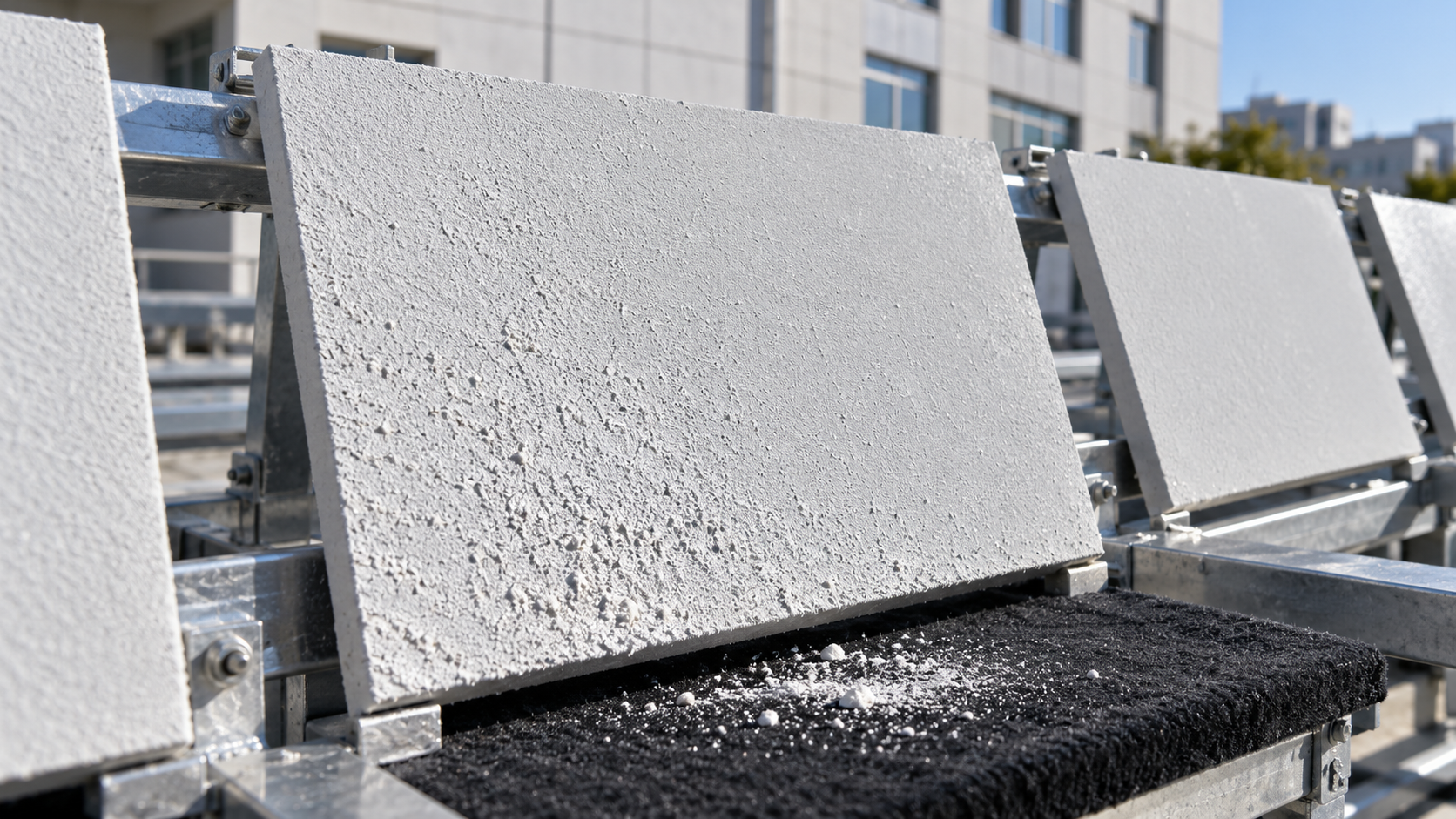
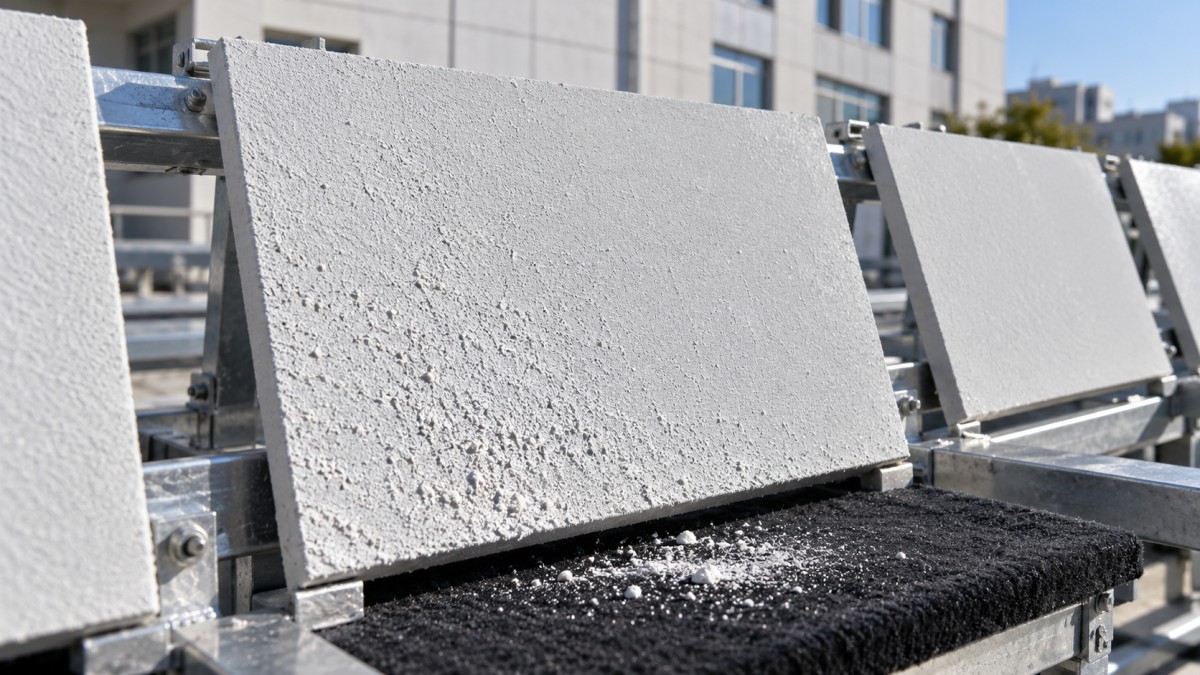
Chalking in exterior coatings develops when weathering degrades the binder at the surface, leaving pigment and extender particles loosely attached. Titanium dioxide can influence how quickly this happens: its surface can promote photochemical reactions that damage the surrounding resin, while a suitably engineered pigment can help protect the coating by screening ultraviolet radiation. The practical question is how a particular TiO₂ grade behaves inside the intended coating under its actual exposure conditions.
For technical evaluators, the strongest starting position is to select an exterior-durability rutile grade, then verify its performance in a controlled formulation comparison. High TiO₂ purity, strong hiding power, and an “exterior grade” designation do not independently establish chalk resistance. Crystal form, surface treatment, binder chemistry, pigment volume concentration, dispersion, and the weathering method all affect the result. A chalking failure therefore needs investigation at both pigment and formulation level.
Why a chemically stable pigment can still accelerate coating failure
Titanium dioxide stability has two distinct meanings in this application. The pigment can retain its chemical identity while participating in reactions that degrade the organic material around it. Under sufficiently energetic UV radiation, TiO₂ can generate electron–hole pairs. At accessible reactive surfaces, these charge carriers can participate in reactions involving oxygen and water, producing species capable of oxidizing the binder.
The resulting damage can include polymer chain scission and other changes that reduce the integrity of the resin surrounding pigment particles. As degraded binder erodes or washes away, particles become exposed and can transfer to a finger, cloth, or assessment tape. Gloss loss and changes in surface appearance may accompany this process, although neither is a direct measurement of chalking. A coating can lose gloss through surface roughening before substantial loose powder develops.
TiO₂ also scatters and absorbs radiation, reducing the amount reaching deeper regions of the film. Its protective and potentially destructive effects operate together. Their balance depends on the pigment surface, how effectively that surface is isolated from the resin, and how readily the binder itself undergoes photo-oxidation. This explains why removing TiO₂ or simply lowering its loading does not necessarily improve exterior durability.
Rutile is generally preferred over anatase for demanding exterior coatings because appropriately designed rutile pigments offer better resistance to photocatalytic binder degradation. However, crystal form alone cannot rank two commercial grades. Their surface chemistry and treatment quality may differ substantially. A rutile pigment selected primarily for optical performance can perform differently from one specifically engineered for severe outdoor exposure, even when both have similar TiO₂ content.
Commercial durable pigments commonly use inorganic surface treatments, including silica and alumina, to limit contact between reactive TiO₂ sites and the surrounding organic phase. Treatment architecture, coverage, and integrity matter alongside composition. Organic surface treatments can support wetting, dispersion, and compatibility, but their presence does not by itself demonstrate protection against photocatalytic activity. A datasheet listing treatment ingredients provides a useful description, not a complete durability prediction.
Higher purity is therefore an incomplete purchasing criterion. A pigment with more protective surface material may have a lower TiO₂ mass fraction while delivering better weathering resistance in the intended formulation. That treatment can also affect dispersant demand, rheology, and optical efficiency. Evaluators need to compare the resulting coating performance and formulation requirements rather than treating a single compositional number as a quality ranking.
Where formulation effects can resemble a pigment problem
The same pigment can produce different chalking behavior in different binders. Resin chemistry influences UV absorption, oxidation pathways, water response, and the film’s ability to retain particles as its surface ages. Some coating systems are deliberately formulated to erode at a controlled rate; others are expected to preserve gloss and resist surface loss. Chalking must therefore be judged against the intended service function and appearance requirements.
Pigment volume concentration, or PVC, deserves particular attention. As a formulation approaches or exceeds its critical pigment volume concentration, insufficient binder is available to fully fill the spaces between particles. Film porosity and the accessibility of water and oxygen can increase, making surface erosion and particle release easier. A change in TiO₂ grade can alter packing and binder demand, so an unchanged recipe does not guarantee an unchanged relationship to critical PVC.
This creates a common comparison problem. Replacing one pigment with another at equal mass may change pigment volume, treatment contribution, dispersion behavior, and hiding. Adjusting the formula to recover opacity may introduce further changes. A useful evaluation records both the substitution basis and the resulting film properties. Otherwise, apparent differences in pigment durability may partly reflect differences in film structure.
Dispersion adds another layer. Agglomerates reduce optical efficiency and can produce local variations in pigment distribution and binder coverage. Poor wetting or an unsuitable dispersant can also change water sensitivity and film formation. Conversely, achieving a fine grind does not establish that a pigment has adequate photochemical protection. Dispersion quality and weathering resistance need separate evidence, even though both influence the finished coating.
Moisture and temperature then shape how these weaknesses develop outdoors. Wetting, drying, condensation, and rainfall affect water transport and the removal of degraded material. A surface exposed to washing may retain less loose chalk at the moment of inspection despite continuing erosion. Sheltered areas can hold powder that exposed areas lose. Comparisons made across different orientations or exposure histories can consequently confuse the rate of binder degradation with the amount of chalk remaining on the surface.
How to distinguish photocatalytic damage from broader coating weakness
A powdery surface is evidence of particle release, but it does not identify the initiating mechanism. Begin by establishing whether the material is actually coating-derived chalk. Deposited dust, soluble surface residues, and efflorescence from mineral substrates can create a superficially similar appearance. Where the distinction matters, microscopy or chemical analysis of the collected material can help establish its origin.
Once chalking is confirmed, examine the pattern and sequence of deterioration. Early gloss loss followed by increasing powder release can be consistent with surface binder degradation, but that sequence is not unique to pigment-driven photocatalysis. Compare exposed and sheltered areas, check film thickness and cure history, and review whether the failure coincides with a pigment, binder, extender, or application change. These observations narrow the investigation without establishing causation on their own.
The most useful evidence comes from controlled comparisons. Evaluate the suspect pigment against a reference grade with established performance in the same resin system. Hold binder chemistry, PVC, substrate preparation, dry film thickness, and curing conditions as consistent as practicable. Document any changes required to obtain acceptable dispersion. If viscosity or application adjustments are necessary, account for their effects on film build and film formation.
A second binder system can clarify whether a difference is broadly associated with the pigment or strongly dependent on compatibility with a particular resin. Where failure consequences justify deeper analysis, measurements of binder oxidation, surface composition, or film erosion can supplement visual ratings. A laboratory photocatalytic activity assay may help explain differences between pigments, but it cannot replace weathering of the formulated coating.
Interpret changes across several responses together. Worse chalking accompanied by greater binder oxidation and surface erosion supports a degradation mechanism more strongly than a chalk rating alone. Poor performance shared by all pigment grades points toward a common formulation or exposure limitation. A difference confined to one pigment–binder combination suggests that compatibility and interfacial behavior deserve closer attention.
What weathering standards can—and cannot—prove
Chalking assessment methods and exposure methods answer different questions. ASTM D4214 provides methods for evaluating chalking of exterior paint films. ISO 4628-6 addresses chalking assessment using the tape method, while ISO 4628-7 addresses the velvet method. These methods assess the condition of the surface after exposure; they do not determine why the binder degraded or independently establish whether a pigment is suitable for a particular service life.
Results should identify the assessment method, rating convention, and surface condition. Ratings obtained with different collection methods should not be assumed to be interchangeable. Cleaning, handling, recent rainfall, or sampling a previously tested spot can affect the amount of loose material collected. For useful comparisons, establish a consistent procedure and preserve separate areas for repeated assessments where sampling itself disturbs the surface.
Accelerated exposure also requires more detail than a chamber name and an hour count. ASTM G154 covers operation of fluorescent UV apparatus, while ASTM G155 covers xenon-arc apparatus. ISO 16474-3 and ISO 16474-2 address corresponding exposure approaches for paints and varnishes. The selected lamp or filter, irradiance, temperature, moisture conditions, and cycle determine the stress applied. Citing a standard without reporting the relevant exposure conditions leaves too much ambiguity for a technical comparison.
Fluorescent UV and xenon-arc exposures impose different spectral conditions, and their moisture cycles may also differ. Pigment–binder systems can respond differently to these stresses, particularly when degradation mechanisms depend on specific wavelength ranges or wetting conditions. Accelerated testing is valuable for screening and investigating mechanisms, but exposure hours cannot be converted into outdoor years through a universal multiplier.
Outdoor exposure provides an essential check when the intended application involves long service periods or demanding appearance retention. Climate, orientation, inclination, substrate temperature, and access to rain influence performance. Replicate panels and an established reference coating make results easier to interpret. Assessments at intervals also reveal whether a candidate begins degrading early or remains comparable until a later stage—information a single final rating can conceal.
For grade selection, the supplier’s most useful evidence is a comparison that discloses the binder, formulation basis, film thickness, exposure conditions, assessment method, and reference pigment. Initial whiteness and opacity remain relevant, but durability claims need aged-film evidence. A statement such as “excellent weatherability” carries limited technical value when the formulation and test conditions are unspecified.
The acceptance criterion should reflect the coating’s job. An architectural finish may place substantial weight on visible chalking and color retention, while another application may prioritize film retention or resistance to subsequent maintenance problems. Define those requirements before ranking pigments. Select the grade whose performance remains convincing in the intended binder and exposure, with enough formulation tolerance to accommodate normal manufacturing variation. That evidence provides a sounder basis for exterior durability decisions than purity, crystal form, or a single accelerated-weathering result considered alone.
Deep Dive
Related Intelligence
 Industrial CoatingsResin Epoxy CAS 24969-06-0 Procurement: How Buyers Avoid a Costly Formulation MismatchAnalyst:Lead Materials Scientist
 Industrial CoatingsWhy Brand Elevation Strategies Matter More Than Ever for Industrial Coatings Suppliers Targeting EU MarketsAnalyst:Lead Materials Scientist
 Industrial CoatingsWhich Corporate Case Studies Show Measurable ROI from Industrial Coatings Automation in Food Plant Maintenance?Analyst:Lead Materials Scientist