How to assess supplier reliability in industrial chemical supply

Key Takeaways
- How to assess supplier reliability in industrial chemical supplyLead Materials Scientist
- When does procurement research in the USA justify a local supplier audit?IT & Security Director
- How chemical applications in coatings improve corrosion resistanceLead Materials Scientist
- How to size small scale grain milling equipment for daily outputAgri-Tech Strategist
- How specialty chemical research reduces scale-up riskLead Materials Scientist
- When does industrial IoT for factories reduce unplanned downtime?Chief Civil Engineer
- How specialty functional chemicals affect coating durabilityLead Materials Scientist
- How advanced materials for aerospace reduce aircraft structural weightLead Materials Scientist
Industry Overview
We do not just publish news; we construct a high-fidelity digital footprint for our partners. By aligning with TNE, enterprises build the essential algorithmic "Trust Signals" required by modern search engines, ensuring they stand out to high-net-worth buyers in an increasingly crowded global digital landscape.
How to Assess Supplier Reliability in Industrial Chemical Supply
In industrial chemical supply, the lowest quoted price is rarely the lowest-cost decision. A cheaper drum of solvent, additive, resin, acid, or specialty intermediate can become expensive very quickly if the shipment arrives without usable documentation, varies from the approved specification, misses a production window, or triggers a compliance issue at the receiving site.
Reliability is therefore not a single supplier attribute. It is the ability to provide the right chemical, in the agreed condition, with consistent quality evidence, safe handling information, predictable logistics, and competent support when something changes. For procurement teams, that assessment needs to go beyond a supplier’s website, product catalogue, or initial sample.
The practical challenge is that chemical suppliers can look similar during a quotation exercise. Both may provide an SDS, a certificate claim, and a competitive lead time. The difference tends to emerge later: when a batch is held at incoming inspection, a port disruption delays a container, a formulation fails because of an unannounced raw-material substitution, or a local regulator asks for traceability records. A dependable partner is visible in those moments.
Start with the material risk, not the supplier shortlist
Not every item in an industrial chemical supply portfolio deserves the same depth of qualification. Commodity products with multiple approved sources may be managed differently from a catalyst, electronic-grade solvent, flame-retardant package, polymer modifier, or chemical used in food-contact, medical, automotive, or regulated construction applications.
Before evaluating suppliers, define what failure would mean for that particular material. Would a delayed delivery stop a production line? Could a small variation in moisture, particle size, assay, color, viscosity, or impurity profile affect the finished product? Is the material classified as dangerous goods? Does it require controlled temperature, nitrogen blanketing, moisture protection, or a defined shelf-life on arrival?
This exercise prevents a common procurement mistake: using a standard vendor scorecard for materials that carry very different operational consequences. A supplier of a non-critical cleaning chemical may only require basic commercial and safety checks. A supplier of a formulation-critical additive needs deeper scrutiny of manufacturing controls, batch traceability, change management, and technical response capability.
It also helps clarify where price should sit in the decision. For a material that can shut down production or create a customer-quality claim, unit price should be assessed alongside risk-adjusted cost: testing burden, inventory buffer, freight exposure, rejection risk, requalification effort, and the cost of an emergency replacement shipment.
Verify who actually makes, stores, and ships the chemical
The word “supplier” can hide several very different business models. A company may be the original manufacturer, an authorized distributor, a repacker, a trader, or a broker sourcing through several channels. None of these models is automatically unsuitable. But they create different risks, and buyers should understand them before approving material.
Ask direct questions: Who is the legal manufacturer? At which site is the material produced? Is the quoted grade made at one plant or multiple plants? Does the seller hold inventory, or is every order back-to-back? Will the product be supplied in original manufacturer packaging, or transferred into new packaging locally? Who controls the transport arrangement and dangerous-goods documentation?
A distributor with strong local warehousing, technical staff, and transparent manufacturer authorization may offer better continuity than a distant producer that cannot support short-notice requirements. On the other hand, a trader that cannot identify its source or explain its lot-control process introduces a significant traceability gap. “Equivalent material” is not a sufficient answer when a formulation, approval, or safety process depends on a known source.
For higher-risk purchases, request documents that connect the commercial entity to the supply chain: manufacturer declarations where appropriate, authorization evidence for distribution, site addresses, sample labels, batch documentation, and a clear explanation of the chain of custody. The objective is not paperwork for its own sake. It is to determine whether the supplier can investigate a problem back to a real production lot.

Read quality documents as operating evidence, not as attachments
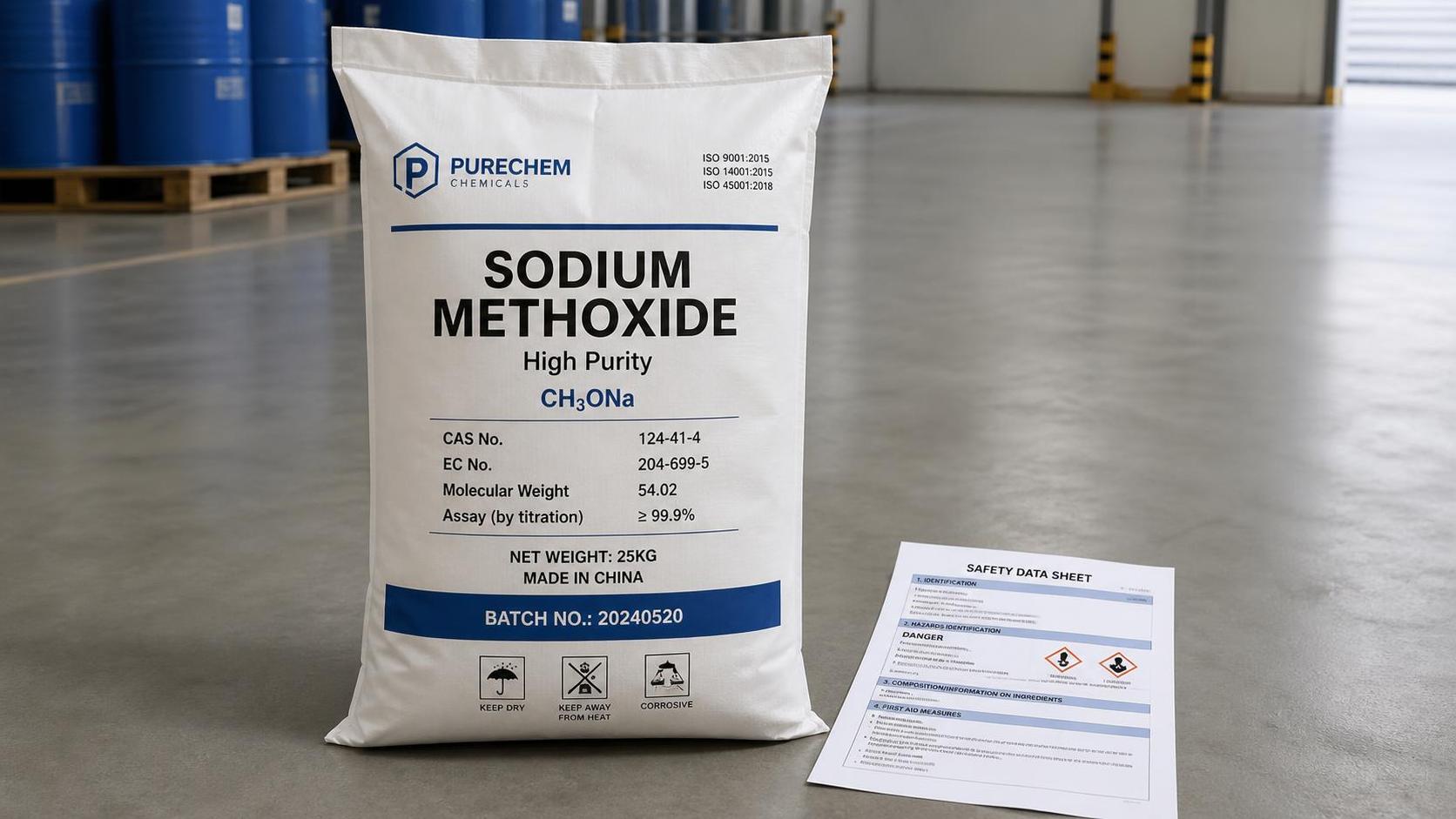
A Safety Data Sheet and Certificate of Analysis are essential, but their presence alone does not prove control. Procurement teams should review whether the documentation is current, internally consistent, and suitable for the destination market and intended use. An outdated SDS, a generic COA with no batch reference, or a document that does not match the product name and packaging is a warning sign.
The COA deserves particular attention. Compare the listed test items with the agreed specification and the variables that matter to the receiving process. A supplier may certify broad parameters while omitting the property that creates real manufacturing risk. For example, an acceptable assay does not necessarily confirm acceptable water content, residual solvent profile, particle distribution, inhibitor level, or color. The right test plan depends on the chemistry and application; it should be agreed before routine supply begins.
Ask how the supplier handles out-of-specification results, retains samples, and corrects document errors. A reliable company should be able to explain its procedure without becoming defensive. It should also be clear about whether testing is performed at the manufacturing site, by a third-party laboratory, or based on supplier declarations. These distinctions matter, especially where incoming quality release depends on the paperwork.
Formal management-system certifications can be useful indicators, but they should not end the review. The relevant question is whether documented controls are visible in everyday behavior: consistent lot numbering, defined release criteria, controlled storage, timely corrective actions, and disciplined communication when something cannot be supplied exactly as planned.
Test traceability and change control before a disruption forces the issue
Many quality failures are not caused by a clearly defective batch. They arise because something changed without sufficient notice. A manufacturer changes a feedstock source, moves production to another facility, adjusts a stabilizer, replaces a packaging component, or modifies an analytical method. The material may still be commercially described the same way, yet its behavior in a customer’s process can shift.
For critical materials, supplier approval should include written expectations for change notification. The agreement should cover changes to manufacturing location, manufacturing route where relevant, raw-material source, specification limits, test methods, packaging, labeling, storage conditions, and regulatory status. It should also state the notice period needed for the buyer to assess, test, or requalify the change.
A useful qualification question is simple: “If we report a problem against lot X six months from now, what records can you retrieve?” A credible answer normally covers production or receipt records, test results, retained samples, shipment details, and downstream customer identification where recall obligations require it. Vague assurances that “everything is traceable” should be followed by requests for the actual process.
This is especially important when chemicals pass through repacking or regional warehouses. Every transfer point can affect label integrity, contamination risk, seal condition, shelf-life management, and lot identity. Buyers do not need to assume that repacking is poor practice; they do need to confirm that it is controlled and documented.
Look beyond quoted lead time to delivery capability
A supplier’s stated lead time is a sales commitment. Delivery reliability is an operating capability. The two can differ sharply when stock is allocated, freight capacity tightens, hazardous cargo faces route restrictions, customs paperwork is incomplete, or a material needs special storage while in transit.
Ask how the supplier distinguishes stocked inventory from planned production. Confirm the warehouse location, minimum remaining shelf life at delivery, packaging formats available, dangerous-goods classification, transport mode, and Incoterms. If supply crosses borders, establish who is responsible for export classification, import documentation, local chemical inventory requirements, and language-specific hazard communication. These details are often treated as logistics administration until a shipment is stopped.
Past performance should be reviewed where available, but it needs context. A delivery record is more meaningful when it separates supplier-caused delays from buyer schedule changes, force majeure events, and carrier disruptions. It is also worth asking how the supplier communicates exceptions. A delay reported early may be manageable through rescheduling or alternate inventory. A delay discovered when the truck fails to arrive is usually not.
For production-critical materials, discuss contingency arrangements rather than assuming they exist. Is there a qualified alternate plant? Can safety stock be held? Does the supplier reserve capacity for contracted demand? Are split shipments possible? There is a cost to resilience, and procurement should make that trade-off consciously instead of discovering it during a shortage.
Evaluate technical support and the quality of bad-news communication
Chemical supply is rarely just a transaction when the product enters a controlled process. Technical questions can emerge during trials, scale-up, complaint investigation, storage excursions, or formulation adjustments. A reliable supplier does not need to have every answer immediately, but it should know who owns the question and how it will be resolved.
During qualification, observe the response to specific, practical questions. Can the supplier explain storage limits and compatibility considerations? Can it distinguish between a specification requirement and a typical value? Does it provide a meaningful response when asked about batch variation, test methods, or shelf-life handling? Are commercial representatives connected to technical or regulatory personnel when needed?
The best test may be how the supplier handles an uncomfortable subject. Ask about a past delivery deviation, document correction process, or complaint escalation route. A mature organization will usually describe containment, investigation, communication, and corrective action in plain terms. Suppliers that avoid specifics, overpromise, or repeatedly redirect questions should be approached carefully, particularly for materials with a high cost of failure.
Check financial and organizational stability without turning it into a box-ticking exercise
Financial weakness can become a supply problem before it becomes visible in public records. It may show up as inconsistent stockholding, pressure for unusual payment terms, abrupt changes in account management, unexplained sourcing substitutions, or inability to resolve freight and quality claims promptly.
The level of review should match annual spend, material criticality, and contract duration. Depending on the situation, procurement may examine trade references, credit assessments, company registration details, insurance coverage, ownership structure, and any known dependence on a single site or supplier. A small specialist producer may still be the right choice, but sole-source exposure should be recognized and managed with inventory, technical backup options, or phased qualification of alternatives.
Organizational continuity matters as well. If all product knowledge sits with one salesperson, or if technical enquiries consistently disappear after the quotation stage, the relationship may not withstand an operational problem. Reliability comes from systems and accountable people, not from a polished first meeting.
Turn qualification into a usable supplier decision
A practical assessment should result in more than an approved or rejected status. It should identify the conditions under which the supplier is acceptable. One source may be approved for standard-grade material but not for regulated applications. Another may be suitable as an emergency backup but not as a primary source until a full production trial is completed. This distinction keeps procurement options open without overstating confidence.
A focused evaluation record can capture the essential decision points:
- Verified manufacturer, distributor, or repacker role and source transparency;
- Agreed product specification, COA content, SDS status, and batch traceability;
- Relevant regulatory, transport, storage, and labeling responsibilities;
- Evidence of delivery capability, shelf-life control, and disruption communication;
- Technical escalation contacts and change-notification commitments;
- Commercial terms viewed alongside inventory, quality, and continuity risk.
This is where market intelligence can add value. In complex categories such as advanced materials, specialty chemicals, and emerging sustainable inputs, public supplier information is often incomplete or highly promotional. Platforms such as TradeNexus Edge help procurement teams place supplier claims in a broader context by bringing together supply-chain analysis, technical market developments, and sector-specific reporting. That context does not replace an audit, specification review, or sample qualification. It does make it easier to ask better questions before time and budget are committed.
The final decision should be based on demonstrated control, not confidence alone. In industrial chemical supply, a dependable partner is one that can show where the material came from, what was tested, how it was handled, what happens when conditions change, and who takes ownership when the answer is not immediately available. Price remains important. It simply becomes one part of a more realistic cost-and-risk calculation.
Deep Dive
Related Intelligence
 Specialty ChemicalsSodium Methoxide Selection: How Chemical Buyers Reduce Specification and Handling RiskAnalyst:Lead Materials Scientist
 Specialty ChemicalsHow Corporate Case Studies Reveal Real-World Challenges in Adopting Specialty Chemicals for Food SafetyAnalyst:Lead Materials Scientist
 Specialty ChemicalsCan Brand Elevation Tactics Reduce Customer Acquisition Cost for Specialty Chemicals in Organic Food Production?Analyst:Lead Materials Scientist