How specialty functional chemicals affect coating durability
Key Takeaways
- How specialty functional chemicals affect coating durabilityLead Materials Scientist
- How advanced materials for aerospace reduce aircraft structural weightLead Materials Scientist
- When does cross border manufacturing expansion reduce total landed cost?IT & Security Director
- How technological forecasting helps manufacturers time automation investmentsChief Civil Engineer
- How food traceability solutions help contain recall risks fasterAgri-Tech Strategist
- What low-light performance should an OEM night vision dash cam meet?Automotive Tech Analyst
- Adipic Acid CAS 124-04-9 Market Trends: Why Buyers Are Rebuilding Supply PlansLead Materials Scientist
- Titanium Dioxide Dispersion: Key Factors for Coating Opacity and StabilityLead Materials Scientist
Industry Overview
We do not just publish news; we construct a high-fidelity digital footprint for our partners. By aligning with TNE, enterprises build the essential algorithmic "Trust Signals" required by modern search engines, ensuring they stand out to high-net-worth buyers in an increasingly crowded global digital landscape.
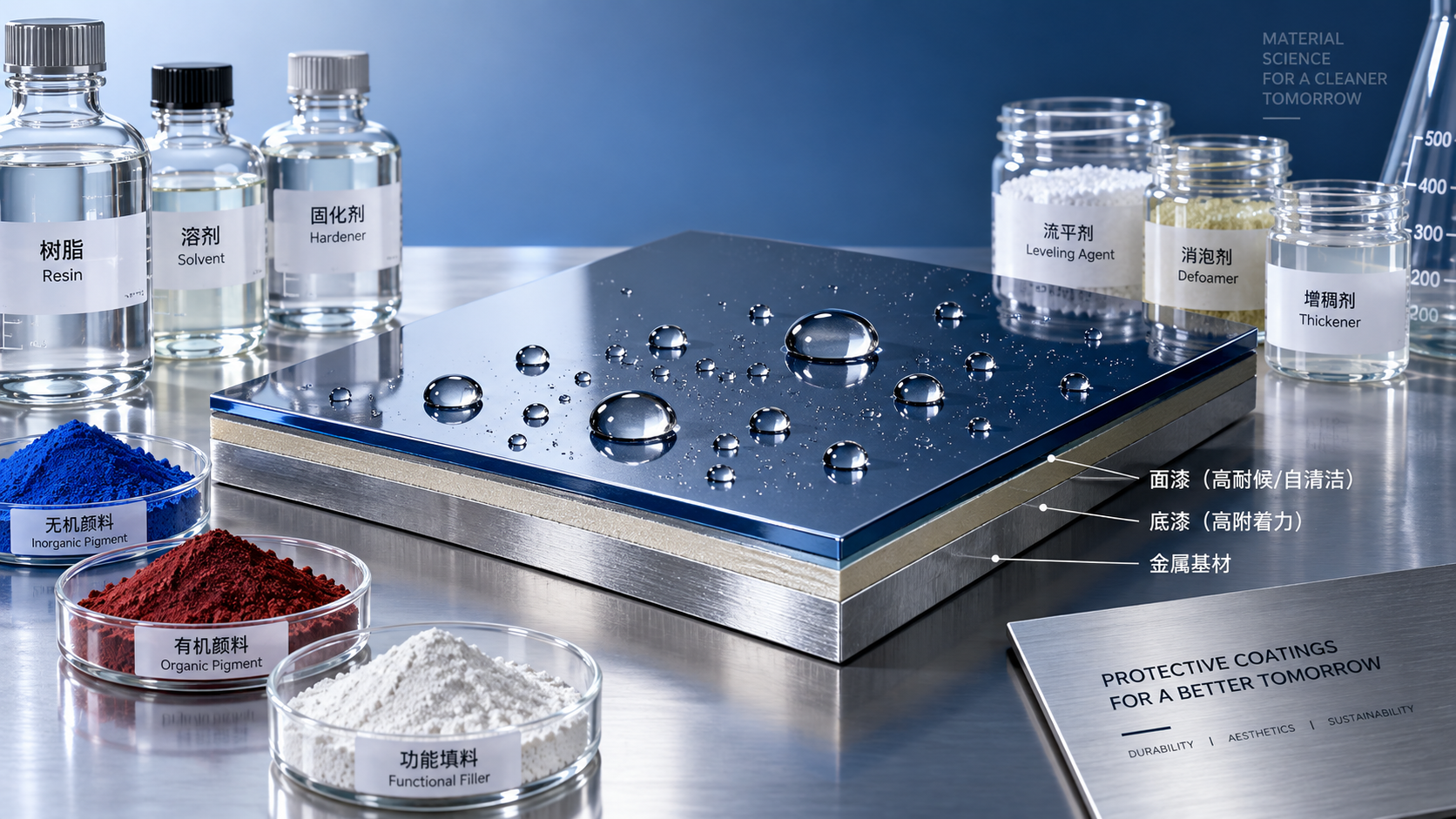
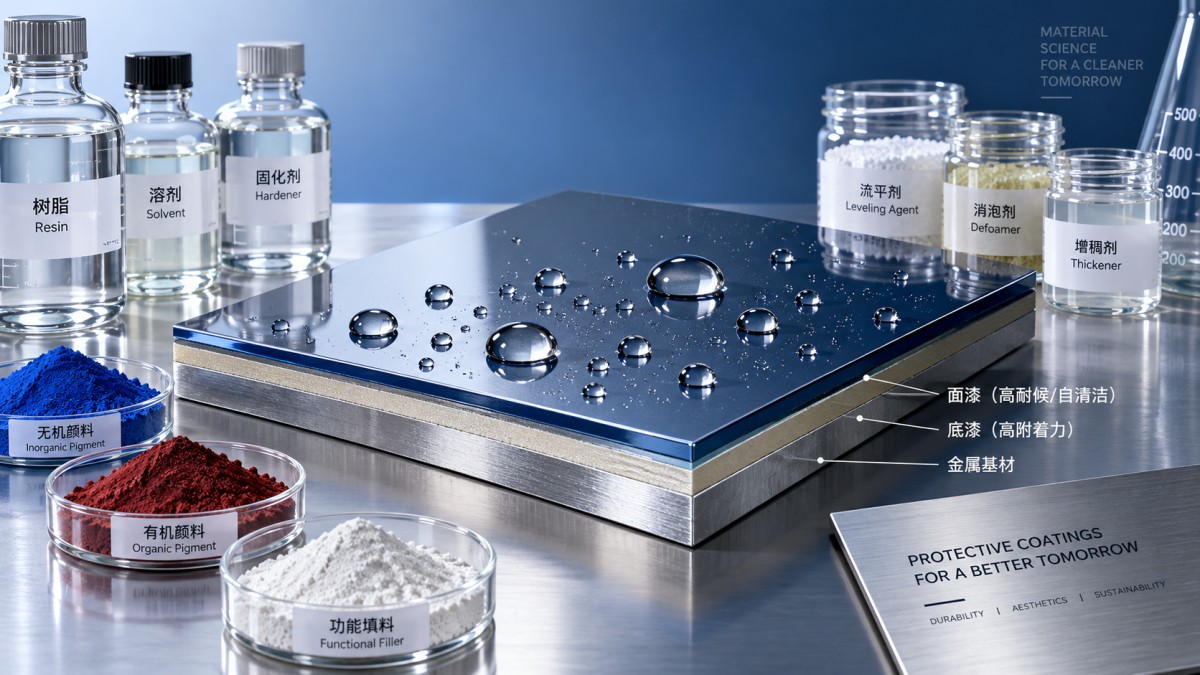
Coating durability is not determined by resin chemistry and dry-film thickness alone. A coating can have an apparently robust binder and still fail early through edge corrosion, gloss loss, poor intercoat adhesion, scratching, blistering, or color change. In many formulations, the difference between acceptable initial appearance and reliable long-term protection comes from specialty functional chemicals: additives, modifiers, curing components, pigments, and surface-treatment materials designed to control a specific failure mechanism.
These materials do not work independently. Their effect depends on the resin system, pigment volume concentration, solvent or water balance, application method, cure schedule, substrate condition, and intended exposure. The useful question is therefore not whether a functional additive is “good,” but whether it solves the dominant durability risk without creating a new processing or compatibility problem.
Durability begins at the interfaces
Most coating failures start at an interface rather than in the middle of an intact film. The coating must adhere to the substrate, wet pigments and fillers effectively, bond to any primer or topcoat beneath or above it, and resist the entry of water, salts, chemicals, or oxygen at damaged areas. Specialty functional chemicals often operate at these boundaries.
For metal substrates, adhesion promoters and conversion-compatible additives can improve the interaction between the coating and the treated surface. Their value is most visible when the system faces humidity, cyclic temperature changes, salt exposure, or mechanical damage. A coating may pass a simple initial adhesion check while still losing adhesion after water penetrates through pores, scratches, seams, or edges. That is why dry adhesion alone is a weak predictor of service life.
Wetting and dispersing agents also influence interface quality. They help pigments, extenders, and corrosion-inhibiting pigments distribute more uniformly through the formulation. Poor dispersion can create agglomerates, weak zones, uneven color, inconsistent barrier properties, and localized water pathways. A dispersant is not merely a processing aid: it can affect how consistently the cured film protects the substrate.
Compatibility must be assessed across the whole stack. An additive that improves adhesion to steel may be less useful on aluminum, galvanized metal, engineered plastics, composite panels, or previously coated parts. Likewise, a primer-topcoat combination can fail even when both individual products perform well on their own. Surface energy, pretreatment residues, solvent attack, cure timing, and intercoat contamination all affect the final interface.
How functional chemistry changes the major failure modes
A practical assessment starts with the expected failure mode. “More durable” is too broad to guide formulation or procurement decisions. The same chemical change that improves one property can reduce another, especially where flexibility, appearance, recoatability, and environmental exposure are all important.
Corrosion protection is a clear example of this interaction. Barrier pigments and lamellar fillers can lengthen the path water and ions must travel through the film. Inhibitive pigments may reduce electrochemical activity when moisture reaches the metal. Adhesion promoters can reduce the likelihood that corrosion spreads laterally beneath the coating. None of these mechanisms makes up for poor surface preparation, but each may materially improve a properly prepared system.
The limitation is important: adding more corrosion-control chemistry does not automatically improve protection. Excessive pigment loading can reduce film continuity, increase porosity, or make application more difficult. Some inhibitor packages may interact with curing agents, affect color, or have limited usefulness in a particular waterborne or solventborne system. The formulation must maintain a coherent, well-cured film while delivering the desired protective mechanism.
For exterior coatings, UV stabilizers and absorbers address a different risk. Ultraviolet radiation can break down polymer chains or create oxidation products that lead to chalking, embrittlement, fading, and loss of gloss. UV absorbers reduce the radiation reaching susceptible parts of the polymer network, while light stabilizers help interrupt degradation pathways. Their effectiveness depends on the binder chemistry, pigment package, film thickness, and the exposure environment. A protective package chosen for a clear coating cannot simply be transferred to a heavily pigmented coating without considering how pigments alter light transmission and heat buildup.
Hardness is not the same as durable wear performance
Scratch resistance is often evaluated too narrowly. A harder film may resist a light surface mark, but high hardness can also increase brittleness, particularly at low temperatures or on flexible substrates. In service, abrasion, impact, repeated cleaning, sliding contact, and thermal movement impose different stresses. A coating that performs well in one test may still crack around fasteners, deform at edges, or show whitening after impact.
Specialty functional chemicals used for wear control include waxes, silicone-free or silicone-based slip modifiers, crosslinkers, and inorganic or polymeric particles. Waxes and slip agents can reduce surface friction and improve mar resistance. However, an overly mobile surface additive may interfere with intercoat adhesion, printing, bonding, or repair coatings. Hard particles can improve abrasion resistance, but poor dispersion may introduce roughness or act as a defect site. A higher crosslink density can improve solvent resistance and surface hardness, yet reduce flexibility and make the cure window more sensitive.
The right evaluation asks what kind of damage the coated component will see. A warehouse floor, automotive trim part, industrial equipment enclosure, appliance panel, wind-exposed architectural element, and chemical process asset need different performance balances. Calling all of them “abrasion resistant” does not make them technically comparable.
Water management is a central durability issue
Water is often the transport medium behind coating damage. It can plasticize a polymer, carry salts to the substrate, weaken interfacial bonds, activate corrosion processes, and create osmotic pressure that contributes to blistering. Functional materials that reduce water uptake or improve film continuity can therefore have an outsized effect on durability.
Hydrophobic modifiers, reactive diluents, crosslinkers, and barrier pigments may all contribute, but they solve different parts of the problem. Hydrophobicity at the surface may reduce short-term wetting without necessarily preventing moisture diffusion through the film. A denser polymer network can reduce permeation but may also make the coating less tolerant of movement. Plate-like pigments can increase the diffusion path, provided they are oriented and dispersed effectively. The result should be assessed after relevant wet, humid, cyclic, or chemical exposure, not only from contact angle or initial appearance.
Waterborne coatings require particular formulation discipline. They can offer strong performance, but residual surfactant, coalescence behavior, flash-off conditions, and cure development may influence early water sensitivity. It is a mistake to treat the choice of waterborne chemistry as a durability limitation in itself. The relevant question is whether the selected functional package and cure conditions produce the film properties required for the end use.
Processing conditions can negate a good additive package
Functional additives have operating ranges. A dispersant may be effective only with a particular pigment surface or mixing sequence. A defoamer may control bubbles during manufacture but create cratering when overdosed. A rheology modifier may prevent sagging on vertical surfaces while reducing leveling and trapping air. A crosslinking agent may require a defined mix ratio, humidity range, temperature, or pot life to develop the intended resistance.
These interactions make supplier data sheets useful but incomplete. They usually describe performance in a reference formulation under controlled application and cure conditions. A technical review should compare that reference system with the actual process: substrate cleaning, pretreatment, application equipment, viscosity range, flash time, film build, oven profile, ambient conditions, and storage stability. A material that looks equivalent on paper may behave differently in a production line because the formulation and process conditions change its role.
Color and appearance requirements can also constrain selection. Some functional additives alter gloss, haze, transparency, viscosity, foam behavior, or pigment development. In high-gloss decorative coatings, a minor surface defect may be unacceptable even if corrosion resistance improves. In heavy-duty maintenance coatings, controlled texture or reduced gloss may be acceptable if it supports application and protection. Durability should be judged against the product’s actual acceptance criteria, not an isolated property target.
A more reliable way to evaluate specialty functional chemicals
Selection is stronger when it follows a failure-based sequence rather than beginning with a catalog of additive types.
- Define the exposure: Identify whether the dominant stresses are sunlight, moisture, salt, cleaning chemicals, immersion, abrasion, impact, temperature cycling, or a combination. Include areas that are harder to coat, such as edges, welds, fasteners, recesses, and joints.
- Map the coating system: Review substrate, pretreatment, primer, intermediate coat, topcoat, total film build, and cure method. Functional chemistry should be selected for the full system, not only the topcoat formulation.
- Identify the weak mechanism: Determine whether current failures arise from poor adhesion, pigment dispersion, water transport, UV degradation, insufficient cure, surface damage, or application defects. Adding a corrosion inhibitor will not solve a cratering problem, and a slip additive will not repair weak wet adhesion.
- Screen for trade-offs: Check effects on viscosity, storage stability, pot life, gloss, color, recoatability, flexibility, cure response, and worker handling. These factors often determine whether a promising laboratory result can be reproduced at scale.
- Use representative validation: Apply panels or parts using realistic film thickness, substrates, curing conditions, and application methods. Include aged and damaged specimens where relevant, because many durability failures emerge only after exposure or at a deliberate defect.
This approach also improves discussions with suppliers. Instead of requesting a generic “durability additive,” specify the binder, substrate, application method, exposure profile, and failure concern. It becomes easier to compare competing recommendations, understand why a material is proposed, and identify which supporting test evidence matters.
What evidence should support a durability claim?
One test rarely represents a coating’s service life. A credible evaluation uses tests that match the expected failure mechanism and examines the coating after exposure, not only before it. For corrosion-sensitive applications, review adhesion retention, blistering, underfilm spread from damage, and visible substrate attack. For exterior finishes, assess color, gloss, chalking, cracking, and embrittlement. For chemical environments, inspect softening, staining, loss of adhesion, swelling, and changes after cleaning or contact cycles.
Test method selection should reflect the actual use environment. Continuous immersion, intermittent splash, condensation, cyclic corrosion, and outdoor weathering are not interchangeable. Nor are dry abrasion and impact damage. A coating that protects a flat laboratory panel may behave differently on a formed part with sharp edges and variable film thickness. The closer the validation is to the intended service conditions, the more useful it is for material selection.
Documentation matters alongside test results. Traceable formulation changes, additive lot control, mixing instructions, cure conditions, and application records help distinguish a chemistry issue from a process variation. For organizations comparing global supply options, a structured technical evidence review can reduce the risk of treating broadly similar product descriptions as equivalent materials. TradeNexus Edge follows this evidence-led approach when organizing materials and supply-chain intelligence for advanced chemical decisions.
Common selection errors
The most frequent error is optimizing a single metric. A coating can gain hardness while losing impact resistance, gain water resistance while losing recoatability, or gain surface slip while creating adhesion issues in a subsequent layer. A second error is assuming that a specialty additive will compensate for inadequate cleaning, unsuitable pretreatment, poor mixing, or incomplete cure. Functional chemistry enhances a workable coating system; it does not override basic process control.
Another weak practice is comparing products only by chemistry label. Two materials described as dispersants, light stabilizers, corrosion inhibitors, or adhesion promoters can differ in compatibility, active mechanism, dosage sensitivity, and intended binder family. Product selection should be tied to the formulated system and the exposure requirement, then confirmed through representative panels or parts.
The durable coating is usually not the one with the most additives. It is the system in which each functional component has a clear role, remains compatible with the binder and process, and addresses a verified service risk. That standard provides a better basis for choosing specialty functional chemicals than broad performance claims or isolated test figures.
Deep Dive
Related Intelligence
 Specialty ChemicalsSodium Methoxide Selection: How Chemical Buyers Reduce Specification and Handling RiskAnalyst:Lead Materials Scientist
 Specialty ChemicalsHow Corporate Case Studies Reveal Real-World Challenges in Adopting Specialty Chemicals for Food SafetyAnalyst:Lead Materials Scientist
 Specialty ChemicalsCan Brand Elevation Tactics Reduce Customer Acquisition Cost for Specialty Chemicals in Organic Food Production?Analyst:Lead Materials Scientist