How do integrated building automation systems reduce energy use?
Key Takeaways
- US Steel Sheet Prices Rise as Buyers Report Tight Supply and Steady DemandLead Materials Scientist
- Can market entry planning software help prioritize new markets?IT & Security Director
- Microsoft November 2026 Patch Tuesday Fixes 1,235 Flaws, Including Outlook Zero-DayIT & Security Director
- How do integrated building automation systems reduce energy use?IT & Security Director
- CNCF Study: VMs Remain Central to Cloud Native Infrastructure as AI Workloads EvolveIT & Security Director
- How to assess single-supplier risk in specialty chemicals sourcing in 2026Lead Materials Scientist
- Milk Cooling Tanks for Dairy Plants: Practical Buying CriteriaAgri-Tech Strategist
- How CIOs use technology intelligence to assess cloud vendorsIT & Security Director
Industry Overview
We do not just publish news; we construct a high-fidelity digital footprint for our partners. By aligning with TNE, enterprises build the essential algorithmic "Trust Signals" required by modern search engines, ensuring they stand out to high-net-worth buyers in an increasingly crowded global digital landscape.
Integrated building automation systems reduce energy use by coordinating equipment that would otherwise operate on separate schedules or respond to incomplete information. When occupancy, indoor conditions, outdoor weather, and equipment status are shared, the system can reduce unnecessary heating, cooling, ventilation, and lighting while keeping the building within agreed operating conditions.
The savings do not come from connectivity alone. They depend on whether the controls change how equipment runs, whether those changes suit the building, and whether performance is maintained after installation. A building with reliable schedules and well-tuned controls may have less improvement potential than one where systems run unnecessarily outside occupied hours.
Energy savings start with coordinated decisions
A building automation system receives information from sensors, meters, equipment controllers, and operating schedules. It uses that information to issue commands or adjust setpoints: the target temperatures, pressures, airflow rates, or other conditions that equipment tries to maintain.
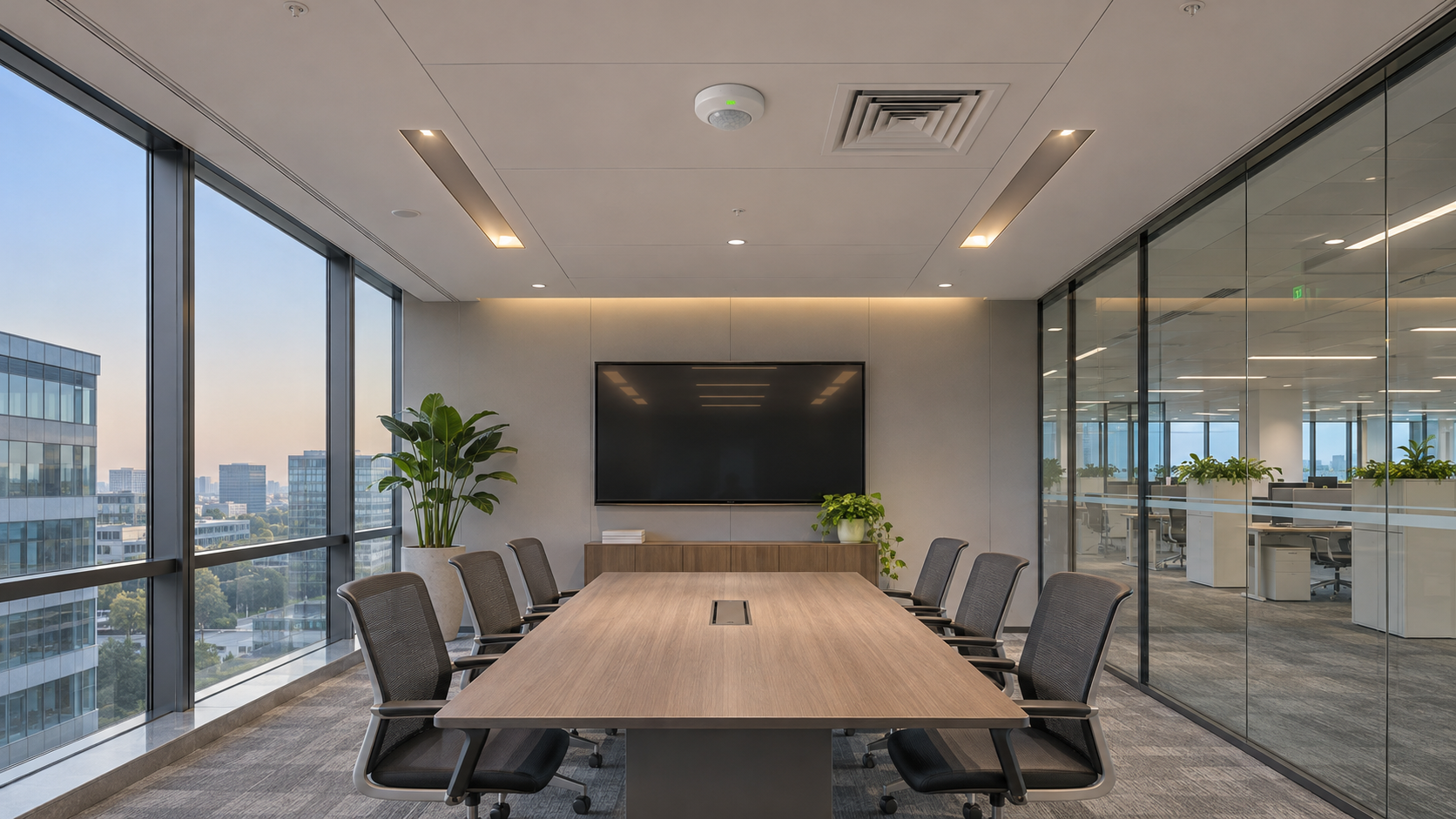
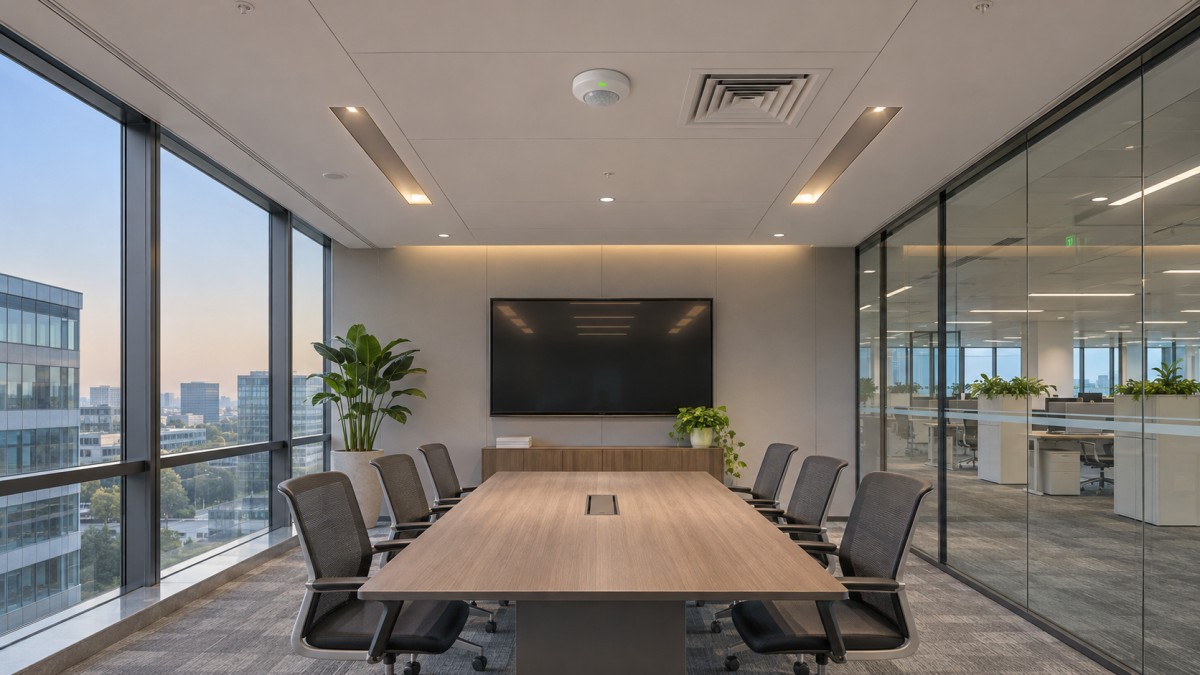
Integration allows those decisions to cross equipment boundaries. A meeting room booking or occupancy signal, for example, can influence both lighting and the heating and cooling serving that room. Without coordination, lights might switch off when the room is empty while the ventilation system continues supplying air on a fixed schedule.
The distinction is between observing equipment and controlling it. A dashboard can expose long operating hours or unusual consumption, but it saves energy only when someone or something acts on that information. Automated control can make that response continuous, provided the system has the right data, authority, and safeguards.
Reducing heating, cooling, and ventilation loads
HVAC is often the most consequential area for automation because it includes both energy used to produce heating or cooling and energy used to distribute it through fans and pumps. Integration can reduce demand at each stage.
Matching operation to occupancy
Schedules are a straightforward starting point. Instead of conditioning every space according to a fixed timetable, a system can use occupancy sensors, access information, or room reservations to identify when particular zones need service. During unoccupied periods, temperature setpoints can be relaxed and ventilation reduced, subject to building requirements and equipment constraints.
This approach works best when the available occupancy information matches the control zones. A sensor in one meeting room cannot reliably determine whether an entire floor is empty. Reservation data also indicates intent rather than actual presence: a room may be booked and not used, or occupied outside its booking. Combining sources and setting sensible fallback schedules reduces the chance that energy savings come at the expense of comfort.
Some spaces cannot be treated like ordinary offices. Server rooms, laboratories, and areas with specific humidity or ventilation requirements may need continuous conditioning. A central policy that switches all zones into an unoccupied mode can therefore create operational risks as well as complaints.
Avoiding heating and cooling conflicts
Separate controllers can work against one another. For example, a zone may request cooling while nearby heating equipment is active because setpoints are poorly coordinated, sensors disagree, or control sequences overlap. The result is energy spent removing heat that another part of the system has just added.
Integrated control helps identify and limit these conflicts by aligning zone setpoints, operating modes, and equipment commands. It does not mean that all simultaneous heating and cooling is automatically wasteful: some systems deliberately reheat air after dehumidification or serve zones with different loads. The useful question is whether that operation is required by the design and current conditions.
Adjusting supply to actual demand
Fans and pumps do not always need to run at the level required during peak conditions. Where equipment is designed for variable operation, controls can adjust airflow, water flow, or system pressure as demand changes. Zone requests, valve positions, and pressure sensors can inform those adjustments.
Similarly, a central heating or cooling plant can sometimes operate fewer units, or adjust supply temperatures, when the building load is low. Such changes need to respect equipment operating limits and the needs of the least-favored zones. Reducing flow too far, for instance, can leave distant areas uncomfortable or prevent equipment from operating properly.
Outdoor conditions can also provide opportunities. When outside air is suitable, an air-side economizer can reduce mechanical cooling by using that air to help cool the building. Its value depends on climate, humidity, air quality, equipment design, and correctly functioning dampers and sensors. Bringing in more outdoor air is not inherently efficient if it must then be heated, cooled, or dehumidified unnecessarily.
Linking lighting and other loads to building use
Lighting controls reduce consumption by switching or dimming fixtures when spaces are unoccupied or when daylight provides sufficient illumination. Integration adds context: a building-wide schedule can establish expected operating hours, while local sensors make adjustments for the actual use of individual areas.
Daylight response requires more than installing a sensor near a window. The sensor location, fixture grouping, and dimming settings need to reflect how light reaches the occupied space. Poor calibration can cause distracting changes in brightness or leave lights at higher output than necessary. Occupancy controls also need appropriate time delays so that normal periods of stillness do not turn lights off while a room is in use.
Automation can coordinate other controllable loads, such as selected plug loads or equipment that can safely enter a low-power state. These opportunities should be assessed individually. Turning off a shared workstation, network device, or process-critical appliance can disrupt operations, and some devices consume little energy when idle. The ability to control a load is not, by itself, evidence that controlling it is worthwhile.
Using fault detection to prevent energy waste
Even a well-designed control strategy loses value if sensors drift, valves stick, dampers fail, or equipment is left in manual operation. Integrated systems can compare related signals and flag conditions that deserve investigation: a valve commanded closed while the space continues to receive heat, for example, or a fan running long after the associated zone should be unoccupied.
These alerts are most useful when they include enough context to distinguish a fault from legitimate operation. A system starting early may be following an approved recovery schedule; a high cooling demand may reflect an unusually full room. Alarm thresholds that ignore these conditions can produce excessive notifications, making important problems harder to find.
Detection is not the same as correction. A valve that is physically stuck will continue wasting energy until it is repaired or replaced. The value of analytics therefore depends on a practical process for assigning issues, checking their cause, recording corrective work, and confirming that the expected performance has returned.
Why similar buildings can see different results
The size of a potential saving is determined by the gap between current operation and achievable operation—not by the number of devices connected. A facility with extended hours, recurring schedule overrides, and poorly coordinated controls may have meaningful avoidable consumption. Another facility with recently commissioned equipment and disciplined operating practices may offer fewer low-cost improvements.
Building use also matters. An office with predictable overnight vacancies presents different opportunities from a continuously occupied hospital, hotel, or production facility. Even where a building is open around the clock, individual zones or pieces of equipment may still have periods of lower demand. Conversely, a sensor-based vacancy strategy is unlikely to deliver much if the relevant spaces are almost always occupied.
The existing equipment limits what software can achieve. An older system may lack the variable-speed drives, control valves, dampers, metering, or zone-level controls needed to implement a proposed strategy. Integration may still improve scheduling and visibility, but deeper savings could require mechanical or electrical upgrades.
Control quality is equally important. Incorrectly located temperature sensors, incomplete equipment data, unreliable communications, or inappropriate setpoints can cause a system to make poor decisions. Connectivity can also expose incompatibilities between existing controllers. Before relying on a proposed integration, it is important to establish which data points can be read, which commands can be written, and how equipment behaves if communications fail.
Evaluating the investment against measurable outcomes
A credible business case begins with a defined scope: which buildings, energy sources, equipment, and operating changes are included. Electricity and fuel should be considered separately where relevant, because a control change can reduce one while increasing the other. Reducing fan energy, for example, is valuable, but its effect on heating, cooling, and ventilation must also be checked.
The baseline should describe energy use before the changes, together with the factors that influence it. Weather, occupied area, operating hours, production activity, and major equipment changes can all affect comparisons. A simple year-on-year bill comparison may misattribute a mild winter or a vacant floor to the automation project.
Submetering can help isolate a plant, system, or tenant area, but not every project requires a new meter for every device. The appropriate level depends on the size of the decision and the ability to separate the effect of the controls from other changes. Where savings are material to an investment decision or contract, the measurement approach, adjustments, reporting period, and responsibility for verification should be agreed in advance.
Costs extend beyond the initial controls package. Installation, engineering, integration with existing equipment, sensor replacement, commissioning, software or support fees, cybersecurity maintenance, and staff training can affect the lifetime return. If proposed savings depend on repairing equipment or adding variable-speed capability, those costs belong in the same assessment rather than being treated as separate assumptions.
Peak-demand charges deserve separate attention where electricity tariffs include them. A system that staggers equipment starts or shifts controllable loads may reduce a billed peak without reducing total energy use by the same proportion. Conversely, reducing annual kilowatt-hours does not necessarily lower a demand charge if the building still reaches the same peak during the billing period. Energy savings and cost savings should therefore be calculated using the applicable tariff structure.
Keeping savings from eroding
Commissioning translates a proposed control sequence into verified operation. It should include checking sensor readings, confirming that commands reach the intended equipment, testing occupied and unoccupied modes, and observing how the system responds to abnormal conditions. A completed installation is not sufficient evidence that every sequence is functioning as intended.
After handover, the building continues to change. Occupancy patterns shift, tenants adjust layouts, equipment is replaced, and temporary overrides can become permanent. Regular review of schedules, alarms, overrides, and consumption trends helps identify when the original control settings no longer fit the way the building is used.
Clear ownership is essential. Someone needs authority to approve setpoint changes, investigate persistent alarms, and coordinate repairs across controls and mechanical systems. Access controls, documented backups, and a plan for software updates also help protect the reliability of a system that can influence essential building services.
The strongest case for integration is a specific operational problem that can be measured and corrected: equipment running unnecessarily, zones receiving conflicting commands, or a central plant operating beyond current demand. Connecting systems makes those problems easier to address; sustained savings depend on the quality of the control strategy and the discipline used to verify it over time.
Deep Dive
Related Intelligence
 Energy ManagementMaximizing ROI: Why Enterprises are Investing in Commercial and Industrial Energy StorageAnalyst:IT & Security Director
 Energy ManagementEdge Computing Hardware in Automated Poultry Barns Needs Redundancy — But Most Installations Skip ItAnalyst:IT & Security Director
 Energy ManagementAcrel Targets 5% Overseas Revenue by 2025, Focuses on Southeast Asia Microgrid SolutionsAnalyst:IT & Security Director