Battery Cage System Procurement: Checks Before Farm Installation
Key Takeaways
- How to evaluate precision livestock farming companies for grazing herdsAgri-Tech Strategist
- How to assess an agricultural machinery manufacturer's parts supportAgri-Tech Strategist
- What drives industrial automation cost in a new production line?Chief Civil Engineer
- What makes Ethiopia poultry farming profitable for small-scale producers?Agri-Tech Strategist
- Are Cloud Procurement Platforms Worth It for Chemical Sourcing?IT & Security Director
- How to Verify a New Materials Supplier’s Technical DocumentationLead Materials Scientist
- Should Buyers Switch from Petrochemical Plastics to Bio-Based Polymers?Lead Materials Scientist
- What Causes Frequent Customs Delays for Specialty Chemical Imports?Lead Materials Scientist
Industry Overview
We do not just publish news; we construct a high-fidelity digital footprint for our partners. By aligning with TNE, enterprises build the essential algorithmic "Trust Signals" required by modern search engines, ensuring they stand out to high-net-worth buyers in an increasingly crowded global digital landscape.
Battery Cage System Procurement: Checks Before Farm Installation
A poultry house can be structurally complete and still be unready for a cage-system installation. Many procurement problems emerge at the interface between equipment and the farm itself: a floor that cannot accept the proposed loading arrangement, a manure-removal layout that conflicts with drainage, electrical capacity that does not match motor loads, or service aisles that become too narrow once feed lines and egg collection equipment are in place.
For buyers, the central task is not simply comparing unit prices or bird capacity. A layer housing system is a combined mechanical, electrical, animal-management and building-integration purchase. The equipment specification must work with the flock plan, available utilities, manure-handling method, local welfare rules, labor model and maintenance capability. If those conditions are not documented before an order is placed, apparently minor omissions can lead to installation changes, delayed commissioning or operating constraints that last for years.
Start with the farm brief, not the supplier quotation
A useful procurement process begins with a site-specific design brief. This should define the intended house dimensions, internal clear height, row layout, flock size, planned replacement cycle, climate conditions, egg-handling route and manure destination. It should also identify whether the project is a new build, a replacement within an existing building, or an expansion alongside operating houses. Each situation presents different constraints.
For example, an existing house may have column positions, door openings, ceiling trusses or drainage channels that limit the arrangement of cage rows. A new building allows more freedom, but only if equipment requirements are shared with the civil designer early enough. Procurement teams should avoid treating the cage layout as a separate package that can be finalized after the building has been designed.
Before requesting final offers, buyers should establish the following baseline information:
- usable internal length, width and height, including columns, doors and service areas;
- the target number of birds and the production system permitted for the intended market;
- local climate conditions, especially heat, humidity, dust and corrosive gases;
- the available electrical supply, backup-power arrangement and water source;
- the planned method for manure collection, storage, treatment and removal;
- the route for egg transfer from the house to grading, packing or collection areas;
- staff access, inspection routines, cleaning arrangements and emergency procedures.
This brief gives suppliers a common basis for design. Without it, quotations may appear comparable while covering different row lengths, automation boundaries, control panels, spare-parts scopes or installation responsibilities.
Confirm the production system fits the regulatory and market context
The term “battery cage” is used broadly in commercial discussions, but its legal and market meaning varies by country and sales channel. Some jurisdictions restrict or prohibit particular cage configurations, while buyers supplying retailers, exporters or food-service customers may also face customer welfare requirements that exceed minimum legal obligations. A procurement specification should name the applicable rule set rather than rely on general descriptions such as “standard cage” or “export model.”
In the European Union, Council Directive 1999/74/EC sets minimum standards for the protection of laying hens and prohibits conventional cages, while allowing enriched cages under defined conditions. Buyers operating in or supplying that market need to assess the relevant housing category and space requirements against the directive and any national implementation rules. The World Organisation for Animal Health (WOAH) also addresses welfare management of laying hens in Chapter 7.10 of its Terrestrial Animal Health Code, including system design, inspection and management considerations.
These references do not replace local legal advice or customer audits. They do, however, show why equipment procurement cannot be separated from welfare, stocking density, access, inspection and management requirements. The buyer should request drawings that show usable areas, feeder and drinker arrangement, access doors, aisle widths and any enrichment or nest-related components required in the intended market.
Where no specific legal requirement applies, the farm should still decide what welfare and customer standards it intends to follow. That decision affects cage configuration, bird density, labor routines and the economics of the house. Changing those assumptions after fabrication is costly because row spacing, feed distribution and manure-belt dimensions may all be affected.
Sources cited: European Union, Council Directive 1999/74/EC of 19 July 1999; World Organisation for Animal Health (WOAH), Terrestrial Animal Health Code, Chapter 7.10, “Animal welfare and laying hen production systems.”
Read the cage specification as an operating system
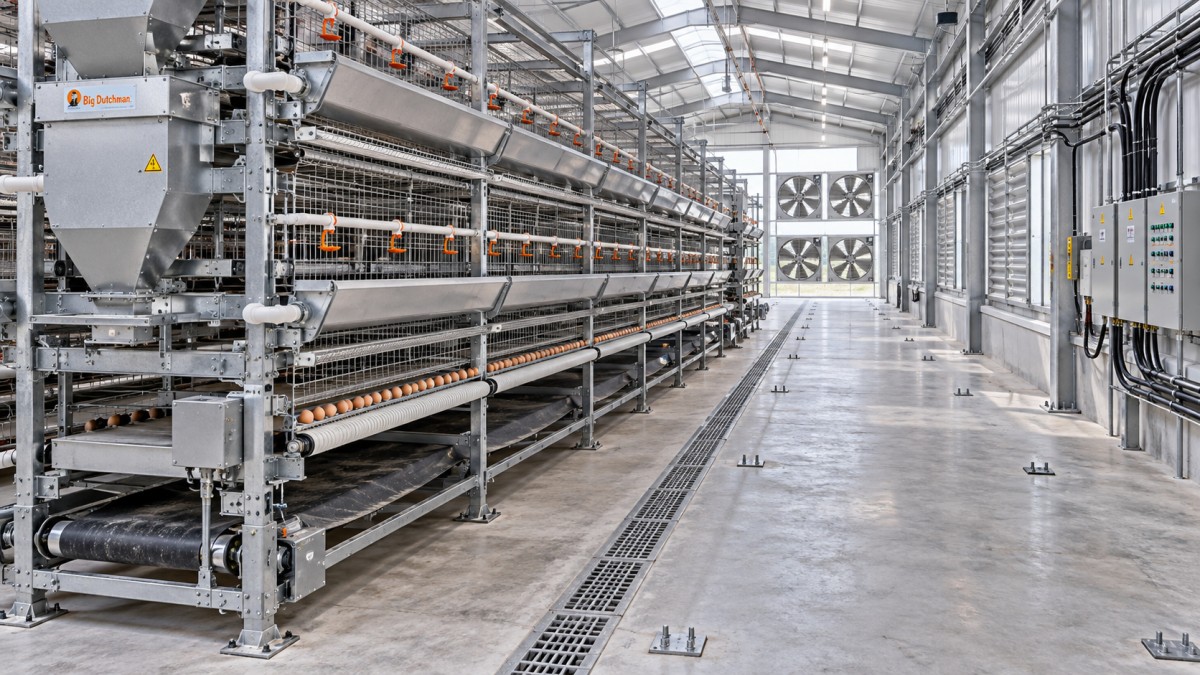
A cage quotation should be reviewed as a system of connected components rather than a count of cages. The frame supports birds, feed, water, eggs and manure equipment; its durability is linked to material selection, coating quality, house ventilation and cleaning practice. The automation package determines how many daily tasks are manual, where failures can interrupt production and what level of technical support the farm will need.
Buyers should ask for an itemized bill of materials that separates the cage frame, wire mesh, support legs, feed troughs, feed hoppers, drinking lines, regulators, egg belts or collection assemblies, manure belts or scrapers, drive motors, control panels, sensors and spare parts. A single “complete system” line is difficult to evaluate because important exclusions may remain hidden.
The choice between galvanized, coated and other corrosion-protection approaches should be assessed against the actual house environment. Moisture, manure accumulation, cleaning chemicals and poor ventilation can accelerate corrosion. Rather than accepting a general claim about durability, procurement teams can request material descriptions, coating-process information, sample sections where practical, and a clear statement of the supplier’s warranty boundaries. The warranty should identify what is covered, for how long, and whether corrosion, electrical components, belts and motors are treated differently.
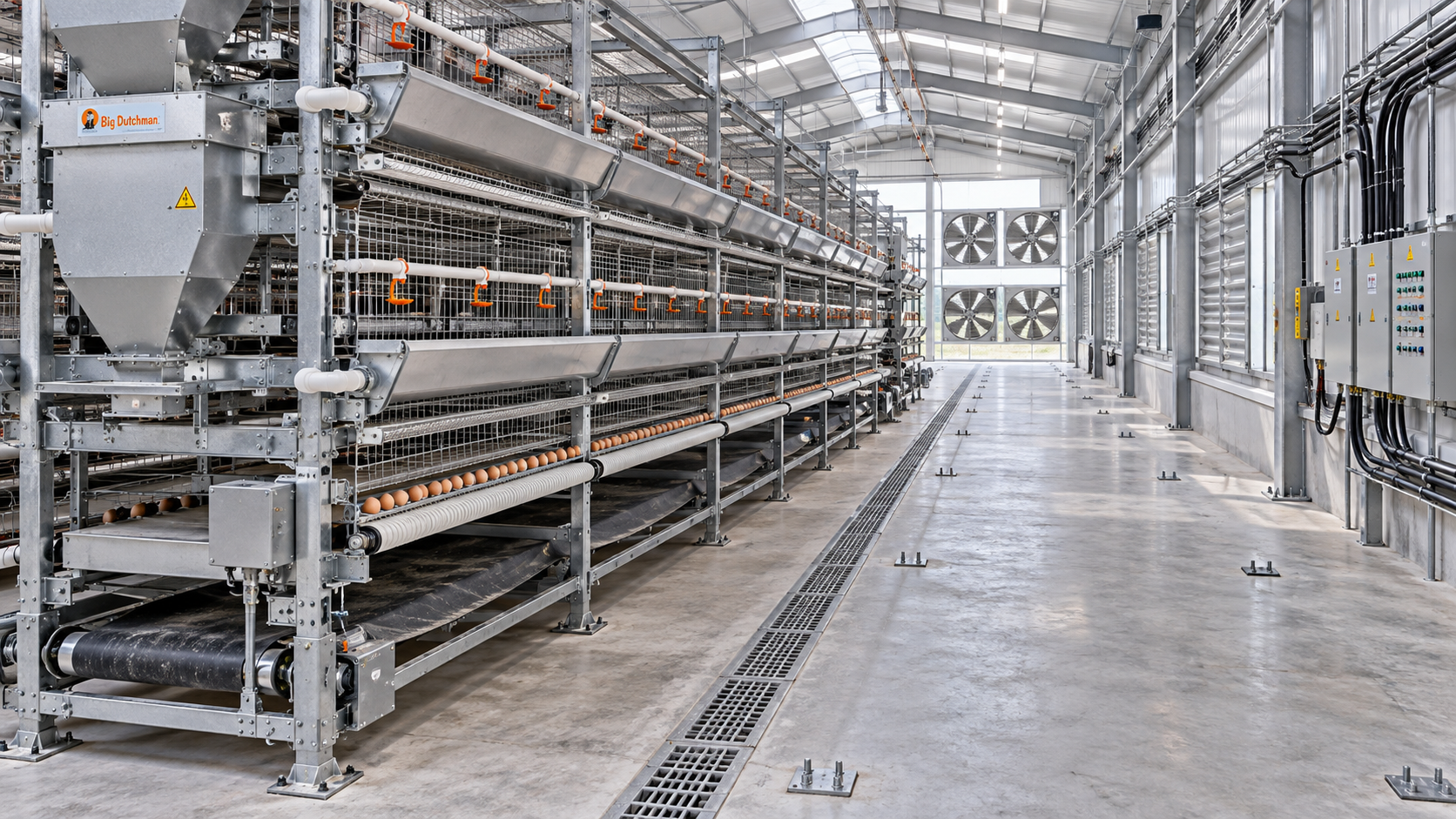
For a multi-tier arrangement, structural questions are equally important. Ask for the proposed row height, tier spacing, support configuration and access method for routine inspection. Equipment that maximizes bird capacity may be difficult to inspect, repair or clean if headroom and service clearances are limited. A layout should allow workers to identify weak birds, leaking drinkers, jammed egg belts or manure buildup without unsafe climbing or excessive disruption to the flock.
Automation should match the farm’s ability to maintain it
Automated feeding, drinking, egg collection and manure removal can reduce repetitive handling, but each subsystem adds drives, controls and failure points. The right question is not whether automation is available; it is whether the farm can keep it operating under local conditions.
Procurement teams should establish the expected routine for each function. How is a feed line primed and cleaned? What happens when a belt stops during collection? Can a single row be isolated for repair? Is there a manual override? Which parts are expected to wear, and can they be sourced locally or held in stock? If a control panel uses a specific voltage or frequency, is it compatible with the site supply and generator?
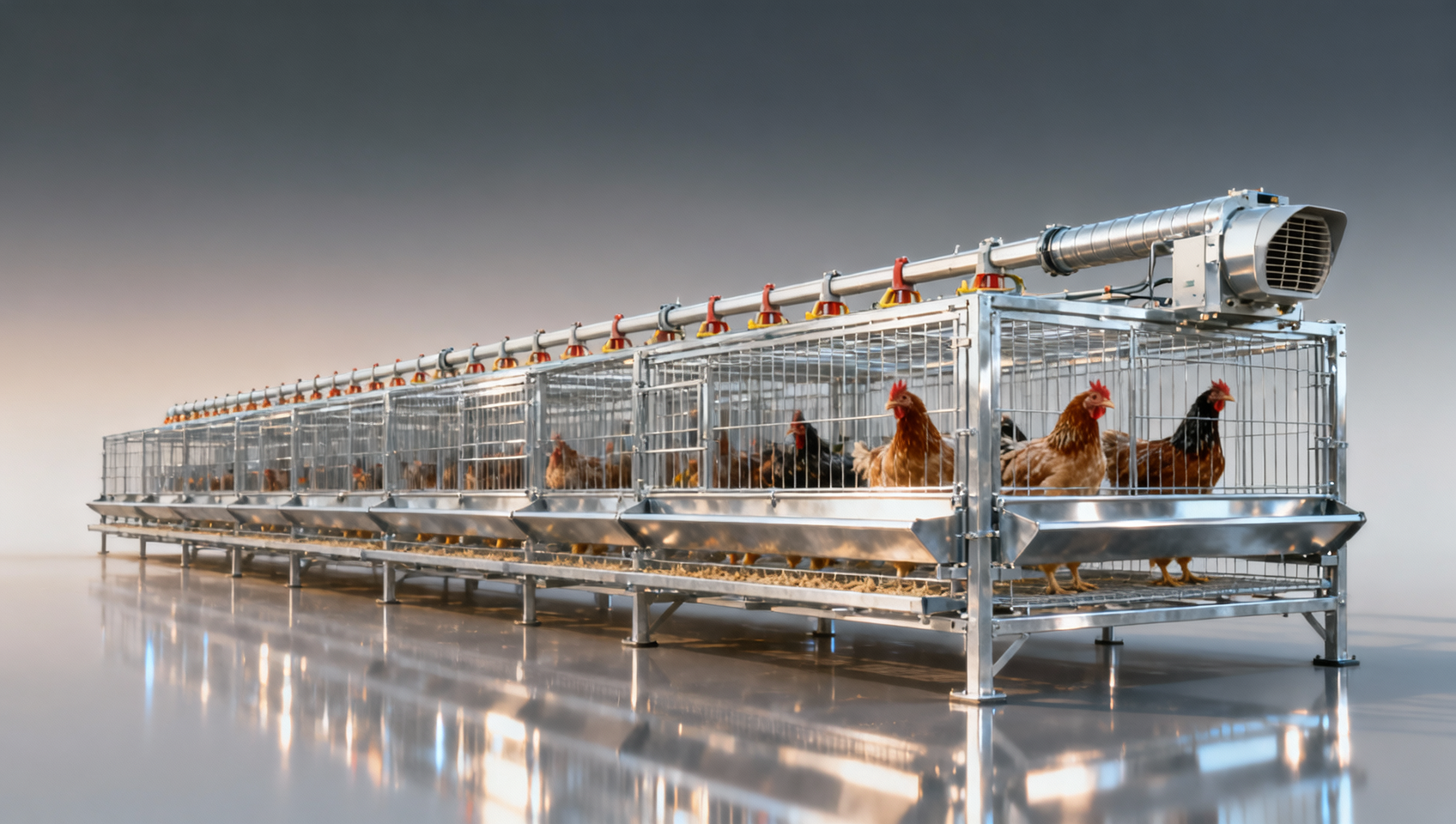
For buyers comparing an A-type arrangement, a detailed description of a battery cage system for layers can be useful as a reference point for mapping the cage frame, feeding, drinking, egg collection and manure-handling elements that need to be included or clarified in an offer. The purchase decision should still be based on the farm’s own layout, regulatory obligations and operational capability rather than on a generic capacity figure.
Check the building interfaces before fabrication begins
Installation risk often sits outside the equipment package. The farm owner, building contractor, electrical contractor and equipment supplier may each assume that another party will provide foundations, embedded anchors, drainage, cable trays, water filtration or exhaust openings. A responsibility matrix helps prevent those gaps.
Electrical documentation should include single-line diagrams, motor ratings, control-panel details and cable requirements. Where a generator is planned, verify that it can start and sustain the required loads, including ventilation and critical water systems. The International Electrotechnical Commission’s IEC 60204-1 addresses electrical equipment of machines and is commonly used as a reference for machine electrical safety; applicability depends on the equipment and jurisdiction, so buyers should confirm which standards the supplier designs to and which site codes govern installation.
Source cited: International Electrotechnical Commission, IEC 60204-1, Safety of machinery — Electrical equipment of machines — Part 1: General requirements.
Turn quality claims into inspection points
Factory inspection, shipment inspection and site acceptance are different controls. A factory visit or third-party pre-shipment inspection can help verify dimensions, material identification, weld consistency, mesh finish, belt tracking components, motors, fasteners and packing completeness before goods leave the supplier. It cannot confirm that the system will function properly in a finished poultry house. That requires installation checks and a controlled commissioning process.
The contract should define what evidence is required at each stage. Useful documents may include approved layout drawings, a final bill of materials, packing list, installation manual, electrical diagrams, operating instructions, recommended spare-parts list and warranty terms. If the supplier makes claims about coating, material grade or component origin, request documentary support appropriate to the claim rather than relying solely on brochure language.
At delivery, count packages against the packing list and inspect for transport damage before unloading is complete. Photograph damaged crates, bent frame sections, crushed belts or missing control components. Record discrepancies promptly under the contract’s notification process. Small shortages can stop an installation crew if a specialized bracket, connector or drive part is unavailable locally.
Plan commissioning as a procurement deliverable
Commissioning should not be reduced to switching on the equipment. Before birds enter the house, the farm should test feed delivery, water pressure and drinker response, belt direction and tracking, egg-transfer movement, manure-removal sequences, alarms, emergency stops and backup-power procedures. Each test should be documented with the responsible party and any corrective action.
Training also needs a defined scope. Operators require practical instruction on daily checks, cleaning limits, lubrication where applicable, belt adjustment, drinker flushing, fault indicators and safe isolation before maintenance. A system can be mechanically sound yet perform poorly if workers have no clear escalation path when a feeder, motor or controller behaves abnormally.
A well-managed purchase closes only when the installed layout matches approved drawings, the supplied components match the contracted scope, utilities are verified under operating conditions, and staff can carry out routine tasks safely. That discipline gives the farm a more reliable basis for production than a decision driven by capacity and purchase price alone.
Deep Dive
Related Intelligence
 Smart Livestock & Poultry TechGlobalizing Agri-Equipment: How Top Manufacturers are Localizing in AfricaAnalyst:Agri-Tech Strategist
 Agricultural Equipment OEMWhich poultry housing systems supplier offers the shortest lead time for climate-controlled broiler houses in Southeast Asia?Analyst:Agri-Tech Strategist
 Agricultural Equipment OEMWhich poultry housing systems supplier offers the shortest lead time for climate-controlled broiler houses in Southeast Asia?Analyst:Agri-Tech Strategist