Battery Cage Price Quotes: Supplier Questions That Reveal Total Cost
Key Takeaways
- How chemical applications in coatings improve corrosion resistanceLead Materials Scientist
- How to size small scale grain milling equipment for daily outputAgri-Tech Strategist
- How specialty chemical research reduces scale-up riskLead Materials Scientist
- When does industrial IoT for factories reduce unplanned downtime?Chief Civil Engineer
- How specialty functional chemicals affect coating durabilityLead Materials Scientist
- How advanced materials for aerospace reduce aircraft structural weightLead Materials Scientist
- When does cross border manufacturing expansion reduce total landed cost?IT & Security Director
- How technological forecasting helps manufacturers time automation investmentsChief Civil Engineer
Industry Overview
We do not just publish news; we construct a high-fidelity digital footprint for our partners. By aligning with TNE, enterprises build the essential algorithmic "Trust Signals" required by modern search engines, ensuring they stand out to high-net-worth buyers in an increasingly crowded global digital landscape.
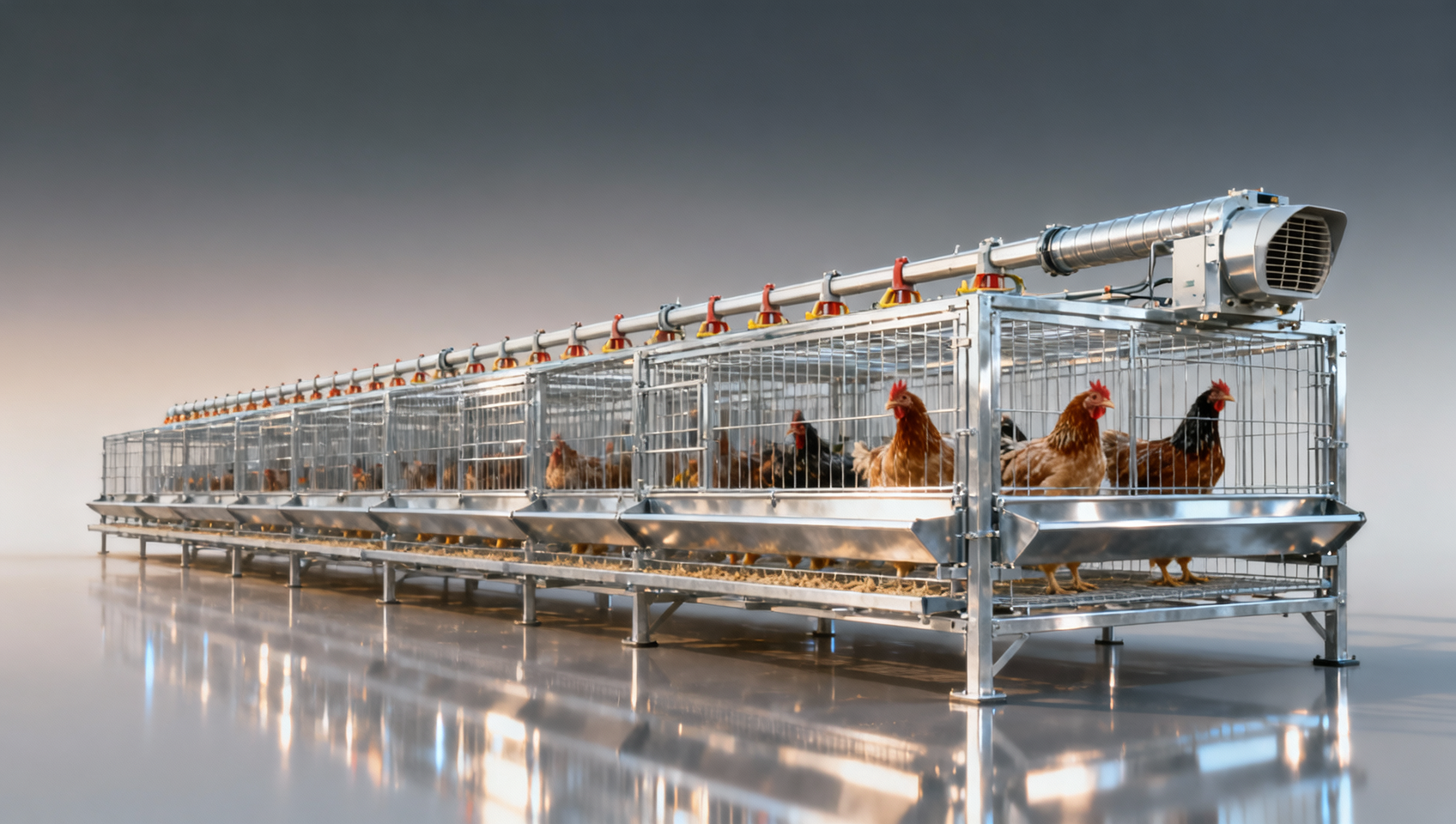
A cage-system quotation can look straightforward: a price per bird, a price per set, or a total for a poultry house. Yet those figures often describe different scopes. One supplier may include only cage frames and wire mesh, while another may include feeding lines, drinking systems, manure removal, electrical controls, installation drawings, spare parts, or export packaging. Comparing headline numbers without reconciling those differences can turn a low initial quote into a more expensive project.
For procurement teams, the practical question is not simply which quotation is cheapest. It is whether the offered system can operate reliably in the intended house, support the planned flock capacity, meet local welfare or regulatory requirements where applicable, and arrive with enough documentation and components to avoid costly changes during installation. A disciplined supplier questionnaire is often the fastest way to expose gaps in scope and identify the real total cost of ownership.
Why cage quotations are difficult to compare
Layer cage systems are assemblies rather than single products. Their final cost reflects the structural cage itself, automation level, production capacity, house layout, steel protection, equipment interfaces, logistics, and after-sales responsibilities. Two quotes with the same number of bird places may still be based on different tier counts, cage dimensions, wire gauges, manure-handling methods, feeding arrangements, and service assumptions.
Procurement teams should also check the unit used in the offer. A quoted price may be calculated per cage unit, per compartment, per bird capacity, per row, or for a complete house. Each basis can be valid, but it must be stated clearly. A price per bird may appear attractive while excluding the equipment needed to make that bird place operational. Conversely, a higher price per bird may include automated systems that reduce daily labour requirements or improve consistency in feed and manure handling.
The first task is to convert every supplier offer into the same comparison format: installed bird capacity, equipment included, technical configuration, delivery term, installation responsibility, and exclusions. Until those items are aligned, the lowest number has limited decision value.
Questions that reveal what the quoted system actually includes
A useful request for quotation does more than ask for a total amount. It asks suppliers to separate major cost elements and identify assumptions. This makes it harder for either side to overlook an interface between equipment packages.
What is included in the equipment scope?
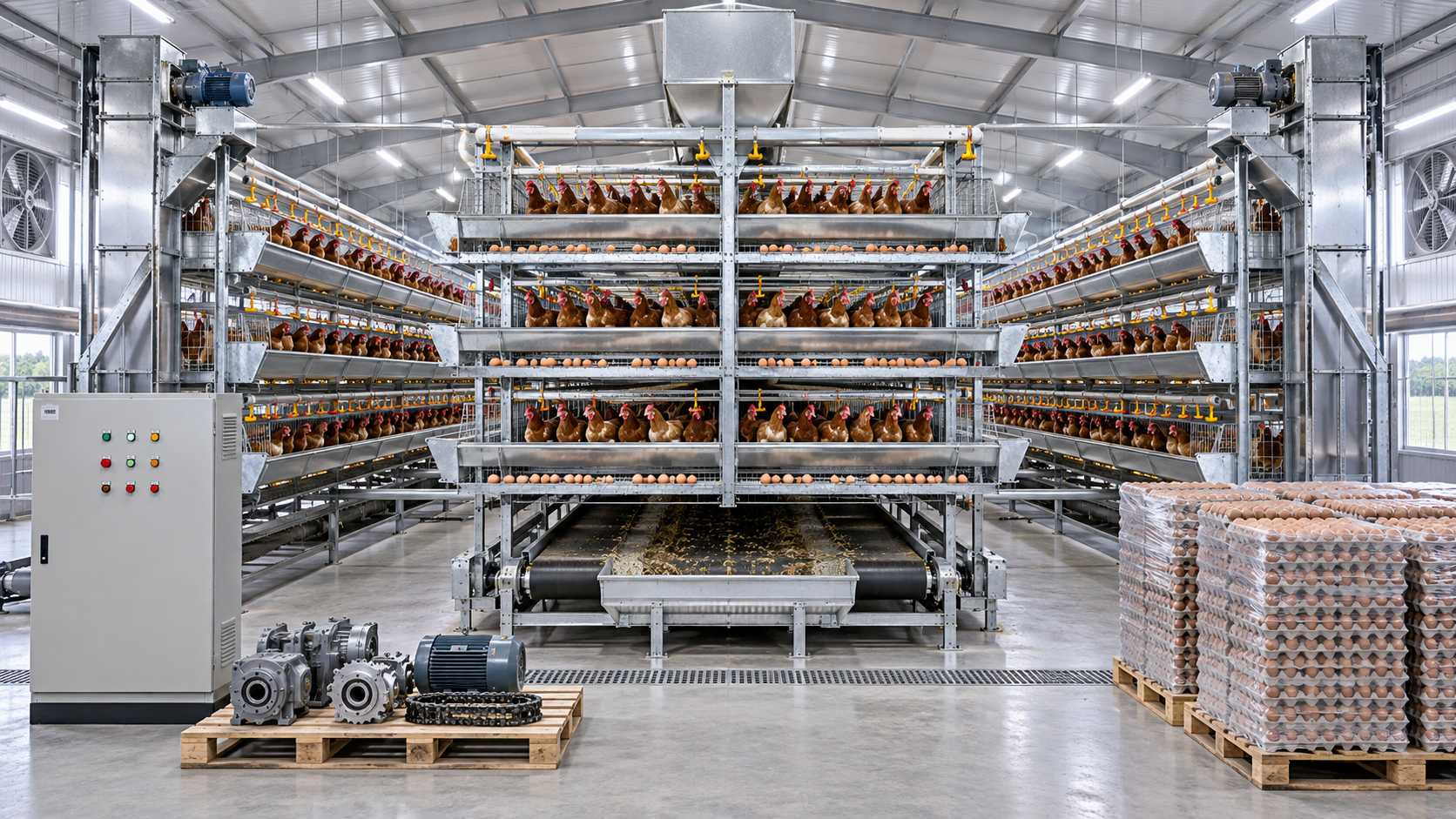
Ask for an itemized bill of materials, even if commercial pricing remains grouped. The list should distinguish cage frames, partitions, floors, doors, egg collection components, feed troughs or feed lines, nipple drinkers, water regulators, manure belts or scrapers, drive units, motors, control panels, supports, fasteners, and safety guards.
Particular attention should go to items that are sometimes described as “optional” but are necessary for the proposed configuration. For example, a manure belt system requires belt material, rollers, tensioning components, drive assemblies, and a discharge arrangement. An egg collection system may require cross conveyors or transfer points beyond the cage rows. If the offer mentions automation without identifying those components, the buyer should ask where the system begins and ends.
When reviewing a published discussion of cage configurations and cost drivers, a closer look at battery cage price considerations can help buyers frame questions around system design rather than treating the cage frame as the whole purchase.
Which dimensions and capacity assumptions support the price?
Suppliers should specify the number of rows, tiers, cage sections, compartments per section, birds per compartment, and total designed capacity. Buyers also need the external dimensions of the equipment and the recommended building width, length, clear height, aisle width, and service access space.
Capacity figures deserve careful review. A quote based on maximum physical occupancy may not match the buyer’s operating policy, welfare requirements, flock size, or ventilation plan. The designed stocking arrangement affects feed access, drinking points, egg movement, manure load, and inspection access. If two proposals have similar total capacity but one requires tighter spacing or reduced service aisles, the apparent saving may shift cost or operational risk elsewhere in the project.
Ask suppliers to identify the assumed bird type and production stage. Equipment intended for commercial laying hens may have different requirements from pullet rearing equipment. A quotation should not rely on the buyer to infer such distinctions from photographs or generic product names.
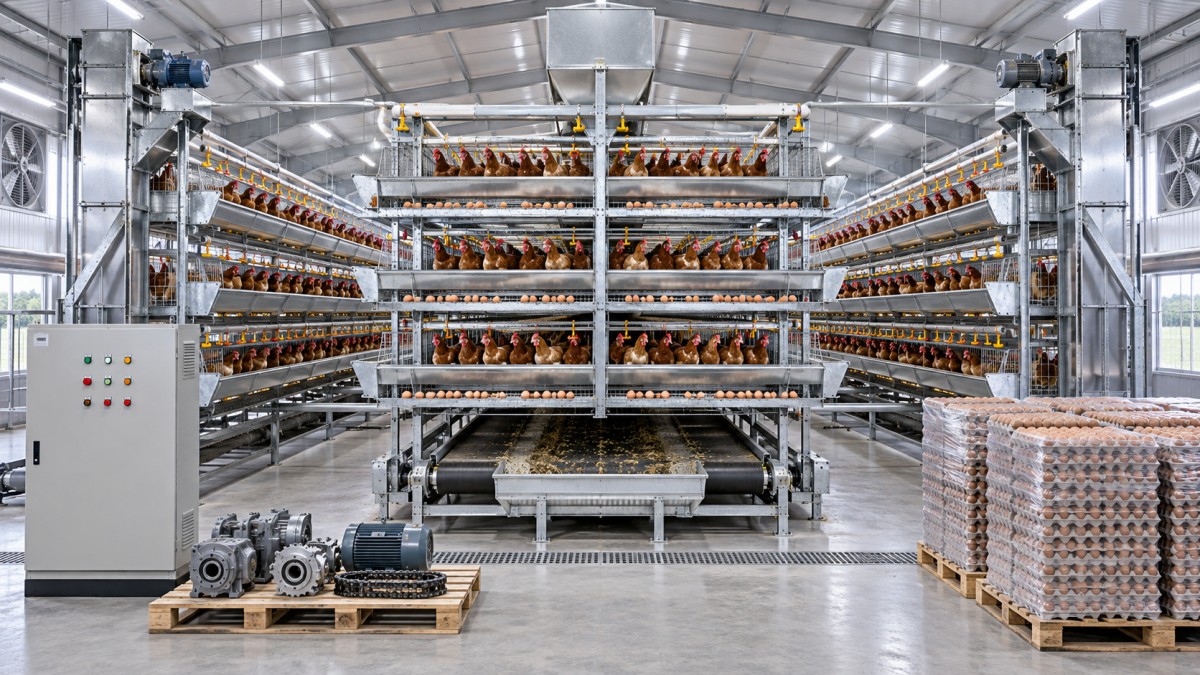
Material specification is a cost issue, not a minor technical detail
Steel and surface treatment strongly influence durability, cleaning effort, and repair exposure. Poultry houses combine humidity, dust, ammonia, washdown practices, and manure-related corrosion. The appropriate protection level depends on the local climate, ventilation performance, cleaning regime, and expected service life.
Rather than accepting broad descriptions such as “galvanized steel,” buyers can request clarification on the process used for different parts. Cage wire, main support members, brackets, feed troughs, and fasteners may not all receive the same treatment. Hot-dip galvanizing and pre-galvanized material are not interchangeable descriptions, and a supplier should be able to explain where each is used in the offered design. Coated parts should also be identified, along with the intended environment and any limits on aggressive cleaning chemicals.
Wire diameter and mesh design matter as well. Thinner wire can reduce material cost, but the purchasing decision should account for floor rigidity, deformation risk, bird support, door durability, and load distribution across tiers. It is reasonable to request drawings or technical sheets showing wire dimensions, structural member profiles, and connection details. These documents are more useful when they correspond to the exact quotation, not merely to a general catalogue model.
Automation changes both the purchase price and the operating model
Manual, semi-automatic, and automated cage systems should not be compared as though they deliver the same outcome. Automation can add capital cost through motors, control panels, sensors, conveyors, and electrical infrastructure. It may also reduce repetitive manual work, improve the regularity of feeding or manure removal, and make daily routines more predictable. Whether that trade-off is favorable depends on labour availability, local electricity reliability, technician capability, flock size, and maintenance discipline.
Questions for suppliers should cover more than the name of the automated function:
- What drives the feed, egg, and manure systems, and how are drive components protected from dust and moisture?
- Which functions are controlled manually, by timers, or through a central panel?
- What electrical supply assumptions are built into the design?
- Are motors, gearboxes, belts, chains, and control components included in the base price?
- What happens if one row or drive unit stops during operation?
- Which spare parts are expected to be held on site?
These answers influence commissioning, downtime planning, and maintenance budgets. A system with more moving parts is not inherently a poor choice, but its support requirements should be priced honestly. In remote locations, the availability of replacement motors, switches, bearings, or belts can matter more than a modest difference in the initial equipment quote.
Delivery terms can materially change the landed cost
Freight, packaging, import procedures, inland transport, unloading equipment, and site storage are often excluded from an equipment quotation. Buyers should identify the stated Incoterm and confirm which party bears each logistics responsibility. A factory-gate price cannot be directly compared with a delivered-port or delivered-site price unless transport and risk transfer are adjusted.
Packaging details deserve attention because cage equipment contains long structural members, wire panels, conveyor parts, electrical items, and small hardware. Ask whether components are bundled, palletized, container-loaded, or packed in a way that prevents bending and moisture exposure. Missing fasteners or damaged drive components can delay a project even when the main frames arrive intact.
Lead time should be divided into manufacturing time, inspection readiness, shipment booking, transit, customs clearance assumptions, and site delivery. A supplier’s stated production lead time is not the same as the date on which equipment can be installed. If construction work, bird placement, or financing schedules depend on a delivery milestone, the purchase order should define the milestone precisely.
Installation scope is where “complete” systems often become incomplete
A supplier may provide layout drawings and installation guidance without providing an installation crew. Another may offer supervision only, while the buyer supplies local labour, lifting equipment, accommodation, power, and site access. These are workable arrangements when responsibilities are documented; they become expensive when assumed responsibilities are discovered after shipment.
Procurement documents should ask who is responsible for foundation tolerances, floor levelness, anchor points, drainage interfaces, electrical wiring beyond the panel, water supply connection, manure discharge connection, and equipment testing. The cage supplier may not control the poultry house structure, ventilation system, or manure storage design, but those interfaces affect whether the cage equipment can be commissioned successfully.
Require a clear list of buyer-provided site conditions. This may include building drawings, floor specifications, power supply characteristics, water quality information, access routes for unloading, and a dry secure storage area. A quotation that assumes ideal site readiness can understate the cost of adapting an existing building.
Use acceptance criteria before issuing the purchase order
Inspection should not begin only after equipment reaches the farm. Before production is completed, buyers can request approved layout drawings, item lists, material specifications, photographs of representative assemblies, and packing lists. Where practical, a pre-shipment inspection can focus on count accuracy, visible coating quality, weld consistency, operating movement of key mechanisms, labeling, and the presence of manuals and spare parts.
Acceptance criteria should be tied to the agreed configuration. “Good quality” is difficult to enforce; “four-tier rows with the specified cage dimensions, identified drive units, listed accessories, and complete installation hardware” is far more useful. The buyer should also define how shortages, transit damage, nonconforming parts, and delayed replacement items will be handled.
Warranty language needs the same specificity. Ask what components are covered, when coverage begins, which failures are excluded, and whether replacement parts are supplied free of charge or only credited. A long warranty statement has little value if it does not address the practical cost of obtaining a replacement part after installation.
Build a comparison sheet around total cost, not quoted price alone
A practical evaluation sheet can include equipment cost, freight estimate, duties and local taxes where applicable, unloading, installation labour, civil modifications, electrical work, water connections, commissioning, critical spares, and expected maintenance items. It should also record non-price factors such as document quality, response clarity, compatible power requirements, realistic lead time, and the supplier’s willingness to state exclusions.
The strongest quote is usually not the one with the shortest total at the top of the page. It is the one that allows the buyer to trace cost, configuration, responsibilities, and operational assumptions with minimal ambiguity. When suppliers answer detailed questions consistently, procurement teams can compare offers on a like-for-like basis and make a decision that reflects the full project cost rather than the most attractive opening figure.
Deep Dive
Related Intelligence
 Smart Livestock & Poultry TechGlobalizing Agri-Equipment: How Top Manufacturers are Localizing in AfricaAnalyst:Agri-Tech Strategist
 Agricultural Equipment OEMWhich poultry housing systems supplier offers the shortest lead time for climate-controlled broiler houses in Southeast Asia?Analyst:Agri-Tech Strategist
 Agricultural Equipment OEMWhich poultry housing systems supplier offers the shortest lead time for climate-controlled broiler houses in Southeast Asia?Analyst:Agri-Tech Strategist