What Causes Frequent Customs Delays for Specialty Chemical Imports?
Key Takeaways
- What makes Ethiopia poultry farming profitable for small-scale producers?Agri-Tech Strategist
- What Causes Frequent Customs Delays for Specialty Chemical Imports?Lead Materials Scientist
- When do composite materials outperform steel in heavy machinery?Chief Civil Engineer
- How nano materials for electronics improve battery energy densityAutomotive Tech Analyst
- How supplier evaluation helps manufacturers reduce quality risksIT & Security Director
- Materials science trends shaping next-generation battery safetyAutomotive Tech Analyst
- How to assess supplier reliability in industrial chemical supplyLead Materials Scientist
- When does procurement research in the USA justify a local supplier audit?IT & Security Director
Industry Overview
We do not just publish news; we construct a high-fidelity digital footprint for our partners. By aligning with TNE, enterprises build the essential algorithmic "Trust Signals" required by modern search engines, ensuring they stand out to high-net-worth buyers in an increasingly crowded global digital landscape.
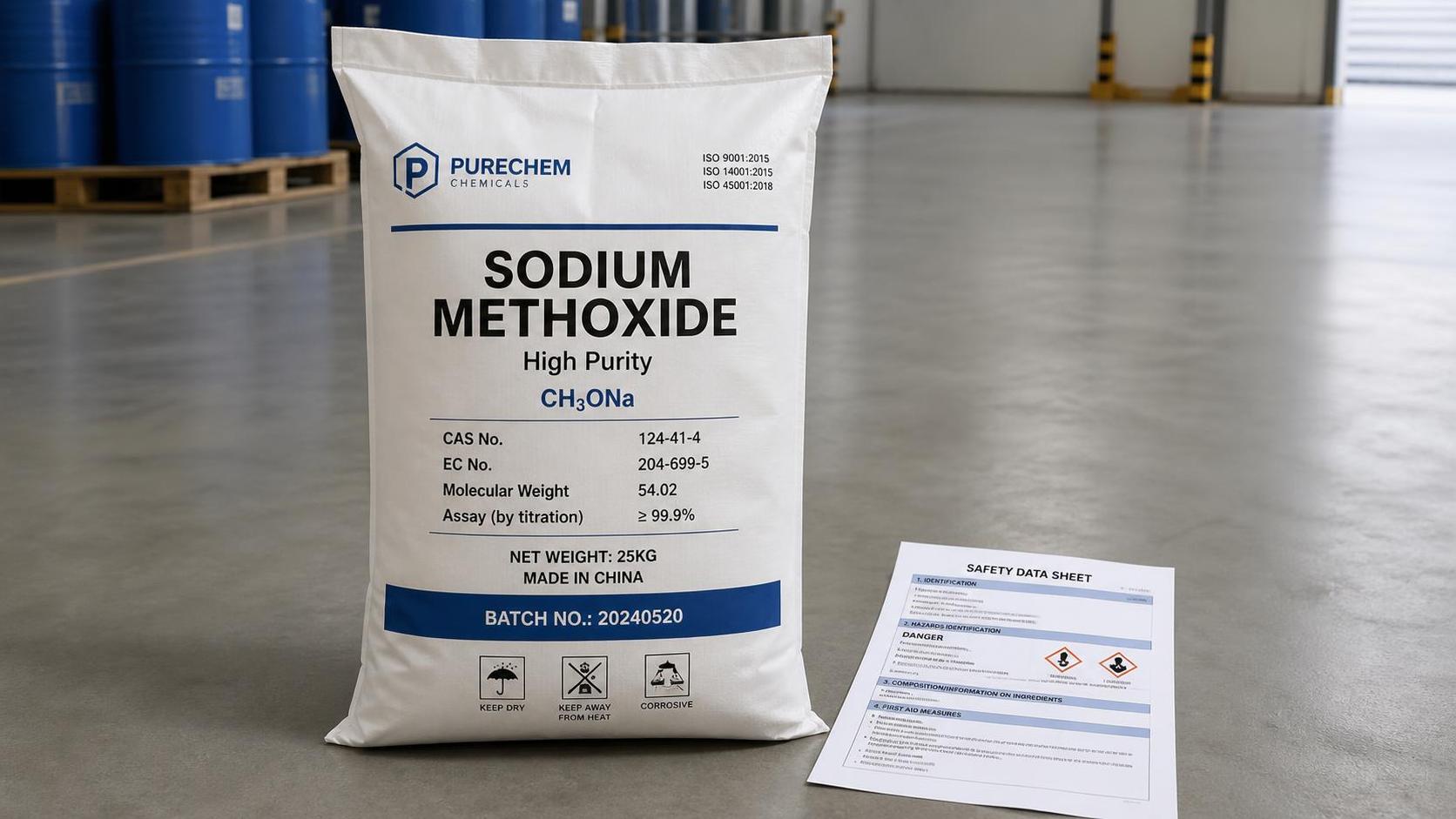
A specialty chemical shipment can appear ready to move: purchase order released, drums packed, freight booked, and documents sent ahead. Then the cargo is held at the border while customs requests clarification on the product identity, hazard status, intended use, or import authorization. Storage charges, production interruptions, and missed delivery windows can follow quickly, especially when a material is needed for a formulation, pilot line, maintenance task, or regulated manufacturing process.
What causes frequent customs delays when importing specialty chemicals? In most cases, the issue is not the shipment itself but a mismatch between the chemical, its classification, and the documents submitted for entry. Incomplete safety data sheets, vague commercial descriptions, incorrect HS codes, inconsistent product names, restricted-substance controls, labeling defects, and destination-country registration requirements are frequent triggers. The fastest way to reduce delays is to treat customs readiness as a product-data process completed before dispatch, rather than a document task handled after cargo is in transit.
Why specialty chemicals receive closer scrutiny
Customs authorities need enough information to determine what is entering the country, whether it is permitted, how it should be classified for duty and trade controls, and whether other agencies must review it. That is straightforward for a clearly identified commodity, but specialty chemicals are often mixtures, intermediates, additives, catalysts, coatings, laboratory materials, or proprietary formulations. Their commercial names may reveal little about their chemical composition or regulatory status.
One product can also sit across several control areas at once. It may be a hazardous material for transport, a controlled precursor under national rules, a product subject to chemical inventory obligations, or an item requiring sector-specific approval because of its end use. A declaration that only states “industrial additive,” “polymer modifier,” or “chemical sample” leaves too much uncertainty. Customs may stop the shipment until the importer provides a fuller technical explanation.
The resulting delay is not always a sign that the material is prohibited. Often, the authority needs evidence that it is properly described, legally eligible for import, and aligned with the paperwork presented by the exporter, freight forwarder, carrier, and importer of record.
Documentation gaps that stop clearance
A Safety Data Sheet (SDS) is often the first document reviewed when questions arise. Yet an SDS prepared for one market may not satisfy the format, language, revision, hazard communication, or local contact requirements of the importing country. An outdated sheet can cause similar problems when its composition, emergency information, classification, or supplier details no longer match the actual shipment.
The document should identify the product consistently with the commercial invoice and packing list. Customs reviewers may question a shipment when the invoice uses a trade name, the SDS uses a formulation code, and the transport document uses a generic substance description. Differences are sometimes legitimate, but they should be explainable without asking the authority to infer the connection.
Details that should agree across the file
- Product name, grade, formulation code, and manufacturer or supplier identity.
- CAS numbers or other recognized identifiers where applicable.
- Physical form, concentration range, pack size, and net quantity.
- Hazard classification and transport information, including UN number when assigned.
- Country of origin, seller, consignee, importer of record, and final delivery location.
- Declared customs value, currency, Incoterms, and description of charges included in the price.
An SDS is useful evidence, but it does not replace a commercial invoice, packing list, certificate, authorization, or import declaration. A common operational failure is assuming that a technically complete SDS will resolve a weak invoice description. It may not. Customs classification and valuation depend on the entry declaration, while safety information serves a different purpose.
HS classification is often less obvious than expected
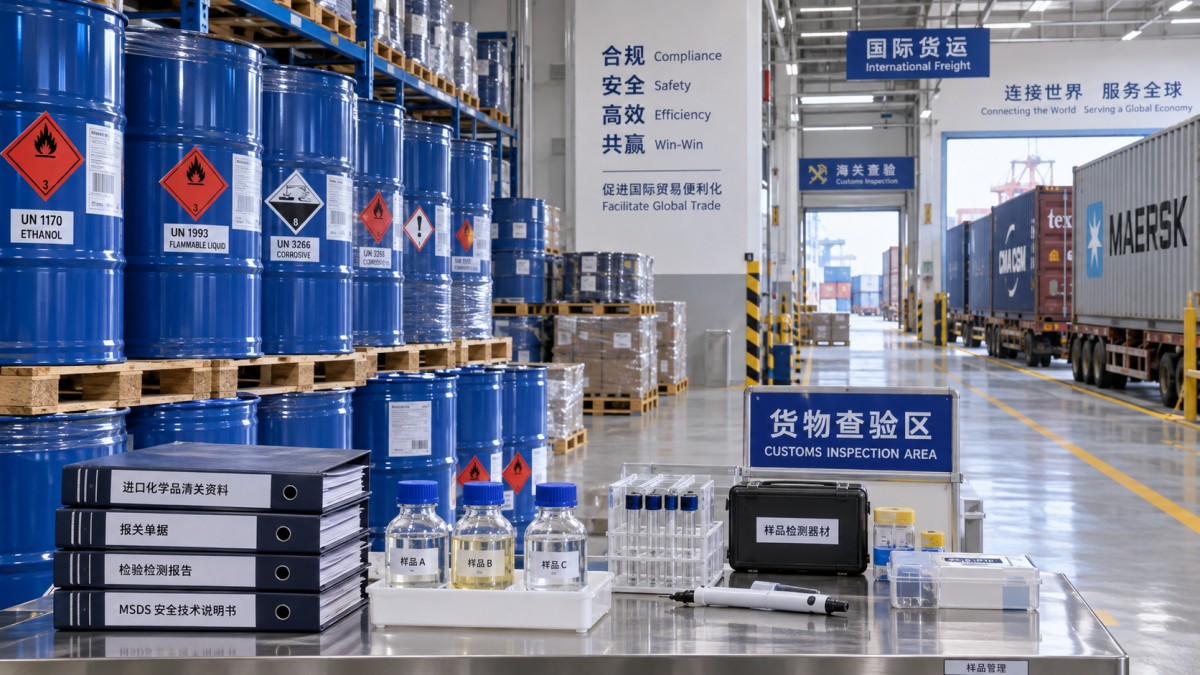
Incorrect tariff classification is a major source of holds because specialty chemicals may be classified by chemical composition, chemical function, degree of processing, concentration, or the presence of other ingredients. A product’s marketing category is rarely enough. “Specialty resin,” “water-treatment additive,” or “performance chemical” may describe its use but not its legal classification.
Misclassification commonly occurs when an exporter selects a code based on a similar product, a previous shipment to another market, or a broad database search. National tariff schedules can contain additional subdivisions, notes, exclusions, and local reporting requirements. A code that is accepted in one destination may be incomplete or inappropriate in another.
Classification also affects more than duty. The HS code can influence whether a permit, licensing check, anti-dumping measure, safeguard measure, statistical declaration, or inspection requirement applies. Where the product’s status is uncertain, an importer should avoid treating the code as a routine line-item detail. Technical composition data, product function, and tariff notes should be reviewed together before regular imports begin.
Regulated, restricted, and controlled substances
A shipment can be delayed even when its HS code is correct. Certain substances, mixtures, precursors, persistent chemicals, ozone-related materials, pesticides, biocides, pharmaceuticals, or dual-use items may be subject to restrictions outside normal customs procedures. The applicable rules depend on the destination, the concentration of controlled ingredients, the quantity, the intended use, and sometimes the identity of the importer.
Mixtures create a particular challenge. A product may be sold as a coating additive or process aid, yet contain an ingredient that crosses a reporting threshold or appears on a restricted list. The commercial product name may not signal this risk. Import teams should review the full composition information available under confidentiality arrangements and verify whether the destination has controls that apply to the mixture, not just the principal component.
End use can matter as much as chemistry. The same substance may face different treatment when imported for research, industrial processing, resale, laboratory analysis, or incorporation into consumer goods. A vague statement such as “for industrial use” may be insufficient where an agency needs a specific use declaration. The purchase order, technical specification, and import documents should not contradict one another on this point.
Packaging and labeling problems can turn into customs issues
Transport compliance and customs compliance overlap but are not identical. A carrier may accept a dangerous-goods shipment based on the transport declaration, yet customs or a border inspection authority may still identify missing local labels, improper language, absent hazard information, or packaging marks that do not correspond to the declared material.
Drums, totes, pails, and outer cartons should be traceable to the documents. Unlabeled inner containers, handwritten substitutions, damaged labels, or a product code that cannot be matched to the invoice can lead to a physical examination. This is especially disruptive when several similar formulations are packed in one consignment.
Before shipping, compare the applied labels with the SDS, commercial documents, and dangerous-goods declaration. Confirm that net and gross weights are plausible, package counts reconcile, and any required marks are visible after palletization. These checks are basic, but they prevent a border officer from having to resolve an avoidable identity question.
Timing failures: correct documents sent too late
Some delays arise because the file is technically complete but arrives after the entry has already been prepared. A broker may receive a revised SDS, final invoice, or permit number after the shipment is at port. Correcting an entry during examination can be slower than filing it accurately from the start, particularly where the correction changes product classification, value, or agency status.
Late changes are common when purchase orders are amended near dispatch, samples are added to a production shipment, or a supplier substitutes a grade thought to be equivalent. For customs purposes, “equivalent” is not enough. A new grade may have a different composition, identifier, hazard classification, or tariff treatment.
A practical control is to establish a release gate before cargo collection. The broker or customs team should receive the final commercial invoice, packing list, current SDS, product specification, tariff classification basis, transport information, and any permits before the carrier departs. Changes after that point should trigger a documented review rather than an informal email note.
A useful way to investigate repeat holds
When the same lane or supplier experiences repeated customs delays, do not treat each hold as a separate freight exception. Review the history for patterns. Is the problem tied to one product family, one origin country, one port, one broker, or one recurring wording issue? Repeated requests for the same missing detail usually indicate that the master data is incomplete or that the entry process does not capture it reliably.
- Read the actual hold notice. Separate a customs query from a carrier delay, terminal congestion, inspection hold, or missing delivery appointment.
- Match the request to the submitted records. Identify what customs could not verify: identity, tariff code, value, origin, permit, labeling, or end use.
- Check for conflicting versions. Compare the documents used by the exporter, forwarder, broker, and importer. Version control matters.
- Correct the underlying product file. Do not only amend the current entry. Update the approved description, classification rationale, SDS revision date, and document owner.
- Set an escalation rule. Products with controlled ingredients, unclear composition, or recurring classification uncertainty should be reviewed before the next order is released.
Importers should keep a product-level customs dossier for materials shipped repeatedly. It does not need to be overly elaborate, but it should preserve the approved invoice description, identifier, current SDS, classification rationale, relevant regulatory confirmations, and instructions for handling grade changes. This reduces dependence on individual emails and makes it easier to respond when a customs officer asks a focused question.
Questions import teams often ask
Can a valid SDS guarantee customs clearance?
No. An SDS supports product identification and hazard communication, but it does not by itself establish tariff classification, customs value, origin, licensing status, or eligibility under destination-country chemical controls. It must align with the rest of the import record.
Why is a shipment held when the same chemical cleared previously?
The product may have cleared under a different port review standard, a different entry filing, or without being selected for inspection. A formulation revision, supplier change, concentration change, new origin, changed quantity, or updated local rule can also alter the review. Prior clearance is useful history, not permanent approval.
Should samples be declared differently from commercial chemicals?
Samples may have a different value basis or intended use, but they should never be described so vaguely that their chemical identity is obscured. “Sample” explains why it is being imported; it does not replace the product description, hazard information, classification, or any required authorization.
When is specialist review justified before shipping?
Extra review is warranted when the composition is confidential or complex, the product contains potentially controlled constituents, the HS classification is uncertain, the destination has chemical inventory or registration rules, or a prior shipment was detained. Resolving those questions before dispatch is usually less disruptive than responding while cargo is under hold.
Deep Dive
Related Intelligence
 Specialty ChemicalsSodium Methoxide Selection: How Chemical Buyers Reduce Specification and Handling RiskAnalyst:Lead Materials Scientist
 Specialty ChemicalsHow Corporate Case Studies Reveal Real-World Challenges in Adopting Specialty Chemicals for Food SafetyAnalyst:Lead Materials Scientist
 Specialty ChemicalsCan Brand Elevation Tactics Reduce Customer Acquisition Cost for Specialty Chemicals in Organic Food Production?Analyst:Lead Materials Scientist