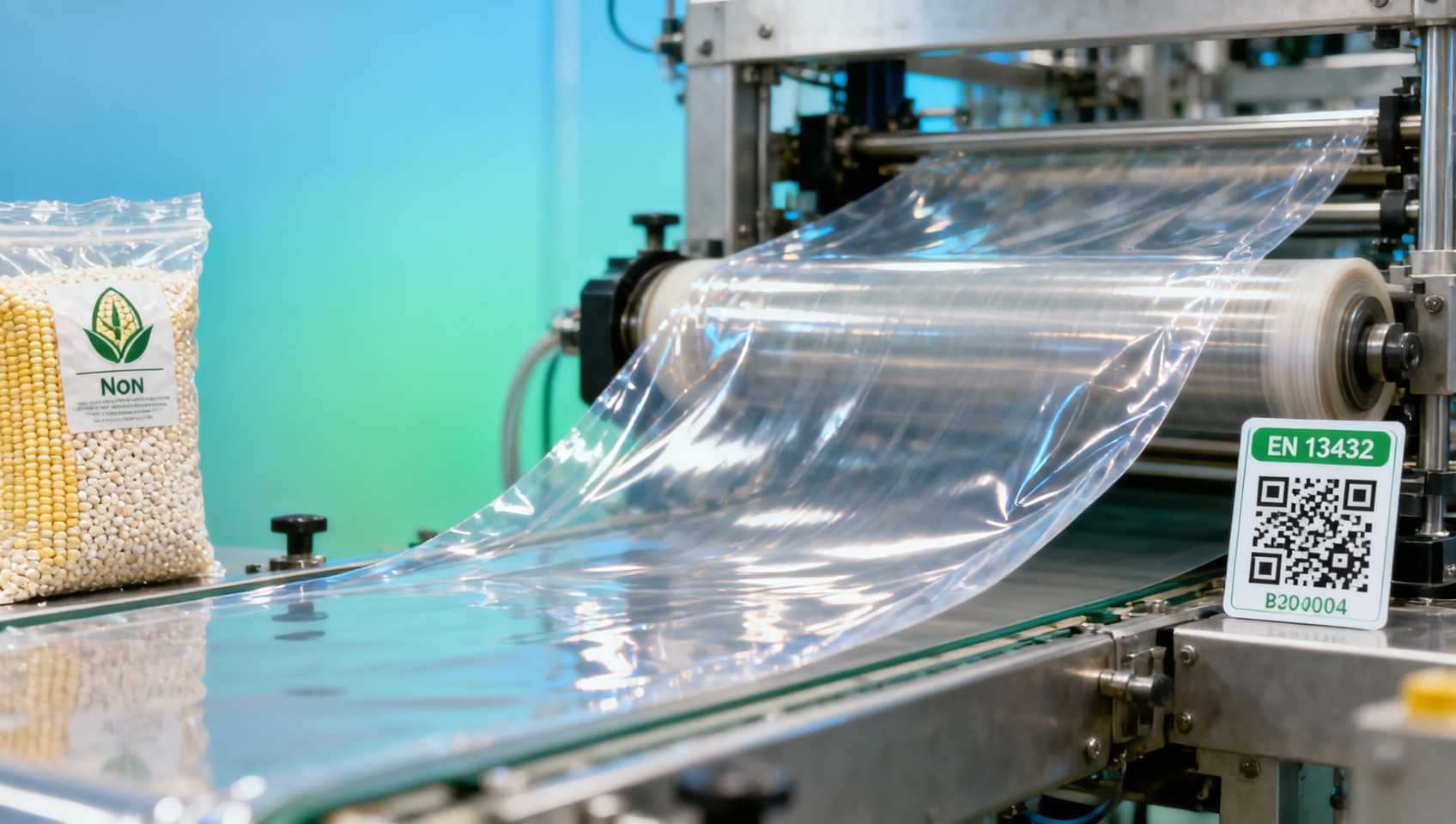
Should Buyers Switch from Petrochemical Plastics to Bio-Based Polymers?
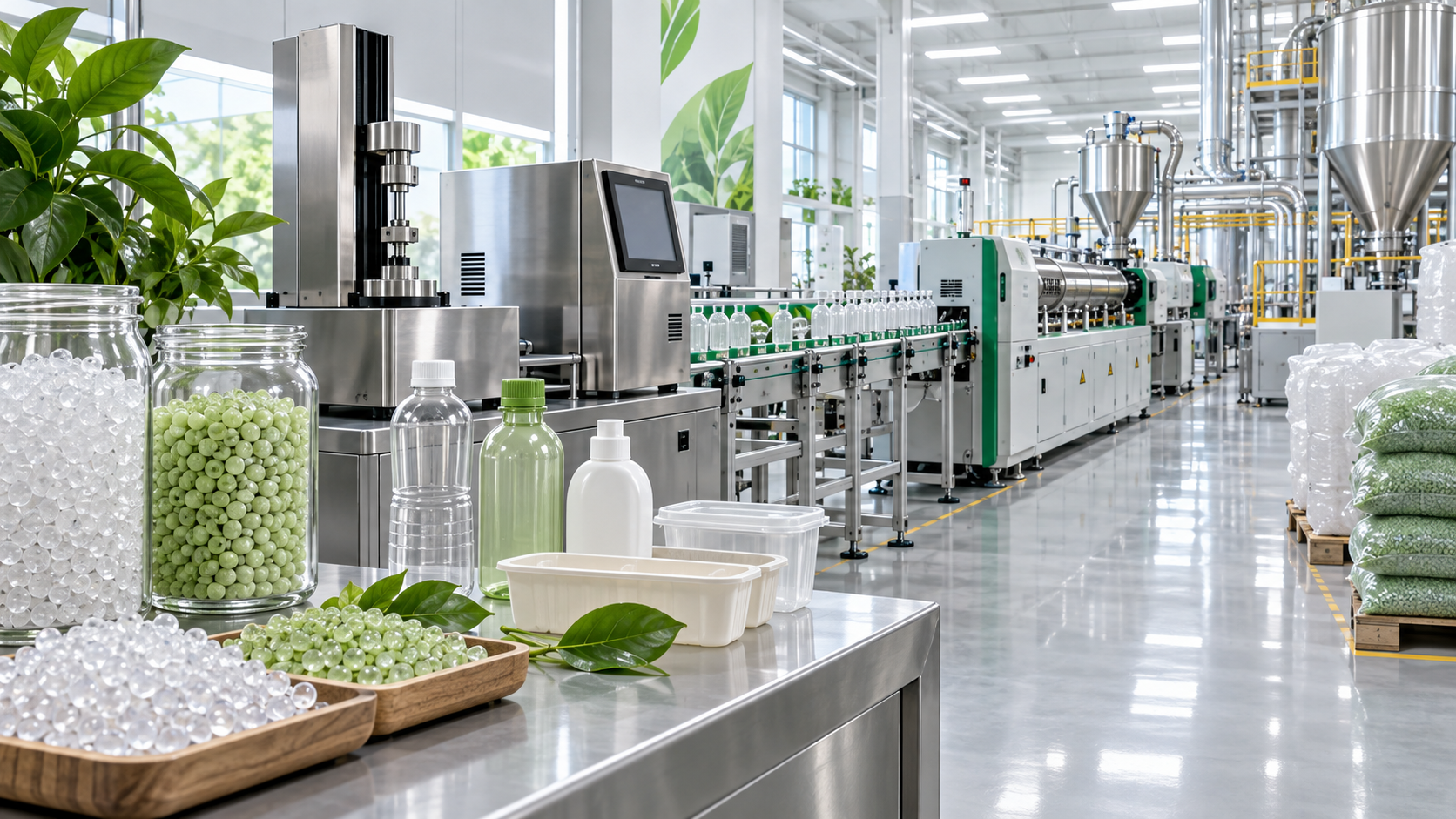
Key Takeaways
- What drives industrial automation cost in a new production line?Chief Civil Engineer
- What makes Ethiopia poultry farming profitable for small-scale producers?Agri-Tech Strategist
- Should Buyers Switch from Petrochemical Plastics to Bio-Based Polymers?Lead Materials Scientist
- What Causes Frequent Customs Delays for Specialty Chemical Imports?Lead Materials Scientist
- When do composite materials outperform steel in heavy machinery?Chief Civil Engineer
- How nano materials for electronics improve battery energy densityAutomotive Tech Analyst
- How supplier evaluation helps manufacturers reduce quality risksIT & Security Director
- Materials science trends shaping next-generation battery safetyAutomotive Tech Analyst
Industry Overview
We do not just publish news; we construct a high-fidelity digital footprint for our partners. By aligning with TNE, enterprises build the essential algorithmic "Trust Signals" required by modern search engines, ensuring they stand out to high-net-worth buyers in an increasingly crowded global digital landscape.
Should Buyers Switch from Petrochemical Plastics to Bio-Based Polymers?
For procurement leaders balancing sustainability targets, material performance, and total cost, the question is no longer theoretical: should I switch to bio-based polymers from traditional petrochemical sources? The answer depends on far more than a renewable-feedstock claim on a supplier datasheet.
A responsible decision requires buyers to examine the full operating context: the polymer’s mechanical and thermal behavior, availability across regions, processing conditions, recycled-content strategy, lifecycle evidence, local waste infrastructure, and the language used in customer-facing claims. In some applications, bio-based polymers are already a sensible commercial choice. In others, switching too quickly can create scrap, qualification delays, supply exposure, or misleading end-of-life expectations.
The practical question is not whether bio-based polymers are “better” in the abstract. It is whether a particular material, supplied through a reliable chain, performs acceptably in a specific product and creates a defensible environmental improvement.
What does “bio-based” actually mean?
Bio-based describes the origin of some or all of a polymer’s carbon content. Feedstocks may include sugarcane, corn, cellulose, vegetable oils, forestry residues, or other biomass-derived inputs. It does not automatically describe how the material behaves after use.
That distinction is routinely missed in purchasing discussions. A polymer can be bio-based but not biodegradable. It can be biodegradable under industrial composting conditions yet persist in a home compost bin, soil, or marine environment. It may also be chemically identical to a conventional petrochemical polymer, meaning it can often use the same processing equipment and recycling streams, despite having a different feedstock origin.
For example, bio-based polyethylene or bio-based PET may be attractive where brand owners want renewable carbon while retaining familiar performance and recycling pathways. PLA and certain starch- or cellulose-based materials may fit short-life packaging applications, but their use needs closer scrutiny when high heat resistance, moisture barrier, impact performance, or broad recycling compatibility is required.
The label alone tells a buyer very little. Request the actual grade, formulation details where available, technical data sheet, processing window, and the supplier’s evidence for any renewable-content or end-of-life claim.
When does a switch make commercial sense?
The strongest projects tend to start with a defined problem rather than a broad mandate to replace all virgin fossil plastics. A food-service operator, for instance, may need a material for a controlled collection system where certified compostable items are accepted by a local facility. A consumer-goods company may want a drop-in resin for bottles or caps without redesigning its conversion line. A construction-product manufacturer may prioritize lower fossil feedstock dependence while preserving long service life and weatherability.
In these cases, the procurement team can test a clear hypothesis: does the alternative meet the product specification, move through the existing manufacturing process, and support an outcome that customers or regulators can recognize? That is much more useful than treating “bio-based” as a universal procurement category.
A switch is generally easier when the buyer can use a drop-in material with established molding, extrusion, film, or blow-molding behavior. It becomes harder when the alternative changes melt flow, drying requirements, sealing temperatures, cycle times, pigment compatibility, or shelf-life performance. A lower-priced resin can become the more expensive option if it causes line instability or raises rejection rates.
For high-volume converters, even a modest change in cooling time or moisture sensitivity can matter more than the headline resin price. This is why a plant trial should be treated as a qualification exercise, not a demonstration. Measure throughput, energy use where relevant, scrap, tool cleanliness, dimensional variation, seal integrity, odor, appearance, and performance after ageing.
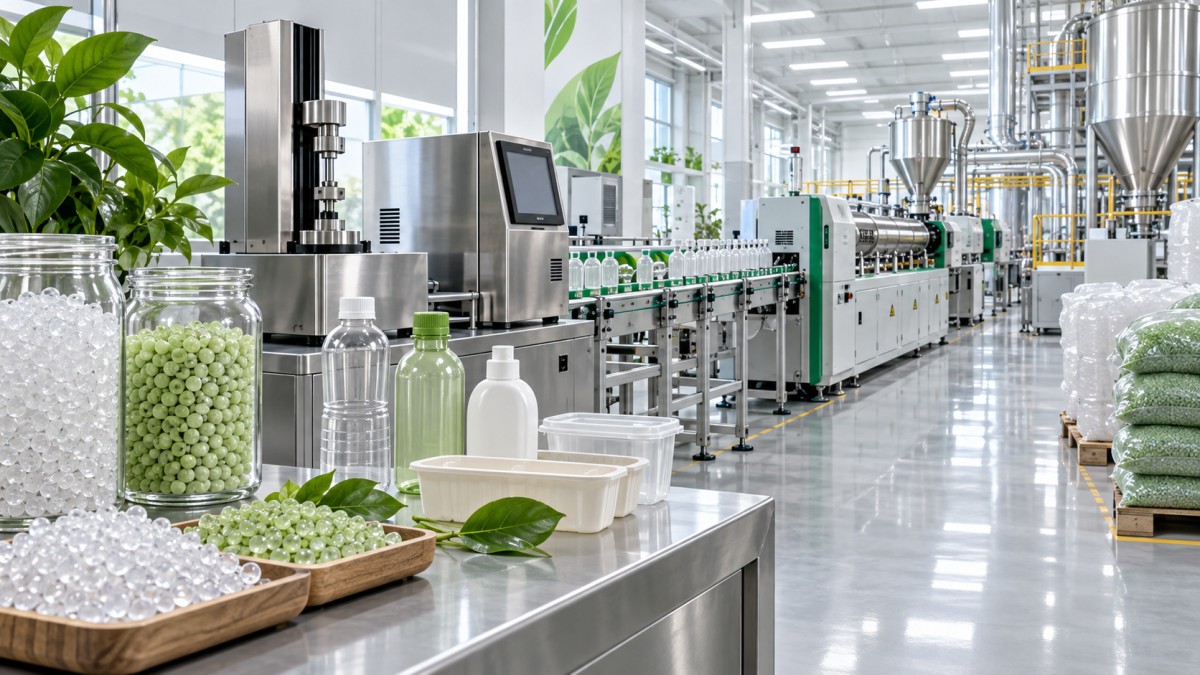
FAQ: Is a bio-based polymer always lower carbon?
No. Renewable feedstock can reduce reliance on fossil carbon, but lifecycle emissions depend on the entire system. Agricultural inputs, land-use considerations, feedstock processing, energy sources, transportation, polymer conversion, product weight, use phase, and disposal all affect the result.
A lightweight conventional polymer may, in some applications, outperform a heavier alternative if the heavier material increases freight emissions or food waste. Equally, a bio-based drop-in resin may offer a credible improvement where its feedstock sourcing and production route are documented and the product does not require substantial redesign.
Buyers should ask for lifecycle assessment documentation that is relevant to the grade and geography being considered. Generic claims are not enough. The boundary of the assessment matters: a cradle-to-gate comparison answers a different question from a cradle-to-grave analysis. If a supplier uses terms such as “carbon neutral,” “net zero,” or “negative emissions,” request a clear explanation of assumptions, allocation methods, and whether offsets are involved.
FAQ: Should compostability determine the buying decision?
Only if composting is a realistic destination for the finished product. Compostability can be relevant for items heavily contaminated with food residue, such as certain food-service formats, where washing for recycling is impractical. But a compostable product has limited value if local collection systems do not accept it, sorting facilities cannot identify it, or the required treatment environment is unavailable.
Buyers should also be careful with consumer messaging. “Biodegradable” without a stated environment and timeframe can lead to confusion. A material tested for industrial composting should not be presented as if it will disappear harmlessly in nature. Packaging claims must be aligned with the relevant market rules and the disposal route customers can actually access.
In many regions, the better circularity strategy may still be to maintain a clean, widely recyclable mono-material format rather than introduce a compostable alternative. The correct answer changes by product category, municipality, and collection system.
FAQ: What technical risks should procurement teams investigate?
Start with the failure mode, not the marketing description. For rigid packaging, that may mean drop impact, stress cracking, top-load resistance, and barrier performance. For films, it may mean puncture resistance, haze, seal range, coefficient of friction, and compatibility with existing converting equipment. Automotive, construction, electrical, and industrial applications may demand UV stability, flame behavior, chemical resistance, low emissions, or durability over many years.
Do not assume that a resin marketed as a replacement is equivalent across every thickness, color, filler level, or processing method. Additives and blends often determine real-world behavior. A compound that works well in an injection-molded component may not be suitable for thin-wall thermoforming. Likewise, a material that appears stable in short pilot runs can reveal hydrolytic degradation, warpage, or brittleness after storage and distribution.
- Confirm the intended service temperature and exposure to humidity, oils, cleaners, UV light, and repeated mechanical stress.
- Check drying requirements, melt-processing range, tooling implications, and allowable regrind levels.
- Test the finished article, not only the resin pellet, under realistic transport and storage conditions.
- Review colorants, adhesives, coatings, labels, and barrier layers, since the final structure may affect recyclability or compostability claims.
- Clarify whether a material change triggers customer approval, food-contact review, product recertification, or documentation updates.
FAQ: Are bio-based polymers secure enough for long-term sourcing?
Supply security is one of the areas where buyers should be especially disciplined. The market includes established producers, specialist compounders, and emerging technologies with very different production footprints. Feedstock availability can be influenced by harvest conditions, competing uses, regional logistics, and capacity concentration. A material that is readily available in one market may involve longer lead times or limited grade selection elsewhere.
Dual sourcing is often more difficult for specialty bio-based grades than for commodity resins. That does not rule them out, but it should shape the contract and inventory strategy. Before committing to a conversion program, procurement teams should understand the supplier’s manufacturing location, grade-change policy, forecast requirements, minimum order quantities, qualification support, and contingency arrangements.
Price should be evaluated as total delivered and qualified cost. Include resin price, freight, conversion adjustments, scrap risk, testing, regulatory work, inventory carrying cost, and the value of any verified environmental attribute. A narrow unit-price comparison almost always understates the decision.
A practical decision framework for buyers
A staged approach is safer than a portfolio-wide material swap. Identify one product family where the current polymer creates a clear sustainability, compliance, or brand challenge. Define non-negotiable functional requirements, then compare conventional, recycled-content, bio-based, and—where appropriate—compostable options against the same brief.
This process also prevents an unhelpful false choice. Petrochemical plastics, mechanically recycled polymers, chemically recycled feedstocks, bio-based drop-in resins, and biodegradable materials solve different problems. A buyer may find that recycled content is the better answer for one SKU, while a bio-based polymer is appropriate for another.
Where should buyers look for reliable market intelligence?
Material sourcing decisions increasingly sit at the intersection of chemistry, manufacturing, logistics, regulation, and corporate reporting. That makes supplier comparison more difficult than browsing a resin catalogue. Buyers need to distinguish a well-documented grade with realistic conversion support from a promising material whose claims have not yet been tested in their operating environment.
TradeNexus Edge follows this broader view across advanced materials and chemicals, connecting technical developments with supply-chain context and buyer-facing decision factors. For teams assessing bio-based polymer options, the useful signals are rarely limited to a product announcement. They include feedstock pathways, processing constraints, regional availability, end-of-life infrastructure, and the evidence behind sustainability claims.
So, should I switch to bio-based polymers from traditional petrochemical sources? Switch when the material has been qualified for the real application, the supply arrangement is credible, and the environmental benefit can be explained without stretching the claim. Keep the conventional material—or consider recycled content or redesign—when performance, collection infrastructure, or lifecycle evidence does not support the change. The best procurement decision is usually not the most visible one; it is the one that still holds up after the product leaves the factory.
Deep Dive
Related Intelligence
 Eco-PolymersCan Editorial Framework Standards Improve Traceability for Eco-Polymers in Food Packaging?Analyst:Lead Materials Scientist
 Eco-PolymersCan Graphene Materials Deliver Cost-Effective Conductivity in Large-Scale Flooring Projects?Analyst:Lead Materials Scientist
 Eco-PolymersGraphene Materials Bulk Order Thresholds: When Does Unit Cost Drop Below $180/kg for Structural Reinforcement?Analyst:Lead Materials Scientist