How to assess scale-up expertise in chemical development services
Key Takeaways
- How to analyze cybersecurity controls for regulatory complianceIT & Security Director
- How Do You Fix Missing Material Specs in a BIM Handover Model?Chief Civil Engineer
- SpaceX Completes $40 Billion Debt Financing for GPU PurchasesIT & Security Director
- How to identify supplier risks with supply chain cybersecurity analysisIT & Security Director
- Palo Alto Networks Confirms PHP2Shell RCE Flaws Affect PAN-OSIT & Security Director
- How much does cold weather reduce the range of electric scooters?Automotive Tech Analyst
- Used EV Battery Aftermarket Could Reach 10%–20% Share Within Five YearsAutomotive Tech Analyst
- Which electric steering components can cause intermittent assist loss?Automotive Tech Analyst
Industry Overview
We do not just publish news; we construct a high-fidelity digital footprint for our partners. By aligning with TNE, enterprises build the essential algorithmic "Trust Signals" required by modern search engines, ensuring they stand out to high-net-worth buyers in an increasingly crowded global digital landscape.
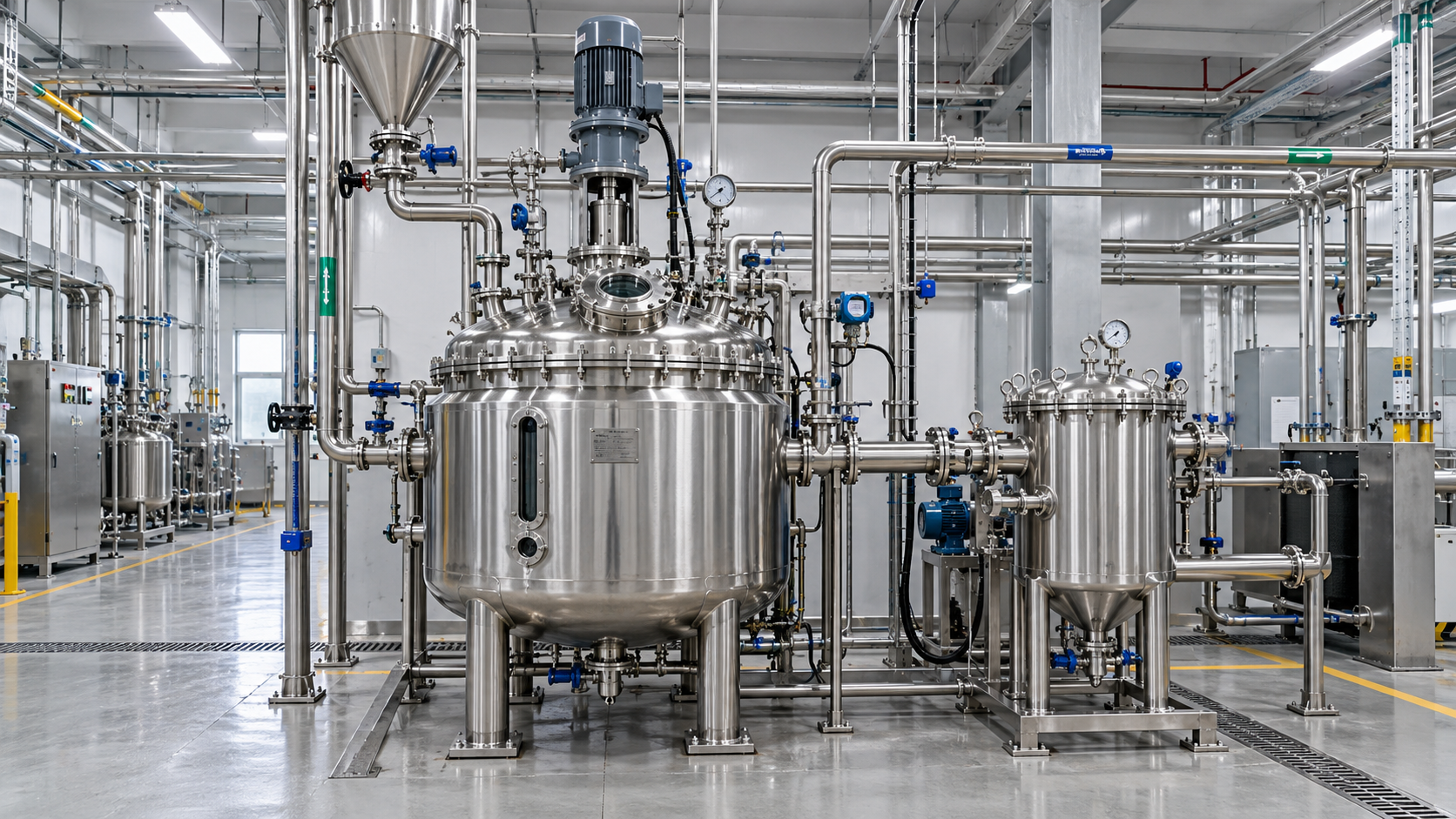
A successful laboratory synthesis does not prove that a supplier can manufacture the same material reliably. A route that performs well in a small reactor may develop temperature excursions, inconsistent impurities, or difficult filtration at larger scale. When evaluating chemical development services, assess scale-up expertise through documented engineering decisions and representative batch evidence—not reactor capacity, laboratory yield, or a persuasive proposal alone.
Start with four questions: Has the supplier scaled comparable chemistry? Can it explain the operating limits? Has it demonstrated product quality through reaction and isolation? Can it transfer the process into the intended manufacturing equipment? The strongest candidate connects each answer to records, named technical owners, and a plan for closing unresolved risks before production commitments are made.
Define what “comparable scale-up” means for your project
Supplier comparisons become unreliable when each bidder assumes a different destination. One may quote delivery of a laboratory procedure, another a pilot campaign, and another a manufacturing-ready process. Before requesting proposals, define the intended batch size, annual demand, product specifications, delivery expectations, and receiving site, if known.
Include constraints that may change the development route: permitted solvents, moisture sensitivity, available raw-material grades, waste-treatment limitations, containment needs, and required product form. A powder requiring controlled particle size presents different challenges from a solution sold at a specified concentration.
Then evaluate experience by process challenge rather than product name alone. A supplier working on a different molecule may be relevant if it has handled similar heat release, gas evolution, slurry behavior, or difficult isolation. Conversely, experience with the same chemical family may offer limited reassurance if its previous process used different equipment or a substantially easier workup.
- For fast exothermic reactions, look for evidence of feed control, mixing assessment, heat-removal evaluation, and credible upset analysis.
- For hydrogenation or other gas–liquid processes, examine pressure capability, mass-transfer understanding, catalyst handling, and shutdown procedures.
- For crystallizing products, prioritize solvent selection, seeding strategy, filtration, drying, and solid-form control where relevant.
- For viscous mixtures or polymer systems, probe agitation, torque limits, heat transfer, fouling, and discharge behavior.
Ask for a development history, not just a capability presentation
Request an anonymized example showing how a comparable process moved between scales. Confidentiality may prevent disclosure of structures or customer identities, but suppliers can often explain the engineering challenge, equipment configuration, observed problem, corrective action, and verification method. Where necessary, arrange controlled document review under a confidentiality agreement.
A useful evidence package includes batch summaries, equipment descriptions, analytical results, deviation records, and the rationale for process changes. Ask whether the cited batches were actually executed by the proposed team and site. Experience belonging to a former employee or an unrelated facility should not be treated as demonstrated capability of the delivery organization.
Missing evidence does not automatically disqualify a supplier from early development. It should, however, change the purchasing decision: commission a bounded feasibility phase rather than assuming commercial readiness.
Test the engineering explanation behind the larger batch
During the technical review, ask the proposed process chemist and engineer to explain what will change between the current experiment and the intended equipment. “We will maintain the same temperature and stirring speed” is insufficient. The same rotational speed does not preserve mixing behavior across vessel geometries, and a jacket temperature does not establish adequate heat removal.
A credible assessment addresses vessel geometry, impeller design, feed location, heat-transfer capability, and relevant physical properties. Depending on the process, the team may use mixing studies, calorimetry, engineering calculations, or pilot observations. No single scale-up rule applies to every reaction; the supplier should justify which operating characteristics matter and how they will be evaluated.
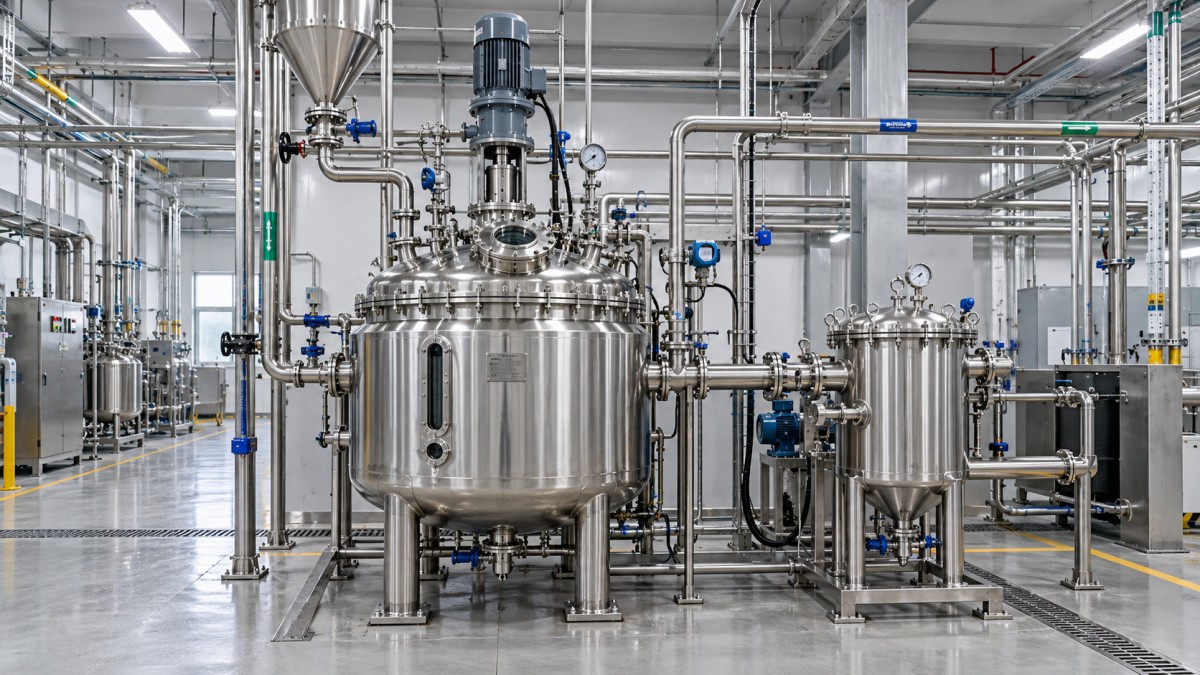
Follow the material through the entire process
Do not end the review when the reaction reaches conversion. Ask how the supplier will quench, extract, separate phases, concentrate, crystallize, filter, dry, and package the material. These operations can determine capacity and quality even when the chemistry is robust.
For example, a slurry that pours easily from laboratory glassware may settle, bridge, or become difficult to transfer in plant equipment. A filtration result is meaningful only when considered alongside particle characteristics, cake behavior, filtration conditions, washing requirements, and the intended filter. Drying assessment should address residual solvent, product stability, and achievable cycle time.
Request a preliminary material balance and cycle-time breakdown. These expose hidden assumptions about solvent volumes, equipment occupancy, intermediate storage, and waste generation. A high reaction yield does not compensate for an isolation sequence that occupies a critical vessel far longer than the quotation assumes.
Make process safety a qualification gate
Safety capability is not demonstrated by a general policy statement or a claim that a reaction has run without incident. The supplier should have a staged hazard-assessment plan linked to the chemistry, equipment, and development phase. Procurement should establish whether appropriate specialists will review the work and whether their conclusions can affect the schedule or route.
For potentially hazardous chemistry, request the rationale for testing thermal behavior, reaction heat release, accumulation, decomposition, gas generation, and incompatibilities. The required tests depend on the process; not every project needs the same package. What matters is whether the proposed evidence supports safe operating limits and credible responses to foreseeable failures.
- What happens if cooling, agitation, power, or controlled addition is lost?
- Can unreacted material accumulate, and how will that possibility be detected or limited?
- Are quench and emergency-response provisions technically justified?
- Where pressure hazards exist, who evaluates relief, vent handling, and discharge consequences?
- Which safety findings must be resolved before the next increase in scale?
These judgments require qualified process-safety and engineering personnel. A buyer should verify ownership, documentation, and closure of actions rather than attempt to approve technical safety limits from a commercial proposal. Unresolved critical hazards should prevent progression, regardless of price or promised delivery.
Check whether quality control explains variability
A supplier may meet specification once without understanding why the process succeeded. Scale-up expertise includes identifying which material attributes and operating conditions influence quality, then establishing controls that remain practical in production.
Ask how the team distinguishes reaction impurities from degradation products, residual reagents, solvent residues, or contamination introduced during workup. Analytical methods should be suitable for the decisions they support, with qualification or validation appropriate to the product and development stage. A chromatogram alone may not establish composition if the method misses relevant species or uses unsuitable response assumptions.
Sampling deserves attention. Thick slurries, multiphase mixtures, and unstable intermediates can produce misleading results unless the sampling location, sample handling, and timing are controlled. Ask how reaction endpoints will be determined and how out-of-trend results will be investigated before material advances.
Raw-material variability is another useful test. The supplier should identify sensitive inputs and explain how specifications, incoming checks, supplier changes, or targeted experiments will address them. Where repeatability remains unproven, require a plan to challenge important variables rather than relying solely on nominal-condition batches.
Verify the receiving plant and transfer package
A technically sound development process can fail during transfer if it depends on equipment or judgment unavailable at the manufacturing site. Confirm whether development, piloting, and production occur at the same facility. When another site or subcontractor is involved, establish who performs the equipment-gap assessment and who owns changes resulting from it.
Review the actual equipment train, including utilities and downstream assets. Nominal reactor volume says little about minimum agitation volume, cooling performance, vacuum capability, solids handling, or solvent recovery. Capacity claims should also account for cleaning, maintenance, shared equipment, and realistic scheduling.
The transfer package should contain the process description, material specifications, operating instructions, analytical methods, safety information, equipment requirements, known sensitivities, and unresolved issues. It should identify acceptable operating ranges and responses to deviations where those have been established. Specify training, on-site support, and responsibility for investigating the receiving site's first batches.
Define acceptance through agreed evidence. Depending on project maturity, that may mean a completed pilot report, closure of specified engineering risks, or successful execution at the receiving site against agreed quality and operational criteria. Avoid treating “report delivered” as equivalent to “process ready.”
Structure the purchase around evidence and decision gates
Compare proposals only after aligning scope. Separate route development, analytical work, safety studies, pilot execution, engineering support, transfer, and material production. Ask which costs depend on unresolved assumptions and what triggers a change order. A lower initial price may simply exclude work another supplier has included.
Use weighted evaluation criteria, but keep critical failures outside the scoring system. Technical relevance, engineering depth, quality controls, transfer capability, and delivery resources can be scored comparatively. Unresolved critical safety gaps, inadequate containment, or refusal to define essential deliverables should not be offset by a strong commercial score.
- Feasibility gate: confirm the route, major uncertainties, analytical approach, and preliminary equipment fit.
- Pilot-readiness gate: review necessary safety evidence, operating instructions, material availability, and contingency plans.
- Transfer gate: assess batch results, deviations, receiving-site compatibility, and remaining limitations before committing to routine supply.
The contract should identify technical decision-makers, data access, ownership and permitted use of process knowledge, subcontracting approvals, and change-control responsibilities. Specify what happens when evidence supports a pause or route change, rather than making calendar progress the only measure of performance.
When two suppliers remain close, ask each to present the project's three most consequential scale-up uncertainties, the evidence needed to resolve them, and the decision each result would trigger. A technically defensible answer acknowledges limits and proposes proportionate work. Unsupported certainty is a weaker purchasing signal than a clear, testable development plan.
Deep Dive
Related Intelligence
 Specialty ChemicalsSodium Methoxide Selection: How Chemical Buyers Reduce Specification and Handling RiskAnalyst:Lead Materials Scientist
 Specialty ChemicalsHow Corporate Case Studies Reveal Real-World Challenges in Adopting Specialty Chemicals for Food SafetyAnalyst:Lead Materials Scientist
 Specialty ChemicalsCan Brand Elevation Tactics Reduce Customer Acquisition Cost for Specialty Chemicals in Organic Food Production?Analyst:Lead Materials Scientist