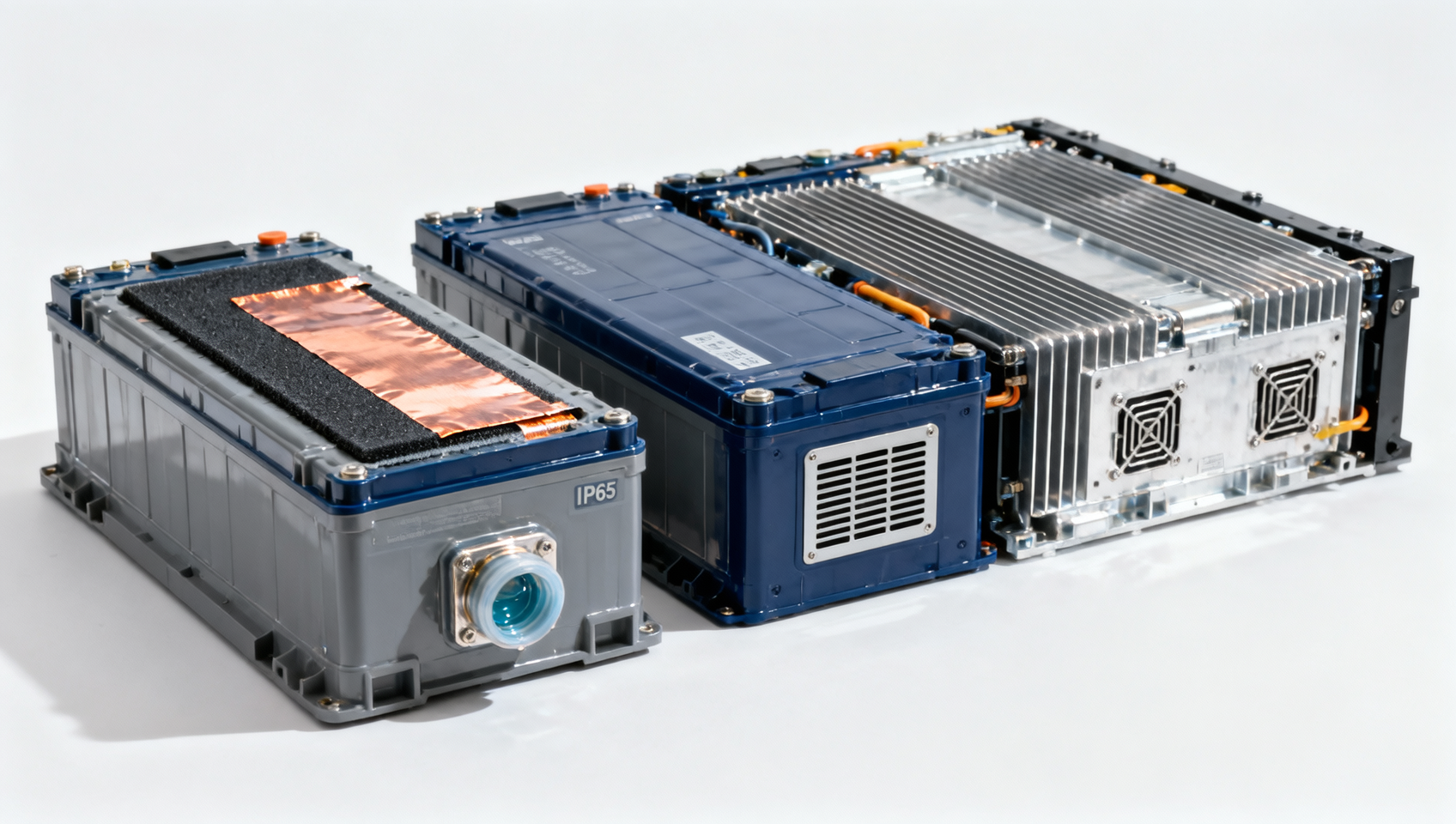
Materials Science trends are redefining next-generation battery safety, pushing technical evaluators to look beyond energy density and cost.
From nonflammable solid electrolytes to advanced thermal barriers and self-healing electrode materials, emerging innovations can reduce failure risks while supporting higher-performance designs.
This article examines material breakthroughs, validation priorities, and supply-chain considerations shaping safer batteries for electric mobility, grid storage, and industrial applications.
For technical evaluators, the central question is no longer whether a battery material appears safer in laboratory demonstrations.
The practical question is whether it reduces failure probability across manufacturing variation, aging, abuse conditions, and the full operating temperature range.
That distinction matters because battery safety is a system outcome, not a single-material property or a specification-sheet claim.
Cells fail when electrochemical instability, heat generation, mechanical damage, contamination, and inadequate protection combine faster than the design can respond.
Today’s Materials Science trends are valuable because they target several links in that failure chain, rather than merely improving one performance metric.
What Technical Evaluators Should Prioritize Before Selecting New Battery Materials
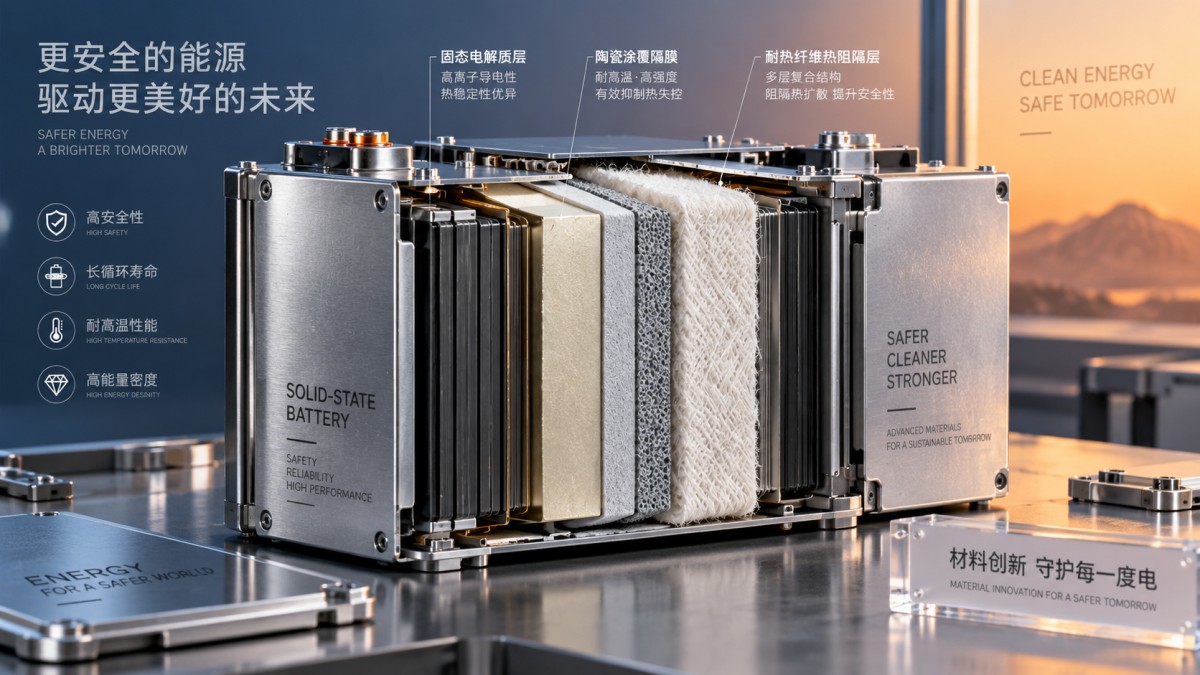
Safety-led material selection should begin with credible failure modes, including internal short circuits, lithium plating, gas generation, thermal runaway, and external-fire exposure.
Each application assigns different weight to these risks, making a single universal definition of a safer battery misleading.
Electric vehicles require high power, crash tolerance, rapid charging resilience, and predictable propagation behavior across large battery packs.
Grid storage prioritizes long duration, low fire spread, manageable maintenance, and safe operation near buildings, substations, or populated industrial facilities.
Industrial equipment often faces vibration, dust, irregular charging, ambient temperature swings, and service conditions that laboratory cycling rarely reproduces.
Evaluators should therefore translate application hazards into measurable material requirements before comparing supplier claims or published performance data.
Useful requirements include onset temperature for exothermic reactions, separator shrinkage, electrolyte flash point, gas evolution rate, and impedance growth after aging.
Mechanical measures also matter, particularly puncture resistance, compression response, particle cracking, adhesion retention, and tolerance to electrode expansion.
A material that improves abuse tolerance but creates difficult processing windows can increase production defects and undermine its apparent safety advantage.
For this reason, manufacturability must be assessed alongside chemistry, especially slurry stability, drying behavior, moisture sensitivity, coating uniformity, and formation requirements.
The strongest evaluation programs use a failure-mode-and-effects framework that connects material properties to cell behavior, module design, and field-service controls.
This approach prevents teams from overvaluing isolated test results while missing interactions between electrodes, electrolyte additives, separators, and pack-level thermal management.
Solid Electrolytes Offer a Major Safety Opportunity, but Not an Automatic Solution
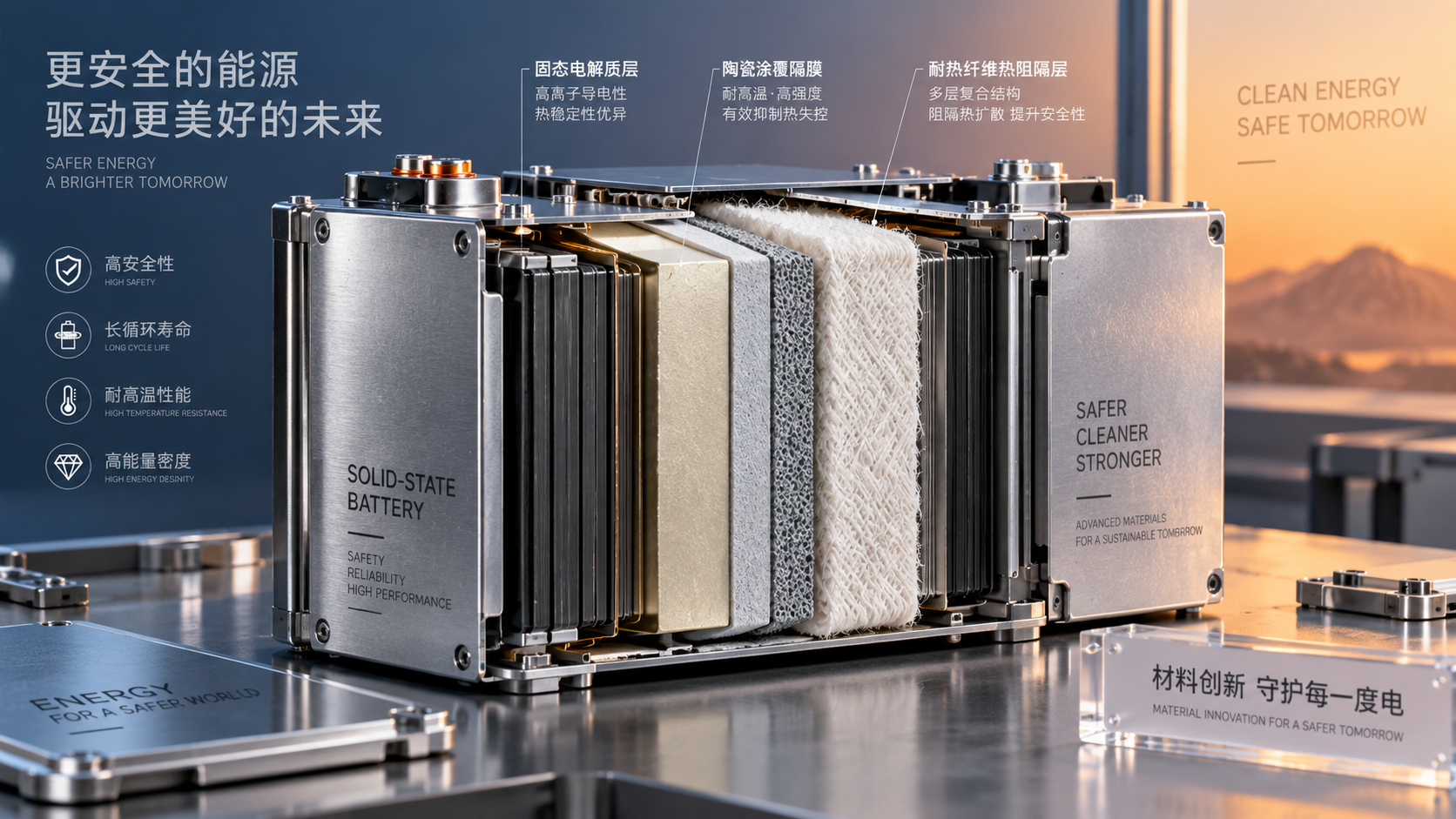
Solid-state batteries attract attention because they can replace volatile liquid electrolytes with materials that are less flammable and potentially more thermally stable.
Sulfide, oxide, polymer, and halide electrolyte families each offer different tradeoffs involving conductivity, processing, interfacial stability, pressure needs, and moisture sensitivity.
Oxide ceramics can provide strong thermal stability, yet their brittleness and demanding interfaces may complicate large-format cell manufacturing.
Sulfide electrolytes often deliver excellent ionic conductivity, but some compositions require strict humidity control and can release hazardous gases when exposed to moisture.
Polymer solid electrolytes are generally easier to process and more flexible, although room-temperature conductivity and high-voltage stability remain important constraints.
Halide systems are emerging as promising cathode-side materials because of their oxidation resistance, though commercial scale-up remains comparatively early.
Technical evaluators should distinguish nonflammability from complete safety, because solid-state cells can still develop dendrites, interfacial voids, and internal shorts.
Lithium-metal anodes may increase energy density, but they introduce deposition uniformity challenges that can become more severe during fast charging or low-temperature operation.
Stack pressure is another overlooked variable, since some solid-state architectures depend on pressure to maintain contact and limit interfacial resistance growth.
A promising cell result should therefore include pressure conditions, cell dimensions, areal loading, cycling temperature, charge rate, and post-mortem evidence.
Without those details, reported cycle life can hide conditions that are impractical for automotive packs, stationary storage containers, or serviceable industrial equipment.
The best near-term use case may be targeted deployment where a modest energy-density premium justifies improved thermal stability and controlled operating conditions.
Separator and Electrolyte Innovations Can Reduce Thermal Runaway Risk Today
Liquid-electrolyte lithium-ion cells will remain dominant for years, making incremental safety improvements commercially significant rather than merely transitional.
Separators are particularly important because they must prevent electrode contact while allowing ions to move rapidly under normal operating conditions.
Conventional polyolefin separators can shrink at elevated temperatures, increasing short-circuit risk precisely when the cell needs electrical isolation most.
Ceramic-coated separators improve dimensional stability and heat resistance, helping preserve separation during abuse events and elevated-temperature storage.
Aramid, cellulose-based, and composite separators are also gaining attention where enhanced puncture resistance or lower flammability supports specific design objectives.
However, thicker or more complex separator structures can reduce power capability, alter wetting behavior, and increase cost or manufacturing complexity.
Electrolyte additives provide another practical route, using small concentrations of compounds that form protective interphases or suppress harmful reactions.
Flame-retardant additives, high-voltage stabilizers, and gas-reducing compounds can improve abuse behavior, but their effectiveness depends heavily on the electrode chemistry.
Some additives reduce flammability while increasing viscosity, lowering conductivity, or affecting low-temperature performance, so tradeoffs must be quantified across duty cycles.
Localized high-concentration electrolytes and fluorinated formulations can widen electrochemical stability windows, though cost, environmental impact, and sourcing need careful examination.
Evaluators should request comparative abuse testing using identical cell geometry, loading, state of charge, and thermal boundary conditions.
Comparisons based only on self-extinguishing electrolyte tests or open-flame demonstrations do not reliably predict cell-level thermal runaway behavior.
Electrode Materials Are Being Engineered to Slow Damage Before It Becomes a Safety Event
Many battery incidents begin with gradual degradation rather than an immediate catastrophic reaction, making electrode durability a core safety consideration.
High-nickel cathodes can improve energy density, yet they may become less structurally stable at high states of charge and elevated temperatures.
Surface coatings based on oxides, phosphates, fluorides, or conductive polymers can reduce direct electrolyte contact and suppress undesirable interfacial reactions.
Doping strategies can stabilize crystal structures, improve oxygen retention, and reduce crack formation during repeated cycling under demanding operating conditions.
These approaches may delay heat-releasing reactions, but performance gains must be tested after calendar aging and not only after fresh-cell cycling.
Silicon-containing anodes represent another important area because their expansion can fracture particles, disrupt interphases, and create uneven current distribution.
Elastic binders, engineered particle structures, and self-healing polymer networks can preserve electrical contact while limiting mechanical damage from repeated expansion.
Self-healing claims deserve close scrutiny because recovery may work under controlled temperature or rest conditions that are unavailable in real operating profiles.
Prelithiation and advanced binders can also change formation behavior, moisture sensitivity, and manufacturing yield, creating new qualification demands.
For lithium-metal systems, protective interlayers and artificial solid-electrolyte interphases aim to promote uniform deposition and resist dendrite penetration.
The relevant evidence is not simply high coulombic efficiency, but stable performance under realistic current density, areal capacity, temperature, and pressure.
Material developers should provide cross-sectional analysis after cycling, allowing evaluators to examine crack patterns, void formation, interfacial layers, and lithium morphology.
Thermal Barriers and Heat-Management Materials Determine Whether Failures Propagate
Even a well-designed cell can fail under severe abuse, so pack-level materials determine whether an individual event becomes a system-level incident.
Thermal runaway propagation occurs when heat, flame, hot particles, and flammable gases transfer from a failed cell to adjacent cells.
Mica, ceramic fiber, aerogel composites, intumescent coatings, and engineered phase-change materials are being used to interrupt those transfer pathways.
Material selection requires more than a high-temperature rating because thermal conductivity, compression set, weight, thickness, and gas permeability all influence performance.
A highly insulating barrier can delay propagation, but it may also trap heat during normal operation if cooling pathways are poorly designed.
Intumescent materials can expand during fire exposure and seal gaps, although their activation temperature, aging behavior, and compatibility with assembly processes need validation.
Thermally conductive gap fillers improve normal cooling, but some formulations can lose contact after vibration, thermal cycling, or long-term compression.
Technical teams should test thermal interface materials in assembled geometries rather than relying solely on coupon-level conductivity values.
Adhesives and encapsulants also deserve attention because they affect flame spread, smoke generation, electrical isolation, repairability, and end-of-life disassembly.
For high-voltage packs, material decisions must coordinate with vent design, electrical isolation, sensor placement, cooling circuits, and emergency-response access.
The most reliable systems use layered defenses: durable cells, early detection, controlled venting, heat barriers, and pack structures that limit escalation.
Validation Must Reflect Real Abuse, Aging, and Manufacturing Variability
Battery safety validation should not stop at standard compliance testing, although standards remain essential for comparing baseline product readiness.
Common references include UN 38.3 transportation testing, IEC 62619 for industrial cells, UL 2580 for electric vehicles, and UL 9540A evaluations.
These frameworks should be supplemented with application-specific testing that reflects the actual mechanical, electrical, thermal, and environmental exposure profile.
For material changes, a staged qualification plan should begin with chemistry screening before moving into cells, modules, packs, and controlled abuse tests.
Early screening can include differential scanning calorimetry, accelerating rate calorimetry, thermogravimetric analysis, impedance tracking, and gas composition analysis.
Cell-level work should include overcharge, external short circuit, nail penetration where appropriate, crush, thermal exposure, and repeated fast-charge cycling.
Testing at multiple states of health is critical because aged cells may behave differently from new cells under the same abuse condition.
Production variability must also be represented through samples from different lots, coating positions, assembly shifts, and manufacturing sites when possible.
A material that performs well in optimized prototypes can create unacceptable safety dispersion when moisture control, particle distribution, or coating quality varies.
Post-test forensic analysis is essential because pass-or-fail outcomes rarely explain why one formulation contained damage while another generated escalating reactions.
Technical evaluators should require transparent test protocols, raw conditions, failure images, and uncertainty ranges before accepting supplier safety conclusions.
Independent validation is especially valuable for novel chemistries, where test methods and internal benchmarks may not yet be consistently standardized across suppliers.
Supply-Chain Risk Can Alter the Safety Case for Advanced Materials
Advanced battery materials can strengthen safety performance while introducing procurement risks that must be addressed before commercial launch.
Specialty coatings, fluorinated chemicals, ceramic powders, and high-purity lithium salts may have limited qualified suppliers or regionally concentrated production capacity.
A supply interruption can force unvalidated substitutions, create inconsistent batches, or encourage production decisions that weaken process control and product quality.
Technical procurement teams should evaluate material specifications alongside supplier process capability, traceability, quality systems, and change-notification discipline.
Critical parameters may include particle size distribution, impurity limits, moisture content, surface treatment consistency, and lot-to-lot electrochemical performance.
Second-source qualification should begin early because battery material replacement often requires extensive electrochemical, mechanical, safety, and regulatory revalidation.
Sustainability considerations also affect material strategy, particularly where fluorinated compounds, cobalt-containing cathodes, or difficult-to-recycle composites are involved.
A safer material is not automatically a better long-term choice if it creates major recycling barriers, restricted-substance exposure, or unacceptable lifecycle impacts.
Decision-makers should use total risk cost rather than purchase price, accounting for yield loss, safety mitigation, testing burden, warranty exposure, and supply resilience.
This broader analysis helps organizations avoid selecting a technically impressive material that cannot support stable, compliant, and scalable battery production.
How to Build a Practical Materials Roadmap for Safer Battery Programs
A useful roadmap separates near-term upgrades from longer-term chemistry transitions, because each category requires different investment, testing, and operational preparation.
Near-term opportunities often include ceramic separators, optimized electrolyte additives, improved cathode coatings, stronger binders, and better thermal interface materials.
These options can frequently fit existing lithium-ion manufacturing platforms, though every change still requires disciplined compatibility and qualification work.
Medium-term programs may explore silicon-rich anodes, advanced high-voltage cathodes, localized high-concentration electrolytes, and improved cell venting architectures.
Longer-term programs can assess solid-state systems, lithium-metal designs, sodium-ion platforms, and alternative chemistries with inherently different hazard profiles.
Sodium-ion batteries may offer attractive thermal and cost characteristics for stationary applications, although energy density and supply-chain maturity vary by formulation.
Material decisions should be ranked using a weighted matrix covering safety impact, technical maturity, manufacturability, total cost, supply security, and regulatory implications.
Teams should assign explicit evidence thresholds for each score, preventing optimistic vendor presentations from carrying equal weight with reproducible independent data.
Cross-functional governance matters because materials engineers, quality leaders, procurement specialists, pack designers, and compliance teams assess different parts of the risk.
The final decision should identify residual risks, required controls, validation milestones, and conditions that would trigger redesign or supplier escalation.
Conclusion: Battery Safety Will Be Won Through Material Systems, Not Single Breakthroughs
The most important Materials Science trends improve battery safety by reducing reaction intensity, resisting damage, slowing heat transfer, and limiting failure propagation.
For technical evaluators, the winning approach is to assess these benefits across realistic conditions rather than treating laboratory performance as commercial proof.
Solid electrolytes, advanced separators, stable electrode interfaces, and thermal barriers all have value when matched to a defined operating and manufacturing context.
The strongest battery programs combine material innovation with rigorous validation, scalable process control, transparent supplier qualification, and layered pack-level protection.
Organizations that evaluate safety as a lifecycle system will be better positioned to select battery technologies that perform reliably in demanding real-world deployments.