How much do excavator attachments cost by type?
Key Takeaways
- OpenRouter Removes Three AI Inference Providers After Prompt TheftIT & Security Director
- How to verify supplier credentials in global chemical sourcingLead Materials Scientist
- National Cybersecurity Standards Committee Seeks Feedback on Three GuidelinesIT & Security Director
- How to verify specialty chemical exporters in IndiaLead Materials Scientist
- Trump Fires National Cyber Director, Names Kirsten Davies Acting DirectorIT & Security Director
- Can mobile POS systems accept payments without internet access?IT & Security Director
- Malaysia and US Deepen Sovereign AI Cloud Cooperation, With $50 Million in US SupportIT & Security Director
- How chemical recycling is reshaping plastics technology in EuropeLead Materials Scientist
Industry Overview
We do not just publish news; we construct a high-fidelity digital footprint for our partners. By aligning with TNE, enterprises build the essential algorithmic "Trust Signals" required by modern search engines, ensuring they stand out to high-net-worth buyers in an increasingly crowded global digital landscape.
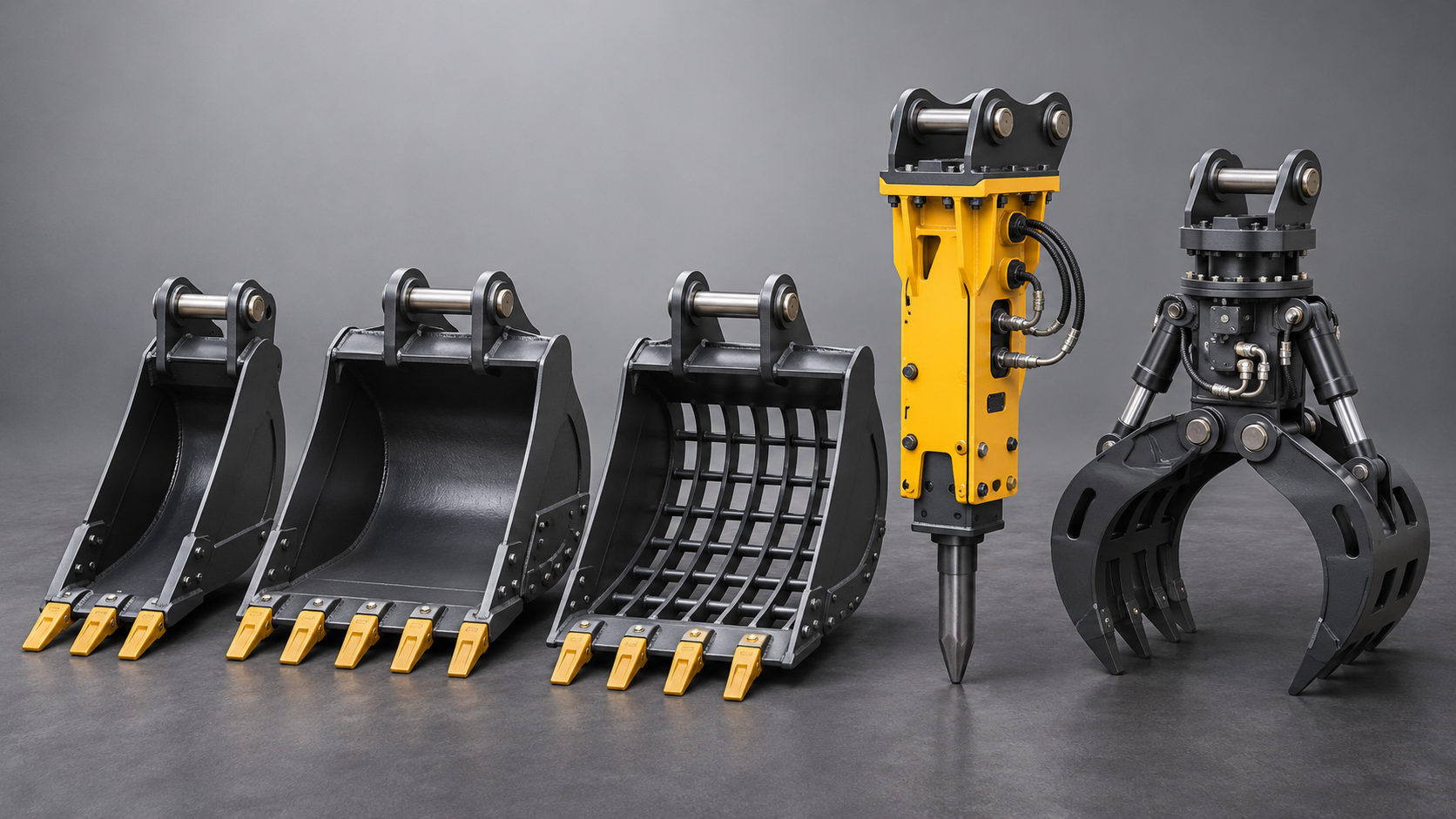
What should you expect to pay for an excavator attachment, and which options offer the best value for your operation? From buckets and hydraulic breakers to grapples and augers, the price varies by type, size, compatibility and supplier. Purchase price is only one part of the equation: installation, maintenance and operating costs also affect the total. This guide compares common attachment categories and the questions worth asking before a quote becomes a purchase order.
Excavator attachment prices by type
A basic digging bucket for a compact excavator can cost a few hundred US dollars, while a large hydraulic attachment can run into tens of thousands. The ranges below are indicative budgeting estimates, not verified supplier quotations. They are intended for initial screening of new equipment in US dollars; actual offers depend heavily on machine size, specifications, market and order terms.
These are deliberately broad ranges, not like-for-like comparisons. A mini-excavator auger drive without a bit is a different purchase from a heavy-duty drive supplied with several bits and a mounting bracket. Taxes, freight, installation and hydraulic modifications may also sit outside the quoted price. For a defensible budget, request current offers against the same specification and delivery location.
What changes the price within each category?
Buckets and thumbs: simple does not mean interchangeable
A general-purpose digging bucket is often the least complicated purchase, but width alone is a poor basis for comparison. A wider bucket may move more loose material per pass; in dense ground, it can also make the excavator work harder or leave the operator taking smaller bites. Ask about capacity, edge configuration, teeth and wear protection as well as the mounting dimensions.
A grading bucket typically favors a wide, smooth edge for finishing and ditch work. Heavy-duty or rock buckets cost more because their construction and wear components are intended for harsher material. That extra spend is hard to justify for occasional topsoil work, but a light bucket in abrasive rock can become an expensive false economy.
A thumb adds material-handling capability without necessarily buying a dedicated grapple. A mechanical thumb is simpler, while a hydraulic thumb gives the operator more control from the cab. The latter may require a cylinder, hoses, valves or controls that are not included in the attachment quote. Confirm how the thumb will align with the existing bucket and whether the stick needs welding or a specific bracket.
Breakers: service access can outweigh the initial saving
A hydraulic breaker must match the excavator’s operating weight and available hydraulic flow and pressure. An undersized breaker may be slow for the material; an oversized one can be unsuitable for the carrier. Have both the carrier supplier and breaker supplier review the proposed combination rather than relying on an attachment’s advertised excavator size alone.
For concrete removal or trench rock, ask what is included: tool point, hoses, mounting bracket, charging equipment and any spare wear parts. Also check the local supply of bushings, seals and replacement tools. A low-cost breaker with long parts lead times may be reasonable as a backup, but it is a riskier choice when one unit controls the pace of a job.
Grapples and augers: define the job before choosing the specification
Grapples are built for different materials. A design suited to logs is not automatically the best choice for sorting demolition debris or handling scrap. Rotation and jaw geometry can improve placement and sorting, but they also add cost and may require additional hydraulic functions. If the work is mostly loading irregular debris, compare a grapple with a bucket-and-thumb combination before committing to either.
With an auger, check whether the offer covers the drive only or also includes the bit, mounting cradle, hoses and extensions. Hole diameter and depth matter, but so do ground conditions. A bit specified for loose soil should not be assumed suitable for hard ground or rock. Ask the supplier to identify the proposed teeth and pilot for the actual material, and price replacements separately.
Compactors and demolition tools: a bigger commitment
Excavator-mounted compactors can be useful where a carrier needs to work along a trench or on a slope, but the attachment is not a substitute for checking the project’s compaction requirements. Establish what material and lift thickness are expected, and how the work will be tested. A low purchase price does not establish that the setup can achieve the required result.
Crushers, pulverizers and shears are specialized purchases. Compare the material to be processed, jaw opening, cutting or crushing capability, attachment weight and hydraulic requirements. Replaceable teeth or blades, maintenance access and rebuild options deserve attention. If the work is intermittent or the material varies from project to project, rental may be more sensible than tying capital to a narrowly specified tool.
Compatibility is where an attractive quote can unravel
Two excavators in the same weight class do not necessarily accept the same attachment without modification. Give suppliers the machine make, model and configuration, then ask them to confirm the connection in writing. For pin-mounted equipment, the relevant dimensions commonly include pin diameter, spacing and stick width. For a quick coupler, identify the exact coupler and interface rather than assuming that a familiar name guarantees a fit.
Hydraulic compatibility needs the same care. The attachment’s flow and pressure requirements must fall within what the machine can provide in the intended configuration. Check the number and type of auxiliary circuits, return-line requirements, hose connections and cab controls. A rotating grapple, for example, may need a control arrangement that a breaker does not. The supplier should identify any additional plumbing, electrical work or setup required.
Weight matters beyond the mounting point. Attachment mass and working position affect the excavator’s stability and available lift capacity. Review the carrier’s applicable lift chart and manufacturer guidance for the actual configuration, including coupler and attachment weight. Do not treat a supplier’s broad carrier-size range as permission to handle a particular load at any reach.
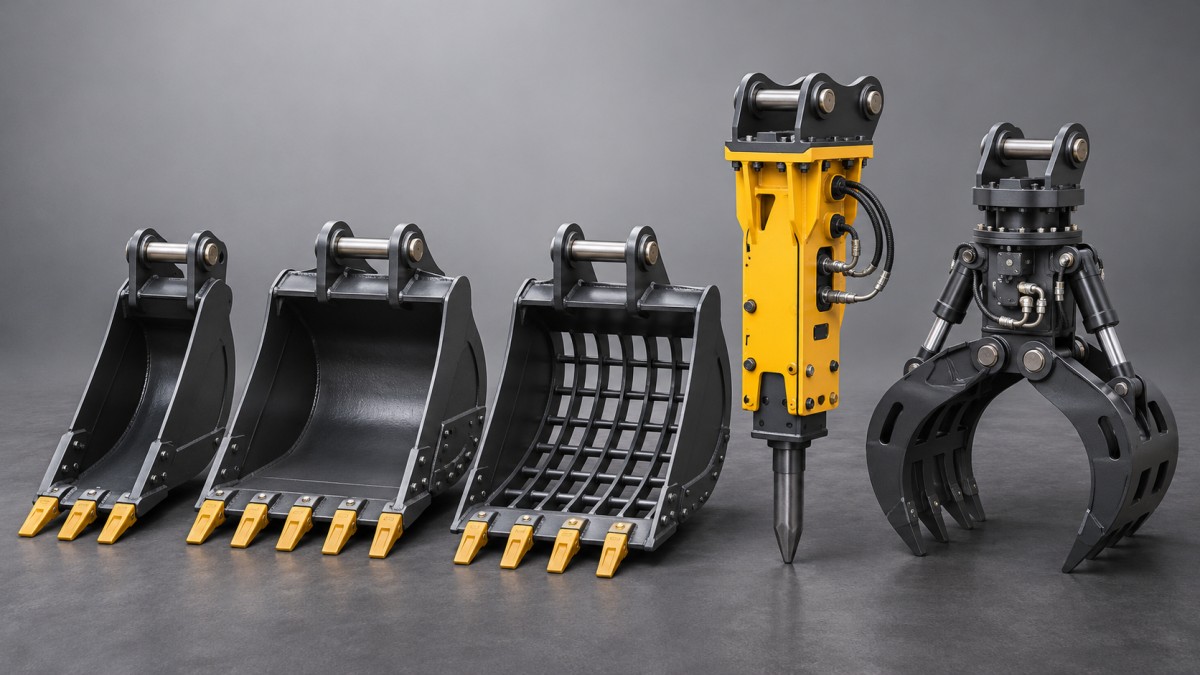
A useful quote request includes the machine details, coupler or pin dimensions, hydraulic specifications, material, intended task and expected operating conditions. Photos help identify a setup, but they should supplement measurements and machine documentation, not replace them.
Build the landed and operating cost, not just the purchase price
The headline excavator attachments price is rarely the complete cost of getting the tool to work. Separate the attachment price from the following items so competing bids can be compared on the same basis:
- Fitment: brackets, pins, coupler adapters, hoses, fittings, controls, installation labor and machine setup.
- Delivery: freight, unloading, insurance, duties and taxes where applicable. Confirm the delivery point and which party is responsible for each charge.
- Consumables: teeth, cutting edges, breaker tools, bushes, seals and other wear items relevant to the attachment.
- Support: parts availability, repair location, response arrangements and the cost of keeping critical spares on hand.
- Downtime exposure: the effect of a failed attachment on the job, including whether a rental replacement is available locally.
For imported equipment, a supplier’s factory price and a delivered local price should not be compared directly. Put freight and import responsibilities in the quote comparison, and confirm who handles warranty claims across borders. A cheaper offer can still be the right decision, but only after the buyer understands what the price excludes.
Warranty language also deserves a close reading. Normal wear parts are often treated differently from structural or manufacturing defects, and coverage may depend on correct installation and operation. Ask who diagnoses a failure, who pays to ship components and whether labor is covered. Keep the answers with the quotation rather than relying on a general warranty headline.
New, used or rental: choose according to the work
New equipment is easier to specify for a known carrier and usually comes with a clearer support arrangement. Used attachments can reduce initial outlay, particularly for uncomplicated tools, but inspection is essential. Look for cracks, repairs, distorted mounting ears, worn pin bores and missing identification. On hydraulic equipment, request operating history where available and inspect for leaks, damaged hoses and excessive play. A fresh coat of paint is not evidence of condition.
Rental is worth pricing when the job is short, the required tool is specialized or future utilization is uncertain. Compare the rental period and delivery charges with the cost of ownership, including fitment and wear responsibilities. A rental agreement should make clear who supplies the mount, who pays for damaged tools and whether downtime or transport extends the chargeable period.
For a purchase, estimate how many hours or projects will use the attachment, then test whether the assumptions are realistic. A simple comparison is to divide the expected ownership cost over the planning period by expected productive hours. Include the purchase, fitment, anticipated maintenance and an appropriately cautious resale estimate. Compare that figure with the full rental cost over the same work; do not count an uncertain resale value as cash already recovered.
How to compare supplier quotations
Send the same scope to each supplier and ask for line-item pricing. A quote should identify the attachment model, carrier fit, included mount and hydraulic components, delivery terms, lead time, warranty and available parts. If a supplier proposes a different specification, ask for the reason and price the difference rather than treating it as an equivalent offer.
This is especially useful when sourcing across markets, a recurring concern in TradeNexus Edge’s coverage of industrial supply chains. The lowest nominal price may exclude a bracket, while another offer includes installation and local parts support. Neither is automatically better; the right comparison is the cost and risk of putting each option to work on the intended machine.
Before issuing the purchase order, resolve the compatibility questions with the parties responsible for the attachment and carrier. If the seller cannot confirm fitment, hydraulic requirements and support in writing, keep that uncertainty visible in the decision. It is easier to clarify a hose, pin or delivery responsibility before shipment than after an excavator is waiting on site.
Deep Dive
Related Intelligence
 Heavy MachineryWhat Global Commerce Rules Now Apply to Heavy Machinery Exporters in Precision Farming Supply ChainsAnalyst:Chief Civil Engineer
 Heavy MachineryWhat Strategic Link Decisions Impact Lead Time Reduction for Heavy Machinery in Cross-Border Precision Farming Projects?Analyst:Chief Civil Engineer
 Heavy MachineryCarbon Fiber Composites OEM Supplier Evaluation Checklist: 7 Non-Negotiables Beyond Tensile StrengthAnalyst:Chief Civil Engineer