What to request from suppliers of LEED v4 VOC paint
Key Takeaways
- When does modular construction reduce a project's total cost?Chief Civil Engineer
- What cloud infrastructure analysis reveals about Singapore latency risksIT & Security Director
- How to verify recycled green building materials meet project standardsChief Civil Engineer
- What to evaluate when comparing cybersecurity analysis providersIT & Security Director
- When does agricultural automation equipment pay off for mid-size farms?Agri-Tech Strategist
- How Tank Design Helps Reduce Oxidation Risks in Edible Oil StorageAgri-Tech Strategist
- How to match heavy duty earthmoving equipment to site conditionsChief Civil Engineer
- When chemical supply solutions reduce the risk of production downtimeLead Materials Scientist
Industry Overview
We do not just publish news; we construct a high-fidelity digital footprint for our partners. By aligning with TNE, enterprises build the essential algorithmic "Trust Signals" required by modern search engines, ensuring they stand out to high-net-worth buyers in an increasingly crowded global digital landscape.
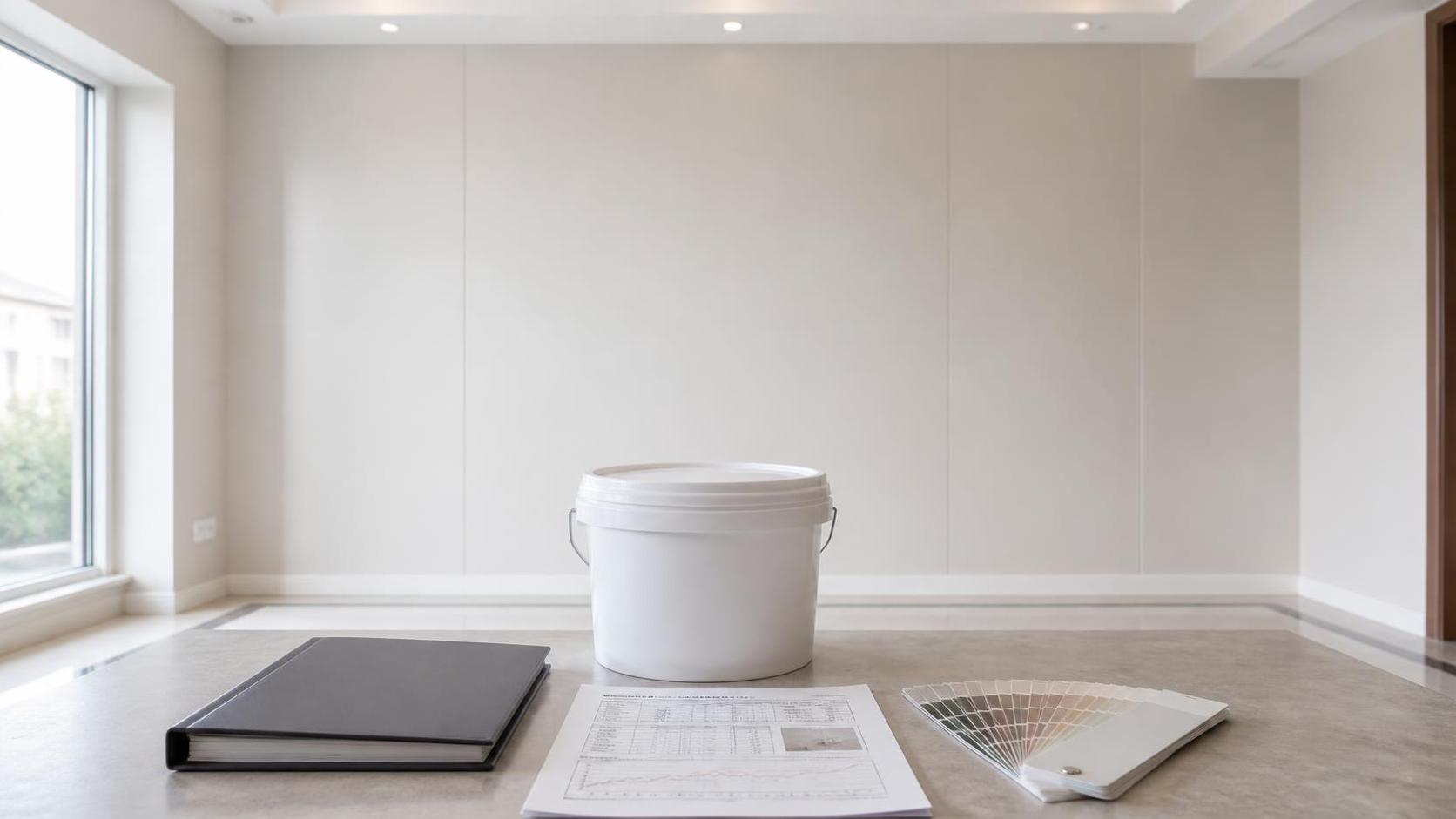
Unit price is only one part of the cost of LEED v4 VOC paint. A coating that appears economical can create expensive delays when its VOC documentation does not match the specified coating category, when emissions evidence is incomplete, or when the stated coverage rate cannot be achieved on the actual substrate. The purchase request should therefore define the evidence required with the same care used for color, sheen, packaging, and delivery timing.
Start by separating two claims that are often treated as interchangeable: VOC content and indoor-air emissions. A paint may meet a stated VOC-content limit yet lack the emissions documentation needed for a project pathway. Conversely, an emissions-tested product still needs its coating-category VOC content verified against the applicable requirements. Request documents for the exact product, finish, base, tint system, and intended application method. Generic family brochures are rarely enough for a submittal review.
Set the request around the specified coating category
Ask the supplier to identify the product category used for VOC-content evaluation, rather than simply providing a statement that the paint is “low VOC.” Interior flat paint, nonflat paint, primers, sealers, and specialty coatings may be assessed under different limits or requirements depending on the project specification and jurisdiction. The submitted category should match the product data sheet, the actual sheen ordered, and the proposed use.
A complete request should include the product name, product code, base designation, sheen, colorant system, intended substrate, and planned location. White base paint and deeply tinted paint can have different formulation details. A wall coating and a metal primer should not be treated as the same material simply because both are sold under a low-emitting product line.
Request the VOC value in grams per liter and ask whether the reported figure includes water and exempt compounds. The answer should specify the test method or calculation basis used. Where the project documents cite a particular standard, regulation, or rating-system requirement, ask the supplier to map its declared value directly to that reference. This reduces the risk of comparing values calculated on different bases.
- A current technical data sheet for the exact paint and sheen proposed.
- A safety data sheet, including the revision date and product identifier.
- A signed VOC-content declaration that names the applicable coating category and reporting basis.
- Written confirmation of whether field tinting changes the declared VOC value or supporting documentation.
Revision control matters. Product data sheets can be updated after a formulation change, a raw-material substitution, or a regional labeling revision. Require document dates and retain the version tied to the purchase order. If paint is supplied from more than one production location, seek confirmation that the supporting declaration applies to all proposed sources.
Ask for emissions evidence, not a broad indoor-air claim
For LEED v4 VOC paint, emissions documentation should identify the tested product and the recognized evaluation framework used. A statement such as “meets indoor air quality requirements” leaves important questions unanswered: Was the exact finish tested? Does the evidence cover the tint base being ordered? Is the declaration still current? Does the product fall within the scope of the project’s low-emitting materials criteria?
Request the full certificate, test report summary, or other third-party evidence allowed by the project requirements, including its validity period and scope. The document should make clear whether the evidence applies to paint alone, a coating family, or a system that includes primer. When a certificate covers a range of products, obtain the supplier’s cross-reference showing where the proposed SKU belongs within that range.
Some projects distinguish between onsite-applied wet products and factory-applied coatings. Clarify the intended installation condition before collecting emissions records. A coating applied in a controlled factory setting may be documented differently from paint opened, mixed, and rolled onsite. The distinction affects both specification review and scheduling of supporting documents.

Also ask whether the evidence assumes a particular drying or curing condition. Temperature, humidity, ventilation, coating thickness, and recoat interval can affect actual installation behavior even when they do not alter the documented product classification. The submittal package should not imply that a laboratory emissions result removes the need to follow application instructions.
Environmental declarations need a defined scope
An environmental product declaration can support broader material disclosure objectives, but it is not automatically proof of VOC compliance or low emissions. Request the declaration in its original form and verify that it covers the proposed product, production region, and declared unit. A declaration for a generic architectural coating may not support a specialized moisture-resistant, fire-retardant, or high-build product.
Review the declaration for its program operator, date, product scope, manufacturing geography where stated, and whether it is product-specific or industry-wide. These distinctions matter when project documents require a particular type of declaration. Do not substitute a sustainability brochure, recycled-content statement, or corporate environmental policy for a product-level declaration.
Ingredient reporting should be treated with similar precision. If the project calls for material ingredient disclosure, ask for the disclosure format requested by the specification and the associated version or issue date. Some information may be presented as screened ingredients, chemical inventories, or hazard-related declarations. The desired format should be agreed before quotation, because a supplier may be able to disclose composition at one level while withholding proprietary details at another.
Where proprietary ingredients are involved, request a written explanation of the disclosure boundary and the method used to evaluate protected components. A vague assertion that materials are confidential does not establish whether the product can meet a required reporting route. The record should show what is disclosed, what is withheld, and the basis on which the project team can evaluate the submission.
Link product evidence to the actual paint system
Paint is frequently ordered as a system: surface preparation material, primer, finish coats, caulk, patching compound, thinner, and touch-up paint. A compliant finish coat can still encounter approval issues if the primer or site-added additive is undocumented. The scope of the request should list every wet-applied product expected to be used in the same work package.
For each item, record the trade name, product code, nominal coverage, recommended dry-film thickness, thinning permission, cleanup method, and storage limits. These details are commercial as well as technical. Underestimating surface porosity or using an unsuitable primer can increase material consumption, labor time, and waste, even when the finish coat has an attractive quoted rate.
Ask whether any field additions are permitted. Water addition, tint packs, extenders, accelerators, or cleaning solvents may affect application quality and can complicate site records. Written directions should state allowable additions, maximum ratios, and whether the original compliance documents remain applicable after modification. When the answer is uncertain, treat the modified application as requiring separate confirmation.
Control the quotation and delivery record
Require line-item pricing that keeps different sheens, bases, primers, and accessories visible. A blended price can conceal a substitution from a documented finish to a different product with similar color availability. The quotation should also identify pack sizes, minimum order quantities, tinting lead time, shelf-life conditions, and any return restrictions for tinted goods.
For imported or regionally transferred materials, request the source location, expected lead time, and documentation available in the destination market. Labels, safety data sheets, and VOC declarations can vary by geography. A product sold under a similar name in another market should not be assumed equivalent without written confirmation.
Shipping and storage deserve attention because waterborne coatings can be damaged by freezing or excessive heat. Ask for transport restrictions, pallet configuration, batch identification, and receipt inspection requirements. Containers should be checked for leakage, damaged seals, incorrect bases, and tint labels before they are distributed across floors or work zones. Recording batch numbers at receipt supports traceability if a color, viscosity, or documentation issue emerges later.
Request a substitution procedure before ordering. The procedure should require that any proposed alternative be submitted with a fresh technical data sheet, VOC-content declaration, emissions evidence, and applicable environmental records. Approval based solely on “equal or better” language is difficult to audit when products differ in category, application limits, or disclosure scope.
Handle samples and mock-ups as evidence, not decoration
Samples can confirm appearance, but they should also test the practical assumptions behind the order. Apply the proposed system to a representative substrate using the expected primer, tools, number of coats, and drying conditions. Observe hiding, roller marks, touch-up behavior, adhesion, and color consistency under the project lighting. A sample board coated with a different base or diluted differently from site practice does not provide a reliable comparison.
Where a mock-up is required, retain the container labels and batch details associated with it. This creates a useful reference if the delivered material differs in sheen, color development, or workability. It also prevents an approved visual sample from being mistaken for approval of an undocumented substitute.
Acceptance records should remain tied to the installed product, not merely the original submittal. Keep purchase orders, delivery tickets, container labels, product data sheets, safety data sheets, VOC declarations, emissions records, environmental declarations where required, and any approved substitution notices together. The resulting file is easier to review when each document uses the same product code and finish description.
A disciplined request package turns a broad low-VOC claim into traceable product evidence. That discipline protects the coating schedule, clarifies the true installed cost, and leaves fewer unresolved questions once paint reaches the site.
Deep Dive
Related Intelligence
 Green Building MatWhat Makes a Digital Landscape Strategy Effective for Green Building Mat Exporters in ASEAN?Analyst:Chief Civil Engineer
 Green Building MatAre Eco-Friendly Industrial Coatings Actually Lower in VOCs — Or Just Reformulated with New Solvent Blends?Analyst:Chief Civil Engineer
 Green Building MatGraphene Materials Bulk Order Logistics: Lead Times, Minimum Order Quantities, and Storage Requirements for Construction-Scale DeploymentAnalyst:Chief Civil Engineer