When does modular construction reduce a project's total cost?
Key Takeaways
- When does modular construction reduce a project's total cost?Chief Civil Engineer
- What cloud infrastructure analysis reveals about Singapore latency risksIT & Security Director
- How to verify recycled green building materials meet project standardsChief Civil Engineer
- What to evaluate when comparing cybersecurity analysis providersIT & Security Director
- When does agricultural automation equipment pay off for mid-size farms?Agri-Tech Strategist
- How Tank Design Helps Reduce Oxidation Risks in Edible Oil StorageAgri-Tech Strategist
- How to match heavy duty earthmoving equipment to site conditionsChief Civil Engineer
- When chemical supply solutions reduce the risk of production downtimeLead Materials Scientist
Industry Overview
We do not just publish news; we construct a high-fidelity digital footprint for our partners. By aligning with TNE, enterprises build the essential algorithmic "Trust Signals" required by modern search engines, ensuring they stand out to high-net-worth buyers in an increasingly crowded global digital landscape.
When Does Modular Construction Reduce a Project’s Total Cost?
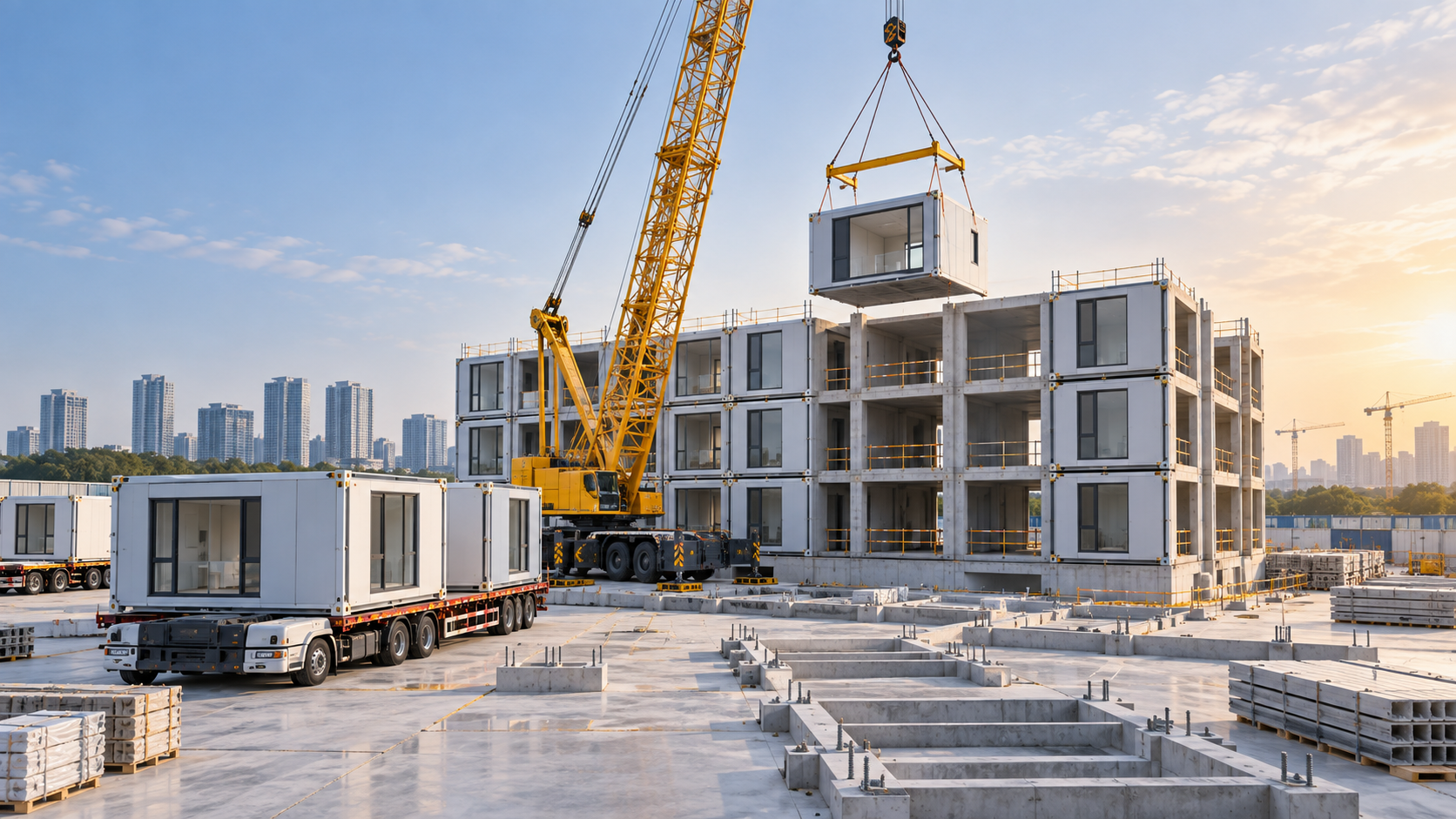
Modular construction is often presented as a faster alternative to conventional building. That is true in the right circumstances, but speed alone does not make a project cheaper. A factory-built approach can reduce a project’s total cost when it removes expensive site uncertainty, shortens the period during which capital is tied up, and makes repetition possible. It can also increase cost if a project is poorly standardized, design decisions arrive late, or transport and lifting requirements are treated as secondary issues.
The financial question is therefore not “Is modular construction less expensive per square metre?” A more useful question is: Which costs move out of the site, which risks become easier to control, and what new costs appear in the factory-to-site chain? The answer varies materially between a repeatable accommodation project, a constrained urban healthcare extension, a remote industrial facility, and a one-off architecturally complex building.
For capital approval, the right comparison is total installed cost and lifecycle exposure—not the quoted price of a module versus the quoted price of conventional structure. This distinction is where many business cases either become credible or fall apart.
The strongest cost case starts with repetition
Modular Construction tends to work financially when a meaningful share of the building can use repeatable room types, service zones, structural grids, or facade assemblies. Hotels, student residences, workforce accommodation, care facilities, bathrooms, utility rooms, classrooms, and some healthcare spaces are frequently assessed for this reason. Repetition allows the manufacturer to stabilize workflows, buy materials more predictably, reduce rework, and apply the same quality checks across many units.
That does not require every room to be identical. A project may combine standardized bedroom or bathroom modules with a conventionally built lobby, circulation core, plant room, or public-facing space. In fact, hybrid construction is often the more sensible commercial choice. It keeps the highly repeatable, labour-intensive elements in controlled production while avoiding the cost of forcing irregular parts of a building into a modular format.
Where every floor plate changes, each facade bay is unique, or the structural geometry evolves throughout detailed design, the factory loses much of its advantage. The project may still benefit from prefabricated elements, but full volumetric modular delivery can become an expensive exercise in manufacturing bespoke products.
Lower site costs matter more than lower factory costs
A modular supplier’s fabrication price may not look cheaper at first glance. Factory production includes controlled labor, production engineering, quality assurance, internal handling, packing, and sometimes a level of finish that would be purchased later under separate site packages. Comparing that number only with the conventional structural frame is a common procurement error.
The savings, when they materialize, are usually spread across the project rather than concentrated in a single line item. Less time on site can mean lower general conditions, reduced temporary works, fewer supervision hours, lower security and site welfare costs, and less exposure to weather disruption. A compact site with difficult access may also benefit from fewer trades working simultaneously in a congested environment.
The commercial value is particularly clear where conventional site labor is scarce, costly, difficult to mobilize, or subject to high turnover. A factory does not eliminate labor; it relocates and sequences it. But controlled production can reduce the coordination burden of having multiple trades wait for one another on site. That matters when labour availability—not material price—is the real constraint on delivery.
Schedule savings only count when they can be monetized
Modular programmes are often shorter because foundations and site preparation can progress while modules are fabricated. That overlap can be valuable, but only if the project’s real constraints have been identified. If planning approval, utility connection, financing conditions, operator fit-out, or final inspection will delay opening anyway, a faster superstructure may not change the financial outcome.
A sound investment model should identify what an earlier completion date actually changes. It may reduce construction-period interest, avoid extension costs under a lease, reduce temporary accommodation needs, accelerate usable capacity, or protect a seasonal operating window. If none of these items can be quantified or contractually captured, schedule compression is a benefit—but not yet a reliable saving.
There is another practical point. A modular schedule is less forgiving of indecision. The factory needs approved drawings, material selections, interfaces, and equipment requirements earlier than a conventional project might. The benefit of parallel work disappears quickly when modules are held in storage because the site is not ready or when completed units require reopening to accommodate late changes.
Early design freeze is a financial control, not an administrative milestone
The earlier the design is resolved, the more realistic the modular cost plan becomes. This is not because factory-built construction is inherently rigid; it is because changes made after production begins have a different cost profile. A late adjustment to a wall opening, bathroom fixture, fire-stopping detail, mechanical penetration, or facade connection may affect several completed assemblies and disrupt a production sequence.
Financial approvals should therefore test the maturity of the design package before approving a modular procurement route. Structural loading, fire performance, acoustic targets, moisture management, building services coordination, transport dimensions, lifting points, and connection details all need to be developed as one system. A low module price based on unresolved interfaces is not a firm cost; it is an early estimate with considerable change risk embedded in it.
This is also where buyer teams should examine scope boundaries carefully. Is the supplier pricing modules only, or modules plus transport, erection, cranage, site connections, weatherproofing, commissioning support, defects liability, and design responsibility? Cost overruns often appear in the gaps between the manufacturing contract and the site package, especially where no party owns a specific interface.
Freight, lifting, and logistics can reverse the economics
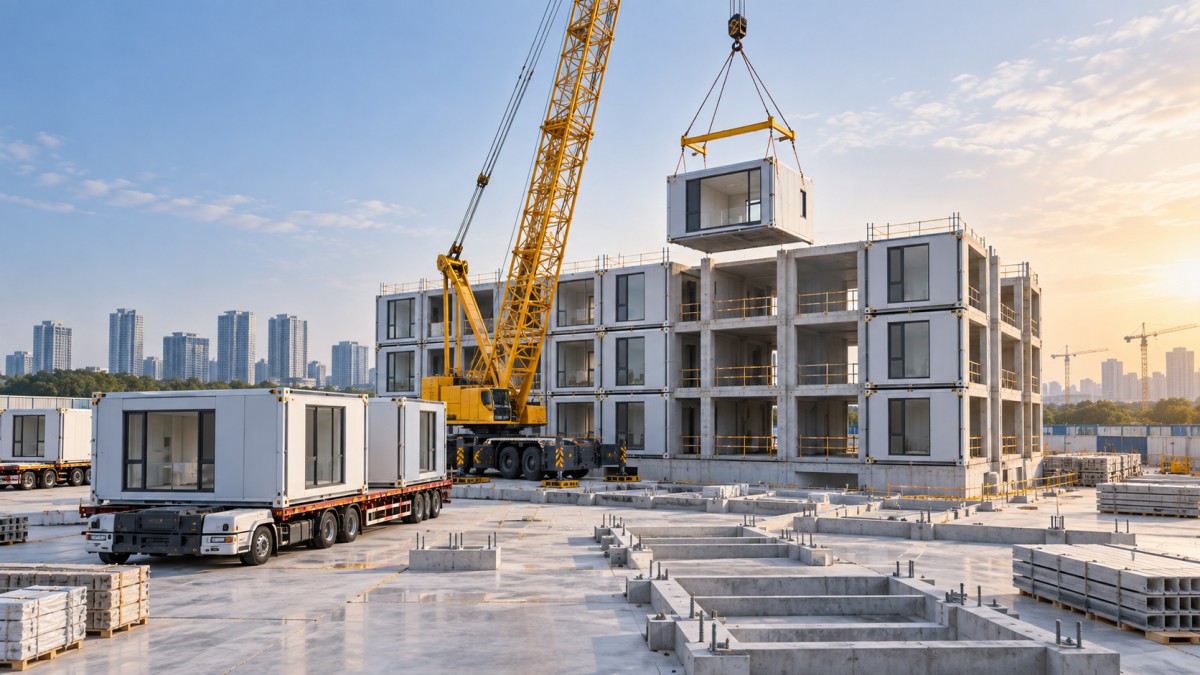
A module that leaves a factory efficiently still has to reach the site intact and be placed safely. Oversize load restrictions, route surveys, escorts, bridge clearances, temporary road closures, port handling, storage, crane selection, and weather windows can be material cost drivers. These are not incidental details to leave until after supplier appointment.
Projects located close to a capable manufacturing base, with practical road access and a predictable lifting plan, generally have a stronger commercial case. Remote locations can also suit modular delivery where local construction resources are limited, but the logistics plan needs more scrutiny, not less. Transport distance by itself is not enough to judge the issue. The relevant question is whether the route, module dimensions, handling points, and delivery sequence have been engineered together.
Storage is another overlooked item. Modules delivered too early may need protected laydown space. Delivered too late, they can interrupt crane operations and site trades. Just-in-time delivery sounds attractive, yet it depends on dependable production status, realistic transit allowances, and a site that can receive units without bottlenecks.
Procurement resilience should be priced into the decision
A modular project can concentrate a large portion of delivery risk in one manufacturer. That can simplify management, but it also makes supplier due diligence more important. A buyer should understand the factory’s available capacity, current order book, critical material dependencies, quality-control process, financial position, warranty arrangements, and ability to support installation. Capacity promised during tender is not the same as capacity secured in a production slot.
Payment terms deserve similar attention. Manufacturers may require deposits or staged payments earlier than conventional site contractors because they are buying materials and committing production capacity before modules arrive on site. That may create a working-capital disadvantage even where the final installed cost is favorable. The approval model should reflect the timing of cash outflows, title transfer, insurance responsibilities, and protection for partially completed units.
This is one reason market intelligence is useful before a tender list is finalized. Platforms such as TradeNexus Edge track the supply-chain context around smart construction rather than treating suppliers as interchangeable directory entries. For a decision team, the useful output is not promotional comparison; it is a clearer view of manufacturing capability, regional logistics exposure, technical fit, and the assumptions behind a quoted solution.
Where modular construction is least likely to save money
The approach is not automatically suitable for every project. Cost savings are less likely when the building is small and highly customized, when the design is still moving, when facade and room configurations are irregular, or when local site labor is readily available at competitive cost. The same caution applies where the project has difficult access but no workable strategy for oversized delivery or crane operations.
It can also be the wrong choice when a project team treats modular delivery as a procurement shortcut. Factory-built systems demand earlier coordination, not less coordination. A conventional project may absorb some late decisions through site sequencing; a production line will expose them immediately. The cost of that discipline should be included in preconstruction budgets rather than discovered after contract award.
A practical approval test
Before committing to Modular Construction, compare two fully scoped delivery models rather than two headline prices. The comparison should include design and engineering, foundations, factory work, transport, lifting, site installation, fit-out completion, utility connections, temporary works, programme-related overheads, financing effects, contingency, and likely change exposure. Then test the assumptions: Is the design sufficiently frozen? Is factory capacity contractually available? Can the site receive modules to the planned sequence? Does earlier completion improve the project’s financial position in a measurable way?
Modular construction reduces total cost when it converts uncertainty into controlled production without replacing it with hidden logistics, interface, or financing risk. The best opportunities usually have repeatable units, real schedule value, expensive site constraints, and a project team willing to make decisions early. If those conditions are absent, selective prefabrication or a hybrid approach may protect more value than an all-modular commitment.
Deep Dive
Related Intelligence
 Sustainable BuildingBuilding insulation rated R-30 — does real-world performance match lab-tested values?Analyst:Chief Civil Engineer
 Sustainable BuildingPrefabricated houses with structural insulated panels — how fire-rated are the joints?Analyst:Chief Civil Engineer
 Sustainable BuildingStrategic Link Partnerships in Precision Farming Rarely Include Shared Firmware UpdatesAnalyst:Chief Civil Engineer