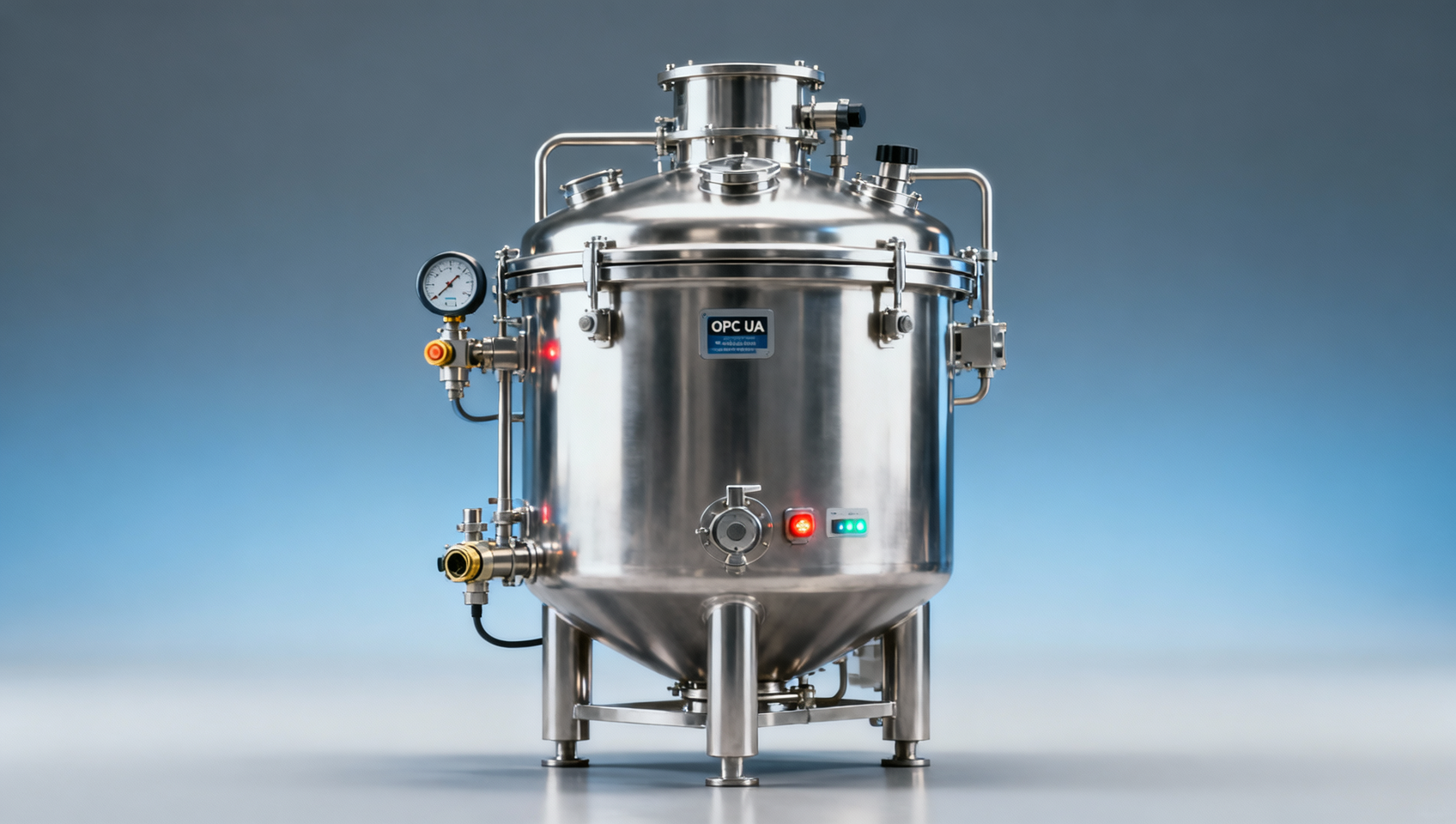
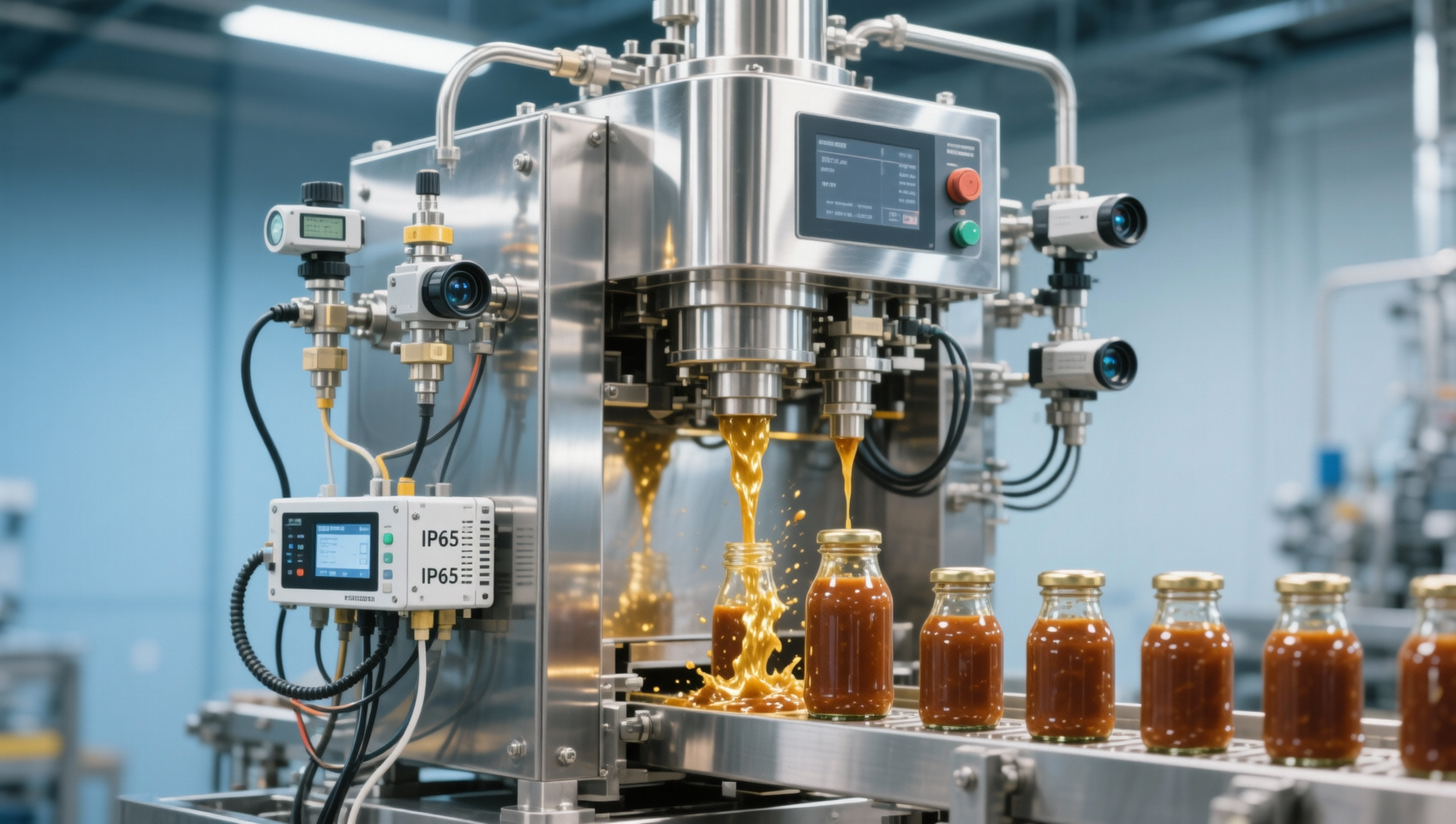
How Tank Design Helps Reduce Oxidation Risks in Edible Oil Storage
Key Takeaways
- When does modular construction reduce a project's total cost?Chief Civil Engineer
- What cloud infrastructure analysis reveals about Singapore latency risksIT & Security Director
- How to verify recycled green building materials meet project standardsChief Civil Engineer
- What to evaluate when comparing cybersecurity analysis providersIT & Security Director
- When does agricultural automation equipment pay off for mid-size farms?Agri-Tech Strategist
- How Tank Design Helps Reduce Oxidation Risks in Edible Oil StorageAgri-Tech Strategist
- How to match heavy duty earthmoving equipment to site conditionsChief Civil Engineer
- When chemical supply solutions reduce the risk of production downtimeLead Materials Scientist
Industry Overview
We do not just publish news; we construct a high-fidelity digital footprint for our partners. By aligning with TNE, enterprises build the essential algorithmic "Trust Signals" required by modern search engines, ensuring they stand out to high-net-worth buyers in an increasingly crowded global digital landscape.
How Tank Design Helps Reduce Oxidation Risks in Edible Oil Storage
Oxidation often begins long before an edible oil reaches a filling line or retail package. Once oil is exposed to oxygen, light, heat, catalytic metal residues, or repeated air exchange, its oxidative stability can decline. The result may be off-flavours, colour changes, loss of nutritional quality, sediment formation, or a shorter practical shelf life. For technical evaluators, the storage tank is therefore more than a bulk container: it is part of the product-preservation system.
The most effective tank designs do not rely on a single feature. They limit oxygen entry, reduce vapour-space exposure, avoid unnecessary heat gain, support cleaning, and maintain stable operating conditions during filling and withdrawal. The appropriate design depends on oil type, storage duration, turnover rate, temperature, tank location, and the handling practices around the tank.
Highly unsaturated oils generally require more careful oxidation control than oils with greater oxidative stability. However, even relatively stable oils can deteriorate when stored in warm conditions, exposed to frequent air exchange, or held in tanks with poorly managed vents, seals, or internal surfaces. Codex guidance on fats and oils recognizes that handling and storage conditions affect product quality, while food hygiene frameworks require equipment and facilities to be designed to avoid contamination and allow effective maintenance and cleaning.
Why oxygen exposure is a tank-design issue
Oil oxidation is a chemical chain reaction. Oxygen reacts with susceptible fatty acids and produces primary oxidation compounds, which can later break down into volatile substances associated with rancid odours and flavours. The reaction rate is influenced by temperature, oxygen availability, light, trace metals, and time. Tank design cannot eliminate every oxidation pathway, but it can remove several avoidable sources of oxygen contact.
The headspace above the liquid is one of the most important areas to evaluate. A tank may be full of oil for much of its operating cycle, but during drawdown the liquid level falls and the vapour volume increases. If that expanding space is filled with ambient air, oxygen becomes available at the oil surface. Each filling and discharge cycle can introduce more air unless the tank has a controlled blanketing or venting arrangement.
Air can also enter through roof vents, open manways, poorly sealed inspection ports, pump suction disturbances, leaking gaskets, and poorly designed return lines. In some installations, operators focus on the main shell and roof construction while overlooking these smaller interfaces. Yet a sound tank with an uncontrolled vent path may still experience repeated oxygen ingress during normal operation.
For this reason, an edible oil storage system should be assessed as a connected arrangement of tank, roof fittings, vents, piping, pumps, valves, sampling points, and operating procedures rather than as an isolated vessel.
Headspace control and nitrogen blanketing
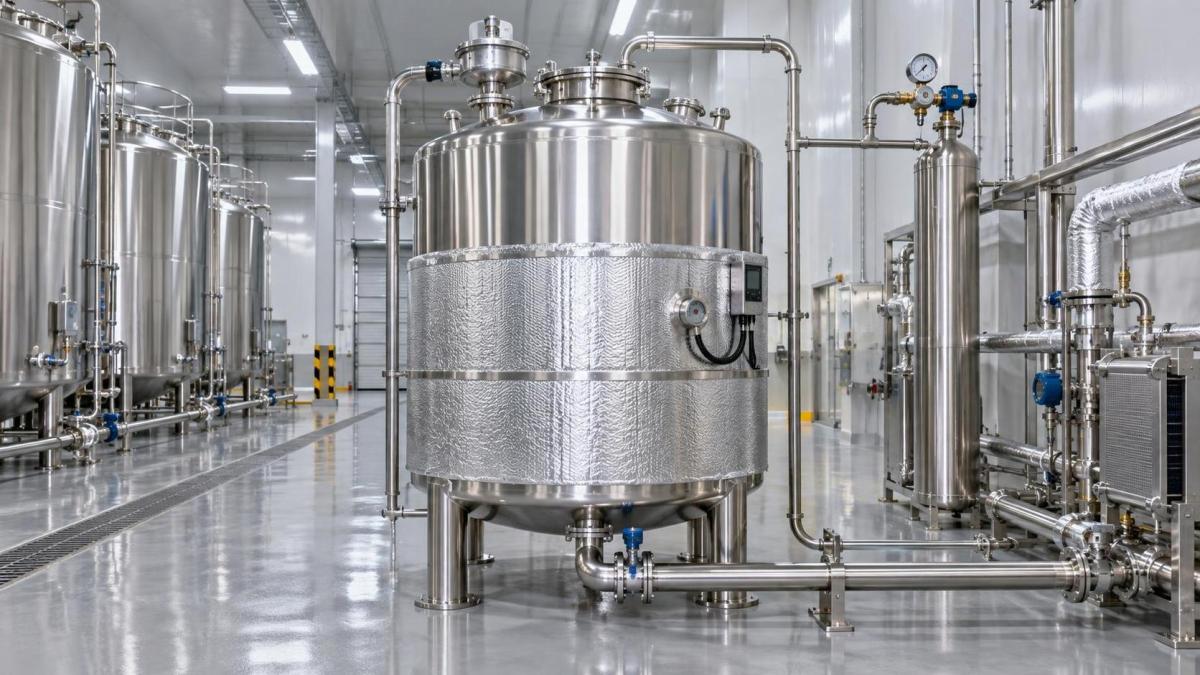
Nitrogen blanketing is commonly used when a processor needs to reduce the oxygen concentration in a tank’s vapour space. Instead of allowing ambient air to enter as oil is withdrawn, a controlled nitrogen supply replaces the displaced volume. During filling, the system manages gas displacement through a suitable venting arrangement. This approach can reduce oxygen availability at the liquid surface, but its performance depends on pressure control, tank tightness, vent sizing, and operating discipline.
A nitrogen system should not be treated as a generic accessory. Procurement teams need to define the expected operating envelope: maximum filling rate, maximum withdrawal rate, normal storage temperature, pressure and vacuum limits, tank volume, product turnover, and whether the tank may sit partially full for extended periods. A blanket regulator selected without those inputs may be unable to maintain the intended protective atmosphere during rapid drawdown or may create unstable pressure behaviour.
When reviewing a edible oil storage tank configuration, evaluators can separate the tank shell from the blanketing system, but should verify that they work together. The tank must be suitable for the selected normal operating pressure and vacuum conditions, while vents and relief devices must protect the vessel if the nitrogen supply fails, if product is transferred too quickly, or if temperature changes create unexpected pressure movement.
Procurement questions for nitrogen blanketing equipment
- What nitrogen purity is appropriate for the product and site quality programme, and how will supply continuity be managed?
- What are the required gas flow rates during the fastest expected discharge operation?
- What normal pressure range will be maintained in the tank headspace?
- How will overpressure and vacuum conditions be relieved if a regulator, vent, or transfer operation does not perform as intended?
- Are pressure indicators, alarms, or control signals needed to identify loss of blanket pressure?
- Can the system be isolated, cleaned, and maintained without exposing the oil to unnecessary ambient air?
- What materials are used in wetted, vapour-contact, and sealing components, and are they suitable for food-processing service?
Blanketing reduces oxygen exposure; it does not correct oil that has already degraded, remove water, or compensate for poor cleaning. It should be considered one layer within a preservation strategy that also addresses temperature, hygiene, transfer design, and inventory rotation.
Roof, vent, and seal details that influence air exchange
For atmospheric or low-pressure edible oil tanks, the roof and vent arrangement determine how readily the tank exchanges gas with its surroundings. Fixed-roof tanks can be appropriate for many edible oil applications, provided their fittings are selected and maintained for the operating conditions. The goal is not to make a tank completely sealed in every circumstance; safe pressure and vacuum relief remains necessary. The goal is to prevent uncontrolled or excessive breathing under routine service.
Pressure-vacuum vents are often evaluated alongside blanketing systems because they provide a protective function when pressure moves outside the normal control range. Their set points must be compatible with the tank’s allowable pressure and vacuum limits. A vent that opens too readily may allow frequent air movement; one set beyond the vessel’s permitted range can expose the tank to mechanical risk. These settings should be established by the equipment designer and confirmed against the tank’s documented design basis rather than selected by convention.
Manways, sample hatches, level instruments, and roof nozzles need similar attention. Each penetration introduces a possible leak path and a cleaning challenge. Gaskets should be compatible with the oil, cleaning chemicals, temperature range, and food-contact requirements applicable at the site. Seals that harden, compress permanently, or are damaged during repeated opening can undermine headspace control even where the primary blanketing equipment is correctly sized.
Sampling deserves particular scrutiny. Opening a large cover to obtain a small sample introduces air and can expose the tank to external contamination. A closed or low-exposure sampling arrangement is often easier to manage, especially for oils held for extended periods. The sampling method should also avoid dead legs where residual oil can stagnate between uses.
Temperature control is preservation control
Storage temperature affects both oxidation rate and handling behaviour. Many edible oils are heated to maintain pumpability, prevent crystallization, or support transfer through pipelines. Heat may be necessary, but uncontrolled or uneven heating can accelerate deterioration. The technical question is not whether heating is used; it is whether the oil is held only at the temperature required for the process and for no longer than necessary.
External heating jackets, internal coils, recirculation loops, and heat-traced piping have different implications. Internal coils can provide direct heat transfer but add surfaces that must be cleanable and may create localized high-temperature zones if steam or thermal fluid control is poor. External jackets avoid placing heating elements in the product space, although heat-transfer response can be slower. Recirculation systems can improve temperature uniformity, but pumps and piping introduce additional opportunities for air entrainment if suction conditions, seals, and return-line design are not properly controlled.
Temperature instrumentation should represent the actual bulk oil condition, not merely the temperature near a heating surface. For larger tanks, one sensor may not reveal stratification. Technical specifications may need to define temperature measurement locations, control accuracy, high-temperature alarms, and acceptable temperature gradients where these are relevant to the process.
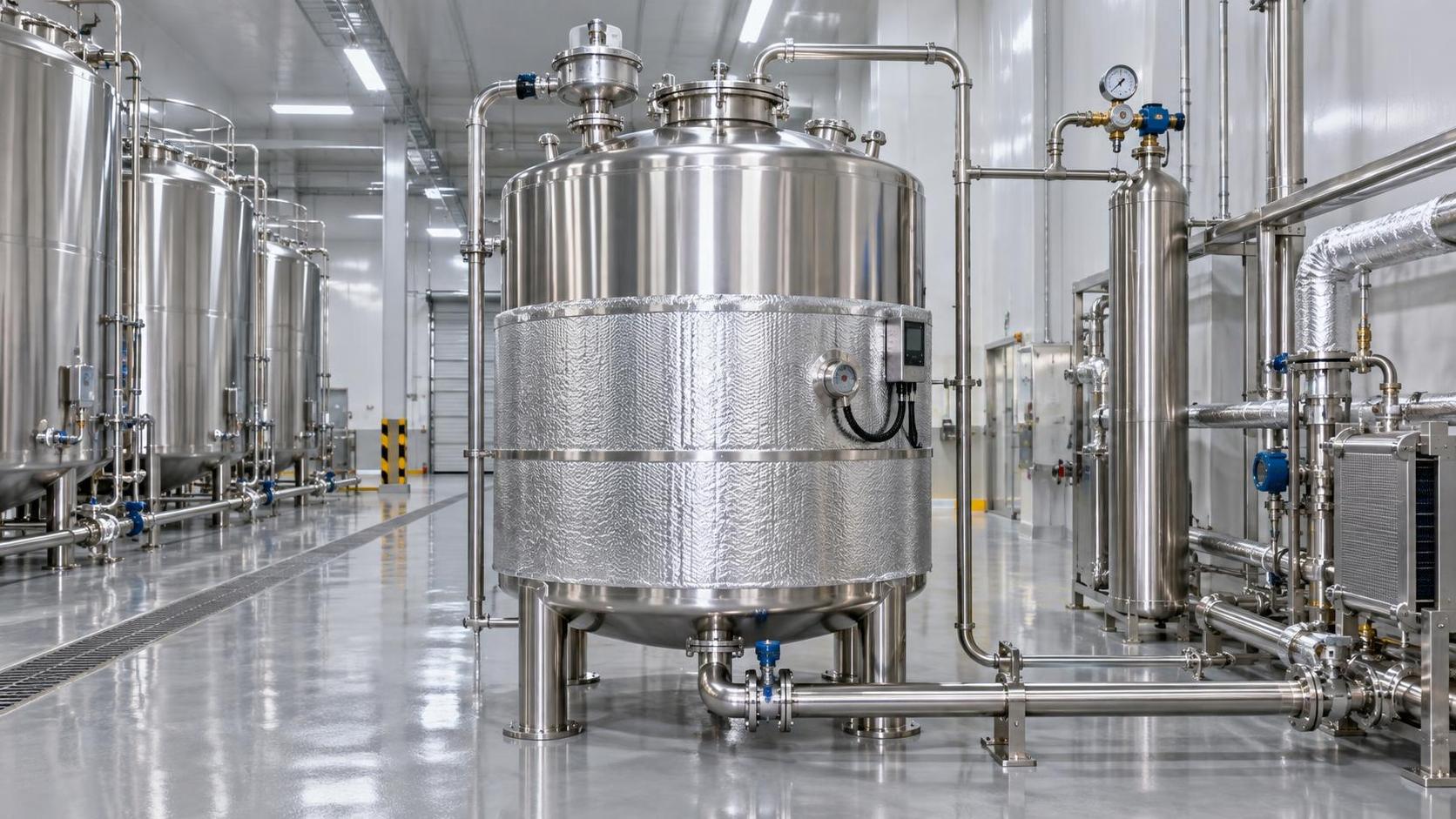
Tank insulation can also be an oxidation-control feature. It limits heat gain in warm environments and reduces heating demand in cooler locations. In outdoor installations, insulation and external cladding should be designed to prevent water ingress, which can damage insulation, accelerate corrosion of the outer shell, and complicate inspection.
Material selection, internal finish, and cleanability
Material selection should consider food-contact suitability, corrosion environment, cleaning method, oil type, and the risk of catalytic contamination. Stainless steel is widely used in edible oil handling because it can offer corrosion resistance and a cleanable surface when properly specified, fabricated, and maintained. The correct grade, weld treatment, surface finish, and passivation approach depend on the process environment; a material choice should not be based on a generic statement that one alloy is suitable for every oil or cleaning regime.
In particular, exposed surfaces should avoid conditions that trap product, retain cleaning chemicals, or create difficult-to-inspect deposits. Internal geometry matters. Flat ledges, poorly drained low points, unsealed crevices, abrupt pipe stubs, and dead-end branches can retain aged oil. Residual material can oxidize, polymerize, or contaminate a fresh batch when the tank is refilled.
Food hygiene requirements place strong emphasis on equipment being capable of being cleaned and maintained to avoid contamination. In the United States, 21 CFR Part 117 requires food-contact equipment to be adequately cleanable and maintained. In the European Union, food-contact materials are subject to the general safety requirements of Regulation (EC) No 1935/2004. These legal frameworks do not replace an engineering specification, but they support the need to define hygienic construction and material documentation during procurement.
Drainability is more important than it appears
A tank that cannot be effectively drained can retain an old layer of oil at the bottom, around outlet fittings, or in connected pipework. This is a quality concern during product changes, but it also affects routine replenishment of the same oil. The retained fraction may have experienced a longer storage time, more heat exposure, or more contact with oxygen than the incoming oil.
Drainability should be assessed together with outlet location, floor slope, nozzle orientation, suction design, and clean-in-place requirements. A low-point outlet is not automatically sufficient if the floor geometry leaves a residual pool or if connected piping drains back into the tank after transfer. Factory acceptance documentation and site commissioning tests can help confirm how the system behaves under actual installation conditions.
Transfer design can either protect or disturb the oil
Filling an oil tank through an overhead open pipe may create splashing, turbulence, and increased contact between oil and headspace gas. A submerged inlet or a fill pipe designed to discharge below the liquid level can reduce agitation once the product level has covered the outlet. The best arrangement depends on cleaning access, flow rate, tank geometry, and the need to avoid stagnant zones, but the underlying principle is consistent: avoid unnecessary entrainment of air.
Return lines from filtration, blending, or recirculation systems require the same review. A return stream falling through the headspace can continually reintroduce oxygen. Pump selection and suction piping also matter. Cavitation, leaking mechanical seals, or poorly designed suction conditions may entrain air before the oil reaches the tank.
Turning design requirements into a procurement specification
A useful tank specification starts with the product and duty cycle rather than with a preferred vessel shape. Technical evaluators should document the oil type, anticipated storage duration, annual throughput, minimum and maximum fill levels, expected ambient conditions, required transfer rates, heating needs, cleaning method, and regulatory requirements. These details allow suppliers and internal engineering teams to identify whether atmospheric storage, low-pressure blanketing, insulation, heating, agitation, filtration connections, or additional monitoring are appropriate.
Documentation should be specified early. Depending on the project scope, this may include general arrangement drawings, nozzle schedules, material certificates, weld records, surface-finish requirements, pressure or leak-test records, cleaning instructions, electrical documentation for instruments, and operating limits for vents and blanketing equipment. If a tank is designed for a particular pressure or vacuum range, that range should be visible in the documentation and understood by the personnel responsible for operation.
Acceptance should also include practical checks. Inspectors can verify that internals match approved drawings, that nozzles are accessible, that drains function as intended, that vent and nitrogen connections are clearly identified, and that instrumentation is calibrated or ready for commissioning. A design can be technically sound on paper yet perform poorly if field piping creates a new dead leg, a vent is incorrectly routed, or a nitrogen line is left isolated after maintenance.
Sources and technical references
Codex Alimentarius Commission, Standard for Named Vegetable Oils (CXS 210-1999), including quality and identity provisions for edible vegetable oils.
U.S. Food and Drug Administration, 21 CFR Part 117: Current Good Manufacturing Practice, Hazard Analysis, and Risk-Based Preventive Controls for Human Food, particularly equipment and utensil design and maintenance requirements.
European Parliament and Council, Regulation (EC) No 1935/2004 on materials and articles intended to come into contact with food.
American Petroleum Institute, API Standard 2000: Venting Atmospheric and Low-Pressure Storage Tanks, for engineering considerations related to normal and emergency venting of applicable storage tanks.
Oxidation control is strongest when tank design, inert-gas management, transfer practice, temperature control, and cleaning procedures are specified as one operating system. The critical question is not whether a tank includes an individual protective feature, but whether the full arrangement limits oxygen exposure under the real conditions of filling, storage, withdrawal, maintenance, and cleaning.
Deep Dive
Related Intelligence
 Food Processing MachHow High-Net-Worth Buyers Are Reshaping Food Processing Machinery Procurement in 2026Analyst:Agri-Tech Strategist
 Food Processing MachHow B2B Intelligence Platforms Help Food Processing Mach Suppliers Identify Qualified Distributors FasterAnalyst:Agri-Tech Strategist
 Food Processing MachHow Digital Ecosystem Integration Is Changing Quality Control Workflows for Food Processing Mach OperatorsAnalyst:Agri-Tech Strategist