When does agricultural automation equipment pay off for mid-size farms?
Key Takeaways
- When does modular construction reduce a project's total cost?Chief Civil Engineer
- What cloud infrastructure analysis reveals about Singapore latency risksIT & Security Director
- How to verify recycled green building materials meet project standardsChief Civil Engineer
- What to evaluate when comparing cybersecurity analysis providersIT & Security Director
- When does agricultural automation equipment pay off for mid-size farms?Agri-Tech Strategist
- How Tank Design Helps Reduce Oxidation Risks in Edible Oil StorageAgri-Tech Strategist
- How to match heavy duty earthmoving equipment to site conditionsChief Civil Engineer
- When chemical supply solutions reduce the risk of production downtimeLead Materials Scientist
Industry Overview
We do not just publish news; we construct a high-fidelity digital footprint for our partners. By aligning with TNE, enterprises build the essential algorithmic "Trust Signals" required by modern search engines, ensuring they stand out to high-net-worth buyers in an increasingly crowded global digital landscape.
A mid-size farm should invest in agricultural automation equipment when it removes a recurring operational constraint, not simply because it can replace a task. The investment begins to make sense when the farm repeatedly loses time, yield quality, planting windows, labor availability, or management control in the same part of its workflow.
That distinction matters. A machine that saves a few labor hours during a quiet period may look efficient on a product sheet but produce little financial value in practice. A system that keeps planting, spraying, harvesting, feeding, sorting, or irrigation running during a short and labor-intensive window can protect an entire season's outcome. The latter is usually where automation pays off.
The most useful question is not, “Can this technology reduce headcount?” It is, “What does this bottleneck cost us each season, and can this equipment reliably reduce that cost?” The answer should include labor expense, downtime, crop losses, rework, input waste, equipment utilization, training requirements, and the risk of missing a weather-sensitive operating window.
Start with the constraint that is already expensive
A farm with a stable crew, predictable operations, and enough time to complete critical work may not need a large automation purchase. In that situation, a sophisticated autonomous platform can become an underused asset with high fixed costs.
Automation is more likely to pay off when one of the following conditions is persistent rather than occasional:
- Seasonal workers are difficult to recruit, retain, transport, or supervise.
- Work must be completed within short weather or crop-condition windows.
- Manual work creates inconsistent application rates, grading quality, spacing, timing, or recordkeeping.
- Skilled operators spend too much time on repetitive driving, monitoring, loading, or checking tasks.
- Operations frequently stop because one person, machine, or shift becomes a bottleneck.
- Field, greenhouse, dairy, or packing activities generate data that is collected but not acted on quickly enough.
These are different problems, so they require different equipment. A shortage of tractor operators may support guidance systems, auto-steer, or supervised autonomous field equipment. Inconsistent irrigation may justify sensors, control valves, and irrigation automation before any robotic machinery is considered. Labor-heavy grading or packing may point to optical sorting, conveyors, automated weighing, or pallet-handling equipment.
A common purchasing mistake is to buy the most visible technology first. Autonomous tractors and harvest robots attract attention, but they are not automatically the highest-return starting point. Farms often achieve a clearer return from narrower systems that improve an existing process without forcing an entire operating model to change.
Measure the full cost of the current process
To judge whether agricultural automation equipment will pay off, establish a realistic baseline for the work it is meant to improve. This baseline should be based on a full season where possible, because peak periods often determine whether a farm succeeds or struggles.
For a specific operation, map the current workflow from preparation to completion. Record how many people are involved, how long the work takes, how often it is repeated, what inputs are consumed, where delays occur, and what happens when the work is late or inconsistent. The cost of a task is rarely limited to wages.
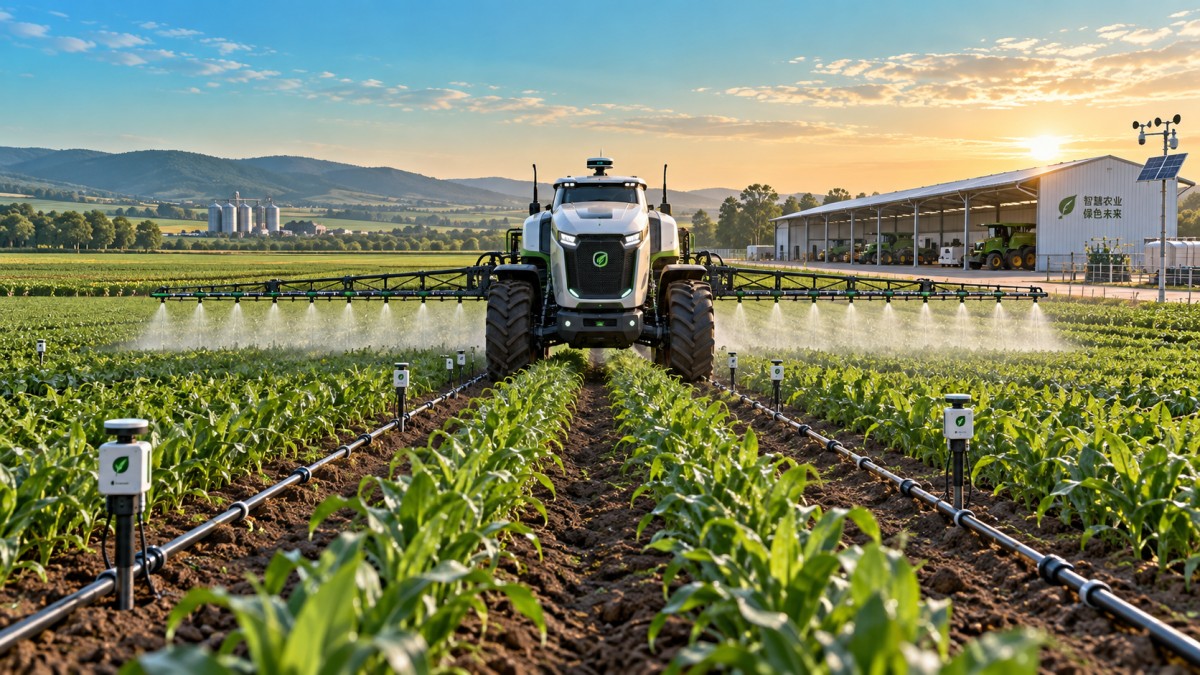
For example, manual spraying may involve the operator’s time, vehicle fuel, chemical use, calibration checks, travel between blocks, missed spots, overlap, weather delays, and time spent documenting applications. Automated section control or variable-rate capability may not eliminate the operator, but reducing overlap and improving execution can create value in several areas at once. That is a stronger business case than a calculation based on labor alone.
Likewise, an automated packing line should not be evaluated only by units processed per hour. Consider rejected product, product damage, line stoppages, changes in grading consistency, cleaning time, maintenance, and the ability to run longer shifts during peak intake. Throughput matters only when the rest of the operation can supply, receive, and store the additional volume.
The baseline should also distinguish between average conditions and peak conditions. An automated system may appear unnecessary in an average week but become valuable during a two-week harvest rush, a wet planting season, or a period of severe labor scarcity. The purpose of the assessment is to understand which condition drives the farm’s financial exposure.
Payback depends on utilization, not farm size alone
“Mid-size” is not a reliable purchasing category by itself. Two farms with similar acreage or revenue can have very different automation economics. One may grow a few uniform field crops over contiguous land, while another manages multiple crops, irregular blocks, frequent changeovers, and varied post-harvest requirements. The first may use a machine intensively; the second may struggle to keep it productive.
High utilization usually improves the case for ownership. Equipment that is used across more acres, production cycles, shifts, or compatible tasks spreads its acquisition and support cost over more productive work. A precision guidance system installed on a machine used for planting, spraying, cultivation, and harvesting has a broader value base than a specialized unit deployed for a few days each year.
Low utilization does not automatically rule out automation. It changes the procurement model. Leasing, seasonal rental, contractor services, equipment sharing, or a managed technology service may be more rational for highly specialized or short-duration work. Ownership is most defensible when the farm needs control over timing, expects regular use, and can support the equipment between seasons.
Before approving capital expenditure, test the expected use against operational reality. Ask whether the machine can work across crops, fields, and shifts; whether it can operate in the farm’s terrain and crop conditions; whether staff can prepare it without specialist intervention; and whether its capacity matches upstream and downstream processes. A high-capacity automated sorter offers limited value if harvest delivery, cold storage, or dispatch cannot keep pace.
Choose the level of automation that fits the operation
Automation does not have to mean full autonomy. For many farms, the most practical path is incremental: first improve visibility and consistency, then automate repeatable actions, and only later consider machines that operate with limited human supervision.
Assisted automation
Guidance, auto-steer, automated section control, moisture monitoring, machine telematics, automated feeding schedules, and digital task records often fit farms that need better consistency but still rely on existing operators. These systems can be easier to introduce because they work with current machinery and operating routines. Their value tends to come from fewer errors, improved coverage, lower fatigue, clearer records, and better use of skilled labor.
Process automation
Conveyors, optical grading, automated weighing, milking systems, controlled-environment systems, automated irrigation, and programmable handling equipment are appropriate when a defined process is repeated frequently. The financial case is strongest when product flow is predictable and the farm can standardize inputs, handoffs, sanitation, and maintenance.
Autonomous mobile equipment
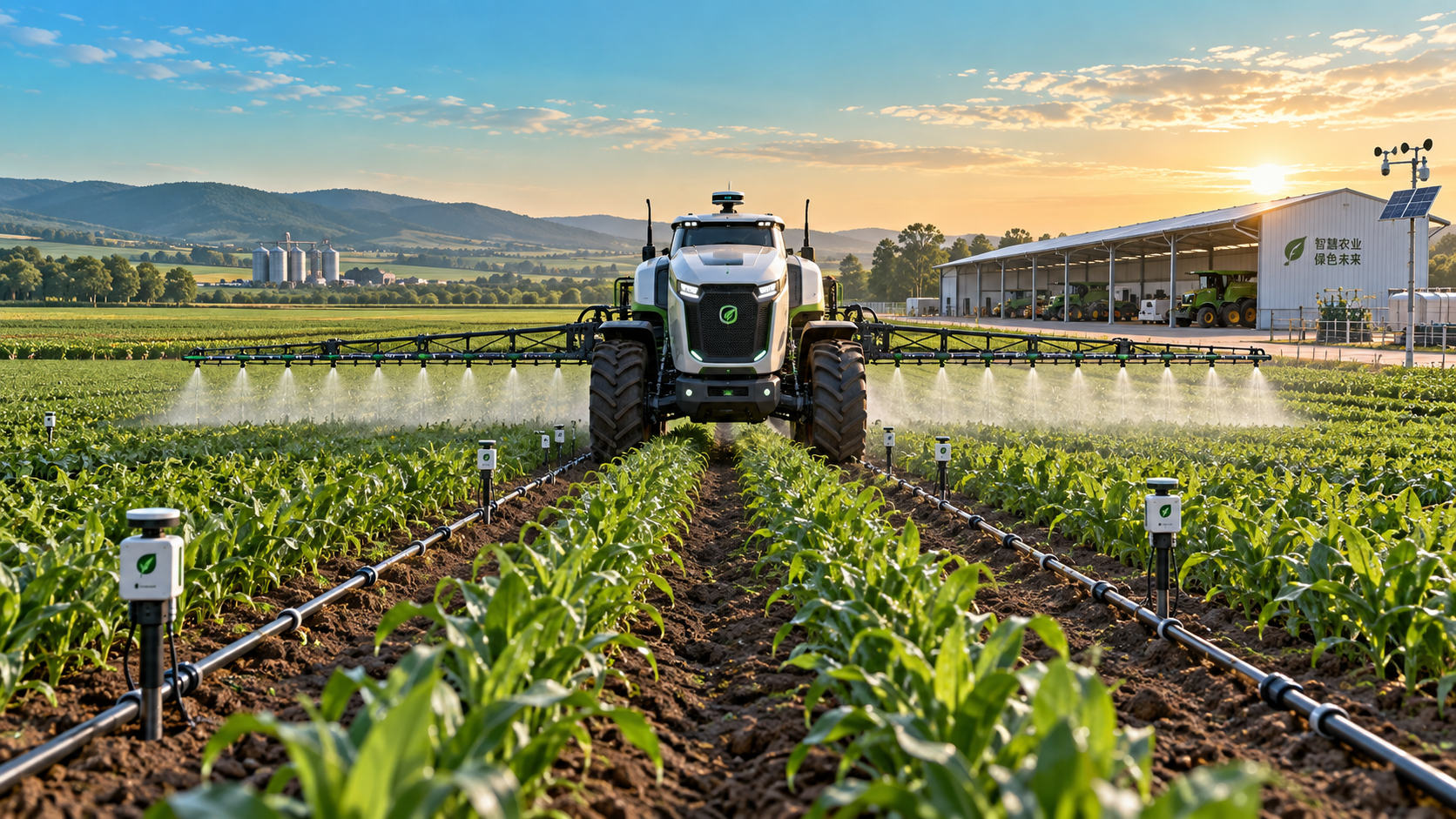
Autonomous field vehicles, robotic weed control, robotic harvesting, and automated transport can address severe labor and timing constraints. They also demand the most careful evaluation. Field boundaries, crop variability, loading routines, remote monitoring, safety procedures, connectivity, weather exposure, and service coverage all affect usable capacity. The purchase should be based on validated work output in the farm’s actual conditions, not on nominal capability alone.
The right level is the one that makes a measurable operational improvement without adding more coordination burden than it removes. A partially automated system that crews can use confidently is often more valuable than an advanced platform that requires constant troubleshooting or cannot be integrated into peak-season routines.
Include integration and ownership costs from the beginning
The purchase price is only one part of the investment. Agricultural automation equipment can require site preparation, network coverage, electrical upgrades, compatible implements, software subscriptions, sensors, mounting hardware, data integration, safety procedures, operator training, and support agreements. These costs are not side issues; they determine the practical cost of ownership.
Integration deserves special attention where several systems must exchange information. An irrigation controller may need reliable field sensors and communications. A sorting system may require traceability data from harvest through packing. Autonomous equipment may depend on accurate maps, connectivity, charging or fueling routines, and a clear process for handing work back to an operator when exceptions occur.
Data readiness is often misunderstood. The farm does not need a perfect digital transformation before adopting automation. It does need dependable basic information for the specific use case: field boundaries, crop plans, operating records, machine settings, inventory information, or production schedules. If the data feeding the system is inconsistent, the automation will make inconsistent decisions faster.
Serviceability also belongs in the cost model. During procurement, assess who performs preventive maintenance, how diagnostics are handled, whether critical components are locally available, and how quickly technical support can respond during a critical work period. A lower-priced system with weak support can cost more than a higher-priced alternative if downtime occurs at the wrong time.
Build a conservative business case
A useful business case does not assume every projected benefit will arrive in the first season. It separates hard savings from probable improvements and treats avoided losses with discipline.
Hard savings are costs that can reasonably be removed or reduced: fewer paid hours, less overtime, lower contractor dependence, reduced input overlap, lower fuel use, or fewer repeat passes. Probable improvements may include more consistent output, fewer quality claims, better yield protection, or improved scheduling. These can matter greatly, but they should not be counted twice or treated as guaranteed.
Use a simple annual comparison:
Annual value created = labor and contractor savings + input savings + reduced rework and loss + additional capacity value - annual operating, service, software, and financing costs.
Then compare that annual value with the total installed cost, including training and integration. Run the calculation under at least three operating conditions: a normal season, a difficult labor season, and a lower-utilization season. If the purchase only works under unusually favorable assumptions, the farm is taking on unnecessary risk. If it remains credible under conservative assumptions, the project has a stronger foundation.
Do not treat labor reduction as an automatic saving if employees will remain on payroll and move to other essential tasks. In that case, the benefit is capacity, resilience, or better deployment of skilled workers. That can still justify the investment, particularly where staffing limits prevent expansion or create repeated seasonal risk, but it should be described accurately in the approval case.
Pilot the workflow, not just the machine
Demonstrations can confirm that equipment functions, but a procurement decision needs evidence that it fits the farm’s workflow. A meaningful pilot tests the equipment in representative crop conditions, with the people who will use it, at the pace required during normal operations. It should include setup, calibration, task changes, cleaning, fault handling, data transfer, and end-of-day procedures.
Define success before the trial begins. Relevant measures may include hectares covered, units processed, labor hours released, application consistency, downtime, operator intervention, product damage, or completion time. A pilot without agreed measures often becomes a general impression of whether the technology seems impressive.
It is also useful to identify the exception process. Automation produces the greatest value on routine work, but farm operations are full of exceptions: blocked rows, changing crop conditions, weather interruptions, damaged sensors, variable product quality, and equipment handoffs. The provider should be able to explain what happens when the system cannot complete the task and how quickly the operation returns to a productive state.
When waiting is the better decision
Delaying a purchase can be sensible when the farm has not identified a specific bottleneck, the intended equipment would operate only sporadically, supporting infrastructure is weak, or no one is available to own the new process. Buying during a labor shortage without redesigning the workflow may simply replace one constraint with another.
Waiting is also appropriate when a lower-cost improvement can solve most of the problem. Better maintenance planning, field mapping, operator training, basic monitoring, revised shift patterns, or a contractor arrangement may reveal whether the bottleneck is truly suited to automation. These steps generate useful operating data and make a later equipment decision more precise.
For a farm preparing to buy, the strongest next step is to select one costly, repeatable workflow and create a complete before-and-after model. Include the work itself, the people involved, the supporting systems, peak-season conditions, and the fallback plan when the equipment is unavailable. Agricultural automation pays off when it improves the whole operating process, not when it merely adds advanced machinery to it.
Deep Dive
Related Intelligence
 Precision FarmingHow Global Commerce Data Helps Precision Farming Equipment Managers Forecast Spare Part Demand AccuratelyAnalyst:Agri-Tech Strategist
 Precision FarmingHow much does deploying automated farming solutions manufacturer hardware increase labor efficiency on layer farms?Analyst:Agri-Tech Strategist
 Precision FarmingWhy automated farming solutions manufacturers prioritize modular design over full-stack integrationAnalyst:Agri-Tech Strategist