What drives the cost of green building materials on a project?
Key Takeaways
- What makes Ethiopia poultry farming profitable for small-scale producers?Agri-Tech Strategist
- What Causes Frequent Customs Delays for Specialty Chemical Imports?Lead Materials Scientist
- When do composite materials outperform steel in heavy machinery?Chief Civil Engineer
- How nano materials for electronics improve battery energy densityAutomotive Tech Analyst
- How supplier evaluation helps manufacturers reduce quality risksIT & Security Director
- Materials science trends shaping next-generation battery safetyAutomotive Tech Analyst
- How to assess supplier reliability in industrial chemical supplyLead Materials Scientist
- When does procurement research in the USA justify a local supplier audit?IT & Security Director
Industry Overview
We do not just publish news; we construct a high-fidelity digital footprint for our partners. By aligning with TNE, enterprises build the essential algorithmic "Trust Signals" required by modern search engines, ensuring they stand out to high-net-worth buyers in an increasingly crowded global digital landscape.
A project can meet an ambitious sustainability brief on paper and still run into trouble at bid review. The reason is rarely a single “green premium.” More often, the green building materials cost is shaped by a chain of decisions: what the specification requires, where materials are made, how much documentation is needed, whether installers know the system, and how the product behaves over the building’s life.
For project managers and engineering leads, the practical question is not simply whether sustainable materials cost more. It is: which costs are unavoidable, which can be designed out early, and which are worth accepting because they reduce risk later? A low-carbon concrete mix that needs a longer curing window, reclaimed timber with inconsistent dimensions, or high-performance insulation requiring specialist detailing can all alter a project budget in very different ways.
Understanding those drivers before procurement begins gives teams more room to protect schedule certainty, embodied-carbon targets, and whole-life value at the same time.
Cost begins with the performance brief, not the purchase order
“Green material” is not a uniform commercial category. It can refer to recycled-content steel, bio-based insulation, low-VOC finishes, certified timber, locally sourced aggregates, modular components, products with environmental product declarations (EPDs), or materials designed for reuse. Each option has a distinct supply chain and risk profile.
The largest budget differences often start in the wording of the specification. A broad requirement such as “use sustainable flooring where feasible” lets the contractor compare viable options. A narrow mandate for a particular chemistry, certified origin, recycled-content threshold, or declaration format can reduce the supplier pool sharply. Fewer qualified suppliers may mean less pricing competition, longer lead times, and greater exposure to freight or exchange-rate changes.
That does not mean environmental requirements should be diluted. It means every requirement should be tied to a project outcome. Ask what the team is really trying to achieve:
- Lower embodied carbon at practical completion?
- Compliance with a green building rating system or public procurement rule?
- Healthier indoor air quality for occupants?
- Durability in a humid, coastal, industrial, or high-traffic environment?
- A circularity target, such as reuse, disassembly, or recycled content?
When the objective is clear, procurement can assess equivalent pathways instead of treating one branded material or certification route as the only acceptable answer.
Where the green building materials cost actually comes from
Material unit price is visible. The less visible elements are where budgets tend to move. A useful procurement review separates the installed cost from the cost of ownership and from the cost of uncertainty.
Certification adds value—but it is not cost-free
Certification frequently enters the discussion as a simple box to tick. In reality, it affects both material availability and project administration. Certified wood, environmental declarations, low-emission labels, responsible sourcing schemes, and product health disclosures can make a procurement decision more defensible. They may also be essential for client policy, finance requirements, building certification credits, or regulatory reporting.
However, documentation requirements can become expensive when they are poorly coordinated. Suppliers may need to prepare declarations for each product variation, contractors may have to track batch-level evidence, and design teams can spend substantial time chasing incomplete submissions. A product can meet the environmental intent yet fail the procurement process because its evidence does not match the exact requested format.
Build a material evidence register early. For each major package, record the performance requirement, accepted proof, responsible party, renewal date where relevant, and approved substitute criteria. This is less glamorous than selecting materials, but it prevents a common late-stage problem: a seemingly compliant product is installed before its documentation has been validated.
Project teams should also distinguish between a credible environmental claim and a requirement that has real decision value. An EPD, for example, communicates environmental impacts under defined rules; it does not automatically prove that one product is “sustainable” in every application. It needs to be read alongside durability, installation requirements, transport distance, and the project’s carbon calculation method.
Local availability can outweigh an attractive product price
A material sourced close to the project is not automatically the lowest-carbon or lowest-cost option, but local availability often improves budget control. Shorter supply lines can reduce freight exposure, simplify site deliveries, make samples easier to obtain, and allow faster replacement if defects or quantity errors arise. Local distributors may also provide practical support that a distant manufacturer cannot.
By contrast, imported sustainable materials can become expensive for reasons unrelated to the product itself: container availability, customs clearance, minimum order quantities, port delays, protective packaging, currency fluctuations, and the need to carry more site inventory. A freight disruption can also erase the savings assumed in an early estimate.
For major materials, ask suppliers to quote on a like-for-like delivered basis, including packaging, insurance, duties where applicable, unloading constraints, lead time, and contingency for damaged or rejected stock. Comparing only ex-works or list prices creates a false sense of economy.
There is another nuance. A regional product with a lower transport burden may still require a longer haul if it is made from a specialized input. Procurement should therefore assess the full route and verified product data rather than relying on “local” as a shortcut for environmental performance.
Installation complexity is often the overlooked premium
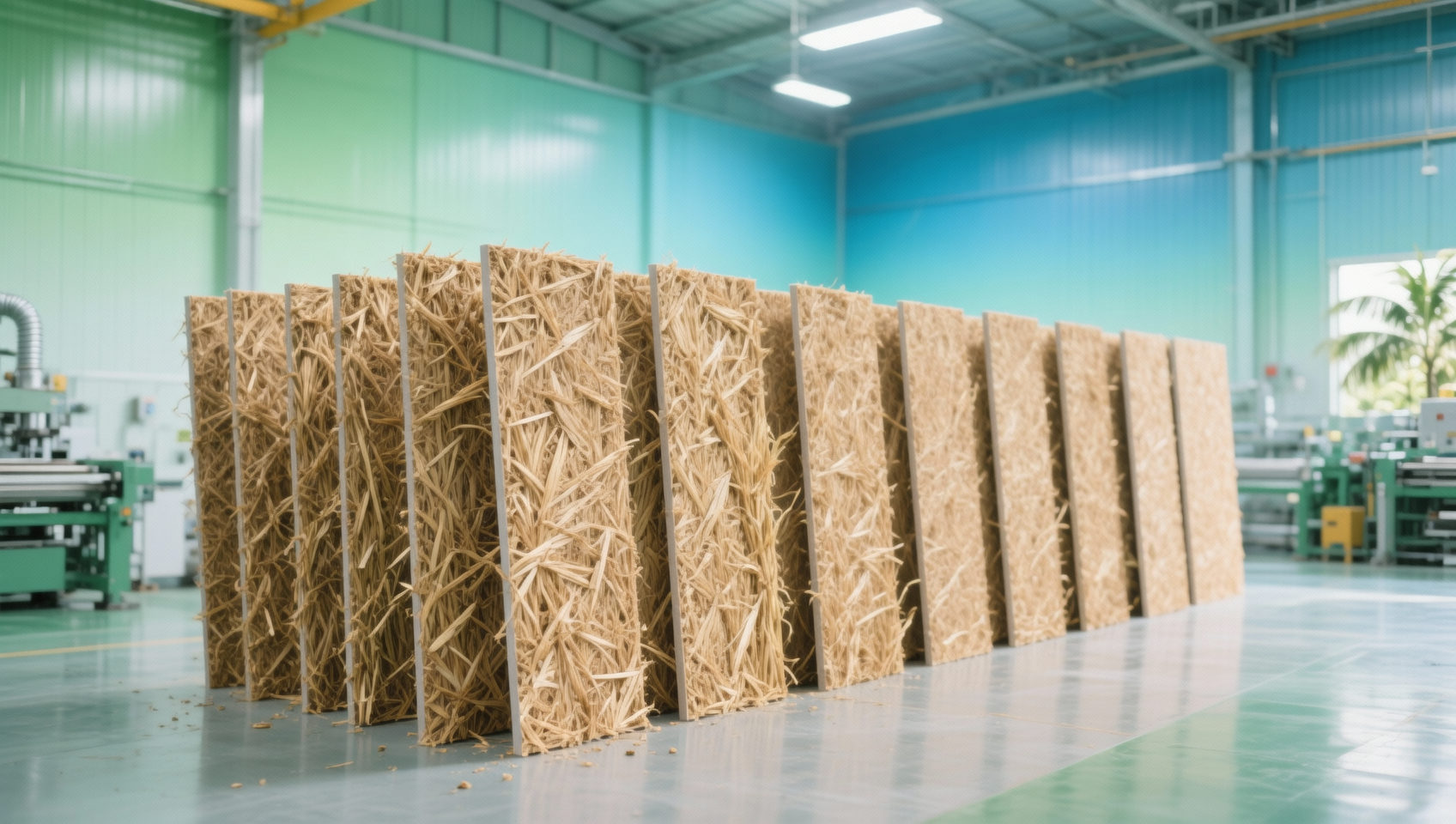
Some sustainable materials perform exceptionally well once installed, yet require a different approach on site. Bio-based insulation may need moisture-aware detailing. Reused components can require sorting, testing, cleaning, resizing, or engineering checks. Low-carbon concrete mixes may call for revised curing plans or careful coordination with stripping schedules. Recycled-content finishes may show more natural variation, requiring earlier agreement on visual acceptance standards.
None of these factors should rule out the material. The mistake is treating them as minor contractor issues rather than design-and-procurement inputs. When labor productivity, site conditions, quality control, and programme dependencies are ignored, the apparent material saving can become a variation later.
Before final selection, request method statements, installation guides, sample assemblies, and references from comparable conditions. For unfamiliar systems, a mock-up is often money well spent. It tests workmanship, confirms tolerances, exposes interface issues, and lets the client approve appearance before a large order is placed.
Why small quantities carry a disproportionate premium
Many project managers encounter this late in design: a sustainable option is commercially sensible at scale but difficult to buy for a small area, one-off feature, or late design change. Manufacturers may impose batch minimums, while distributors may charge extra for color matching, custom finishes, or broken-pack handling. The project then pays for waste, expedited shipping, or surplus stock that has no immediate use.
Design coordination can reduce this exposure. Standardizing module sizes, limiting unnecessary finish variations, consolidating orders across floors or phases, and freezing key selections before production slots fill up can all improve pricing. On refurbishment projects, careful surveys are equally important. Reuse is attractive in principle, but it only becomes economical when the available material is measured, graded, and matched to a realistic design strategy.
For circular materials, include contingency for quality variation and recovery losses. Reclaimed products are not inferior by definition; they simply demand a procurement model that respects their variability.
Do not confuse lower upfront cost with lower project cost
Budget pressure naturally pushes teams toward unit-rate comparisons. That is appropriate for commoditized items with similar performance and service life. It is less reliable for building-envelope systems, structural components, mechanical insulation, durable finishes, or materials that influence energy use and maintenance access.
A more complete comparison considers:
- Acquisition and installation cost
- Expected lifespan and warranty conditions
- Inspection, cleaning, repair, and replacement requirements
- Operational energy implications
- Downtime or disruption when replacement is needed
- Residual value, recoverability, or disposal cost at end of life
- Carbon and compliance risks that may affect client reporting
Whole-life cost analysis does not need to become a complicated financial exercise for every item. Use it where the decision is material to the project: high-value assemblies, items with major operational consequences, or choices that would be costly to reverse after installation. For lower-value finishes, a simpler installed-cost and availability review may be enough.
A practical buying sequence for sustainable material packages
Successful teams do not wait until tender returns to discover whether the sustainability brief is buildable. They bring market intelligence into the process while there is still flexibility.
- Set measurable priorities. Translate broad sustainability language into ranked criteria: carbon, health, durability, circularity, local content, certification, cost ceiling, or programme certainty.
- Map the high-impact packages. Focus early effort on concrete, steel, insulation, glazing, façade systems, timber, finishes, and MEP components according to the project type.
- Test the market before locking specifications. Speak with manufacturers, distributors, specialist contractors, and independent technical advisers about availability, lead times, evidence, and installation needs.
- Create equivalency rules. Define what an alternative must match or improve: structural performance, fire rating, thermal performance, indoor-air requirements, embodied-carbon threshold, appearance, or warranty.
- Evaluate delivered installed cost. Include logistics, storage, wastage, labor, training, testing, and programme effects—not only the purchase rate.
- Secure evidence and supply commitments. Confirm documentation routes, production capacity, approved samples, and substitution controls before site demand becomes urgent.
Cross-border projects benefit from a particularly disciplined version of this process. Market conditions can differ dramatically by region, and a product that is routine in one country may be specialized in another. B2B intelligence sources, supplier due diligence, and regional supply-chain analysis can help teams distinguish genuine availability from a catalogue listing that cannot support the programme.
Questions to put to suppliers before awarding
The best supplier conversations move beyond “What is your rate?” A procurement team should ask whether the quoted material is available for the required delivery window, whether the environmental claim applies to the exact product and production location, and whether the stated lead time includes testing or certification documents.
Also clarify batch consistency, minimum order quantities, acceptable storage conditions, installation training, compatible accessories, site support, defect replacement lead time, and the effect of design changes after order placement. Where carbon reporting matters, ask what data is product-specific, what is generic, and what assumptions were used. Vague answers may not indicate bad faith, but they are a signal that the risk needs closer review.
Cost certainty comes from earlier choices
Green building materials do not have a single price story. Some will carry a clear upfront premium. Others can compete well on installed cost, especially when specification flexibility, local supply, and standard construction practices are considered. Still others cost more at purchase but protect value through durability, lower energy use, simpler maintenance, or stronger compliance evidence.
For project leaders, the objective is not to buy the cheapest “green” product or the most heavily documented one. It is to select materials whose environmental contribution, technical performance, supply reliability, and total cost fit the project’s real priorities. The earlier that conversation begins, the fewer surprises remain hidden inside the final green building materials cost.
Deep Dive
Related Intelligence
 Green Building MatWhat Makes a Digital Landscape Strategy Effective for Green Building Mat Exporters in ASEAN?Analyst:Chief Civil Engineer
 Green Building MatAre Eco-Friendly Industrial Coatings Actually Lower in VOCs — Or Just Reformulated with New Solvent Blends?Analyst:Chief Civil Engineer
 Green Building MatGraphene Materials Bulk Order Logistics: Lead Times, Minimum Order Quantities, and Storage Requirements for Construction-Scale DeploymentAnalyst:Chief Civil Engineer