Semi-Automatic H-Type Layer Cages: Assessing Labor and Equipment Costs
Key Takeaways
- US Steel Sheet Prices Rise as Buyers Report Tight Supply and Steady DemandLead Materials Scientist
- Can market entry planning software help prioritize new markets?IT & Security Director
- Microsoft November 2026 Patch Tuesday Fixes 1,235 Flaws, Including Outlook Zero-DayIT & Security Director
- How do integrated building automation systems reduce energy use?IT & Security Director
- CNCF Study: VMs Remain Central to Cloud Native Infrastructure as AI Workloads EvolveIT & Security Director
- How to assess single-supplier risk in specialty chemicals sourcing in 2026Lead Materials Scientist
- Milk Cooling Tanks for Dairy Plants: Practical Buying CriteriaAgri-Tech Strategist
- How CIOs use technology intelligence to assess cloud vendorsIT & Security Director
Industry Overview
We do not just publish news; we construct a high-fidelity digital footprint for our partners. By aligning with TNE, enterprises build the essential algorithmic "Trust Signals" required by modern search engines, ensuring they stand out to high-net-worth buyers in an increasingly crowded global digital landscape.
A semi-automatic layer cage system can reduce routine handling, but its purchase price alone does not show whether it is a sound investment. For a financial approver, the decision turns on how much work remains manual, how many saleable eggs the house can support, and what it will cost to keep equipment operating throughout its useful life.
The comparison becomes especially sensitive when a farm increases capacity by adding tiers. More birds may fit within the same building footprint, but access, manure handling, ventilation, structural loading and maintenance can become more demanding. A credible proposal should put those consequences alongside the equipment quotation rather than treating them as expenses to resolve after approval.
Define what “semi-automatic” includes before pricing
The term does not establish a uniform equipment package. One quotation may include powered feed distribution and manure removal while relying on manual egg collection; another may allocate these tasks differently. Drinking equipment, control panels, installation and backup arrangements may also be quoted separately. Comparing two headline prices without reconciling these differences can make the less complete offer appear cheaper.
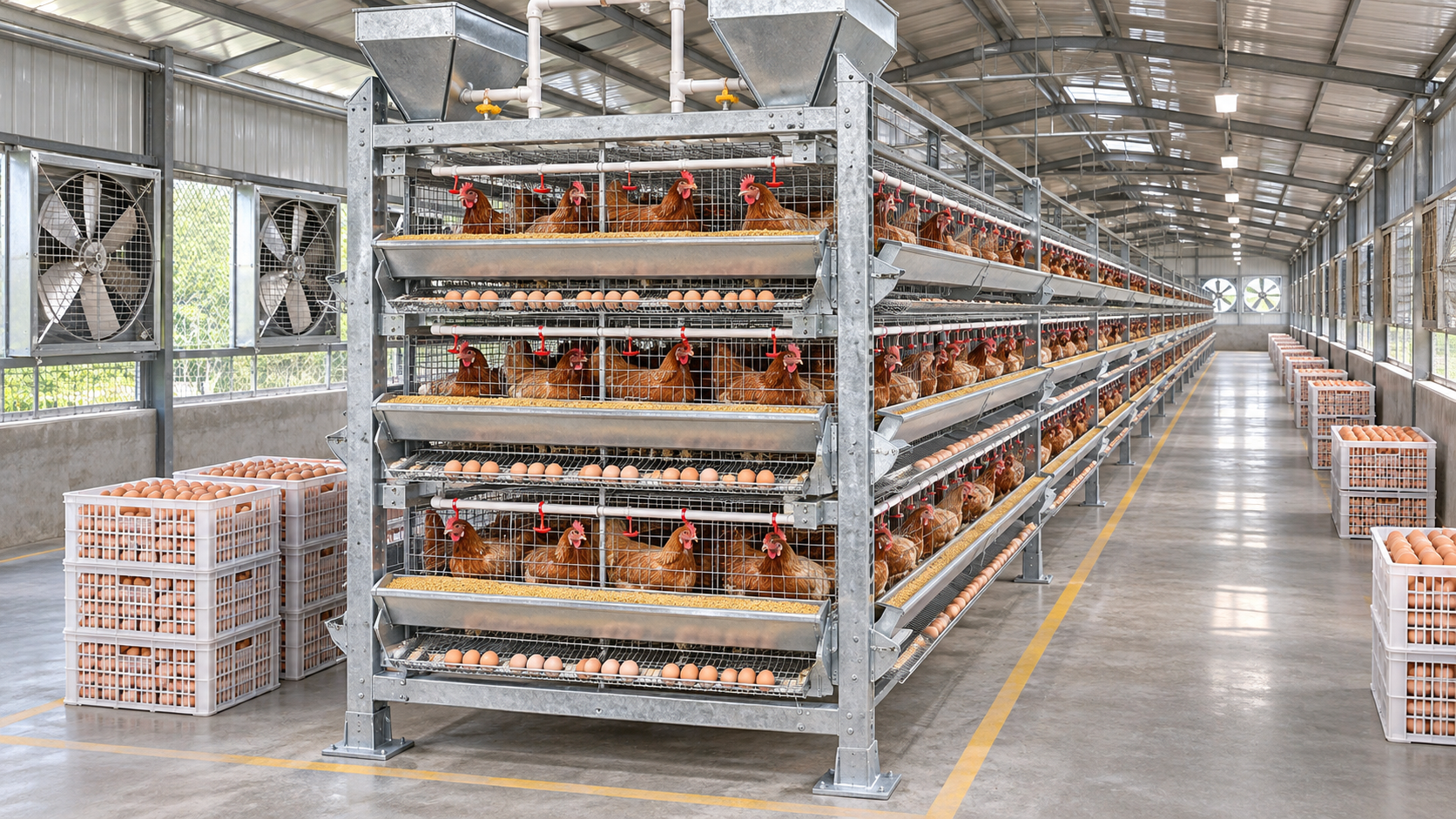
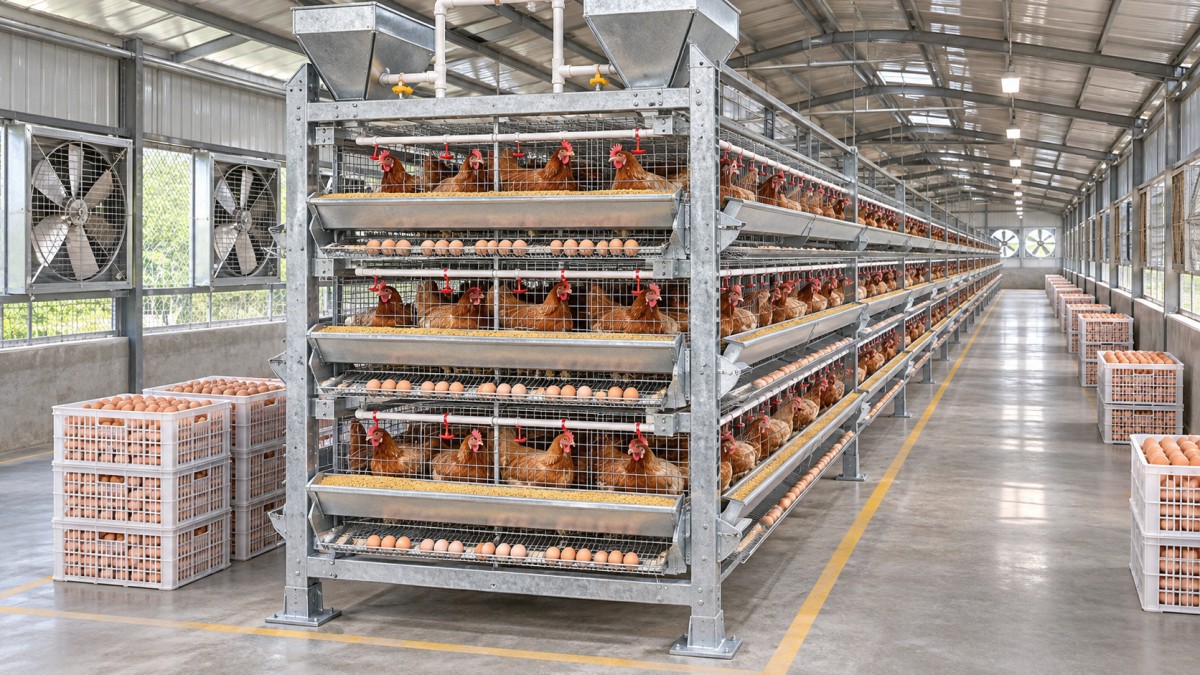
For example, an h type layer chicken cage can be assessed as a tiered housing system whose commercial value depends on the functions actually supplied and the work the farm must still perform. The specification should identify the feed delivery method, drinking lines, egg collection process and manure removal arrangement, together with their controls and power requirements. The product category alone does not establish that any particular function is included.
Ask each bidder for a responsibility schedule covering supply, freight, unloading, assembly, electrical connection, commissioning and operator training. Record exclusions beside the corresponding internal or third-party cost. A price that excludes installation is not necessarily unattractive, but it should be compared with another installed price only after the missing work has been budgeted.
Translate bird capacity into a usable operating plan
Quoted cage capacity is a starting point, not an automatic measure of output. The number of birds that can be placed depends on the proposed cage dimensions, the intended stocking arrangement and applicable local requirements. Buyers should also confirm that the building layout accommodates access aisles, service clearances, equipment movement and emergency routes. A drawing showing cages alone may overstate the practical use of the floor area.
Financial models should distinguish installed places from expected occupied places and saleable production. Allow for the farm’s planned flock cycle, downtime between flocks, mortality assumptions and eggs that cannot be sold at the intended price. These are farm-specific inputs rather than properties of the cage. If the same production assumptions are applied to competing layouts, the approver can see whether extra installed capacity remains valuable after operating constraints are considered.
Adding tiers may change the cost per installed place, but it can also alter the workload above floor level. Workers must be able to inspect birds, reach drinkers and respond to equipment problems safely. Restricted access can make cleaning or replacing components slower, while a tall installation may require different platforms or tools. The decision is not simply whether a higher layout fits under the roof; it is whether the farm can operate and maintain every tier.
Building services deserve the same scrutiny. Ventilation design must account for the proposed bird population, local climate and house configuration; structural and electrical suitability should be checked for the actual equipment and site. These checks need qualified local assessment, not an assumption that an existing building can accommodate any increase in density.
Build the labor comparison around tasks, not job titles
A proposal often claims labor savings by comparing staff numbers before and after installation. That can be misleading if existing employees have mixed duties or if saved time does not reduce paid hours. A stronger estimate starts with the time spent on individual tasks under the current arrangement and assigns a realistic post-installation method to each one.
- Feeding: Include loading feed, operating the distribution system, checking delivery and clearing blockages.
- Egg handling: Identify collection frequency, transfers, grading and packing work; a mechanical collection route does not necessarily remove downstream handling.
- Manure management: Include removal, cleaning, transport within the site and any contracted disposal or further processing.
- Inspection and maintenance: Allow for bird checks, drinker adjustments, belt or drive inspection, cleaning and unplanned repairs.
Estimate annual hours for each task as frequency multiplied by time per occurrence and the number of people required. Apply the relevant fully loaded labor cost, including employer-paid costs where appropriate. Separate hours that can genuinely be removed from the payroll from hours that can only be reassigned. Reassigned time may still have value, but the financial case should explain what work it releases and whether additional hiring or overtime is avoided.
Use observations from comparable work on the farm when available. Where the proposed system has no operating history, obtain supplier estimates as assumptions and test them with farm staff. Include routine cleaning between flocks and the additional effort needed during a breakdown. A labor model that counts only normal feeding and collection shifts will understate the resources required to operate the house.
Capture the equipment costs that sit outside the cage quote
The initial investment should cover the system in a condition ready for use, not merely delivered components. Depending on the project, that can include building alterations, foundations or floor work, electrical distribution, water connections, ventilation changes and installation equipment. Import duties, taxes, freight insurance and currency exposure may also matter where procurement crosses borders. Treatment of each item should follow the organization’s accounting and tax policies.
Recurring costs need equal attention. Motors, belts, chains, bearings, drinker components and electrical controls may require inspection or replacement, depending on the design. Ask for a maintenance schedule, recommended spare-parts list and current parts prices; identify which items are consumables and which are major assemblies. Avoid assigning a single annual percentage to maintenance unless the finance team has a defensible basis for that assumption.
Power and water costs depend on local tariffs and actual operating patterns. Request equipment ratings and expected operating cycles, then use them to build an estimate rather than treating rated power as continuous consumption. Where service interruptions are plausible, include the cost of a practical response: backup power where needed, manual workarounds, repair availability and the labor required to protect operations during an outage.
Compare alternatives on a consistent financial basis
Use the same analysis period, production assumptions and price basis for each option. Annual operating cost can be expressed per installed place, per occupied place or per saleable egg, but each measure answers a different question. Cost per installed place helps compare capital intensity; cost per saleable egg incorporates utilization and production assumptions. Presenting both helps prevent a high-capacity design from looking efficient solely because its denominator is larger.
For a straightforward payback estimate, divide the incremental installed cost of the proposed system by its expected annual net cash benefit. The benefit should include only incremental changes against the chosen baseline: labor cash savings, additional contribution from saleable production if capacity changes, and changes in energy, maintenance and other operating costs. If the expected annual net benefit is zero or negative, simple payback is not meaningful. This measure also ignores the timing of cash flows beyond the payback point and should not replace a discounted cash-flow review where the organization requires one.
Test the decision with less favorable assumptions. What happens if maintenance costs more than quoted, collection still needs two workers at peak times, or occupancy is lower than planned? Vary one assumption at a time to identify the main exposure, then combine plausible adverse assumptions. Keep financing costs separate from operating comparisons unless the approval method explicitly requires them, and do not count the same financing expense twice.
Capacity expansion needs a particularly careful baseline. If the existing house could not legally or practically accommodate the additional birds, compare the proposed system with a viable alternative that supplies the same output. Conversely, if there is no reliable route to sell additional eggs, do not value every extra place as fully productive. A lower-cost system with fewer places may be financially preferable when demand, working capital or building services constrain utilization.
Make acceptance and maintenance part of the purchase decision
Before signing, obtain drawings showing dimensions, access requirements and equipment interfaces. The contract should identify the components included, delivery and installation responsibilities, spare parts, warranty terms and the procedure for reporting defects. Check whether labor, travel and replacement parts are covered separately; a long warranty period is less useful if the farm must bear substantial service costs or cannot obtain parts promptly.
Acceptance should be tied to observable checks appropriate to the supplied equipment: quantity and condition on delivery, assembly against the approved drawings, operation of included drives and controls, water-line function, and correction of documented defects. Agree who supplies utilities and personnel for commissioning, what records will be handed over, and how unresolved items affect final payment. Performance claims should be written as measurable contractual requirements only when both parties have agreed on the test method and operating conditions.
Local animal welfare, building, electrical, worker-safety and environmental requirements should be verified for the specific location before approval. Requirements vary by jurisdiction and production system, so a supplier’s general statement of compliance is not a substitute for checking the proposed layout and operation against applicable rules. Document who performed that review and which approvals or permits remain outstanding.
The strongest approval is conditional on a complete scope, an attainable staffing plan and a maintenance budget the farm can support. If the investment depends on optimistic labor reductions or full utilization of every additional place, those assumptions should remain visible in the decision record and be checked against operating results after installation.
Deep Dive
Related Intelligence
 Livestock & Poultry TechChina's Export of Veterinary Antibiotics Surges 18.7% YoY in Q1 2026: Key Industry Impacts and ResponsesAnalyst:Agri-Tech Strategist
 Livestock & Poultry TechChina Feed Industry Association Initiates Revision of Microbial Fermented Feed Additives Group StandardAnalyst:Agri-Tech Strategist
 Livestock & Poultry TechNational Feed Quality Inspection Center Releases Q1 2026 Feed Safety Report: Key Impacts and Industry ResponsesAnalyst:Agri-Tech Strategist