Poultry Cage Manufacturers in Nigeria: Supplier Due Diligence
Key Takeaways
- How falling battery costs are reshaping the electric vehicle marketAutomotive Tech Analyst
- Reuters: Community Opposition Delays or Blocks 120 AI Data Centers Worth $198 BillionIT & Security Director
- India Approves $1.2 Billion Plan to Localize Construction Equipment ProductionChief Civil Engineer
- Singapore CSA Warns of Critical VMware VulnerabilityIT & Security Director
- How to assess weld quality from an excavator attachments manufacturerChief Civil Engineer
- Limited Imports and Rising Costs Push EU Hot-Rolled Coil Prices HigherLead Materials Scientist
- UK NCSC Warns of Attacks on Agentic AI FrameworksIT & Security Director
- Clariant Confirms Ashland Talks as Specialty Chemicals Consolidation LoomsLead Materials Scientist
Industry Overview
We do not just publish news; we construct a high-fidelity digital footprint for our partners. By aligning with TNE, enterprises build the essential algorithmic "Trust Signals" required by modern search engines, ensuring they stand out to high-net-worth buyers in an increasingly crowded global digital landscape.
A poultry cage quotation can look competitive while leaving out installation, feed-delivery components, spare parts or the electrical work needed to run the system. For a buyer in Nigeria, supplier due diligence starts with defining the complete operating requirement, then checking who will manufacture, supply, install and support each part. A low quoted cage price is not a useful comparison if the farm must absorb unpriced work before the first birds are housed.
The distinction between a manufacturer, an importer and a local distributor matters less than whether each party’s responsibilities are documented and enforceable. A manufacturer may control fabrication but have limited installation capacity near the farm. A distributor may provide local support while relying on a separate factory for replacement components. Procurement teams should establish that chain before comparing offers.
Define the farm requirement before approaching suppliers
Begin with the birds and the building, not the number of cage tiers. A layer operation collecting eggs has different requirements from a pullet-rearing unit or a broiler facility. Identify the intended bird type and age, planned stocking arrangement, flock-management method and expected cleaning routine. Ask the farm’s veterinary adviser to review the proposed bird accommodation and management plan against applicable welfare requirements and the farm’s operating practices.
Provide suppliers with a measured building plan showing usable length and width, roof height, columns, doors, drainage and access routes. Include the position of electrical and water supplies, ventilation equipment and any existing manure-handling infrastructure. A drawing should show where workers will move, how feed enters the house and how eggs or manure leave it. The nominal capacity of a cage layout is less helpful if a column blocks an aisle or a delivery vehicle cannot reach the unloading point.
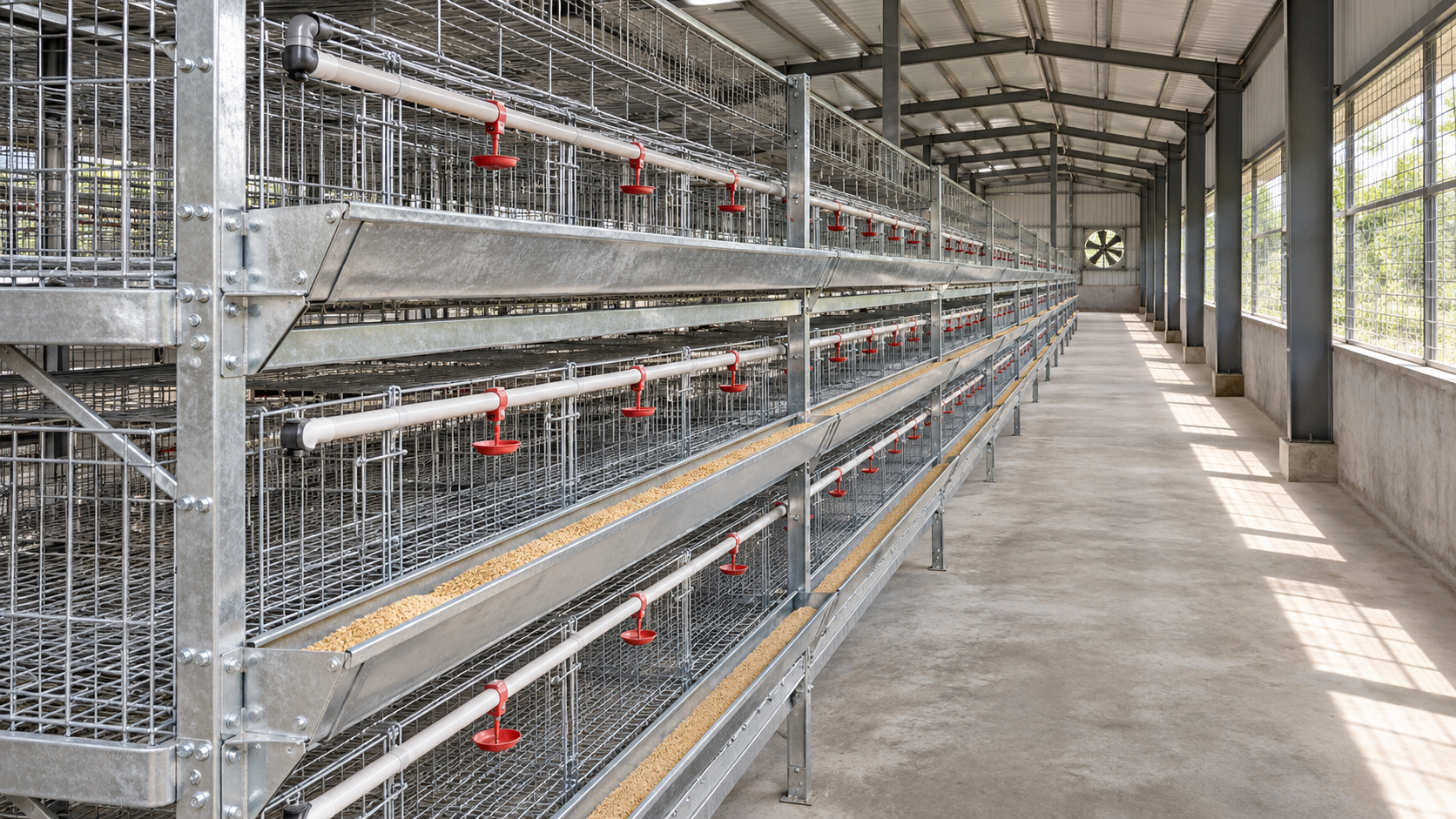
When reviewing poultry cages manufacturers in nigeria, buyers can use equipment and farm-planning information as a starting point for defining a specification, rather than treating any general layout as a site-ready design. Each supplier should respond to the same brief and identify assumptions, exclusions and work required from the farm.
Ask for a schedule that separates cage sections, feeders, drinkers, egg collection, manure removal, controls and installation. If automation is proposed, specify what should happen during a power interruption and who will provide backup equipment. The supplier should also state whether quoted capacity reflects the exact building layout and the agreed stocking plan, rather than an arrangement that would require a larger house.
Establish who is responsible for the equipment
Request the legal name and address of the contracting entity, together with a named contact for technical questions and after-sales service. Ask whether the seller fabricates the cages, sources them from another manufacturer or combines components from several suppliers. For an imported system, identify the importer, the party responsible for customs clearance and the business that will hold the warranty obligation in Nigeria.
Corporate registration can be checked through the Corporate Affairs Commission’s public search service. A registration record helps establish an entity’s identity; it does not, by itself, prove production capacity, product quality or financial strength. Match the entity on the quotation, invoice and proposed contract, and investigate any unexplained differences. If payment is requested to an account in another name, obtain a written explanation and verify the instruction independently through an established contact.
For a claimed manufacturing operation, ask for a component list showing which parts are made in-house and which are purchased. An on-site visit or a live inspection of the relevant production and storage areas can help establish what the supplier actually controls. Where travel is impractical, an independent inspection arranged under the buyer’s instructions is another option. The scope should include identifying the goods against the purchase order, not merely confirming that a workshop exists.
References can be useful if the supplier has permission to provide them. Ask about the same system type and similar service arrangements: whether deliveries were complete, how installation problems were resolved and which parts required replacement. A reference is evidence about a particular transaction, not a guarantee that the next order will perform identically.
Compare cage construction against operating conditions
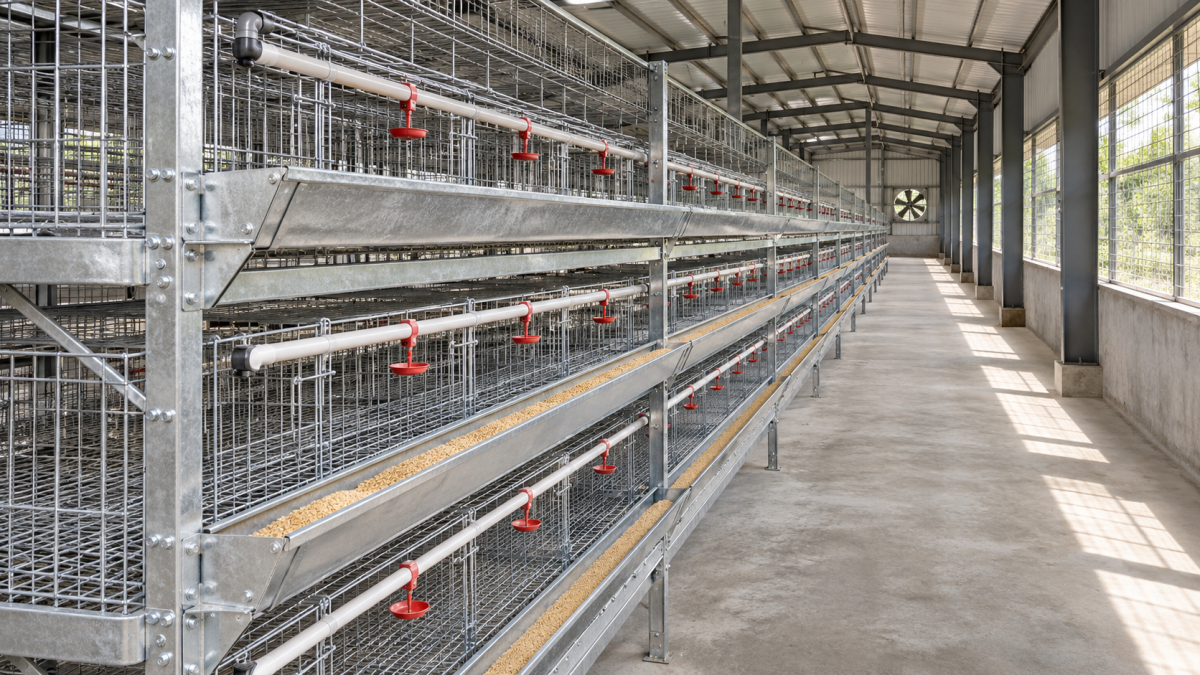
Two cage systems with similar dimensions can differ materially in wire, framing, joints and access for maintenance. Request drawings and a bill of materials that identify the dimensions of cage compartments, wire and structural members, together with the material and protective finish for each relevant part. Measurements should state whether they are taken before or after coating. Ask how the supplier will verify them and what tolerances apply.
Corrosion protection deserves particular attention where wash water, manure, humidity or chemical cleaning agents may contact metal. Suppliers may offer different galvanized or other coated components; the buyer should establish the coating method, the parts covered and how cut edges, joints and damaged areas will be treated. A statement such as “rustproof” is not an acceptance criterion. Request the applicable coating specification and inspection method, and agree how discrepancies will be handled before shipment.
Inspect samples or representative finished sections where practical. Look for sharp wire ends, rough joints, distorted panels, poorly aligned doors and fastening points that are difficult to reach. Check that the floor, feed troughs and drinking lines fit the intended birds and that staff can inspect and remove birds without unnecessary obstruction. These observations do not replace a welfare assessment, but they can reveal details missing from a catalogue.
The supporting structure needs its own review. A multi-tier arrangement concentrates equipment, birds, feed and operational loads into the building and floor. Obtain supplier load information for the proposed configuration and have a competent structural professional assess the existing floor and building where required. Do not assume that a house built for floor-reared birds can carry a new cage system without modification.
Manual and automated systems carry different obligations
Manual feeding or egg collection may limit dependence on motors and controls, but it requires an operating plan for labour, access and daily routines. Automated equipment may reduce repetitive handling when it is properly maintained, yet it introduces motors, sensors, drive parts and controls that must be installed, protected and repaired. Compare systems on the work they transfer to staff as well as the work they automate.
For each powered function, ask for the electrical load, connection requirements, protective devices and recommended maintenance. Confirm whether controls and motors are included in the quotation and whether a qualified local technician can service them. A backup plan should cover both equipment failure and an interruption to the electricity supply; the practical fallback may differ for feeding, ventilation and manure removal.
Build a comparable landed and installed cost
Request an itemized quotation in a consistent format. A useful comparison includes the equipment, packing, inland transport, international freight where applicable, insurance, clearance responsibilities, unloading, installation, commissioning and training. Taxes and duties should be identified separately where applicable, with assumptions stated rather than treated as fixed indefinitely.
Delivery terms need particular care. The contract should identify the agreed Incoterms rule and the named place, while separately stating who arranges unloading, import formalities and movement from the arrival point to the farm. Incoterms allocate certain delivery responsibilities and risks; they do not replace a contract covering ownership, payment, quality or remedies. The International Chamber of Commerce’s Incoterms 2020 guidance is a reference for interpreting the chosen rule.
Ask each bidder to price an initial spare-parts package and identify consumables or components expected to need periodic replacement. The list might include drinker parts, fasteners, belts, motors or control components, depending on the design. Require part numbers or another reliable identification method, compatibility with the supplied configuration and a stated ordering process. A cheap system can become difficult to operate if a small proprietary component is unavailable when needed.
Exchange-rate exposure should also be allocated explicitly. If a quotation is denominated in a foreign currency, record its validity period, payment currency and the basis for any price adjustment. Avoid comparing a firm local-currency offer with an indicative imported-equipment estimate unless freight, clearance and installation assumptions are made equivalent.
Turn promises into inspection and acceptance criteria
A purchase order should incorporate the approved drawings, component schedule and quotation revisions. Set out the quantity and dimensions of cage sections, finish requirements, included accessories and the condition expected at delivery. Where the supplier proposes substitutions, require written approval before production or dispatch. This prevents an apparently minor change in drinker, motor or fastener from creating a future compatibility problem.
Separate the inspection stages. A pre-dispatch check can verify count, visible workmanship, packing and selected dimensions against the agreed documents. On arrival, inspect packages for damage and reconcile the packing list before installation. Record missing or damaged items with photographs and notify the responsible party within the contractual period. Neither stage proves that the installed system operates correctly.
Commissioning should test the assembled equipment under the agreed conditions. Depending on the purchase, that may include checking water-line leaks, feeder movement, egg-collection operation, motor direction, controls and emergency stopping arrangements. Agree in advance who supplies water, electricity and any test materials, who attends, and how unresolved defects are recorded. The handover package should include drawings, operating instructions, maintenance schedules, wiring information where relevant and a parts list.
Define acceptance separately from delivery. If the contract provides for staged payments, connect each stage to an observable event, such as completion of a documented inspection or resolution of specified commissioning defects. Retaining a disputed amount or rejecting equipment may have legal consequences, so the buyer should obtain appropriate contractual advice before signing.
Check service capacity and regulatory responsibilities
A warranty should identify its duration, start date, covered components, exclusions and the process for reporting a fault. Ask whether the remedy is repair, replacement or another agreed measure, and who pays for transport and labour. A warranty document is more useful when it names the entity responsible for fulfilling it and explains how a buyer obtains service at the farm’s location.
Discuss response arrangements without assuming that every fault can be fixed immediately. For essential parts, establish whether stock is held locally or must be ordered from abroad, and request indicative lead times in writing. Where the farm cannot tolerate a long interruption, it may be sensible to hold selected spares on site and train staff to carry out routine checks within their competence.
Regulatory obligations depend on the equipment, transaction and location. Before ordering imported goods, confirm the applicable import procedures and any product-specific conformity requirements with the Nigerian Customs Service and the Standards Organisation of Nigeria, or through qualified local advisers. Do not assume that a supplier’s general certificate covers the exact goods, shipment or intended use. Electrical installation, building alterations and animal management may also require local review by the relevant authorities or qualified professionals.
The strongest purchasing decision is one the farm can verify: the proposed cage layout fits the building, the contract identifies the actual supply chain, and the delivered system can be inspected, operated and maintained under local conditions. Any material uncertainty left unresolved at award should be recorded as a risk with an owner and a deadline, not absorbed into an optimistic equipment price.
Sources: Corporate Affairs Commission, Public Search; International Chamber of Commerce, Incoterms 2020; Nigerian Customs Service, import guidance; Standards Organisation of Nigeria, conformity assessment information.
Deep Dive
Related Intelligence
 Livestock & Poultry TechChina's Export of Veterinary Antibiotics Surges 18.7% YoY in Q1 2026: Key Industry Impacts and ResponsesAnalyst:Agri-Tech Strategist
 Livestock & Poultry TechChina Feed Industry Association Initiates Revision of Microbial Fermented Feed Additives Group StandardAnalyst:Agri-Tech Strategist
 Livestock & Poultry TechNational Feed Quality Inspection Center Releases Q1 2026 Feed Safety Report: Key Impacts and Industry ResponsesAnalyst:Agri-Tech Strategist