List of Poultry Equipment for Planning a Farm’s Core Production Systems
Key Takeaways
- How chemical applications in coatings improve corrosion resistanceLead Materials Scientist
- How to size small scale grain milling equipment for daily outputAgri-Tech Strategist
- How specialty chemical research reduces scale-up riskLead Materials Scientist
- When does industrial IoT for factories reduce unplanned downtime?Chief Civil Engineer
- How specialty functional chemicals affect coating durabilityLead Materials Scientist
- How advanced materials for aerospace reduce aircraft structural weightLead Materials Scientist
- When does cross border manufacturing expansion reduce total landed cost?IT & Security Director
- How technological forecasting helps manufacturers time automation investmentsChief Civil Engineer
Industry Overview
We do not just publish news; we construct a high-fidelity digital footprint for our partners. By aligning with TNE, enterprises build the essential algorithmic "Trust Signals" required by modern search engines, ensuring they stand out to high-net-worth buyers in an increasingly crowded global digital landscape.
Start With Production Flow, Not Individual Purchases
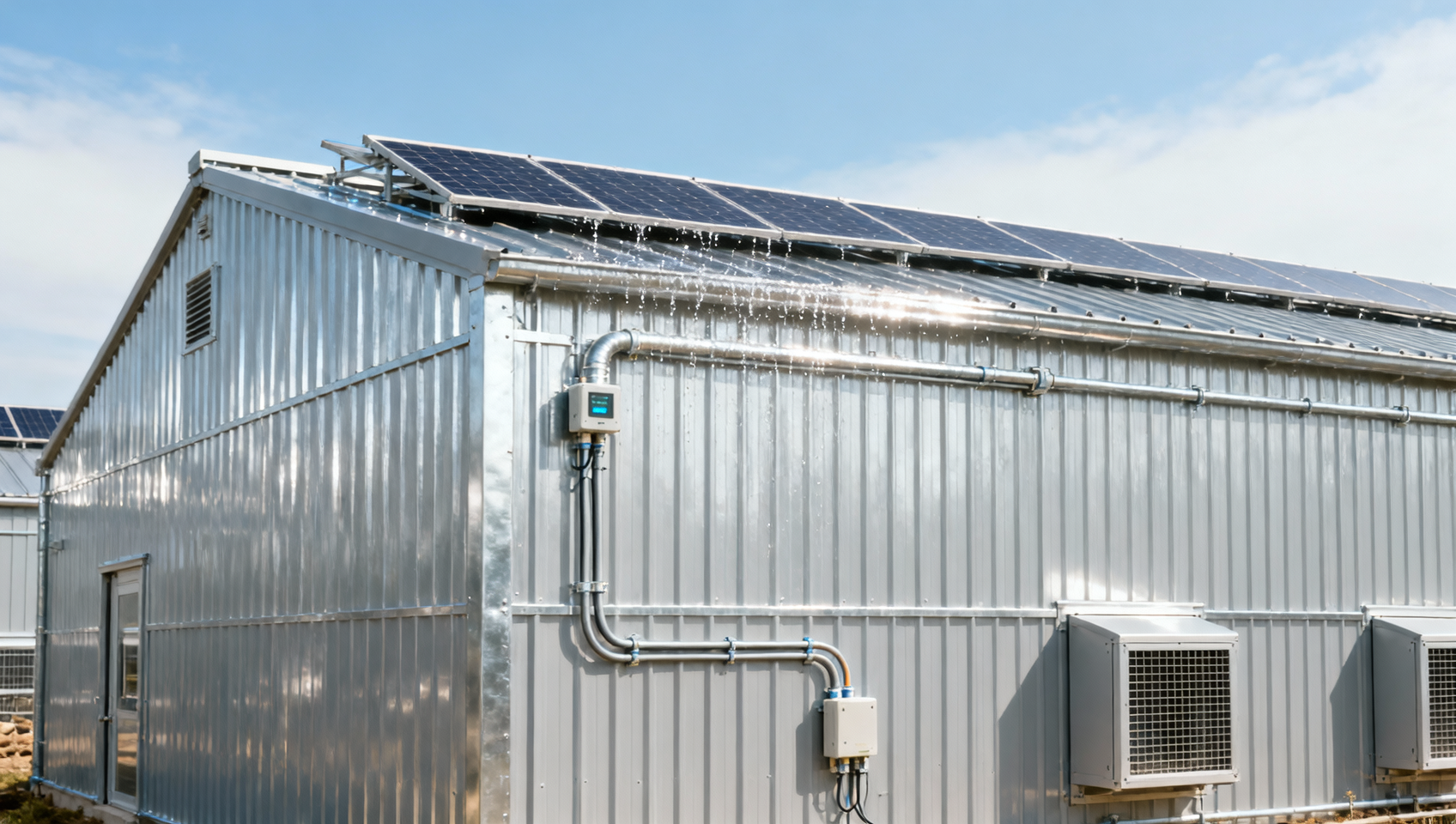
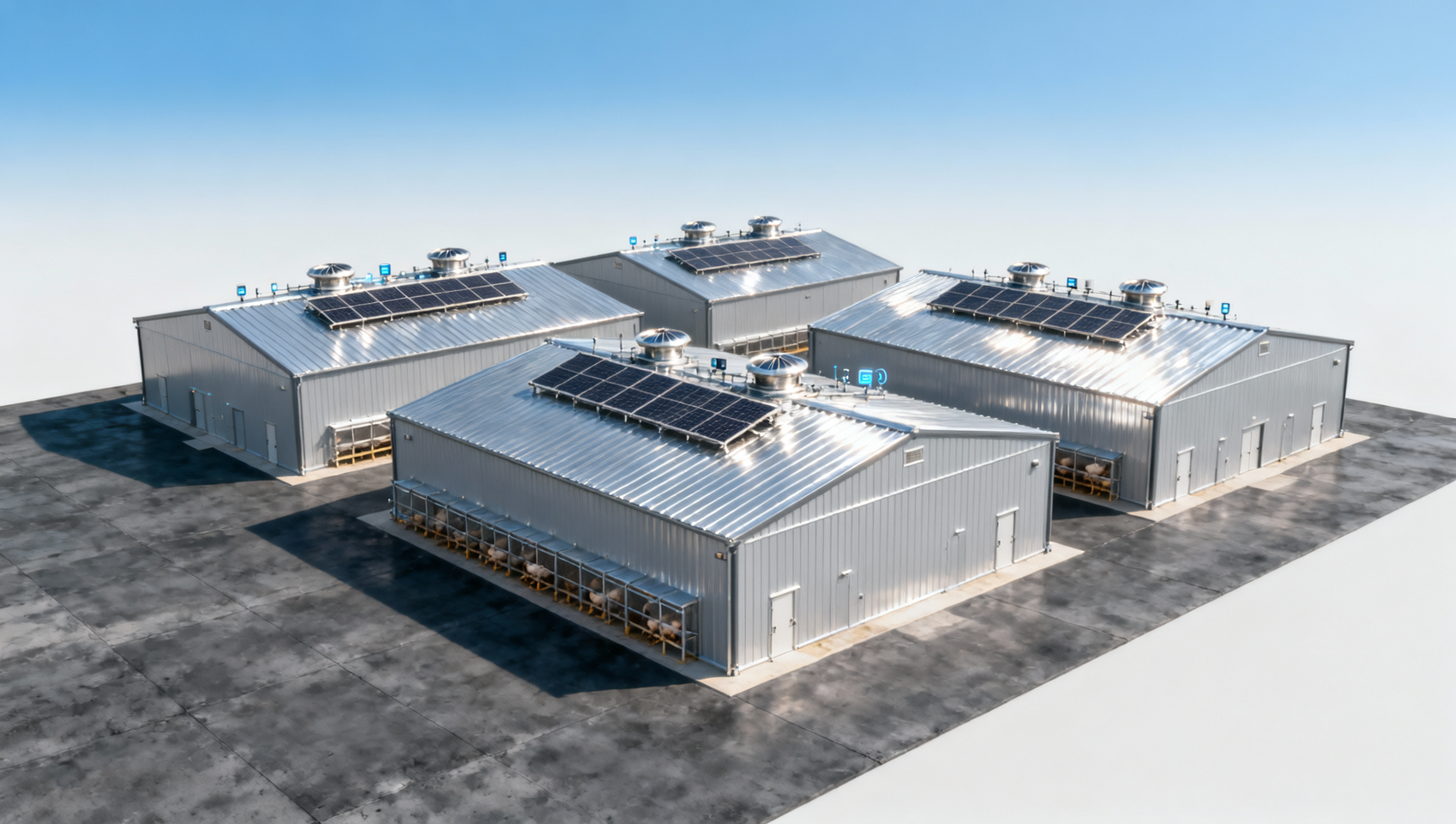
A poultry farm can own every familiar piece of hardware and still struggle with poor flock performance if the equipment does not work as one system. Feed delivery affects water demand; ventilation affects litter condition; lighting influences bird movement and access to feed; egg handling capacity must match the laying house output. For a new farm, the useful question is not simply “What equipment is available?” but “What must happen every day for birds, staff, feed, manure, eggs, and air to move safely through this building?”
The required equipment changes with the production model. Broiler operations are designed around rapid growth, litter management, ventilation, and catching access. Layer farms need reliable nest access, egg collection, grading or packing arrangements, and manure removal. Breeder farms add separate feeding control, nest management, and egg sanitation requirements. Small farms may use manual systems, while larger houses often depend on automated equipment because daily labor tasks cannot be completed consistently by hand at scale.
Planning should also separate essential production equipment from optional convenience purchases. A feed bin, drinker line, heating arrangement, and usable ventilation system may be core requirements. A sophisticated monitoring platform may be valuable, but it cannot compensate for undersized fans, poor drainage, or water lines that cannot be flushed. The most durable equipment plan is built around the farm’s capacity, housing design, local climate, labor availability, and the expected route to market.
Core Equipment Categories in a Poultry House
A practical equipment schedule usually follows the sequence of bird care and product handling. The categories below provide a starting framework, but their final specification should be tied to flock size, bird age, house dimensions, and the production system selected.
Feed storage and feeding systems
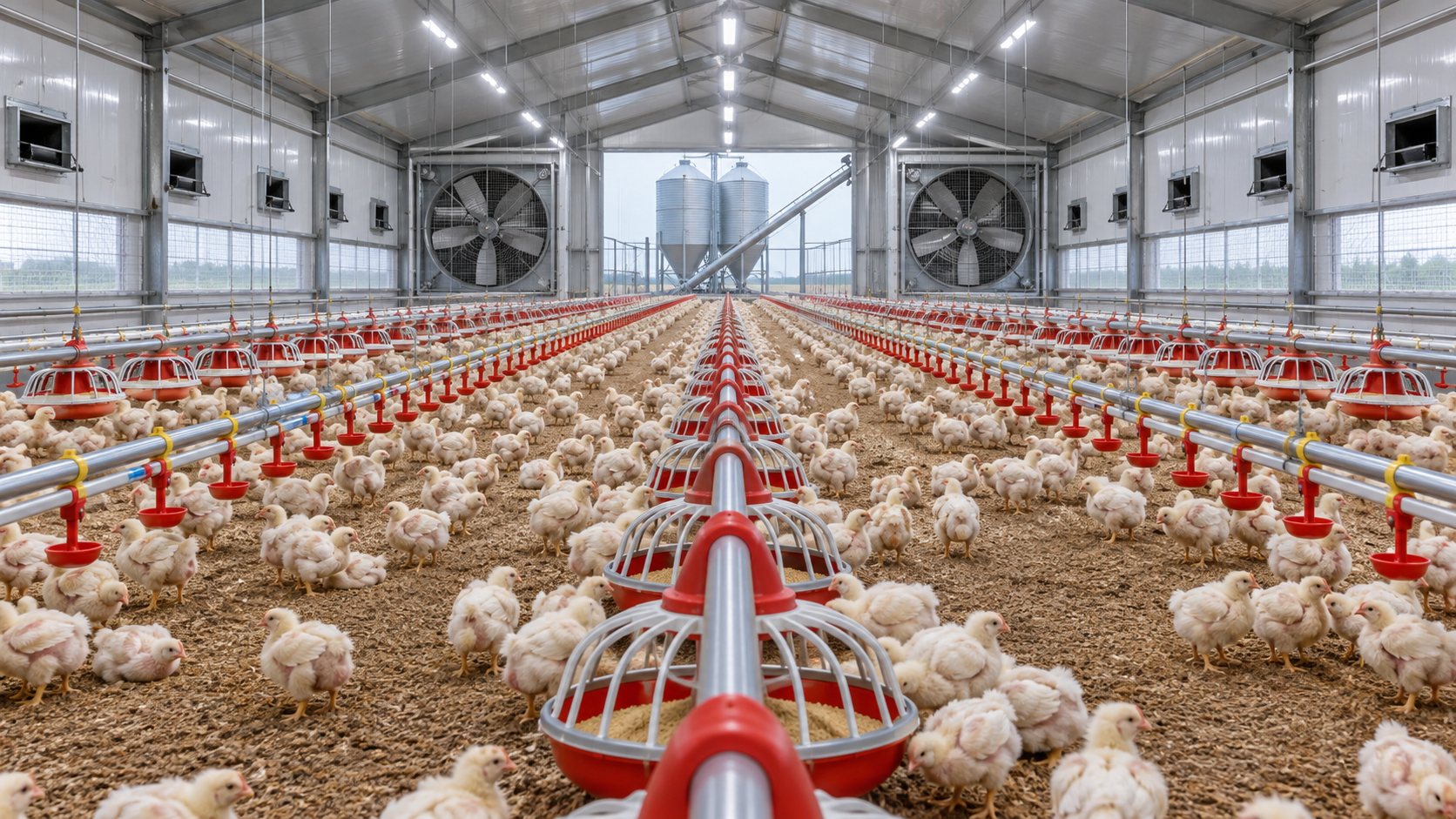
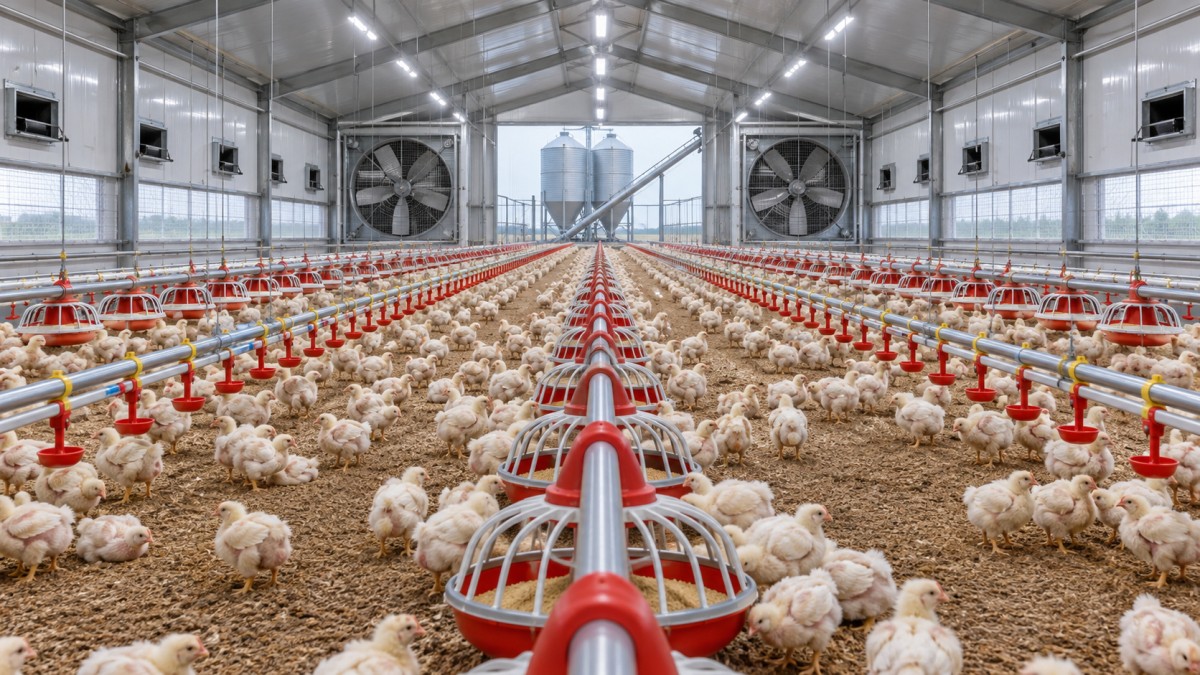
Feed is commonly received in bulk, stored in bins or silos, and moved through augers, conveyors, or feed lines to pans, troughs, chain feeders, or other feeding points. The feeding system must deliver enough feed access for the flock without creating excessive spillage, uneven distribution, or difficult cleaning conditions.
Buyers should examine hopper capacity, auger route, motor location, feeder height adjustment, anti-waste features, and the ease of inspecting blockages. A low-cost system with limited adjustment can become difficult to manage as birds grow. Feed storage also deserves close attention: bins need a stable base, secure lids, weather protection, and discharge arrangements that fit the chosen conveying equipment. Moisture entry and bridging inside a bin can interrupt feeding even when the house equipment is otherwise functioning properly.
Water supply and drinker lines
Water equipment generally includes a source connection, storage or pressure regulation, filtration where needed, medication or dosing capability where appropriate, pipelines, and drinkers. Nipple drinker lines are common in intensive housing because they can reduce open-water contamination and make line height adjustable. Bell drinkers and other open systems may be used in particular setups, though they typically require more attention to cleaning and litter moisture.
The central procurement issue is not the drinker itself but reliable water delivery at the far end of every line. Pressure variation, insufficient line length, poor flushing access, leaks, and sediment can create uneven water availability. A water plan should show the source, tank position, filters, regulators, line lengths, flushing points, and drainage route. If medication or sanitation products will be introduced through the line, the selected components must be compatible with that operating practice and must allow cleaning between flocks.
Heating, brooding, and environmental control
Young chicks cannot regulate body temperature as effectively as mature birds, so brooding equipment must provide a controllable warm zone without creating cold corners, excessive humidity, or unsafe combustion conditions. Depending on the building and energy source, this may include brooders, heaters, radiant units, circulation fans, thermostats, controllers, and temperature sensors.
Heating capacity should be assessed alongside insulation, air leakage, ceiling height, and local weather. A heater sized only by floor area may underperform in a poorly sealed house or in a region with colder night conditions. Fuel supply is another operational risk. Farms using gas, electricity, biomass, or other energy sources should consider storage, backup arrangements, safe routing, maintenance access, and whether local technicians can service the equipment.
Ventilation and cooling equipment
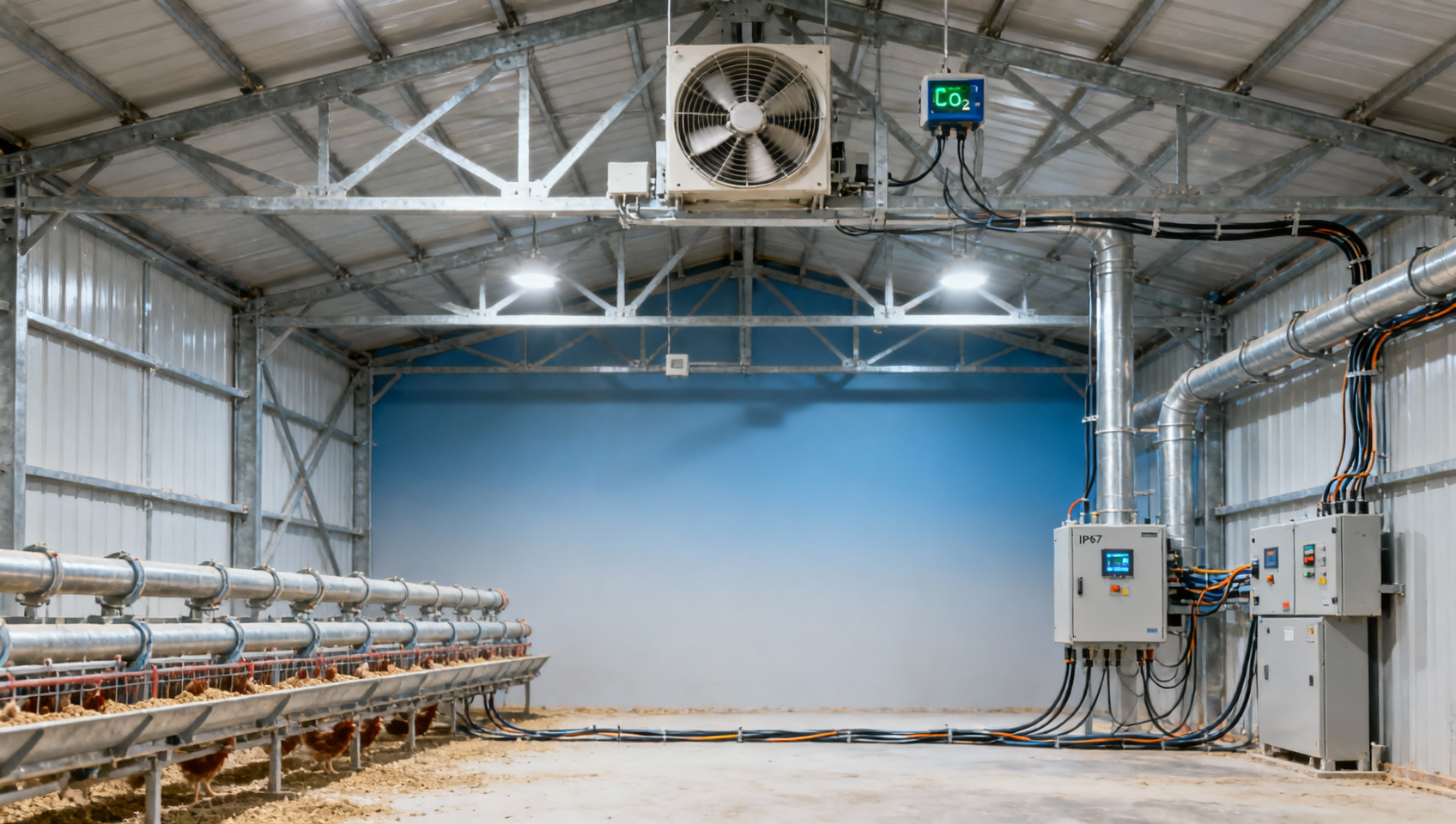
Ventilation is often misunderstood as a matter of adding fans. In practice, a workable system needs a controlled path for fresh air to enter, move through the house, pick up heat and moisture, and leave without creating severe drafts at bird level. Fans, air inlets, curtains, circulation fans, cooling pads, fogging equipment, tunnel-ventilation components, and controllers may all be involved, depending on housing type and climate.
In hot conditions, cooling may become a limiting factor for feed intake and bird comfort. In cooler weather, minimum ventilation is still needed to manage moisture, ammonia buildup, and carbon dioxide from heating, but excessive air speed can chill young birds. Equipment selection should account for the actual house geometry, inlet placement, expected outside temperatures, dust load, electrical reliability, and the ability to clean fans and screens. Buying fans solely by motor rating or advertised air volume can overlook how shutters, static pressure, belts, and maintenance condition influence real performance.
Lighting and electrical infrastructure
Lighting affects bird activity, feeding patterns, inspection work, and, in layers and breeders, the management of production cycles. The equipment package may include LED fixtures, dimmers, timers, controllers, protected wiring, distribution boards, and emergency lighting. Uniformity matters because poorly distributed light can leave birds crowding around brighter areas while staff have difficulty identifying weak or injured birds in darker sections.
Electrical planning should include more than the connected load of lamps and motors. It should also consider starting current for fans and augers, controller sensitivity, cable protection in dusty environments, grounding, backup power, and a safe means of isolating equipment during maintenance. Where power interruptions are possible, alarms and generators may be more important than adding secondary automation features.
Equipment That Changes by Production Type
Some systems are common to nearly all poultry farms, while others are specific to broilers, layers, breeders, pullets, or hatchery-linked operations. Treating these as interchangeable can result in unusable layouts or duplicated spending.
Egg operations also need a defined path after collection. This can include collection belts, transfer tables, trays, packing materials, a clean work surface, and a temperature-controlled holding area if the farm’s market arrangements require it. The system should prevent eggs from passing through dusty traffic zones or being stacked where crushing and hairline cracks become likely. Equipment for washing or grading should be considered only in relation to the farm’s applicable handling procedures and sales channel; adding machinery without a clear process can create sanitation and workflow complications.
Manure, Litter, and Biosecurity Equipment Are Part of Production Capacity
Manure and litter management are sometimes postponed during initial budgeting because they do not directly deliver feed or water. That approach can create a difficult operating environment quickly. Broiler houses may need litter tools, loaders, storage arrangements, and access routes for cleanout between flocks. Layer systems may require manure belts, scrapers, drying arrangements, or collection points depending on the housing design. The selected method must match the volume produced, the frequency of removal, local land access, vehicle movement, and the farm’s ability to keep manure separate from clean-house activities.
Biosecurity equipment is equally practical. Entry control may involve changing areas, handwashing points, dedicated boots, footbaths where they are part of the farm’s protocol, cleaning tools, vermin-control stations, and secure storage for disinfectants. The value lies in whether staff can use the arrangement consistently. A handwashing point located far from the entry route is less likely to be used. A wash area without drainage may become a contamination point itself. Layout and routine matter as much as the equipment item.
Build the Purchase List Around Interfaces and Failure Points
A detailed list of poultry equipment is most useful when each item is connected to a layout, utility requirement, and operating responsibility. Rather than compiling separate quotations for feeders, fans, and controllers, buyers can map where each system begins and ends. For example, the feed system connects delivery vehicle access, bin foundations, auger placement, feeder lines, electrical supply, and house cleaning. The water system connects source quality, filtration, pressure control, line flushing, drainage, and daily observation.
Many installation problems occur at these interfaces. A feed bin may be delivered before its foundation is ready. Fans may be specified without confirming the available electrical capacity. Water lines may be installed before ceiling height and winching positions are finalized. Egg collection equipment may be ordered without enough room for packing tables or trolley movement. These are coordination problems rather than failures of a single product, yet they can delay house commissioning and lead to expensive modifications.
Questions to include in an equipment schedule
- What flock size, stocking arrangement, and bird age is the item intended to serve?
- What utility does it require: electricity, fuel, water pressure, drainage, compressed air, or manual labor?
- What dimensions, mounting points, foundations, or clearances must be prepared before delivery?
- Which components are included, and which items such as cables, valves, sensors, fasteners, or controls must be sourced separately?
- How will the equipment be cleaned, inspected, adjusted, and repaired during a production cycle?
- What happens if the unit stops working: is there an alarm, manual override, spare part, or backup procedure?
Compare Equipment on Operating Fit Rather Than Purchase Price Alone
Initial price is visible, while operating limitations often emerge after birds are placed. A manual feeder can be sensible for a small unit with reliable labor, but it may become a daily bottleneck in a larger house. Automated feeding reduces repeated handling but introduces motors, sensors, controls, and maintenance needs. An open-sided house may use curtains and natural airflow effectively in some climates, whereas a tightly controlled house requires a more integrated ventilation and backup-power strategy.
Material selection also has consequences. Galvanized steel, plastic components, stainless steel parts, and coated surfaces each perform differently under moisture, manure exposure, cleaning chemicals, sunlight, and mechanical wear. Buyers should ask where a material will be located and what it will contact. A component that performs well in a dry feed room may corrode or become difficult to sanitize when installed near drinker lines or manure handling areas.
Before accepting delivery, farms can verify quantities, visible damage, serial or component identification where supplied, manuals, wiring diagrams, assembly instructions, warranty terms, and the availability of routine replacement parts. Installation should be checked before birds arrive: feeder lines should run freely, drinkers should provide water along the full line, sensors should be compared against a reliable reference, alarms should be tested, and generator transfer arrangements should be practiced if installed. Correcting a fault in an empty house is far less disruptive than discovering it during heat stress, a water interruption, or early brooding.
A Farm Plan Should Keep the Equipment List Flexible but Complete
Equipment planning is an exercise in defining a repeatable production environment. The list should identify essential systems, supporting utilities, cleaning and biosecurity needs, contingency measures, and the space required for people to work safely. It should also distinguish between equipment needed on day one and items that can be added after the farm has established stable routines.
The strongest plans avoid both extremes: underbuying the systems that protect bird welfare and overbuying automation that the farm cannot maintain. A clear production flow, accurate house measurements, realistic utility planning, and attention to daily failure points provide a more reliable basis for selection than a generic catalog checklist.
Deep Dive
Related Intelligence
 Smart Livestock & Poultry TechHow poultry housing systems improve flock health and reduce labor costs in commercial farmsAnalyst:Agri-Tech Strategist
 Smart Livestock & Poultry TechWhat livestock management features matter most when scaling a multi-site poultry operation in 2026Analyst:Agri-Tech Strategist
 Smart Livestock & Poultry TechCan automated farming solutions integrate with existing ventilation and feeding hardware on legacy poultry farmsAnalyst:Agri-Tech Strategist