Can a stainless steel fertilizer spreader hopper pay for itself in reduced maintenance?
Key Takeaways
- OpenRouter Removes Three AI Inference Providers After Prompt TheftIT & Security Director
- How to verify supplier credentials in global chemical sourcingLead Materials Scientist
- National Cybersecurity Standards Committee Seeks Feedback on Three GuidelinesIT & Security Director
- How to verify specialty chemical exporters in IndiaLead Materials Scientist
- Trump Fires National Cyber Director, Names Kirsten Davies Acting DirectorIT & Security Director
- Can mobile POS systems accept payments without internet access?IT & Security Director
- Malaysia and US Deepen Sovereign AI Cloud Cooperation, With $50 Million in US SupportIT & Security Director
- How chemical recycling is reshaping plastics technology in EuropeLead Materials Scientist
Industry Overview
We do not just publish news; we construct a high-fidelity digital footprint for our partners. By aligning with TNE, enterprises build the essential algorithmic "Trust Signals" required by modern search engines, ensuring they stand out to high-net-worth buyers in an increasingly crowded global digital landscape.
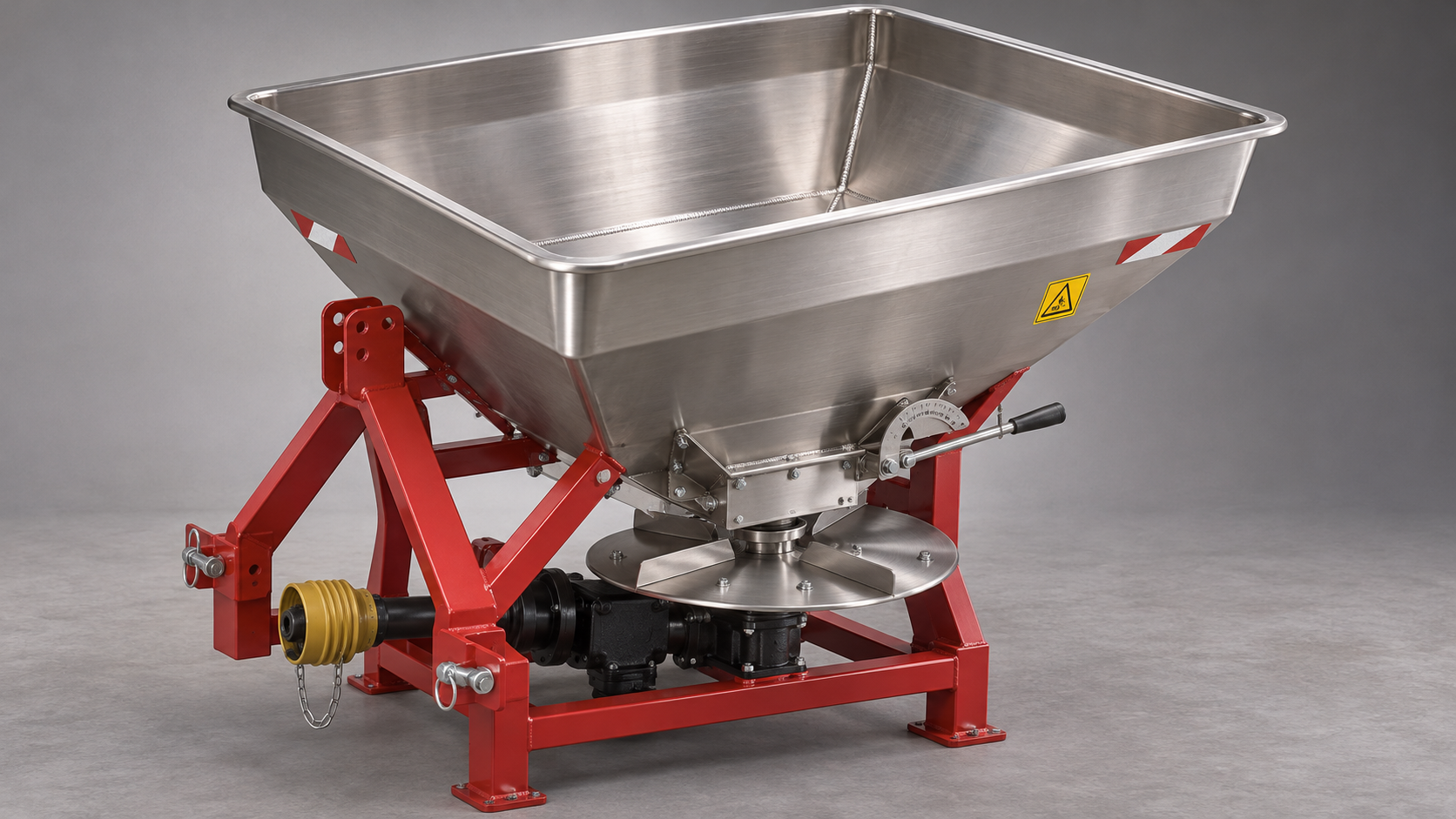
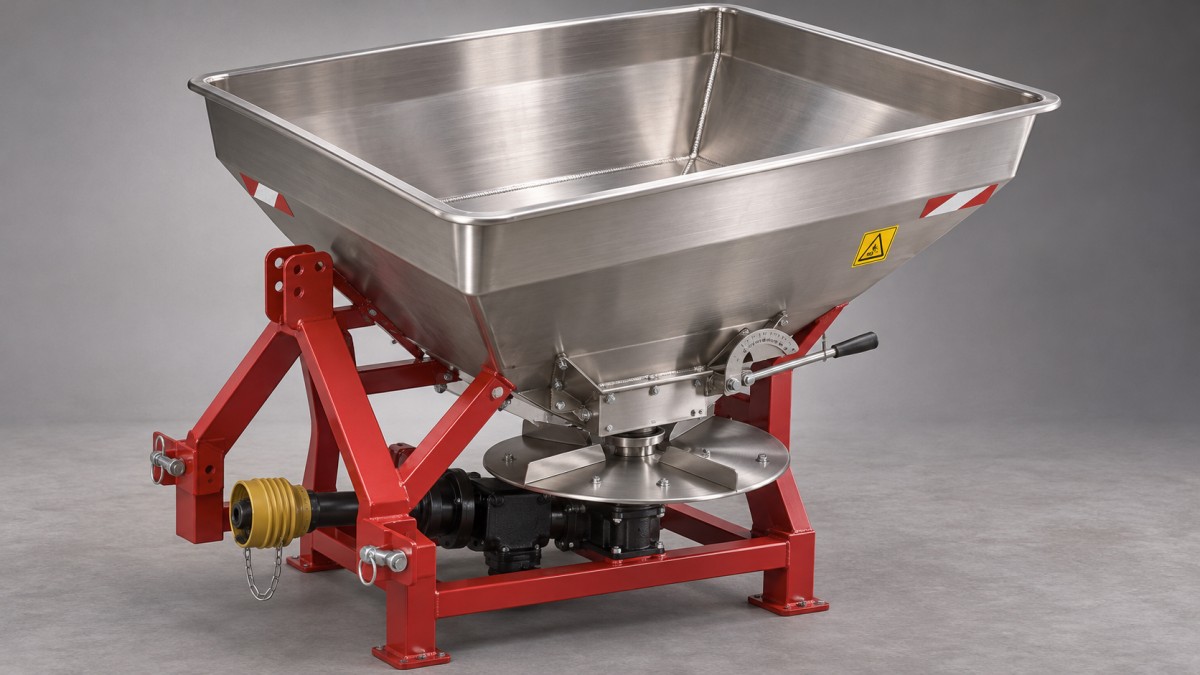
Yes, a stainless steel fertilizer spreader hopper can pay for its higher purchase price through reduced maintenance, but the return is not automatic. The strongest case is an operation that repeatedly repairs corrosion damage, spends substantial labor cleaning and repainting, or faces expensive interruptions during a narrow spreading window. Where a painted hopper remains sound with routine care, the upgrade may not recover its premium within the planned ownership period.
The practical question is not simply, “Is stainless steel worth the extra cost for fertilizer spreader hoppers?” It is whether the costs that stainless construction can realistically avoid exceed the additional investment. That requires separating hopper-related corrosion from wear, breakdowns, and downtime elsewhere on the spreader.
Start with the maintenance costs the hopper can actually change
Fertilizer residue can retain moisture against metal surfaces. On a coated carbon steel hopper, damaged paint, seams, joints, and areas that are difficult to clean can become starting points for corrosion. Repairs may involve removing loose material, preparing surfaces, applying coatings, patching sections, or replacing the hopper. Each task has a labor cost as well as a possible effect on equipment availability.
Stainless steel generally offers better corrosion resistance than unprotected carbon steel, but it is not immune to damage. Deposits left in crevices, unsuitable cleaning chemicals, contact with contaminating steel particles, and exposure to corrosive fertilizer ingredients can still cause problems. Its value depends on the grade, fabrication, operating environment, and care it receives.
Before requesting prices, review maintenance records for the existing equipment. Identify work directly attributable to the hopper and distinguish it from service on bearings, drive components, metering mechanisms, conveyors, and spinners. A stainless hopper does not automatically make those parts stainless or eliminate their maintenance.
Useful records include work orders, purchased repair materials, replacement invoices, cleaning hours, and photographs of recurring damage. Where records combine hopper work with general servicing, ask maintenance staff to estimate the hopper-related share rather than assigning the whole invoice to the proposed upgrade.
Build a comparison around the same operating conditions
Compare the stainless option against a credible alternative, such as a coated carbon steel hopper of comparable capacity and construction. The alternatives should handle the same fertilizer products, carry similar loads, and fit the same spreader duty. A cheaper hopper that requires a different machine configuration is not a clean material comparison.
Use the planned ownership period as the starting point. An operation that replaces equipment frequently has fewer years to recover an upfront premium than one that keeps a spreader through multiple repair cycles. Include only costs that differ between the options; identical routine inspections, for example, do not need to be counted on both sides unless the labor or frequency changes.
Do not assume that every stainless hopper will outlast the machine, or that every coated hopper will require replacement. If the expected timing of a repair is uncertain, model more than one outcome. An unsupported resale premium should be left out or shown separately rather than used to make the purchase appear self-funding.
Calculate the break-even point without overstating savings
For a straightforward screening calculation, subtract the installed cost of the coated option from the installed cost of the stainless option. Then estimate the annual hopper-related savings the stainless option could produce.
Simple payback = additional installed cost ÷ expected annual net savings.
Annual net savings can include avoided coating work, reduced corrosion repairs, and an appropriate allowance for avoided downtime, less any additional care required by the stainless option. If those savings are zero or negative, there is no payback from the items included. A projected replacement avoided near the end of ownership should be treated as a future event rather than casually converted into guaranteed annual savings.
A useful way to test the decision is to reverse the calculation. Divide the additional installed cost by the number of years the equipment is expected to remain in service. The result is the average annual saving needed to recover the premium before financing costs or the time value of money. Compare that threshold with documented hopper costs. If the threshold is higher than all credible avoidable costs, a maintenance-only justification is weak.
Simple payback is a screening tool, not a complete investment appraisal. For a longer ownership period or a substantial price difference, compare the timing of costs using the organization’s normal discounted cash-flow method. A repair avoided several years from now is not financially equivalent to the same amount saved immediately. Keep taxes, financing, and disposal assumptions consistent across both alternatives.
Account for downtime once, and only when it is attributable
A hopper repair during the spreading season may interrupt work, but the financial impact depends on what happens next. A spare machine, a rescheduled job, or off-season maintenance may limit the loss. Conversely, an unavailable machine with no practical substitute can create overtime, rental expense, or other documented costs.
Use the incremental cost of the disruption, not the full value of the crop, job, or machine. If overtime is already included in the repair invoice, do not count it again as downtime. Treat uncertain consequences as a separate scenario rather than a guaranteed saving.
Exposure and cleaning practices can change the outcome
Two spreaders with similar annual hours can experience different corrosion conditions. A machine that is cleaned promptly, dried, and stored under cover may place less stress on a coated hopper than one that retains damp fertilizer in seams between jobs. Fertilizer composition matters too: ask the equipment supplier about compatibility with the actual products handled, including blends and any liquids that may contact the hopper.
Inspect the places where residue tends to remain, not just the broad hopper walls. Welds, lap joints, fastener interfaces, reinforcing members, discharge areas, and the underside of the hopper deserve attention. Damage concentrated around a removable component may be cheaper to address by changing that component or improving cleaning access than by replacing the entire hopper material.
Cleaning itself should be part of the comparison. Stainless may reduce coating maintenance, but it does not remove the need to clear fertilizer residue. Confirm which detergents and cleaning methods are acceptable for each construction, and consider whether the design allows water and residue to drain. An inaccessible stainless crevice can still become a maintenance concern.
Abrasive wear should be assessed separately from corrosion. Fertilizer movement, loading methods, and contact with tools can wear or deform a hopper regardless of its corrosion resistance. If records show that mechanical damage is the main reason for repairs, request evidence about thickness, reinforcement, replaceable wear surfaces, and loading limits before crediting the stainless option with those savings.
Specify what “stainless hopper” includes
The label alone is not enough for a procurement decision. Ask for the stainless grade and the parts covered by the specification. The hopper body may be stainless while brackets, fasteners, frames, chutes, or metering components use other materials. Those mixed-material interfaces can remain maintenance points and may need isolation or specific assembly practices.
Grade selection should reflect the fertilizer products, moisture exposure, cleaning chemicals, and storage conditions. A more corrosion-resistant grade may be justified in a demanding environment, but grade alone does not guarantee performance. Surface condition, weld quality, crevice design, drainage, and fabrication methods matter as well. Obtain the supplier’s material specification in writing rather than relying on appearance.
Request details on wall thickness and structural reinforcement for both bids. A stainless hopper with a different gauge or geometry may differ in stiffness and repairability, so the purchase is not merely a material substitution. Ask whether damaged sections can be repaired locally, whether replacement parts are available, and what repair procedures could affect the warranty.
Review warranty language against the actual failure concern. A warranty may exclude damage from retained fertilizer, cleaning chemicals, abrasion, or inadequate maintenance. It may also cover a component without covering removal, installation, transport, or lost operating time. Those terms influence risk, but they should not be treated as a substitute for a realistic cost estimate.
When the premium is more likely to be justified
The stainless option deserves closer consideration when corrosion-related work is recurring and documented, fertilizer remains on the equipment despite a workable cleaning routine, or a hopper failure would be difficult to accommodate during a critical operating period. A long planned ownership period also gives maintenance savings more time to accumulate, provided the rest of the spreader is likely to remain useful for that period.
The coated option may remain the better purchase when maintenance records show little hopper corrosion, equipment is replaced before major hopper work is expected, or damage is mainly mechanical. Improving drainage, cleaning access, storage, or coating repair may address the observed problem at a lower cost. These alternatives should be priced rather than assumed to be free.
Before approving either bid, run a conservative case using only documented or well-supported savings, then a second case that includes plausible but uncertain avoided repairs or downtime. If the stainless premium is recovered only when every optimistic assumption occurs, describe the purchase as a reliability or risk decision—not as a proven maintenance saving. If the conservative case reaches the required payback period, retain the assumptions with the purchase record so actual hopper costs can be compared with the estimate later.
Deep Dive
Related Intelligence
 Smart Livestock & Poultry TechGlobalizing Agri-Equipment: How Top Manufacturers are Localizing in AfricaAnalyst:Agri-Tech Strategist
 Agricultural Equipment OEMWhich poultry housing systems supplier offers the shortest lead time for climate-controlled broiler houses in Southeast Asia?Analyst:Agri-Tech Strategist
 Agricultural Equipment OEMWhich poultry housing systems supplier offers the shortest lead time for climate-controlled broiler houses in Southeast Asia?Analyst:Agri-Tech Strategist