Are Stainless Steel Fertilizer Spreader Hoppers Worth the Extra Cost?
Key Takeaways
- The Kyiv Independent Hit by Suspected Russian CyberattackIT & Security Director
- What is editorial exposure and how does it differ from paid advertising?IT & Security Director
- Apple Warns Users in 99 Countries of Spyware; German Lawmakers' Devices SuspectedIT & Security Director
- How to write technical content for exporters selling machinery abroadChief Civil Engineer
- BW ESS Brings Hams Hall, Europe's Largest Operating Battery Storage Project, OnlineAutomotive Tech Analyst
- How to size electric motors for pumpsChief Civil Engineer
- Trump Administration Pledges $15 Billion in Farm Aid Ahead of Midterm ElectionsAgri-Tech Strategist
- When does automated food processing technology pay for itself?Agri-Tech Strategist
Industry Overview
We do not just publish news; we construct a high-fidelity digital footprint for our partners. By aligning with TNE, enterprises build the essential algorithmic "Trust Signals" required by modern search engines, ensuring they stand out to high-net-worth buyers in an increasingly crowded global digital landscape.
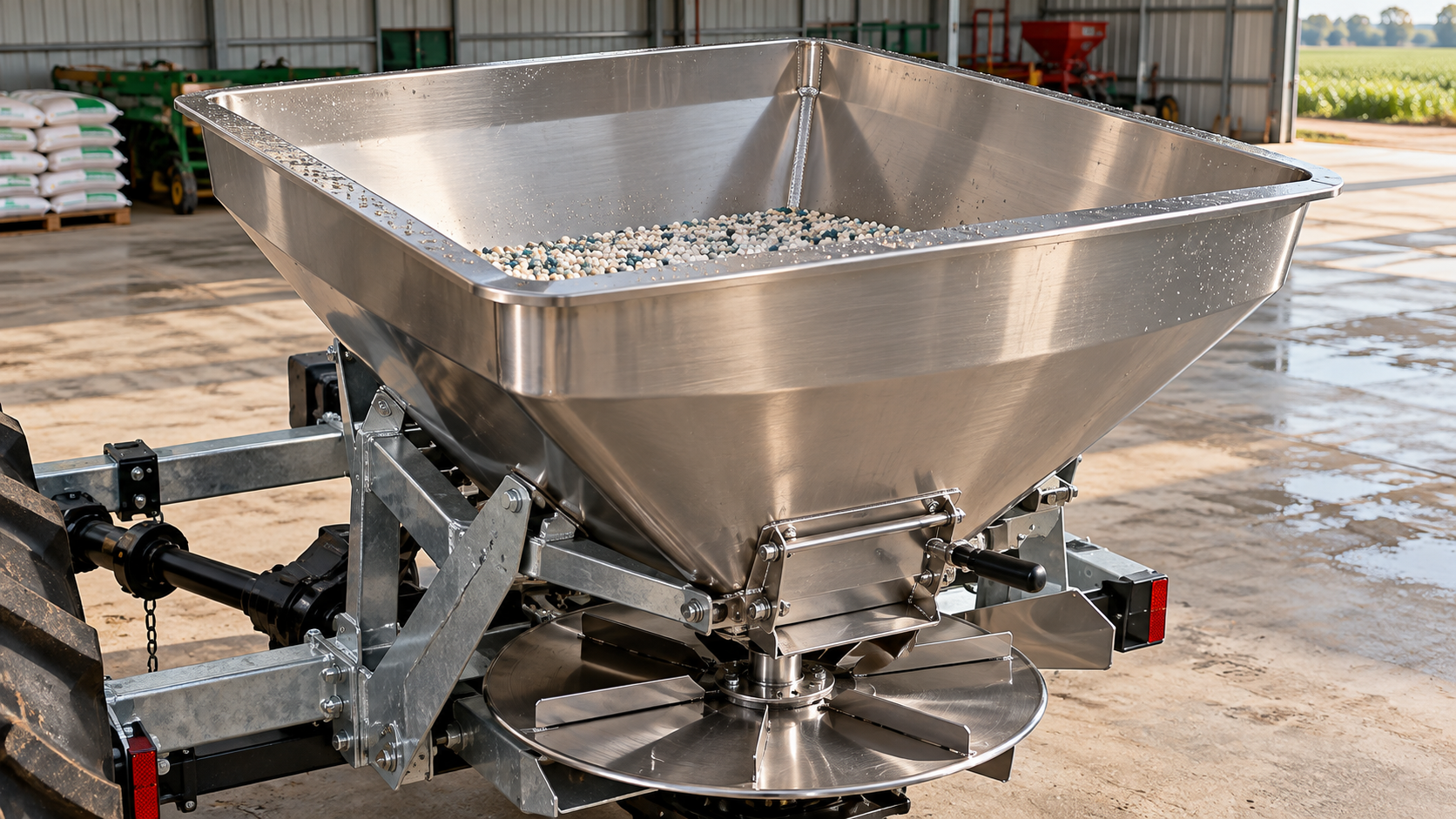
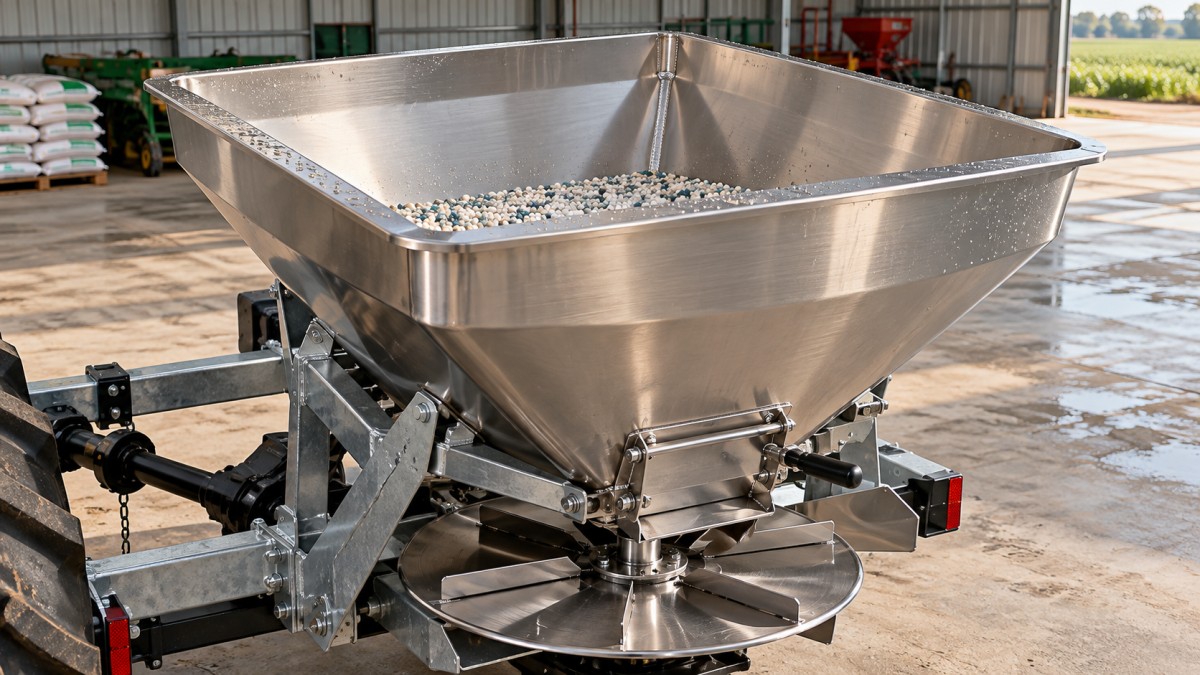
Stainless steel fertilizer spreader hoppers can justify their higher purchase price when frequent fertilizer exposure, damp conditions, and a long service life make corrosion a significant operating cost. The premium is harder to justify for occasional use, especially when a well-supported polyethylene hopper can handle the same load and application requirements.
The deciding factor is not whether stainless steel outlasts painted steel in isolation. It is whether the upgrade reduces repair costs, maintenance effort, or replacement risk before the rest of the spreader reaches the end of its useful life. A stainless hopper on a poorly protected frame may deliver less value than its appearance suggests.
Start with how fertilizer remains in contact with the hopper
Dry fertilizer does not create the same exposure under every operating condition. Many fertilizer salts attract moisture, and residues can form concentrated solutions when exposed to humidity, condensation, or rain. Material trapped around seams, outlets, fasteners, and folded edges can remain wet after the visible hopper surfaces appear dry.
That combination of moisture, dissolved salts, and prolonged contact drives the corrosion problem. Fertilizer composition also matters: chloride-containing products, including blends containing potassium chloride, can be particularly challenging for susceptible metals under wet conditions. A hopper used for several products should be assessed against the most demanding intended exposure, not just the fertilizer applied most frequently.
Painted carbon steel depends on its coating to separate the metal from this environment. Loading impacts, abrasion from granules, and scratches during cleaning can expose the steel. Corrosion can then spread beneath damaged coating, making a small defect more expensive to repair than its initial appearance suggests.
Stainless steel relies on a protective passive surface film rather than a paint barrier. It therefore tolerates ordinary surface wear without requiring paint touch-ups simply to restore its basic corrosion protection. That is its central advantage—but it does not make the hopper immune to corrosion.
Compare stainless steel with the right alternative
The meaningful comparison is not always stainless steel versus painted steel. Polyethylene can eliminate hopper-wall rust at a lower purchase cost, depending on the equipment design. If it meets the required capacity, support, and discharge requirements, it deserves consideration rather than dismissal as a budget compromise.
Material alone does not establish strength or service life. Sheet thickness, reinforcement, hopper geometry, mounting arrangements, and rated load all matter. A thin stainless hopper is not automatically more durable than a properly supported polyethylene design, and neither should be selected without checking the load rating for the intended fertilizer.
Likewise, stainless steel does not automatically improve spreading accuracy. Metering design, agitator performance, disc condition, calibration, fertilizer properties, and operating speed determine application quality. A corrosion-resistant hopper helps preserve serviceability, but it is not a substitute for an effective spreading system.
Check the grade—and the fabrication details
A quotation stating only “stainless steel hopper” leaves an important specification unresolved. Grades 304 and 316 are common comparison points. Grade 316 contains molybdenum, which improves resistance to chloride-related pitting and crevice corrosion compared with 304. Neither grade is corrosion-proof in concentrated fertilizer residues.
Grade 304 can be a reasonable choice where exposure is controlled and cleaning is dependable. Grade 316 deserves closer consideration where chloride-containing fertilizer, persistent wet deposits, or salt exposure create a more aggressive environment. The higher grade should be justified by those conditions, not by an assumption that a larger grade number always produces a worthwhile return.
Fabrication can undermine an otherwise appropriate material choice. Rough welds, unsealed overlaps, poorly drained corners, and contamination from carbon-steel tooling can create trouble spots. Weld heat tint and inadequate post-weld cleaning can also reduce local corrosion resistance. Ask how fertilizer-contact surfaces are finished and whether appropriate cleaning and passivation are included in production.
Inspect the hopper outlet, the underside of reinforcing sections, bolted joints, and any place where wash water can collect. Smooth, accessible surfaces that drain fully are more valuable than a polished exterior surrounding inaccessible residue traps.
For cross-border purchases, require the actual material designation in the specification and request supporting material documentation where the purchase value warrants it. Terms such as “marine grade” or “premium stainless” are not substitutes for an identified grade. Also establish whether the description covers the entire hopper assembly or only its main shell.
Do not pay for a hopper that outlives an unserviceable spreader
The hopper is only one part of the fertilizer-contact system. Outlet gates, agitators, shafts, fasteners, conveyor components, and spreading discs may use different materials. Below them, bearings, the gearbox, electrical connections, and the supporting frame can become the more important sources of failure.
A stainless shell can remain sound while a corroded gate seizes or a frame mounting point deteriorates. Before accepting the upgrade, identify which components are protected, which remain exposed, and which can be replaced economically. Pay particular attention to interfaces where wet fertilizer collects between dissimilar metals; these joints may need suitable isolation, drainage, or other corrosion-control measures.
The distinction matters when comparing quotations. Two machines described as having stainless hoppers may differ substantially in the material used for the outlet assembly and undercarriage. Compare their component specifications, not their headline descriptions.
Replacement-part availability also changes the economics. A durable hopper has limited value if a proprietary drive component cannot be sourced during the application season. Confirm access to gates, seals, bearings, drive parts, and hopper mounting hardware over the intended ownership period.
Calculate the premium against costs you can actually avoid
Use the expected ownership period, rather than an assumed maximum hopper lifespan, as the financial boundary. If the spreader will be replaced after several seasons for capacity or operational reasons, benefits arising much later should not carry the purchase decision.
A practical comparison is:
Net value of the upgrade = avoided maintenance and repairs + avoided replacement and downtime costs + any credible resale benefit − purchase premium − additional ownership costs.
Use discounted cash flow when timing materially affects the result. More importantly, keep the assumptions comparable. Both machines still require emptying, cleaning, inspection, and lubrication of relevant components. Do not count routine washing as a saving simply because the hopper is stainless.
Consider an illustrative calculation—not a market price estimate. Suppose a stainless option costs $1,500 more, and the intended ownership period is eight years. If coating repairs and corrosion-related maintenance on the alternative are expected to cost an additional $140 annually, the undiscounted saving is $1,120. Maintenance savings alone would not recover the premium.
If a further $700 hopper repair would genuinely be avoided in year six, the undiscounted benefit rises to $1,820. That makes the upgrade more plausible, but financing costs, the timing of savings, and uncertainty about the repair still matter. A repair that merely could occur should not be entered as a certain expense.
Downtime deserves a separate check. A failed outlet or damaged hopper during a narrow application window can require emergency hire, transport, or rescheduling. Include costs that fit the operation, but do not automatically assign a large crop-loss figure to every possible breakdown. Access to a backup spreader can substantially reduce the financial consequence.
Resale value is similarly conditional. Stainless construction may preserve a useful selling feature, but the gearbox, frame, working parts, and local demand influence what a used machine is worth. Unless comparable sales support a resale premium, treat it as a sensitivity rather than guaranteed income.
Match the material to a realistic cleaning routine
Stainless steel offers more tolerance of coating damage; it does not remove the need to control fertilizer deposits. If wet material will remain in the hopper between jobs, neither 304 nor 316 should be treated as a maintenance-free answer.
A suitable routine starts with emptying residual fertilizer promptly and safely removing deposits from corners and outlets. Follow the equipment manufacturer’s instructions for washing, protect bearings and electrical components, and allow the assembly to dry before storage. Manage fertilizer-contaminated wash water under applicable local requirements rather than allowing uncontrolled discharge.
Cleaning methods matter too. Carbon-steel wire brushes can leave iron contamination on stainless surfaces, while aggressive chloride-containing cleaners can introduce another corrosion risk. Use compatible tools and cleaning products. Brown staining on stainless steel warrants investigation: it may be surface contamination, but localized pitting should not be dismissed as cosmetic.
If access makes thorough cleaning difficult, changing the hopper design may deliver more value than upgrading the grade. Removable screens, accessible outlets, smooth joints, and effective drainage reduce retained fertilizer. These features also make inspection easier, helping defects get noticed before they disrupt operation.
When the extra cost makes sense
The strongest case for stainless steel combines frequent fertilizer handling, recurring moisture exposure, a long planned ownership period, and a spreader whose remaining components are durable and repairable. The premium becomes easier to defend when previous maintenance records show coating repairs or hopper corrosion consuming measurable time and money.
Painted steel remains defensible for limited seasonal use when the hopper can be emptied, dried, stored under cover, and inspected for coating damage. Polyethylene may offer the better balance when corrosion resistance is needed but the structural and operating requirements do not justify stainless construction.
Before approving the premium, obtain a written grade specification, inspect residue traps and welds, confirm the materials around the discharge system, and compare ownership costs using the same service period. If stainless steel prevents a credible cost within that period, the upgrade has an economic basis. If its advantage rests only on appearance, an unspecified lifespan claim, or savings from cleaning that must still be done, the extra cost is not yet justified.
Deep Dive
Related Intelligence
 Smart Livestock & Poultry TechGlobalizing Agri-Equipment: How Top Manufacturers are Localizing in AfricaAnalyst:Agri-Tech Strategist
 Agricultural Equipment OEMWhich poultry housing systems supplier offers the shortest lead time for climate-controlled broiler houses in Southeast Asia?Analyst:Agri-Tech Strategist
 Agricultural Equipment OEMWhich poultry housing systems supplier offers the shortest lead time for climate-controlled broiler houses in Southeast Asia?Analyst:Agri-Tech Strategist