Automatic Layer Cage System Procurement: Assessing Serviceability
Key Takeaways
- How much RAM does edge computing hardware for IoT applications need?IT & Security Director
- How to evaluate precision livestock farming companies for grazing herdsAgri-Tech Strategist
- How to assess an agricultural machinery manufacturer's parts supportAgri-Tech Strategist
- What drives industrial automation cost in a new production line?Chief Civil Engineer
- What makes Ethiopia poultry farming profitable for small-scale producers?Agri-Tech Strategist
- What Are the Biggest Risks of Single-Source Chemical Procurement?Lead Materials Scientist
- Are Cloud Procurement Platforms Worth It for Chemical Sourcing?IT & Security Director
- How to Verify a New Materials Supplier’s Technical DocumentationLead Materials Scientist
Industry Overview
We do not just publish news; we construct a high-fidelity digital footprint for our partners. By aligning with TNE, enterprises build the essential algorithmic "Trust Signals" required by modern search engines, ensuring they stand out to high-net-worth buyers in an increasingly crowded global digital landscape.
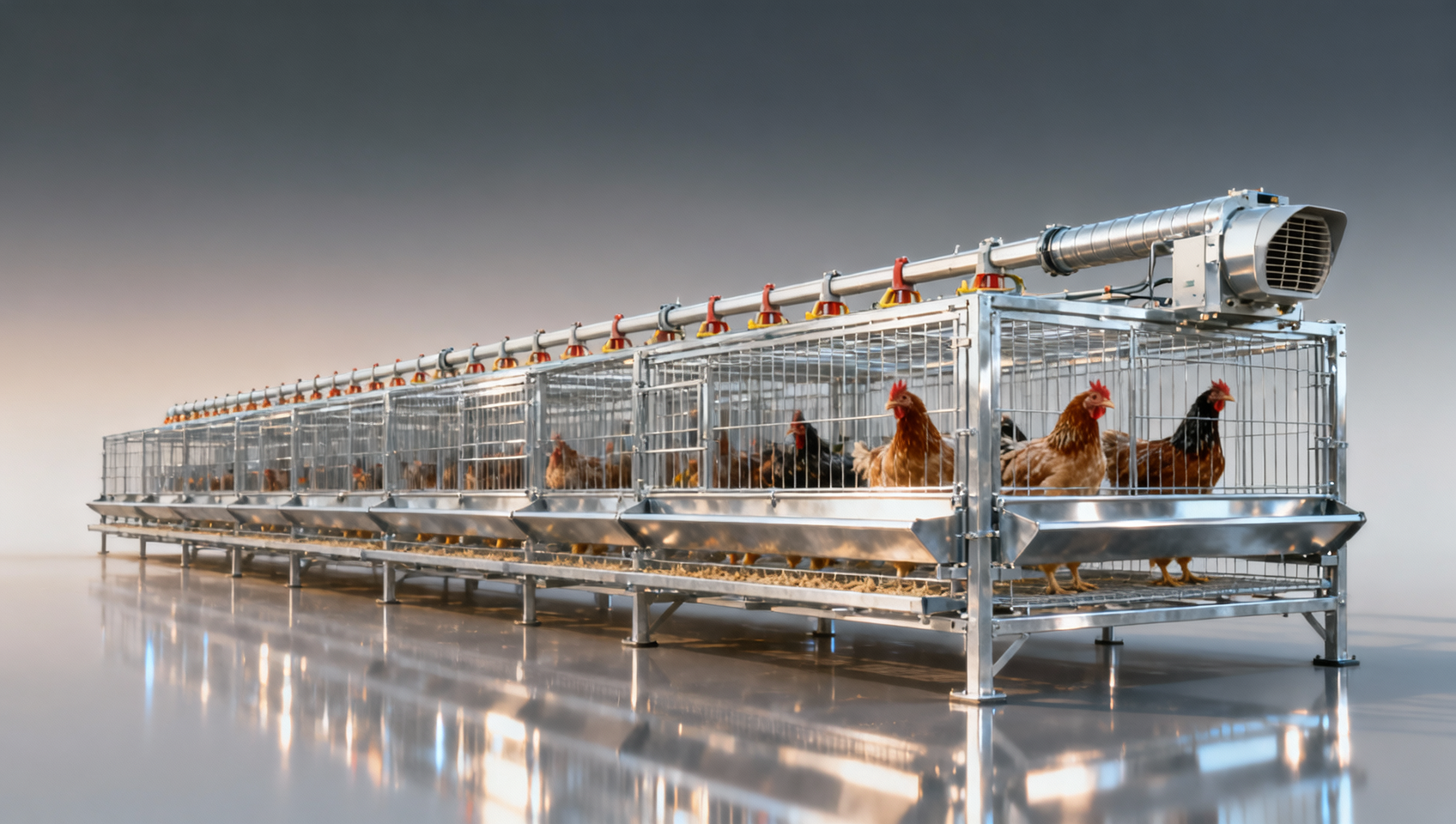
Procurement teams often compare layer housing systems by installed capacity, quoted automation level, and initial price. Those factors matter, but they do not answer the question that usually determines long-term operating stability: can the farm’s staff inspect, clean, adjust, repair, and safely isolate the system without creating recurring disruption in the house?
Serviceability is the practical ease of keeping equipment functional across its working life. In a commercial egg operation, it affects more than maintenance labor. A poorly serviceable feeding line can create uneven feed access; a difficult-to-clean manure belt can increase housekeeping burden; an inaccessible nipple line regulator can delay response to water-pressure problems. When equipment is installed in multiple tiers and runs across long poultry houses, a small design weakness may be repeated hundreds of times.
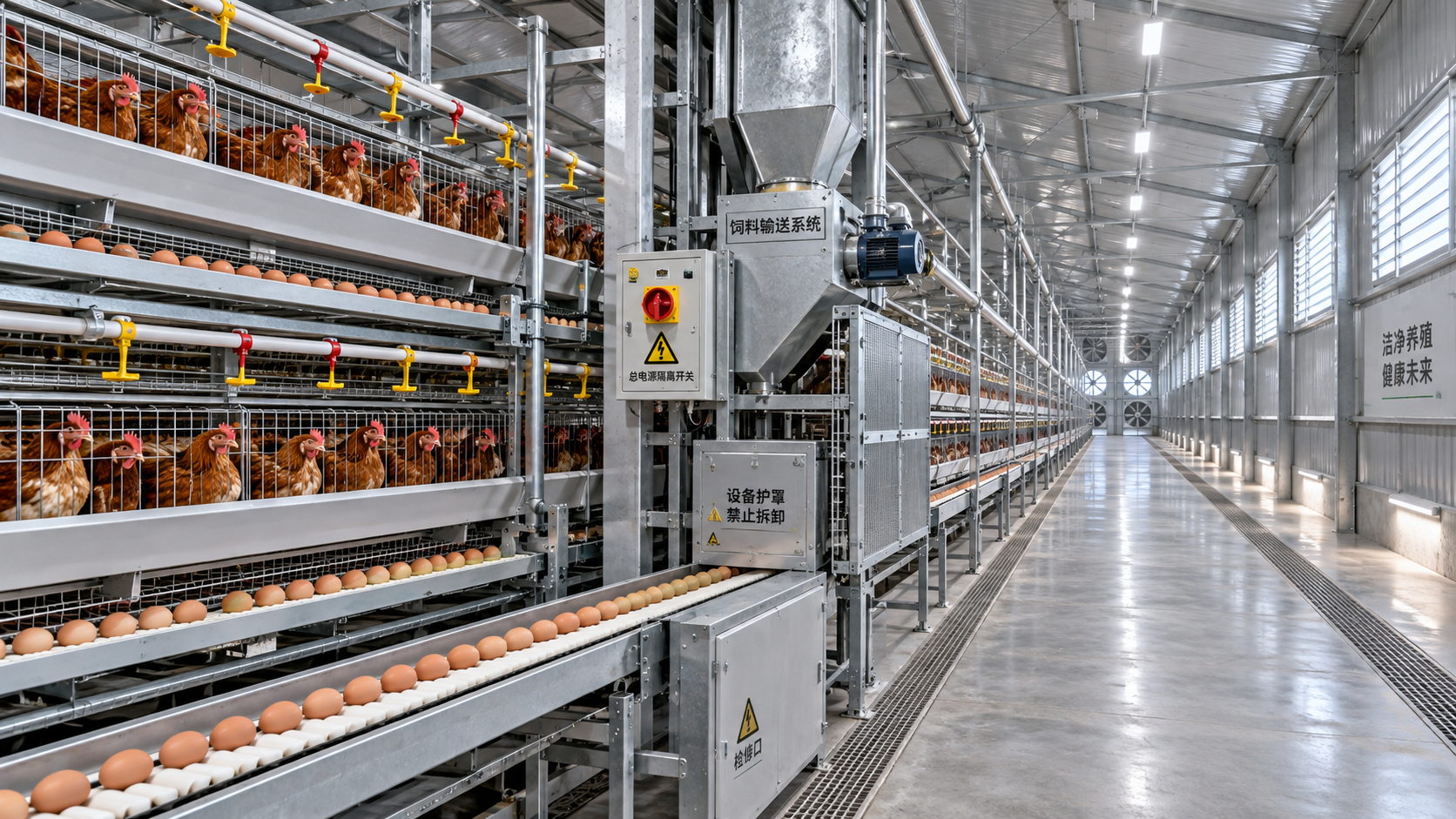
For buyers assessing an automatic layer cage system, the useful question is not simply whether feeding, drinking, egg collection, manure removal, and environmental interfaces are automated. It is whether each automated function can be monitored, isolated, restored, and maintained under real farm conditions: dust, humidity, corrosive manure gases, variable utility quality, staff turnover, and limited maintenance windows.
Serviceability should be defined before supplier comparison
“Easy maintenance” is too vague for a procurement specification. It can mean accessible components to one supplier, while the buyer expects rapid replacement without dismantling adjacent cages, belts, or electrical routes. Procurement documents should turn the term into observable requirements.
A serviceable system generally allows a trained farm technician to identify a fault, reach the affected component, make a defined intervention, verify safe restart, and record the work without disturbing unrelated production zones. This requires attention to the physical arrangement of the cage rows, but also to documentation, spare parts, controls, and supplier support.
Before issuing requests for quotation, buyers can establish a serviceability brief covering:
- Expected inspection and cleaning tasks by shift, week, flock cycle, and annual shutdown;
- Components that must be replaceable while adjoining lines remain in service, where local safety procedures permit;
- Maximum practical access height and aisle constraints for the farm’s maintenance staff and equipment;
- Required isolation points for electrical drives, water lines, feed delivery, and moving equipment;
- Preferred standardization of motors, sensors, belts, bearings, fasteners, and electrical hardware;
- Spare-parts stocking expectations, part identification methods, and lead-time reporting;
- Commissioning records, wiring diagrams, operating manuals, troubleshooting procedures, and training requirements.
This approach changes the supplier discussion. Instead of asking whether a system is automated, the buyer can ask how a jammed egg belt is accessed, how a failed drive is isolated, which wear parts are consumable, and whether the system can be returned to operation after a localized repair.
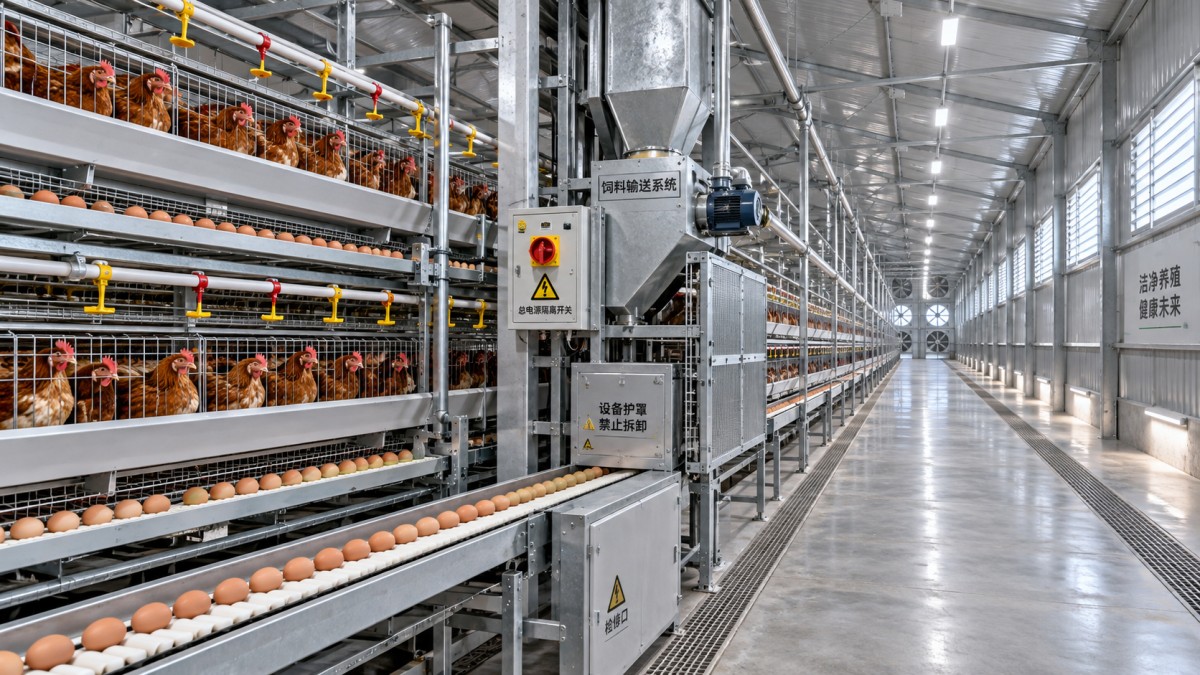
Assess each automated function as a maintainable subsystem
Automation is not one feature. It is a group of linked mechanical and control subsystems, each with different failure modes. A purchase decision should examine the interfaces between them as carefully as the major equipment itself. A manure belt, for example, depends on tracking, tension, drive condition, scraper alignment, support surfaces, and cleaning practices. A quotation that identifies only belt material and motor power provides an incomplete picture of maintainability.
Feed distribution and storage interfaces
Feed systems should be reviewed from the storage discharge point through conveyance, hopper distribution, trough delivery, and return or shutoff arrangements. Fine feed particles, bridge formation, wear at transfer points, and uneven adjustment can all complicate operation. Buyers should inspect whether inspection covers can be opened without removing permanent structural parts, whether feed-level devices can be checked without working in awkward positions, and whether the design allows spillage to be cleaned before it attracts pests or interferes with moving components.
The availability of a manual operating mode may also be relevant during commissioning and fault finding. That does not remove the need for safe operating procedures; it simply gives technicians a controlled way to verify individual functions rather than guessing from a complete-line failure.
Water lines and drinker maintenance
Water is a production-critical utility, yet water-line service requirements are sometimes left out of cage procurement packages. Evaluate line flushing arrangements, pressure regulation access, filtration responsibilities, drain points, leak detection practices, and the availability of replacement nipples or cups. The best configuration will vary with local water quality, treatment methods, winter conditions, and biosecurity procedures.
A buyer should also distinguish between a system that can be assembled quickly and one that can be maintained hygienically. Hidden dead ends, inaccessible drains, or poorly supported lines may make routine flushing and inspection harder. Water-system commissioning should include documented checks for leaks, pressure behavior, and accessibility before birds are placed.
Egg collection equipment
Egg belts, cross conveyors, transfers, elevators, and packing-room interfaces deserve close scrutiny because a blockage in one area can affect the output of several rows. Serviceability questions include whether belt tracking points are visible, whether transfer guards can be removed safely for inspection, whether egg-contact surfaces can be cleaned, and whether operators can clear a minor obstruction without entering hazardous pinch-point areas.
It is also prudent to ask suppliers to identify what happens when downstream equipment stops. The system should have a defined operating logic for alarms, controlled stopping, restart, and recovery. Procurement teams need that sequence in the technical submission, rather than relying on a verbal assurance that the line is “automatic.”
Manure removal and corrosion exposure
Manure removal equipment operates in a harsh environment. Buyers should inspect belt supports, scrapers, drive-end access, tensioning arrangements, corrosion protection, and the route for removed manure. Components exposed to moisture, cleaning chemicals, and manure gases can deteriorate at different rates depending on ventilation, climate, cleaning routines, and building design.
Material descriptions should be specific enough to verify. Terms such as “anti-corrosion treatment” are not an acceptance criterion on their own. A procurement package can require the supplier to state the base material, coating or galvanizing method where applicable, cut-edge treatment, fastener material, and the maintenance actions needed to preserve the finish. That record helps the farm distinguish normal wear from premature deterioration.
Mechanical access is only half of serviceability
Controls determine how quickly a farm can locate a fault. Long houses may contain repeated motors, sensors, relays, and distribution points. If device labels do not correspond with drawings, a technician can spend more time identifying the circuit than correcting the problem. Clear labeling, durable enclosure identification, documented cable routes, and a sensible grouping of control panels reduce that diagnostic burden.
When reviewing an automatic layer cage system configuration, buyers can request a controls review that covers alarm categories, local versus central control, loss-of-power behavior, restart permissions, sensor replacement, and availability of manual overrides. The purpose is not to demand a particular automation architecture. It is to confirm that the selected architecture fits the farm’s maintenance capability and emergency procedures.
Electrical safety must be addressed in the farm’s jurisdiction and site-specific risk assessment. In the United States, for example, maintenance activities involving unexpected energization are covered by OSHA’s control-of-hazardous-energy requirements in 29 CFR 1910.147. Comparable obligations and electrical rules may apply elsewhere. The practical procurement implication is straightforward: equipment should have identifiable isolation points, lockable disconnect arrangements where required, and documentation that enables site personnel to develop and apply safe procedures.
Use a serviceability matrix during technical evaluation
A weighted evaluation matrix prevents an attractive initial quotation from hiding recurring operating exposure. The weights should reflect the farm’s own conditions. A remote site with limited specialist support may assign greater value to interchangeable parts and local fault diagnosis. A farm with an experienced maintenance department may accept more complex controls if the design delivers a clear operational advantage.
The matrix should not be scored from brochures alone. Buyers can use supplier drawings to trace a realistic maintenance task: replacing a drive motor, flushing a water circuit, realigning a belt, or accessing a sensor. If the task cannot be explained step by step before contract award, it will be harder to perform during production.
Installation acceptance should test maintainability, not just movement
Many projects are accepted once conveyors run, drinker lines hold water, and the control panel powers up. Functional movement is necessary, but it does not prove that the installation is ready for the operating team. Acceptance testing should include accessibility checks and fault-response demonstrations.
Useful handover tests may include confirming labels against drawings, verifying that guards are fitted and can be removed and refitted correctly under safe conditions, demonstrating alarm acknowledgement and reset logic, checking isolation arrangements, and reviewing the spare-parts inventory against the agreed list. Where the system includes multiple rows or house sections, tests should cover representative locations rather than only the easiest-to-reach equipment.
Training should be role-specific. Operators need normal operating and basic inspection instructions; maintenance personnel need adjustment, troubleshooting, isolation, and replacement guidance; managers need records that show what requires attention before a small fault becomes a production interruption. A generic product presentation does not replace this handover process.
Animal welfare and regulatory fit remain procurement issues
Cage design, stocking provisions, inspection access, lighting, ventilation, manure handling, and emergency arrangements may be governed by national, regional, retailer, or certification requirements. These requirements vary significantly by market. Buyers should confirm applicable rules before finalizing cage dimensions or house layouts, especially where eggs are intended for regulated export channels or welfare-specific supply programs.
The World Organisation for Animal Health’s Terrestrial Animal Health Code, Chapter 7.10, identifies management and housing factors relevant to laying-hen welfare, including housing environment, inspection, feed and water access, health management, and handling of emergencies. It does not replace local legal requirements, but it is a useful reference for framing due diligence questions. Serviceability supports this review because staff cannot adequately inspect birds, maintain equipment, or respond to faults when access routes and operating controls are impractical.
Price the lifecycle exposure, not only the installed equipment
The lowest purchase price can become expensive if it introduces non-standard consumables, inaccessible drives, unclear wiring, or dependence on a single source for ordinary replacement items. Conversely, a system with more robust documentation and easier component access may carry a higher initial cost while reducing uncertainty during operation. Actual outcomes depend on flock scale, staffing, preventive-maintenance discipline, utility reliability, and the supplier’s contractual support terms.
Procurement teams should request separately priced items for commissioning support, training, recommended commissioning spares, scheduled maintenance parts, and optional monitoring features. Separating these elements makes comparison clearer and avoids treating essential operating requirements as undefined extras after installation.
The practical purchasing decision is not whether automation is suitable in principle. It is whether the proposed equipment can be kept safe, clean, traceable, and operational by the people who will work with it every day. A serviceability-led specification gives that question the same status as capacity, layout, and price.
Sources
- World Organisation for Animal Health (WOAH), Terrestrial Animal Health Code, Chapter 7.10, “Animal Welfare and Laying Hen Production Systems,” 2024 edition.
- Occupational Safety and Health Administration (OSHA), 29 CFR 1910.147, “The Control of Hazardous Energy (Lockout/Tagout).”
Deep Dive
Related Intelligence
 Smart Livestock & Poultry TechGlobalizing Agri-Equipment: How Top Manufacturers are Localizing in AfricaAnalyst:Agri-Tech Strategist
 Agricultural Equipment OEMWhich poultry housing systems supplier offers the shortest lead time for climate-controlled broiler houses in Southeast Asia?Analyst:Agri-Tech Strategist
 Agricultural Equipment OEMWhich poultry housing systems supplier offers the shortest lead time for climate-controlled broiler houses in Southeast Asia?Analyst:Agri-Tech Strategist