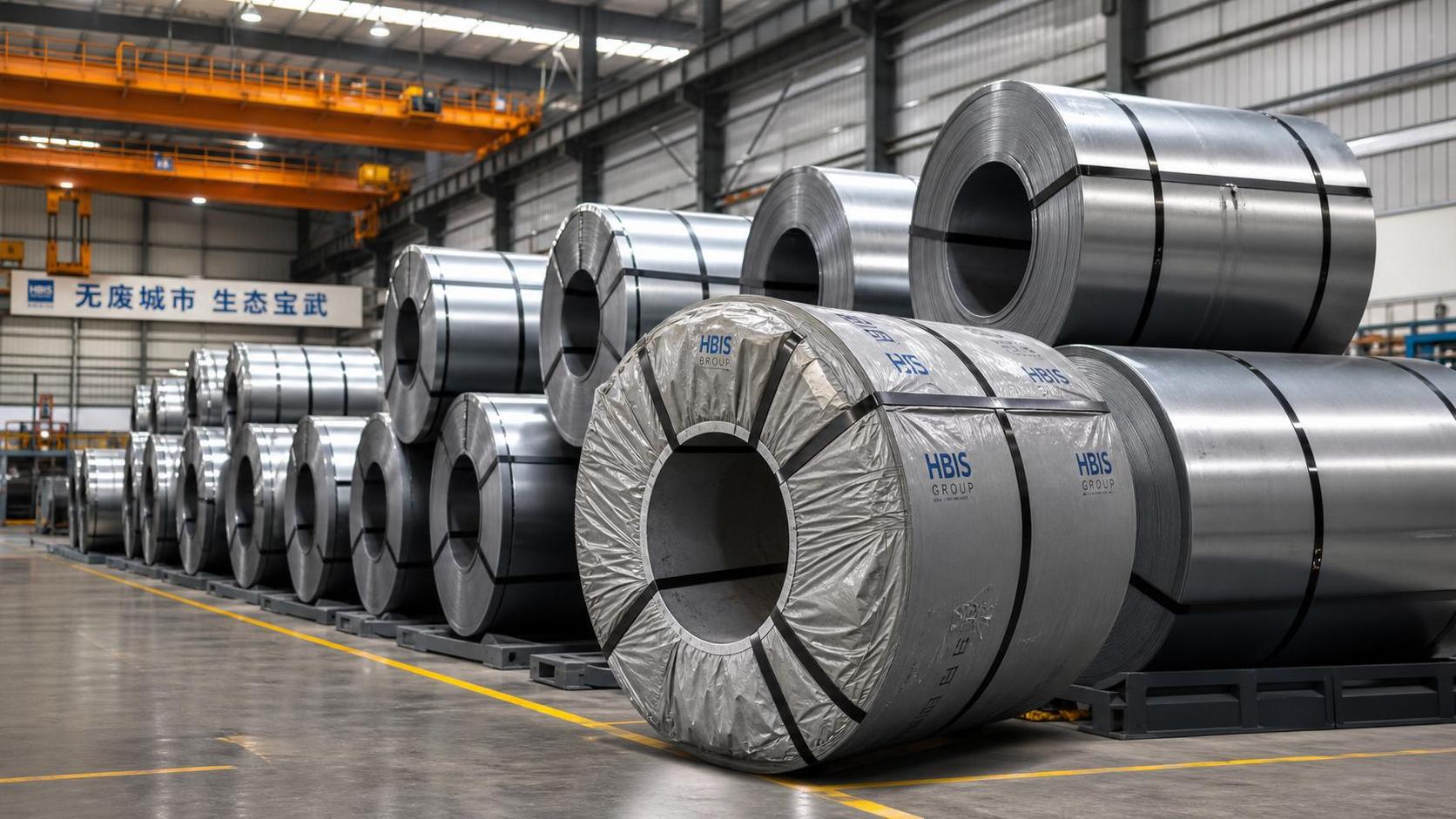
Global Pig Iron Production Fell 2.2% in January–September 2026

Key Takeaways
- OpenRouter Removes Three AI Inference Providers After Prompt TheftIT & Security Director
- How to verify supplier credentials in global chemical sourcingLead Materials Scientist
- National Cybersecurity Standards Committee Seeks Feedback on Three GuidelinesIT & Security Director
- How to verify specialty chemical exporters in IndiaLead Materials Scientist
- Trump Fires National Cyber Director, Names Kirsten Davies Acting DirectorIT & Security Director
- Can mobile POS systems accept payments without internet access?IT & Security Director
- Malaysia and US Deepen Sovereign AI Cloud Cooperation, With $50 Million in US SupportIT & Security Director
- How chemical recycling is reshaping plastics technology in EuropeLead Materials Scientist
Industry Overview
We do not just publish news; we construct a high-fidelity digital footprint for our partners. By aligning with TNE, enterprises build the essential algorithmic "Trust Signals" required by modern search engines, ensuring they stand out to high-net-worth buyers in an increasingly crowded global digital landscape.
Global pig iron production fell by 2.2% year on year to 1.02 billion tonnes in January–September 2026, according to the industry data described in the supplied information. The figures point to continued weakness in steel market demand and may affect how producers, traders and buyers assess supply and delivery plans. No policy or rule change is identified in the information provided; the immediate issue for businesses is to distinguish a market signal from a confirmed change in trade or compliance requirements.
A decline in global output, with differing national results
During the first nine months of 2026, global pig iron production totalled 1.02 billion tonnes, down 2.2% from the same period a year earlier. The supplied industry data describes the result as evidence of continued weak demand in the global steel market.
Production declined in China and some other major steel-producing countries, while South Korea and certain other countries recorded increases. The figures reflect changes in the balance of supply and demand in the global steel market. The supplied information does not give individual country totals or identify the original data publisher.

Where uneven production may reach the supply chain
Steelmakers and raw material buyers
From an industry perspective, lower aggregate pig iron output may lead steelmakers and their suppliers to review production and purchasing assumptions. The global figure alone, however, does not establish what has happened at any individual plant or whether a particular grade of material is more or less available.
Buyers may therefore benefit from checking expected volumes and delivery schedules directly with their suppliers. Where procurement plans depend on output from more than one country, the contrasting results reported for China and South Korea also suggest a need to examine each supply route on its own merits. A global percentage cannot be applied automatically to every supplier, product or contract.
Traders and distributors assessing availability
For businesses that buy and resell pig iron or related steel products, the reported divergence between producing countries may complicate decisions about where to seek supply. Analysis suggests that traders could face different commercial conditions across individual markets, although the supplied figures do not establish changes in prices, export volumes or trade flows.
Before treating a potential supply source as interchangeable with an existing one, traders can review the product specification, available quantity, delivery terms and supporting documents for the transaction. They should also check the trade requirements applicable to the actual route and product. This is a practical verification step, not a response to a newly identified trade rule.
Manufacturers and delivery planners
Manufacturers that depend on steel inputs may use the production data as a prompt to reassess purchasing schedules and supplier communications. A decline in pig iron production does not by itself demonstrate that finished steel deliveries will be delayed or that downstream products will be in short supply. Those outcomes would depend on conditions and contractual arrangements not described in the supplied information.
Analysis suggests that delivery planning is most useful when it connects the general market signal with order-specific evidence: supplier confirmations, product requirements and agreed delivery dates. If a buyer considers an alternative material or supplier, it may need to verify that the proposed substitution meets the requirements of the relevant order before relying on it.
Checks that connect the figures to purchasing decisions
Separate global output from supplier commitments
The first practical question is whether a business has exposure to the producers, products or routes affected by changes in output. Procurement teams can compare their planned needs with current supplier commitments and ask for clarification where volumes or delivery timing are uncertain. The reported global decline is a reason to ask those questions; it is not proof that a particular commitment has changed.
Businesses may also find it useful to distinguish confirmed orders from forecasts. If demand remains weak, an individual buyer may need flexibility in its purchasing plan; if a supplier revises availability, the buyer may need time to assess alternatives. Both are possible planning scenarios, not outcomes established by the data.
Review specifications before considering alternatives
The different national production results may encourage some buyers to examine other sources. Any such review should remain tied to the product and intended use. A prospective supplier's ability to offer a quantity is only one consideration; the buyer may also need to compare specifications, supporting documentation and the delivery terms relevant to its purchase.
Where an order calls for testing, certification or other evidence of conformity, the parties can verify what documents the contract or applicable requirements call for and whether those documents cover the proposed material. The supplied information does not announce a new certification scheme, testing obligation or product standard. Any change to those requirements would need separate confirmation.
Check documents and trade terms for each transaction
Traders considering a different source or destination may wish to review the documents and conditions applicable to that specific transaction. Relevant checks could include the description and origin information supplied for the goods, agreed delivery responsibilities and any requirements identified by the parties for the route in question. The appropriate checks depend on the transaction; the production data alone does not establish which rules apply.
Where contract terms allow changes to volume, timing or source, buyers and sellers can also clarify how those changes would be agreed and documented. This may help prevent a market assumption from being mistaken for an amendment to a commercial commitment. No change to contractual obligations is confirmed in the supplied information.
Monitor later evidence before revising plans
Businesses can compare the reported nine-month result with later production information when it becomes available, while checking that periods and definitions are comparable. Further detail on individual countries, product categories or supplier capacity could help determine whether the aggregate decline is relevant to a particular purchase.
Market feedback from suppliers and customers may also inform planning, but individual reports should be assessed alongside order records and verified data. A single global figure cannot establish the timing or direction of future output, prices or deliveries. It is therefore better used as one input to a review than as a standalone forecast.
A market signal, with no rule change established
At this stage, it is more appropriate to understand the reported decline as a supply and demand signal than as an implemented policy or regulatory change. The supplied information identifies no new law, standard, certification requirement or trade measure. It also does not establish that an authority has issued an execution notice in response to the production figures.
From an analytical perspective, the difference between falling output in China and rising output in South Korea is a reminder that the global result combines different national developments. It does not explain the reasons for each country's change, or show whether those changes will continue. Decisions about sourcing or capacity should therefore rest on more specific evidence than the headline percentage.
What deserves closer attention is whether subsequent verified information reveals changes relevant to a business's actual transactions. These might include updated supplier commitments, market feedback, procurement documents or separately announced trade and compliance requirements. None of those changes can be assumed from the production figures themselves.
Using the nine-month result in proportion
The reported fall to 1.02 billion tonnes provides a reference point for participants assessing a weak steel market and differing production results across countries. Its practical value lies in prompting closer examination of supply exposure, purchasing assumptions and delivery commitments. It does not, on the evidence supplied, create a new obligation or establish a uniform outcome for every part of the industry.
A measured response is to verify the original data, examine the business's own orders and suppliers, and watch for further evidence before making conclusions about future supply or rules. Any policy, certification or trade change should be evaluated on its own published terms if and when it is confirmed.
Basis for this report and further verification
This article is based on the user-provided news title, event period and summary. The input does not provide a specific official source link or identify the original publisher of the industry data. The figures and their context therefore require continued verification against the original release or other reliable primary information.
Depending on the question being investigated, relevant sources may include official announcements, trade authority information, industry association publications and standards organisation documents. Subsequent checks can also cover any policy details, certification guidance, procurement document changes, trade implementation and industry feedback that become relevant. No specific change in those areas is confirmed by the supplied information.
Deep Dive
Related Intelligence
 Steel Market TrendsHow Buyers Can Avoid Common 904L Stainless Steel Coil Sourcing MistakesAnalyst:Lead Materials Scientist
 Steel Market TrendsColor Coated Galvalume Roof Sheet Problems Buyers Can Prevent Before DeliveryAnalyst:Lead Materials Scientist
 Steel Market TrendsCarbon Steel Coil Market Trends: Why Global Buyers Are Rebuilding Flexible Steel Supply ChainsAnalyst:Lead Materials Scientist