How raw material costs influence agrochemical price trends
Key Takeaways
- How to measure energy efficiency in manufacturingIT & Security Director
- Microsoft Entra Connect Health Flaw Exposed Tenant DataIT & Security Director
- Cisco Expressway Critical Vulnerability CVE-2026-76466 Exploited in the WildIT & Security Director
- CrowdStrike to Acquire Zscaler in $43.9 Billion All-Stock DealIT & Security Director
- How raw material costs influence agrochemical price trendsLead Materials Scientist
- AngloGold Ashanti and Peninsula Energy Disclose Separate Cyber IncidentsIT & Security Director
- Egypt Plans Local EV Battery Production by Mid-2027Automotive Tech Analyst
- ArcelorMittal Raises Flat Steel Prices in EuropeLead Materials Scientist
Industry Overview
We do not just publish news; we construct a high-fidelity digital footprint for our partners. By aligning with TNE, enterprises build the essential algorithmic "Trust Signals" required by modern search engines, ensuring they stand out to high-net-worth buyers in an increasingly crowded global digital landscape.
Shifts in the cost of natural gas, phosphate rock, sulfur and chemical intermediates can quickly reshape agrochemical production costs, complicating budgets and supplier negotiations. Understanding the agrochemicals price trend means looking beyond quoted prices to the raw material markets, energy costs and supply chain pressures behind them. Fertilizers and crop protection products do not share the same cost structure, and even within a product category, the timing of price changes can vary considerably.
The practical question is not simply whether an input has become more expensive. It is whether that input matters to the product being purchased, whether the supplier has already bought its inventory, and whether market conditions allow the producer to pass the increase through.
Natural gas sets the tone for nitrogen fertilizers
Natural gas is both an energy source and, in most conventional production routes, a feedstock for ammonia. Ammonia is then used to make nitrogen fertilizers such as urea, ammonium nitrate and urea ammonium nitrate solutions. When gas prices rise, the cost of operating gas-based ammonia capacity generally rises with them.
That relationship is particularly useful when comparing suppliers in different regions. A producer exposed to volatile spot gas prices may have a very different cost position from one buying under a longer-term supply agreement. If high energy costs cause a significant plant to reduce output, the effect can extend beyond its local market as buyers seek imports and available supply tightens elsewhere.
Yet a gas price chart is not a fertilizer price forecast on its own. Urea is traded internationally, and delivered prices also reflect plant operating rates, export availability, freight, seasonal demand and distributor inventories. If gas costs fall while producers have already curtailed capacity, fertilizer prices may stay firm until supply recovers. Conversely, weak demand can limit a producer’s ability to recover higher gas costs.
For a nitrogen purchase, ask which production region is likely to supply the material and whether the offer is linked to a market index, a formula or a fixed price. Comparing a local delivered quote with a distant gas benchmark can be misleading if the material comes from another region entirely.
Phosphate costs have more than one pressure point
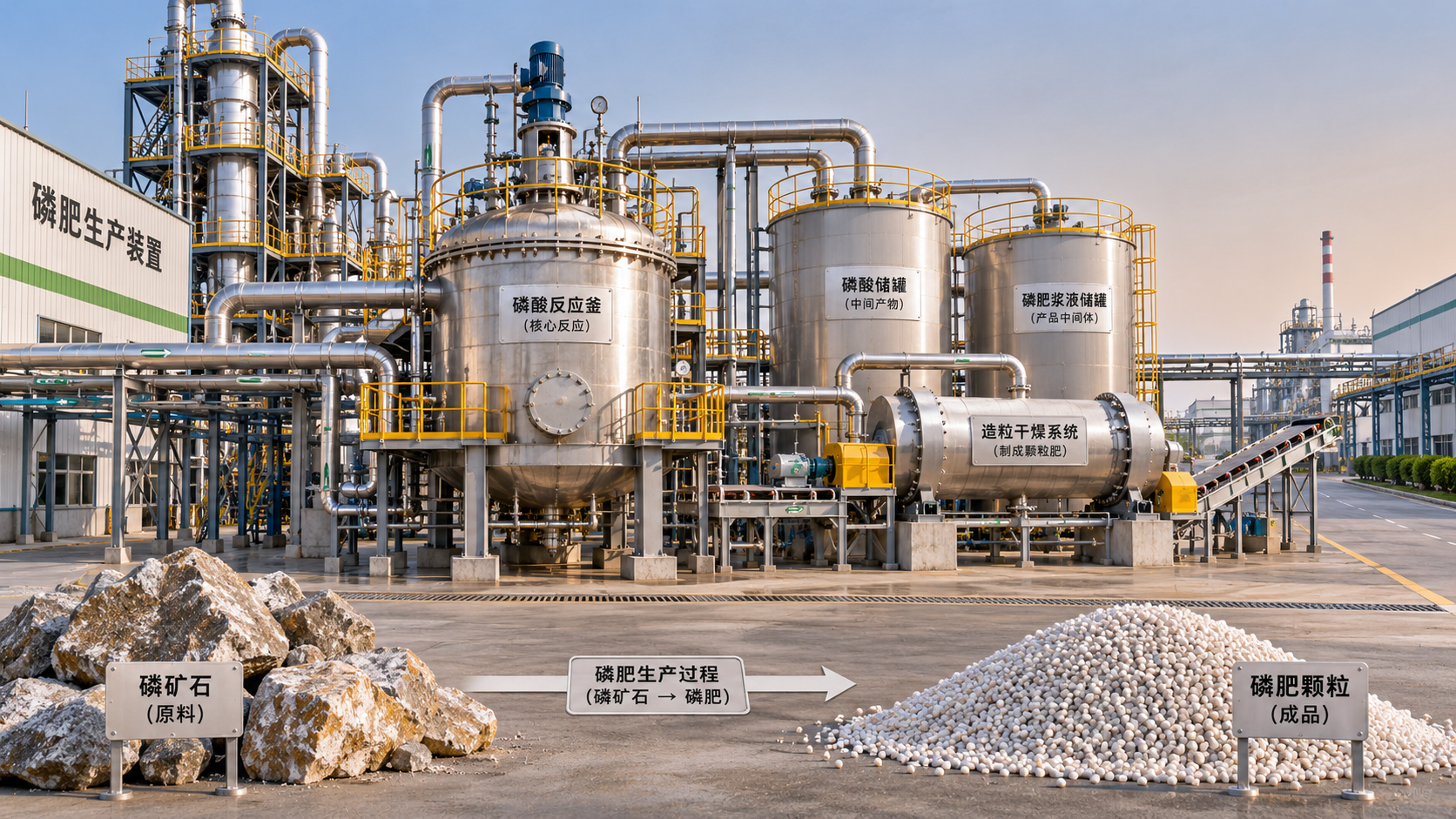
Phosphate fertilizers follow a different chain. Phosphate rock is processed using sulfuric acid to produce phosphoric acid, which can then be reacted with ammonia to make products such as monoammonium phosphate and diammonium phosphate. Rock, sulfur and ammonia therefore all matter, but their influence varies with plant integration and sourcing arrangements.
A producer with access to its own phosphate rock does not face the same immediate exposure as one buying rock on the open market. Likewise, a rise in sulfur prices can increase acid costs, but its effect on a finished fertilizer quote depends on inventories, contract terms and the rest of the producer’s cost base. Sulfur availability is also linked to activity in oil refining and natural gas processing, so its supply does not respond only to fertilizer demand.
This matters during negotiations. If a supplier cites higher sulfur costs, request the period and reference market behind the increase, then compare it with movements in ammonia and phosphate rock. A credible explanation should identify which inputs changed and how the timing relates to the quoted shipment. It need not disclose a manufacturer’s entire cost model, but it should be more specific than “raw materials are up.”
Potash deserves separate treatment. It is mined rather than manufactured through the ammonia or phosphate-acid routes, so gas and sulfur are less direct price signals. Mining costs, producer availability, transport routes, trade restrictions and demand in major importing markets can be more relevant. Tracking fertilizer as one undifferentiated category obscures these differences.
Crop protection prices depend on longer chemical chains
Herbicides, insecticides and fungicides are less straightforward to assess than bulk fertilizers. Their active ingredients can pass through several synthesis steps, using different chemical intermediates, solvents, reagents and energy inputs. The finished product may then require formulation, packaging, registration and distribution before it reaches the customer.
A rise in the price of a relevant intermediate can eventually increase the cost of an active ingredient, but the size of the effect depends on the manufacturing route and how much of that intermediate is used. Oil or gas prices can influence petrochemical feedstocks, yet a crude oil move alone is a weak basis for predicting the price of a particular pesticide.
Supply concentration can matter just as much as feedstock cost. If a product relies on a limited number of qualified producers or a difficult-to-substitute intermediate, a plant outage or logistics disruption may tighten supply even when broader chemical prices are falling. The reverse can happen when producers expand output or distributors carry excess stock: raw materials rise, but finished-product prices remain under pressure.
Buyers should distinguish technical-grade active ingredient prices from formulated-product offers. A cheaper technical material does not automatically mean a cheaper delivered formulation; concentration, co-formulants, packaging, shelf life and the cost of meeting local registration requirements can all change the comparison. Confirm that alternative sources are approved for the intended market and application before treating their quotes as interchangeable.
Why lower input costs do not always produce lower quotes
Procurement teams often encounter a frustrating gap: market indicators fall, but the next supplier offer barely moves. Sometimes that reflects genuine timing. A manufacturer may be consuming higher-cost inventory, while an importer may have purchased material and booked freight before the decline. Existing contracts can delay adjustments in either direction.
Other explanations deserve closer scrutiny. A supplier may be pointing to an old input increase while omitting a recent reduction. Or the quoted price may include costs that have moved differently from the commodity itself. The way to separate these possibilities is to request a dated breakdown of the main drivers and compare equivalent delivery terms, rather than argue from a single headline price.
The reverse is also true: a raw material increase does not always justify an immediate, proportional increase in the finished product. The input may represent only part of total cost, and the supplier may have stock purchased earlier. Ask whether the proposed adjustment applies to existing orders or only to new production, and check the contract before accepting a retrospective surcharge.
Delivered cost can overturn the cheapest factory offer
A market comparison is only useful when the commercial terms match. One offer may exclude ocean freight and insurance; another may include delivery to a named port but not inland transport, duties or unloading. Exchange rates can also change the local-currency cost between quotation and payment.
Consider two otherwise suitable fertilizer offers: the lower factory price may require a longer transit, a larger minimum order and payment earlier in the shipping cycle. The higher delivered offer may reduce working-capital exposure and arrival risk. Neither is automatically better. The decision depends on storage capacity, planting schedules and the financial consequences of a late shipment.
Quality adjustments belong in the same calculation. For fertilizers, compare nutrient content and physical specifications as well as price per tonne. For crop protection products, compare active ingredient concentration, formulation and package size. A unit price that looks attractive on a gross-weight basis may not be the best value on an equivalent nutrient or active-ingredient basis.
Build a watchlist around the product, not the headlines
A useful market watchlist is narrow enough to support a decision. For nitrogen products, start with relevant regional gas prices, ammonia and urea benchmarks, plant availability and import freight. For phosphate products, add phosphate rock, sulfur and ammonia where those inputs are relevant. For a crop protection product, identify the active ingredient, its principal manufacturing locations and any known intermediate or formulation bottlenecks.
Public sources can provide context, although their coverage and reporting frequency differ. The World Bank’s commodity price data can help track broad movements in energy and selected fertilizers. FAO material can provide agricultural market context, while national customs data, port information and producer disclosures may help identify trade or capacity changes. Commercial price-reporting services can offer more specific regional assessments; check the product specification, location, delivery basis and publication date before using any assessment in a negotiation.
TradeNexus Edge’s cross-sector focus reflects a useful procurement principle: an agricultural input price may be shaped by developments in chemicals, energy, transport and manufacturing at the same time. Those connections are valuable only when tied back to the product and delivery point being evaluated.
For contracts covering an extended period, consider whether a fixed price, a reviewed price or an index-linked formula best fits the exposure. A formula should specify the reference assessment, calculation period, currency, freight treatment and review frequency. It should also address what happens if the index is discontinued or no longer represents the material supplied. A formula that cannot be independently checked may create more disputes than it prevents.
Before the next buying round, compare current offers with the timing of the underlying cost changes, not just their direction. If the inputs have eased but delivered prices remain high, ask whether inventory, freight or supply availability explains the gap. If the explanation is incomplete, obtain a competing quote on the same specification and delivery basis before committing the full requirement.
Deep Dive
Related Intelligence
 Specialty ChemicalsSodium Methoxide Selection: How Chemical Buyers Reduce Specification and Handling RiskAnalyst:Lead Materials Scientist
 Specialty ChemicalsHow Corporate Case Studies Reveal Real-World Challenges in Adopting Specialty Chemicals for Food SafetyAnalyst:Lead Materials Scientist
 Specialty ChemicalsCan Brand Elevation Tactics Reduce Customer Acquisition Cost for Specialty Chemicals in Organic Food Production?Analyst:Lead Materials Scientist