Can Chemical Dosing Be Automated Without Replacing Existing Pumps?
Key Takeaways
- The Kyiv Independent Hit by Suspected Russian CyberattackIT & Security Director
- What is editorial exposure and how does it differ from paid advertising?IT & Security Director
- Apple Warns Users in 99 Countries of Spyware; German Lawmakers' Devices SuspectedIT & Security Director
- How to write technical content for exporters selling machinery abroadChief Civil Engineer
- BW ESS Brings Hams Hall, Europe's Largest Operating Battery Storage Project, OnlineAutomotive Tech Analyst
- How to size electric motors for pumpsChief Civil Engineer
- Trump Administration Pledges $15 Billion in Farm Aid Ahead of Midterm ElectionsAgri-Tech Strategist
- When does automated food processing technology pay for itself?Agri-Tech Strategist
Industry Overview
We do not just publish news; we construct a high-fidelity digital footprint for our partners. By aligning with TNE, enterprises build the essential algorithmic "Trust Signals" required by modern search engines, ensuring they stand out to high-net-worth buyers in an increasingly crowded global digital landscape.
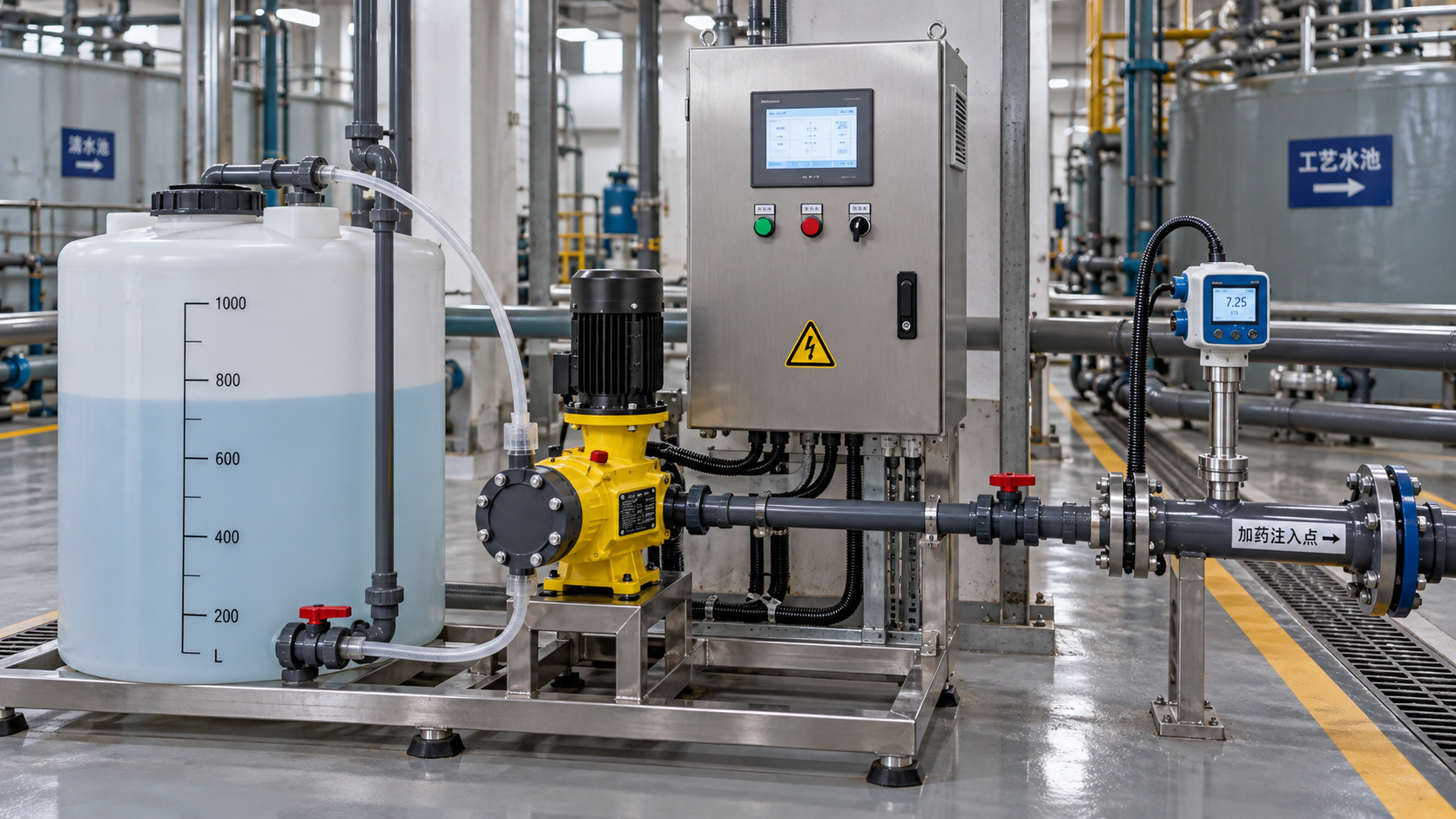
Yes—chemical dosing can often be automated without replacing existing pumps. The pumps must be mechanically sound, compatible with the chemical, and capable of delivering the required flow across the actual operating pressure. Automation then depends on how their output can be controlled and how dosing performance will be measured.
If you are asking, “Can we automate chemical dosing without replacing our existing pumps?” start with the pump model and its control manual. A pump with a remote input may need only a controller, suitable instruments, and commissioning. A manually adjusted pump may require a manufacturer-approved upgrade or a more limited automation approach. Some pumps are poor retrofit candidates even when they still run.
What can be automated while keeping the existing pump?
Automation can mean several different things. The right choice depends on whether you need to eliminate routine switching, match chemical feed to production, or maintain a measured process condition.
A fixed-volume batch may only need a repeatable dosing sequence with suitable verification. A continuously changing treatment process may need variable output and feedback. Buying a sophisticated controller before defining this requirement can add cost without improving the result.
How do you know whether the pump can accept automatic control?
Check the exact model and installed options, rather than assuming that pumps from the same product family have identical capabilities. Common interfaces include an external enable contact, pulse input, analog input such as 4–20 mA, or an industrial communications connection.
These interfaces perform different jobs. An enable contact may only permit the pump to run at its locally selected output. A pulse input may command a defined number of strokes. An analog input may vary stroke frequency, stroke length, or another capacity setting. Digital communications may expose commands and diagnostics, depending on the pump.
A remote start signal does not necessarily provide remote capacity control. This distinction determines whether the retrofit can merely switch dosing on and off or continuously adjust the feed rate.
Electrical compatibility also matters. Confirm signal type, scaling, isolation requirements, and behavior when the signal disappears. The controller’s output must match what the pump accepts, including any powered or unpowered contact requirements. Some pumps need an optional interface module or manufacturer-approved control accessory.
For a motor-driven pump, a variable-frequency drive may be an option only when the motor and pump mechanism support variable-speed operation. Cooling, lubrication, available torque, and permitted speed range can restrict the usable adjustment range.
Can a manual pump be automated with a relay?
Sometimes, but relay control has limits. A pump running at a fixed setting can deliver an average dose through timed operation if the manufacturer permits the switching pattern and the process tolerates intermittent chemical addition.
This may suit a well-mixed batch tank. It can be unsuitable for direct injection into a small process stream, where each operating period creates a concentrated chemical slug. Frequent power cycling can also create excessive starts or interfere with onboard electronics.
Where available, use the pump’s designated remote-enable input rather than repeatedly interrupting its power supply. If the pump has no suitable interface, compare an approved control upgrade with replacement. An improvised actuator on a manual adjustment knob can introduce mechanical wear, poor repeatability, and difficult maintenance.
What should be checked before adding sensors and a controller?
A pump can accept control signals and still be unsuitable for automated dosing. Its hydraulic performance and condition need attention before the control design is finalized.
- Required operating range: Establish the lowest and highest chemical feed rates under realistic process conditions. A pump sized for peak demand may not deliver consistently at the minimum required output.
- Actual discharge pressure: Evaluate delivery against the installed system pressure, including changes during operation.
- Condition and repeatability: Worn check valves, damaged diaphragms, degraded tubing, and suction leaks can cause inconsistent delivery.
- Chemical compatibility: Review all wetted components, including seals, tubing, valves, flow instruments, and injection fittings, at the operating concentration
Deep Dive
Related Intelligence
 Specialty ChemicalsSodium Methoxide Selection: How Chemical Buyers Reduce Specification and Handling RiskAnalyst:Lead Materials Scientist
 Specialty ChemicalsHow Corporate Case Studies Reveal Real-World Challenges in Adopting Specialty Chemicals for Food SafetyAnalyst:Lead Materials Scientist
 Specialty ChemicalsCan Brand Elevation Tactics Reduce Customer Acquisition Cost for Specialty Chemicals in Organic Food Production?Analyst:Lead Materials Scientist