When C5M ISO 12944 testing is needed for offshore steelwork
Key Takeaways
- When does modular construction reduce a project's total cost?Chief Civil Engineer
- What cloud infrastructure analysis reveals about Singapore latency risksIT & Security Director
- How to verify recycled green building materials meet project standardsChief Civil Engineer
- What to evaluate when comparing cybersecurity analysis providersIT & Security Director
- When does agricultural automation equipment pay off for mid-size farms?Agri-Tech Strategist
- How Tank Design Helps Reduce Oxidation Risks in Edible Oil StorageAgri-Tech Strategist
- How to match heavy duty earthmoving equipment to site conditionsChief Civil Engineer
- When chemical supply solutions reduce the risk of production downtimeLead Materials Scientist
Industry Overview
We do not just publish news; we construct a high-fidelity digital footprint for our partners. By aligning with TNE, enterprises build the essential algorithmic "Trust Signals" required by modern search engines, ensuring they stand out to high-net-worth buyers in an increasingly crowded global digital landscape.
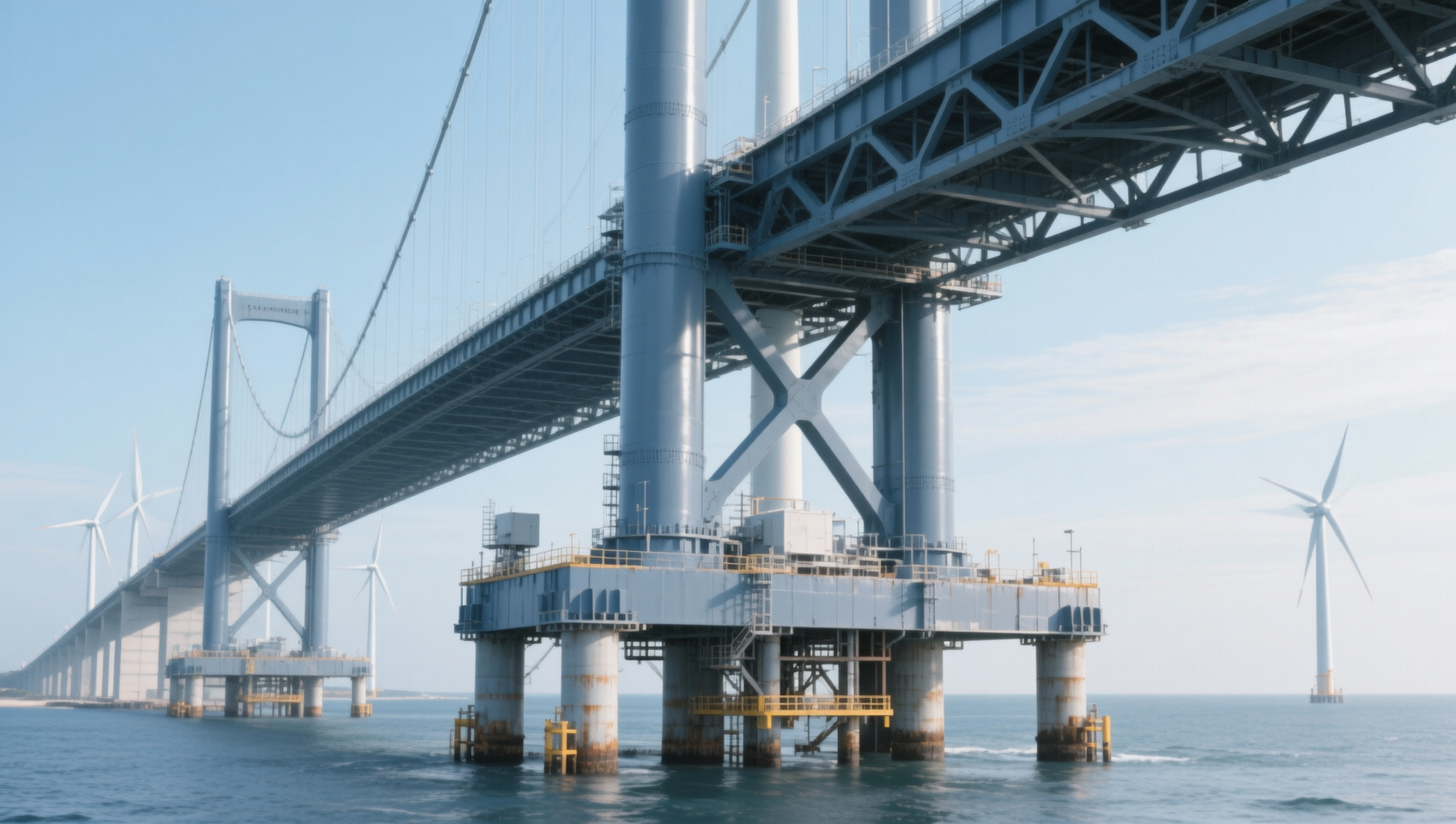
Testing under a C5M ISO 12944 requirement is needed when offshore steelwork will depend on an organic protective paint system to resist a severe marine atmosphere and the project must demonstrate that the proposed system is suitable before release, fabrication, or installation. The trigger is not simply that a structure is near the sea. It is the combination of chloride deposition, persistent wetness, temperature cycling, difficult access for repair, design working life, and contractual evidence requirements.
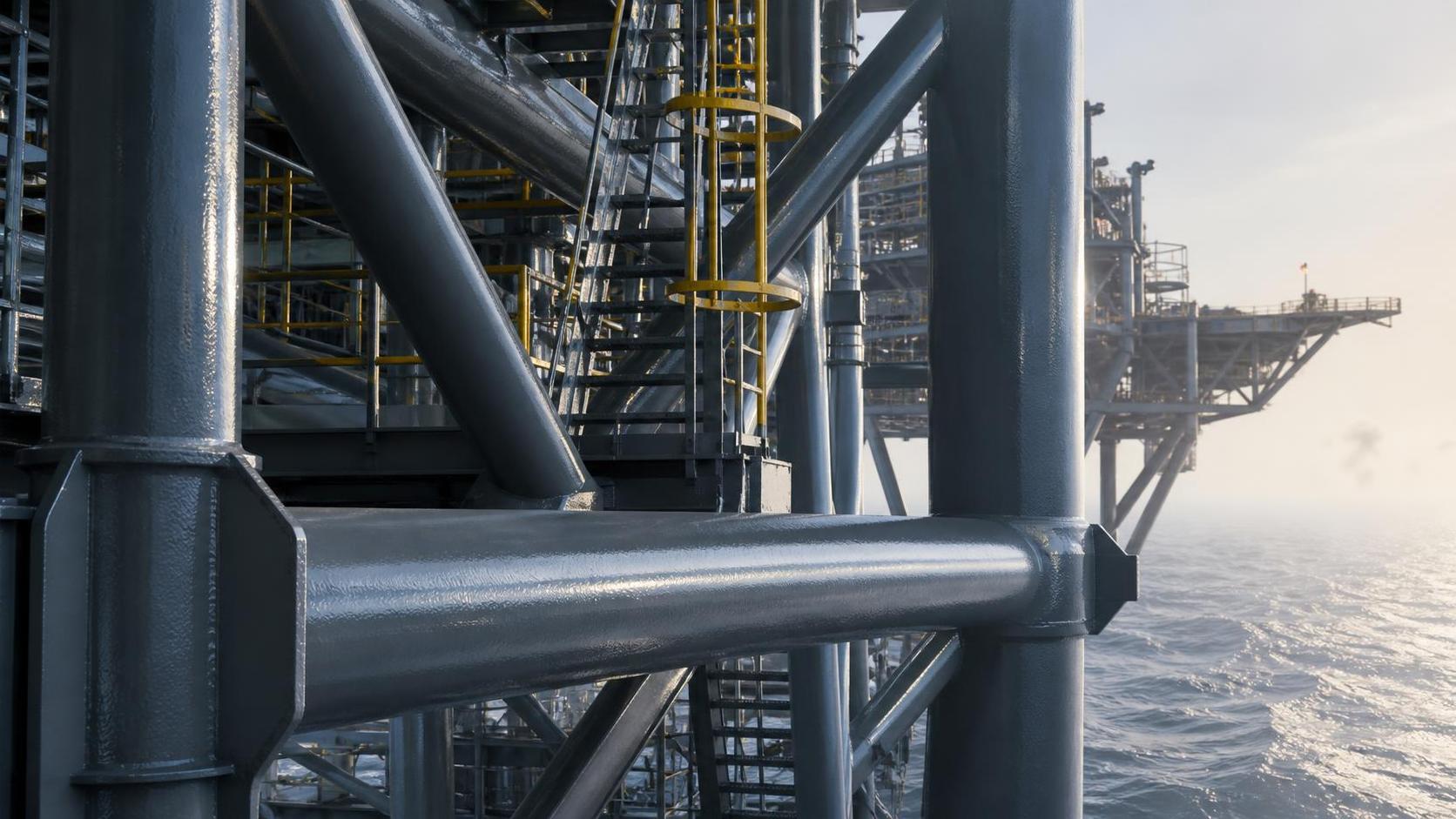
Offshore steel is exposed to wind-borne salt, condensation, rain, ultraviolet radiation, and, in some locations, splash or intermittent seawater wetting. Small coating defects can become corrosion initiation points at welds, sharp edges, bolted interfaces, drain paths, and damaged areas created during transport or lifting. Where loss of section, falling corrosion products, impaired access routes, or degradation of safety-critical supports could follow, a coating qualification should be treated as part of the engineering control package rather than a paint purchasing formality.
Start with the actual exposure zone
The historic C5-M designation is commonly used in specifications for very high corrosivity marine atmospheres. ISO 12944 has been revised over time, so the cited edition matters. Current project documents may classify atmospheric offshore exposure under C5 or use the more severe CX category, while ISO 12944-9 addresses offshore and related structures, including more demanding exposure conditions. A requirement that says only “C5M” without an edition, durability range, or exposure definition leaves room for incompatible assumptions.
Atmospheric steel above the splash zone can still receive substantial chloride loading. Open-deck handrails, crane pedestals, pipe racks, external stair towers, support frames, helideck secondary steel, and exposed equipment skids may dry between wet periods, yet remain within a severe marine category. This differs from steel regularly wetted by seawater, in tidal action, or in the splash zone. Those areas usually require a separate assessment because coating breakdown mechanisms and repair feasibility are markedly different.
Testing is generally warranted when the specified paint system is being proposed as evidence for a high-corrosivity atmospheric classification, especially where a project requires a stated durability expectation. It is also appropriate when the steelwork has complex geometry, numerous edges, extensive welds, thermally sprayed metal, galvanized components, or a substrate preparation method that differs from the system’s prior qualification conditions.
When a paper declaration is insufficient
A product data sheet may describe an epoxy, polyurethane, polysiloxane, zinc-rich primer, or multi-coat system as suitable for marine service. That description does not, by itself, establish compliance with a particular contract requirement. The specification should identify the complete system: substrate, surface preparation grade, pretreatment where applicable, nominal dry-film thickness for each coat, curing conditions, stripe-coat treatment, and the approved topcoat. Changing one component can invalidate reliance on prior test evidence.
C5M ISO 12944 testing should be requested when the offered system is new to the project, when its stated qualification does not cover the specified coating build, or when documents only show tests on individual paint products. A coating system is not merely a list of compatible cans. Intercoat adhesion, solvent entrapment, cure response, pigment selection, and total film thickness affect resistance during cyclic exposure.
Extra scrutiny is justified in the following situations:
- A tender calls for a defined ISO 12944 corrosivity category and durable protective performance, but the submitted evidence omits the relevant test method, exposure duration, assessment criteria, or tested film build.
- Steelwork will be assembled offshore or in a coastal yard, leaving field welds, bolted connections, touch-up zones, and cut edges that cannot receive the same application conditions as shop-coated surfaces.
- The paint scheme uses a reduced number of coats, unusually high film thickness per coat, rapid-cure materials, or a new low-VOC formulation. These may be appropriate, but they should be assessed against the intended environment rather than assumed equivalent to an older scheme.
- Fireproofing supports, access platforms, pipe shoes, grating supports, and hidden interfaces are expected to retain chlorides or moisture. Local geometry may govern the corrosion risk even when the general atmosphere appears less severe.
- There is a long interval between coating application and offshore installation. Storage beside the coast, uncovered transport, abrasion from sea fastening, and repeated handling can undermine the condition demonstrated in a laboratory qualification.
Test evidence must match the standard reference
ISO 12944 is a series, not one test. ISO 12944-2 addresses corrosivity classification, while other parts cover paint systems, surface types, laboratory test methods, protective paint schemes, application, inspection, and offshore structures. When a specification requires testing, it should state which part governs the evidence. Referring broadly to “ISO 12944 tested” is too vague to determine whether the evidence applies to the proposed work.
For atmospheric paint systems, ISO 12944-6 has traditionally been central to laboratory performance testing. Depending on the applicable edition and system category, the test sequence may involve cyclic exposure combining salt spray, humidity, and other conditions, followed by assessment of blistering, rusting, cracking, flaking, and corrosion from an artificial scribe. The acceptance criteria, scribe configuration, and test duration should be traceable to the cited standard edition and the system classification being claimed.
For offshore structures, ISO 12944-9 may be the more relevant reference where the service conditions fall within its scope. It contains requirements that reflect harsher offshore exposure and can include cyclic laboratory procedures designed for offshore conditions. A C5-M atmospheric claim should not automatically be used to prove suitability for splash-zone steel, immersed components, or areas protected by marine growth. Those conditions require their own specified scheme and evidence.
Review the laboratory report as a technical record rather than a pass/fail certificate. It should identify the coating manufacturer, product names and batch references where available, substrate material, surface preparation, profile, edge treatment, stripe coating, dry-film thicknesses, cure intervals, test standard and edition, laboratory identity, exposure sequence, and evaluation results. Missing details make it difficult to compare the test panel with the proposed coating procedure.
Surface preparation can change the answer
Even a correctly qualified system may fail to translate to fabricated steel if surface preparation changes. Abrasive-blasted carbon steel, mechanically prepared repair areas, hot-dip galvanized steel, metallized steel, and stainless-to-carbon-steel interfaces each need compatible treatment. Surface profile outside the coating supplier’s permitted range can lead to inadequate peak coverage or excessive film consumption. Residual soluble salts under a coating are particularly relevant for offshore work because they can promote osmotic blistering and underfilm corrosion.
Specification language should therefore connect test qualification to execution controls. Typical records include abrasive cleanliness, surface profile, dust assessment where required, soluble-salt measurement method and acceptance limit, steel temperature, relative humidity, dew-point margin, wet-film monitoring, dry-film thickness, recoat interval, and visual examination of edges and welds. These records do not replace qualification testing, but they establish whether the tested scheme was applied in comparable conditions.
Stripe coating deserves explicit treatment. Welds, corners, cut-outs, bolt heads, and edges often receive an additional brush or roller coat before the full spray coat. If the coating system was qualified with stripe coats but production work omits them, the installed system differs from the tested configuration. Conversely, an unplanned stripe coat can affect local film thickness and curing if applied beyond the product limits. The coating procedure should define the sequence instead of leaving it to individual practice.
Design details often create the highest exposure
A nominal C5M classification cannot compensate for water traps. Flat ledges, unsealed lap joints, discontinuous welds, unvented hollow sections, sharp arrises, and crevices behind clamps accumulate contaminants and retain wetness. These features can create localized conditions harsher than the open atmosphere. Testing may still be necessary, but design correction is usually the first control: improve drainage, seal where appropriate, radius edges, avoid inaccessible pockets, and define corrosion protection for interfaces before fabrication starts.
Field modifications need the same discipline. Cutting a bracket through a finished coating, welding a small support after completion, or grinding a damaged lifting lug creates a repair zone with a different preparation standard and application method. The repair procedure should identify the feathered overlap width, preparation grade, approved repair materials, coating build, cure restrictions, and inspection hold points. A laboratory test report for the original shop-applied system cannot automatically validate an improvised repair sequence.
Specify testing at the right project stage
The most useful time to resolve a C5M ISO 12944 requirement is before the coating system is locked into fabrication documents. The technical specification can state the relevant ISO 12944 edition, corrosivity or offshore category, expected durability range where applicable, substrate condition, test standard, acceptance criteria, required report content, and whether equivalency must be demonstrated for substitutions. This avoids a late dispute where a supplied system is chemically similar but lacks traceable evidence for the required exposure.
During technical review, compare the submitted report line by line with the project scheme. Pay particular attention to total and individual coat thickness, primer type, topcoat type, number of coats, blasting standard, surface profile, edge preparation, and curing. A thicker test panel is not necessarily conservative; excessive thickness can alter solvent release, flexibility, cracking behavior, and adhesion. A thinner panel may fail to represent the specified barrier protection.
Where testing has already been completed for an identical system, repeat testing may not be necessary. “Identical” should be demonstrated rather than assumed. Material substitutions, a different metal spray seal coat, a changed hardener, alternate thinner, revised cure schedule, or an altered surface preparation standard can be technically meaningful. Written acceptance of equivalency should precede production use.
Common interpretation errors
One frequent error is treating C5-M as a universal offshore label. It describes a severe marine atmospheric context in older terminology; it does not automatically cover immersion, tidal exposure, splash zones, insulated steel, or internal surfaces subject to process fluids. Another is assuming a salt-spray result alone proves ISO 12944 compliance. The applicable standard may call for a defined cyclic procedure and evaluation approach, so a single exposure test may be supporting information rather than qualifying evidence.
Confusion also arises between durability and warranty. ISO 12944 durability ranges are planning concepts for maintenance intervals under assumed conditions. They are not a promise that coating deterioration cannot occur before a particular date. Damage in transport, poor surface preparation, unsealed details, operating temperature outside the coating limits, or unanticipated chemical contamination may shorten service performance.
Finally, laboratory qualification and production inspection serve different purposes. Qualification establishes whether a defined system has demonstrated resistance under a specified method. Production inspection establishes whether the actual steelwork received that system correctly. Both are needed when the consequences of corrosion are high, but neither substitutes for sound detailing, controlled application, and a repair strategy that remains practical after installation.
Testing should therefore be specified whenever the offshore exposure category, asset consequence, contractual standard, or departure from proven practice demands objective evidence. The resulting requirement should be precise enough to distinguish an atmospheric C5 claim from harsher offshore zones and detailed enough to connect the tested panel to the coating that will reach the steel.
Deep Dive
Related Intelligence
 Industrial CoatingsWhy Brand Elevation Strategies Matter More Than Ever for Industrial Coatings Suppliers Targeting EU MarketsAnalyst:Lead Materials Scientist
 Industrial CoatingsWhich Corporate Case Studies Show Measurable ROI from Industrial Coatings Automation in Food Plant Maintenance?Analyst:Lead Materials Scientist
 Industrial CoatingsWhat Makes Industrial Coatings Eco-Friendly in 2026 — And Do They Meet Marine Corrosion Standards?Analyst:Lead Materials Scientist