Selecting a coating system for C5M ISO 12944 environments
Key Takeaways
- When does modular construction reduce a project's total cost?Chief Civil Engineer
- What cloud infrastructure analysis reveals about Singapore latency risksIT & Security Director
- How to verify recycled green building materials meet project standardsChief Civil Engineer
- What to evaluate when comparing cybersecurity analysis providersIT & Security Director
- When does agricultural automation equipment pay off for mid-size farms?Agri-Tech Strategist
- How Tank Design Helps Reduce Oxidation Risks in Edible Oil StorageAgri-Tech Strategist
- How to match heavy duty earthmoving equipment to site conditionsChief Civil Engineer
- When chemical supply solutions reduce the risk of production downtimeLead Materials Scientist
Industry Overview
We do not just publish news; we construct a high-fidelity digital footprint for our partners. By aligning with TNE, enterprises build the essential algorithmic "Trust Signals" required by modern search engines, ensuring they stand out to high-net-worth buyers in an increasingly crowded global digital landscape.
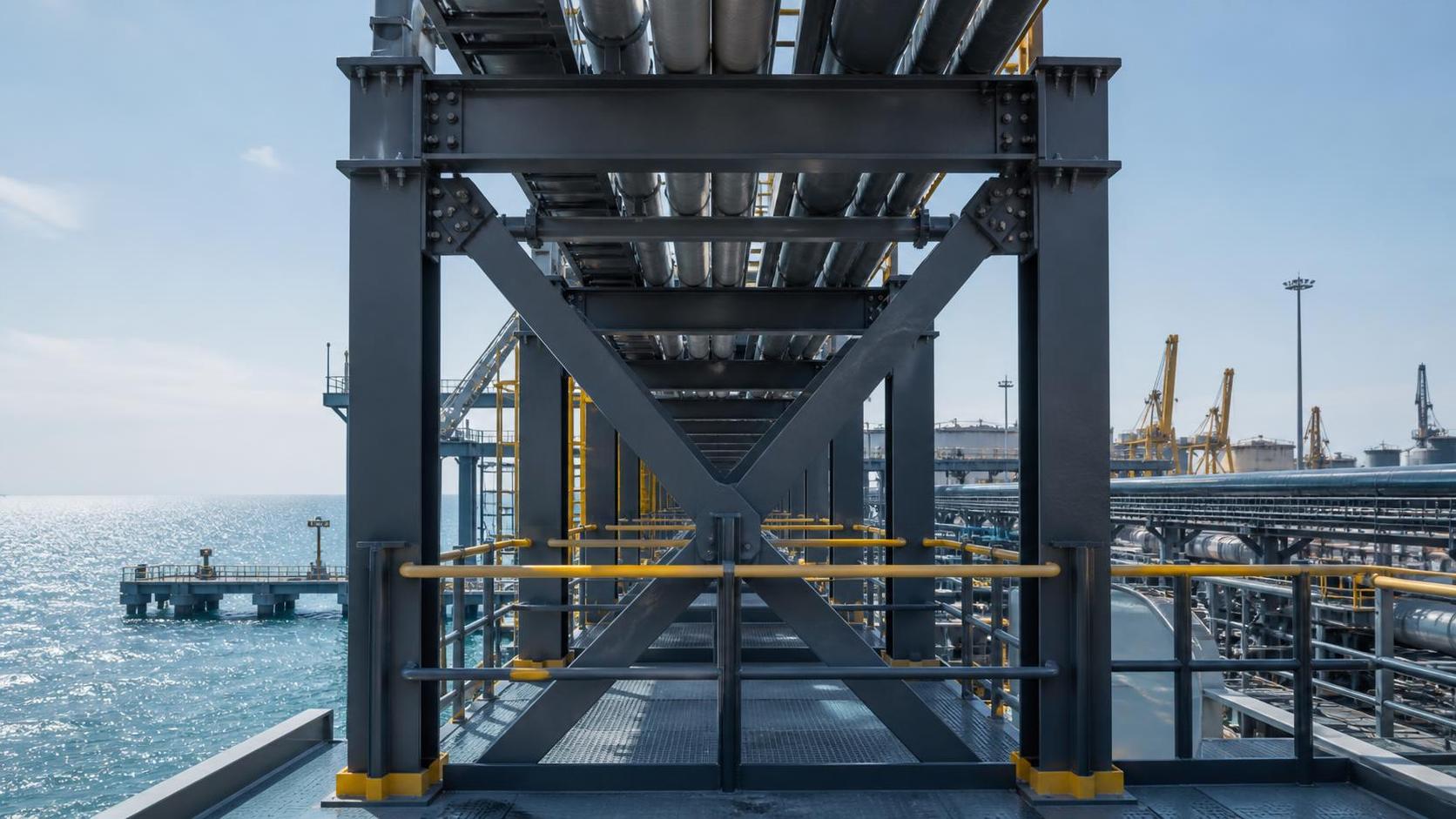
A coating selection often becomes urgent only after the first signs of trouble appear: rust bleeding from bolt edges, blistering around welds, or a topcoat that still looks intact while corrosion advances beneath it. On a coastal processing structure, port conveyor, bridge component, or exposed plant utility, these defects can interrupt access, complicate maintenance planning, and create disagreement about whether the cause was the paint, the preparation, or the original specification.
The difficult part is that a “marine-grade” label is not a coating specification. A system that performs well on a protected exterior wall may fail early on a salt-laden steel handrail, an intermittently wet access platform, or a tubular structure exposed to wind-driven spray. When selecting for a C5M ISO 12944 environment, the decision has to begin with the actual exposure and the condition of the asset, not with a preferred brand, resin type, or familiar paint schedule.
Start by separating atmospheric exposure from immersion
The term C5-M has long been used in project documents to describe very high corrosivity in marine atmospheric conditions. Depending on the edition of ISO 12944 referenced by a contract, current terminology may instead use C5 for very high corrosivity or distinguish more extreme environments separately. That difference matters. Before comparing coating systems, confirm the exact edition, designation, durability expectation, and test requirements named in the project documents.
More importantly, establish whether the steel is actually in an atmospheric service. A surface that is continuously submerged, buried, exposed to tidal movement, or subject to persistent standing water should not be treated as a standard C5-M atmospheric surface. The corrosion mechanism, coating stresses, and suitable system types can be different. A specification that treats splash-zone steel like ordinary exposed structural steel may look complete on paper while leaving the most demanding areas under-protected.
At the earliest review stage, divide the asset into exposure zones rather than assigning one coating system to every steel item. Typical distinctions include:
- Open marine atmosphere with salt deposition but good drainage;
- Partially sheltered steel where deposits remain wet for long periods;
- Undersides, crevices, brackets, and back-to-back members with poor ventilation;
- Surfaces exposed to chemical fumes, cleaning agents, fuel, or process leakage;
- Areas subject to abrasion, impact, cargo handling, or frequent contact;
- Interfaces between coated steel, stainless steel, aluminum, concrete, and fasteners.
This zoning exercise often reveals that the apparent “coating problem” is really a geometry or water-management problem. A highly durable coating cannot compensate indefinitely for sharp edges, water traps, inaccessible gaps, or joints that retain salt and moisture.
The exposure description needs more than a corrosivity label
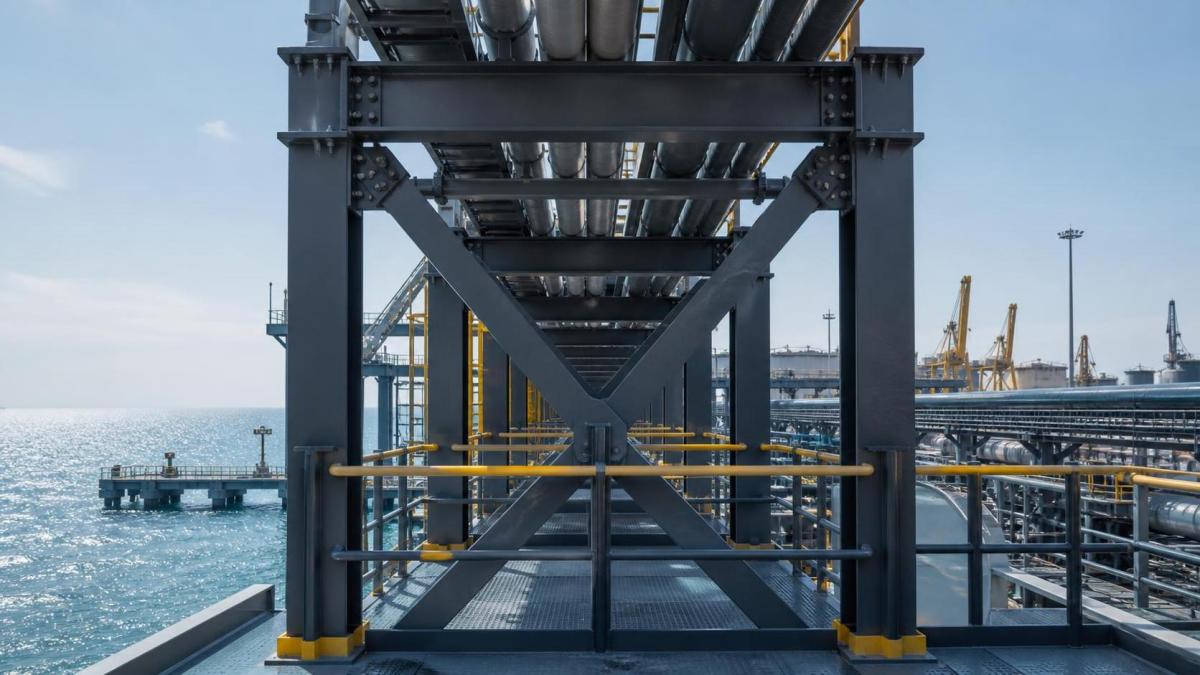
ISO 12944 provides a framework for evaluating corrosion protection, but it does not replace project-specific engineering judgment. Two structures described as coastal may face very different risks. One may be several kilometers inland with seasonal salt exposure; another may sit directly beside breaking water, receive frequent washdown, and remain damp under cladding. Treating both as identical C5M ISO 12944 applications can lead either to unnecessary cost or to an inadequate system.
Ask practical questions while the structure is still accessible. Does salt settle on horizontal members? Are surfaces rinsed naturally by rain, or protected from rain beneath decks and pipe racks? Will process heat raise the steel temperature? Is insulation planned? Can maintenance crews reach all faces for future repairs? Are there areas where condensation repeatedly forms? These answers affect resin selection, stripe-coat requirements, detailing, and the realistic maintenance interval.
Temperature deserves particular attention. Coating data sheets may state dry-film thickness and curing conditions, but the service temperature of the steel, cycling frequency, and exposure to thermal gradients also influence suitability. Likewise, an epoxy system selected for excellent barrier protection may chalk under ultraviolet exposure if it is not protected by an appropriate finish coat. Conversely, a decorative weather-resistant topcoat does not make up for an underbuilt primer and intermediate layer.
Do not choose by generic paint family alone
It is tempting to reduce the decision to a simple choice: zinc-rich primer, epoxy, and polyurethane for every severe marine structure. That approach can be useful as a starting point, but it is not a final specification. The performance of a multi-coat system depends on compatible products, total film build, curing windows, surface preparation, edge treatment, and application control. A respected resin chemistry can still perform poorly when assembled as an unverified combination.
In broad terms, the following system concepts are commonly considered for severe atmospheric service. Their suitability must be verified against the stated exposure, required durability range, and the coating manufacturer’s documented system information.
The table is not a substitute for a tested specification. It simply prevents a common error: assuming that all epoxies, zinc primers, or polyurethane finishes are interchangeable. They are not. Product-specific limits on substrate temperature, humidity, dew point, overcoating interval, and dry-film thickness should be reviewed before the system is approved.
Surface preparation usually decides whether the system gets a fair chance
For new steel, abrasive blast cleaning is frequently the basis for high-performance protection in severe atmospheric exposure. The specified preparation grade should be achievable for the actual component geometry, fabrication sequence, and site conditions. A requirement that is appropriate in a controlled workshop may be difficult to sustain on an exposed erection site during variable weather.
Preparation is not only about visible rust. Soluble salts, oil, fabrication residues, dust, weld spatter, and poor edge condition can all undermine adhesion. Salt contamination is particularly relevant near marine environments. If blasting is performed on contaminated steel without an effective cleaning process, the surface may look visually acceptable while salts remain in pits, weld areas, and rough profiles.
Edges, welds, cut-outs, bolt holes, and irregular details require specific treatment because coating tends to pull away from sharp corners during application. A stripe coat applied to these vulnerable areas before or during full-coat application can be critical. It should not be treated as a token extra pass. The specification needs to state where it applies, when it is applied, and how coverage will be checked.
For maintenance work, the honest question is not “Can the old coating stay?” but “What condition is it in, and what is it bonded to?” A retained coating should be assessed for adhesion, cracking, corrosion spread, compatibility with the proposed repair material, and thickness build-up. Coating over an aged, poorly adhered layer may conceal the defect temporarily while moving the failure plane deeper into the system.
Translate durability expectations into inspection and maintenance decisions
ISO 12944 durability ranges are planning tools for selecting protection levels; they should not be interpreted as a guarantee that corrosion will not occur before a particular date. Actual life depends on exposure severity, design, workmanship, damage, cleaning practice, and maintenance response. This distinction is useful during internal discussions because it moves the decision away from an unrealistic “paint once and forget it” expectation.
A higher-build system may be sensible where shutdown access is difficult, elevated work is expensive, or corrosion could affect operational safety. Yet maximum thickness is not automatically better. Excessive film build can introduce curing problems, solvent retention, cracking risk, or loss of flexibility, depending on the product. The selected system should therefore define both target thickness and permitted application limits for each coat.
Maintenance access should be considered before fabrication is finalized. If a bracket creates a narrow, permanently damp gap that cannot be inspected or recoated, changing the detail may provide more value than adding another coat. Drainage holes, rounded edges, sealed overlaps where appropriate, separation of dissimilar metals, and avoidance of unsealed crevices are all design choices that reduce the load placed on the coating.
A practical path from specification draft to approved system
Begin with a short exposure statement for each zone. It should identify atmospheric, splash, immersed, buried, sheltered, chemical, thermal, and abrasion conditions in plain operational language. Then link each zone to the applicable ISO 12944 category and project requirement. This prevents an atmospheric coating system from being copied into a non-atmospheric service simply because both areas are near the sea.
Next, define the substrate and its starting condition: new carbon steel, galvanized steel, metallized steel, previously coated steel, repaired weld areas, or mixed materials. The preparation method must follow from that condition. For example, a system designed for blast-cleaned new steel should not be assumed suitable for hand-tool-prepared maintenance work without explicit confirmation.
Request complete coating-system documentation rather than isolated product sheets. Review the nominated primer, intermediate and finish coats together; approved film thickness range; surface preparation requirements; climatic limits; curing and overcoating windows; compatible repair materials; and relevant test evidence required by the contract. If the project requires conformity with a particular ISO 12944 performance category, ensure the evidence relates to the proposed complete system rather than a similar product family.
Before full production, use a representative trial area when the substrate, detailing, or application environment creates uncertainty. It can reveal issues such as pinholing on rough steel, poor edge coverage, incompatibility with an existing coating, or impractical curing times. The purpose is not to create a showcase panel; it is to verify that the specified process can be repeated under real working conditions.
Control the application conditions, not just the finished appearance
A coating can look smooth and uniform while being applied outside acceptable climatic conditions. Steel temperature, air temperature, relative humidity, dew point margin, ventilation, and contamination between coats all need attention. Condensation can be invisible at the moment of application, especially on shaded steel or during changing weather. If the substrate is too close to the dew point, adhesion and long-term corrosion resistance may be compromised.
Inspection records should capture the preparation achieved, environmental readings, batch traceability where required, wet-film observations, dry-film measurements, repairs, and any nonconformities. Measurements should cover edges, difficult geometry, and representative high-risk locations rather than only broad, accessible faces. Averages can hide local thin spots, and corrosion commonly begins at those local weak points.
Finally, include a repair philosophy in the specification. Marine exposure makes accidental damage likely during transport, installation, bolt tightening, lifting, and later maintenance. The repair method should state how damaged coating will be feathered, cleaned, prepared, recoated, and allowed to cure. A well-selected C5M ISO 12944 system remains dependable only when repairs restore the protective sequence instead of merely covering visible damage.
The strongest selection is usually the one that matches exposure zone, substrate condition, preparation capability, and future maintenance access without relying on optimistic assumptions. When those elements are aligned, the coating system becomes a controlled engineering decision rather than a last-minute paint choice.
Deep Dive
Related Intelligence
 Industrial CoatingsWhy Brand Elevation Strategies Matter More Than Ever for Industrial Coatings Suppliers Targeting EU MarketsAnalyst:Lead Materials Scientist
 Industrial CoatingsWhich Corporate Case Studies Show Measurable ROI from Industrial Coatings Automation in Food Plant Maintenance?Analyst:Lead Materials Scientist
 Industrial CoatingsWhat Makes Industrial Coatings Eco-Friendly in 2026 — And Do They Meet Marine Corrosion Standards?Analyst:Lead Materials Scientist