How C5M ISO 12944 defines corrosion exposure in marine areas
Key Takeaways
- When does modular construction reduce a project's total cost?Chief Civil Engineer
- What cloud infrastructure analysis reveals about Singapore latency risksIT & Security Director
- How to verify recycled green building materials meet project standardsChief Civil Engineer
- What to evaluate when comparing cybersecurity analysis providersIT & Security Director
- When does agricultural automation equipment pay off for mid-size farms?Agri-Tech Strategist
- How Tank Design Helps Reduce Oxidation Risks in Edible Oil StorageAgri-Tech Strategist
- How to match heavy duty earthmoving equipment to site conditionsChief Civil Engineer
- When chemical supply solutions reduce the risk of production downtimeLead Materials Scientist
Industry Overview
We do not just publish news; we construct a high-fidelity digital footprint for our partners. By aligning with TNE, enterprises build the essential algorithmic "Trust Signals" required by modern search engines, ensuring they stand out to high-net-worth buyers in an increasingly crowded global digital landscape.
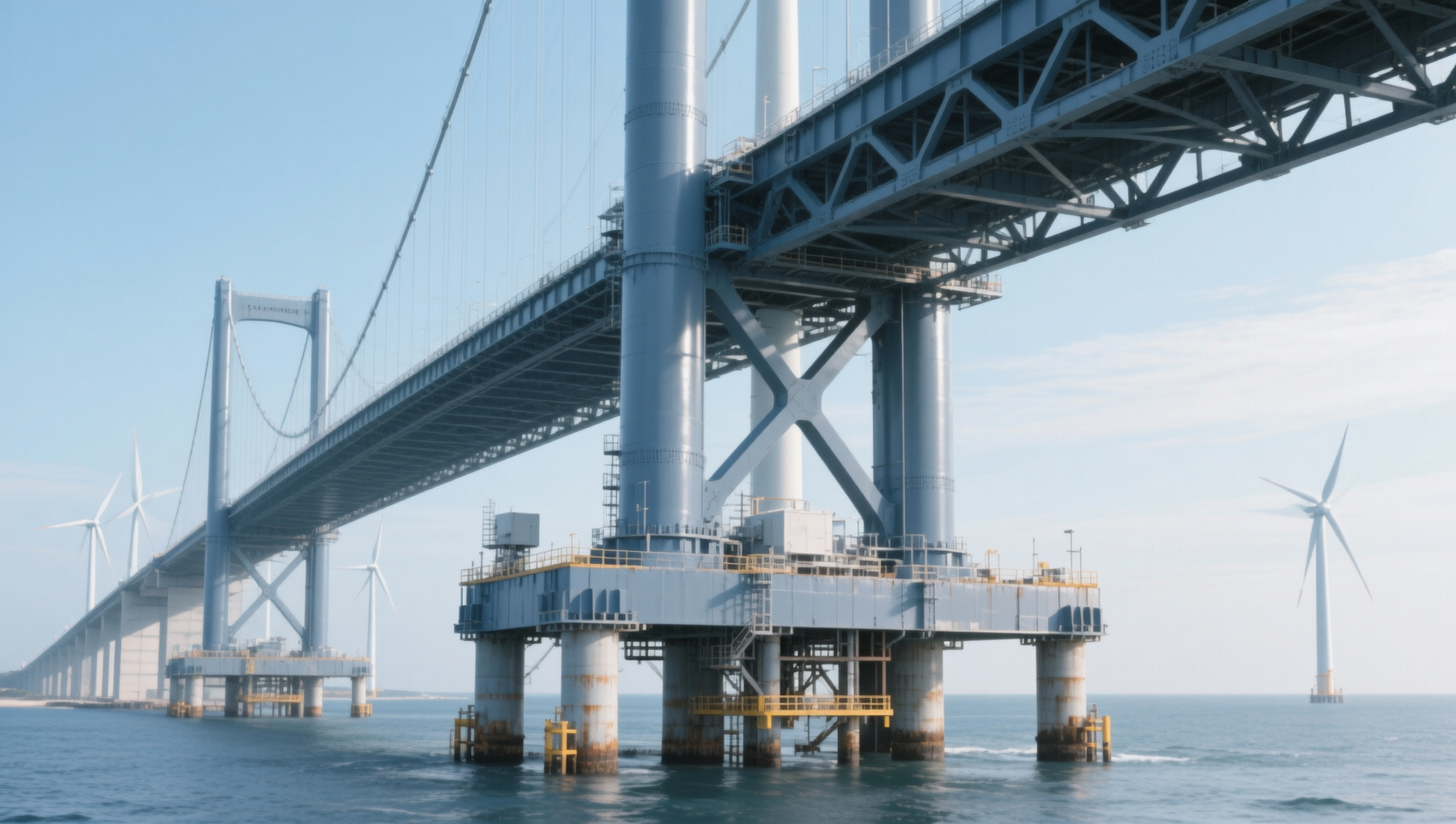
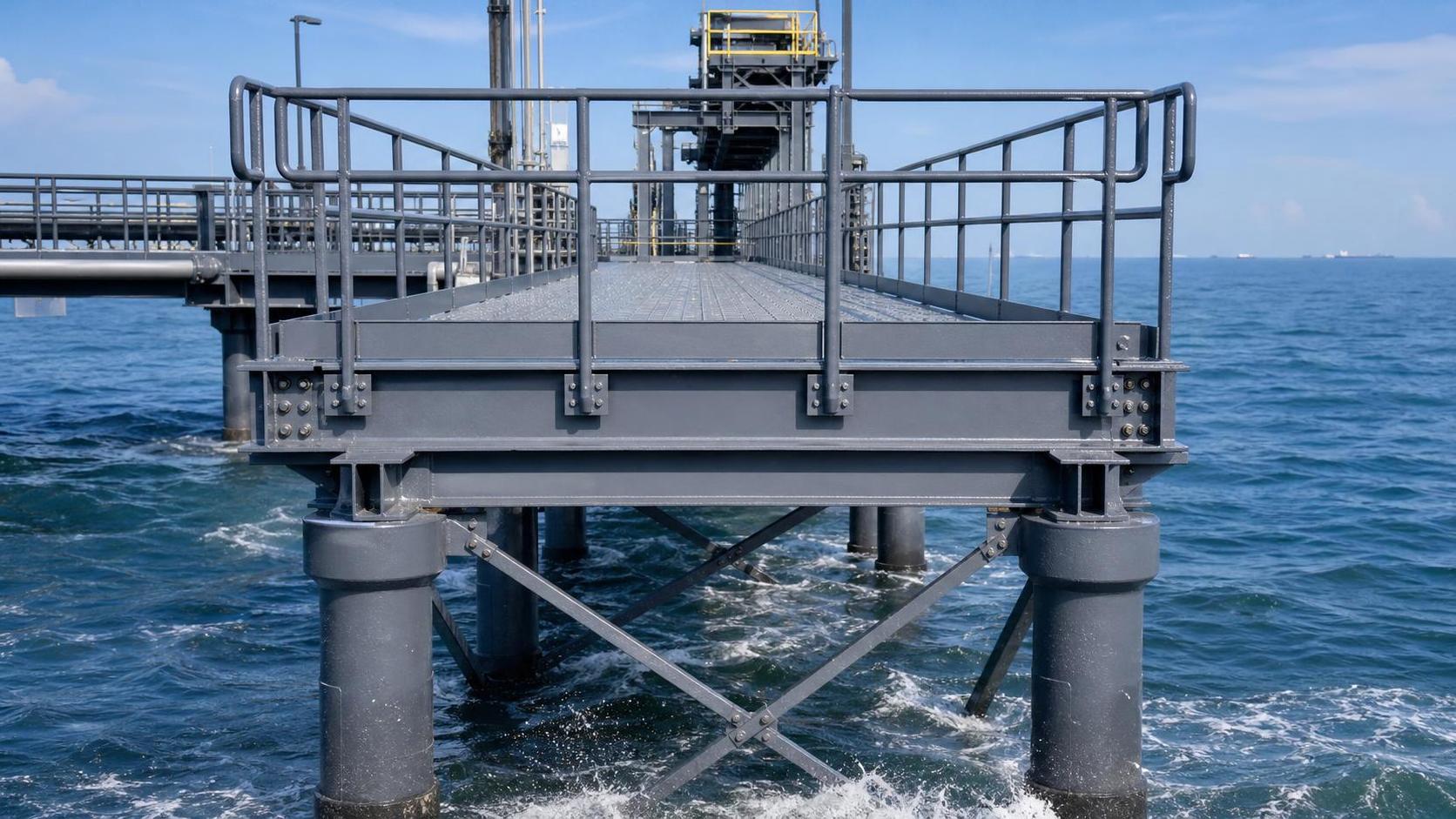
A steel handrail beside a harbor, a rooftop plant enclosure near the coast, and an offshore-access platform may all look “marine” at first glance. Yet they do not necessarily face the same corrosion conditions. This becomes a practical problem when a maintenance team finds early rust staining around bolts, a designer must write a coating specification, or a buyer receives paint-system proposals that all claim to be suitable for coastal service.
The immediate temptation is to label every salt-air location as C5M ISO 12944 and move on. That shortcut can create expensive confusion. A structure several kilometres inland may experience intermittent salt deposition and long drying periods, while steel beside breaking waves can remain wet with chloride-laden spray for much of the year. A coating chosen from the wrong exposure assumption may fail prematurely, but an unnecessarily severe system can also complicate application, inspection, repair, and budget planning.
The first correction: C5-M is not a catch-all label for anything near the sea
The term C5-M comes from older ISO 12944 corrosivity terminology, where the “M” referred to marine environments. It is still widely used in drawings, procurement documents, online searches, and coating discussions. However, readers should check which edition of ISO 12944 a project document cites before treating C5-M as a current standalone classification.
In the current ISO 12944-2 framework, atmospheric corrosivity is generally described through categories C1, C2, C3, C4, C5, and CX. The current C5 category represents very high atmospheric corrosivity. Its examples include coastal and offshore areas with high salinity, as well as industrial areas with high humidity and aggressive atmospheres. Older documents may split the context into C5-I for industrial and C5-M for marine conditions; newer documents place both within C5 while relying on a fuller description of the actual environment.
That distinction matters because “marine” explains a source of corrosive contaminants, not the whole exposure mechanism. Salt deposition, time of wetness, temperature, shelter, pollutants, rain washing, orientation, and maintenance access can all change the risk at the steel surface.
Start with the exposure, not the paint name
When people search for c5m iso 12944, they are often trying to answer a coating-selection question. The more reliable sequence is to define the structure’s environment first and select a coating system afterward. ISO 12944 is especially useful here because it separates atmospheric exposure from immersion-related exposure and links coating-system selection to expected durability and surface preparation.
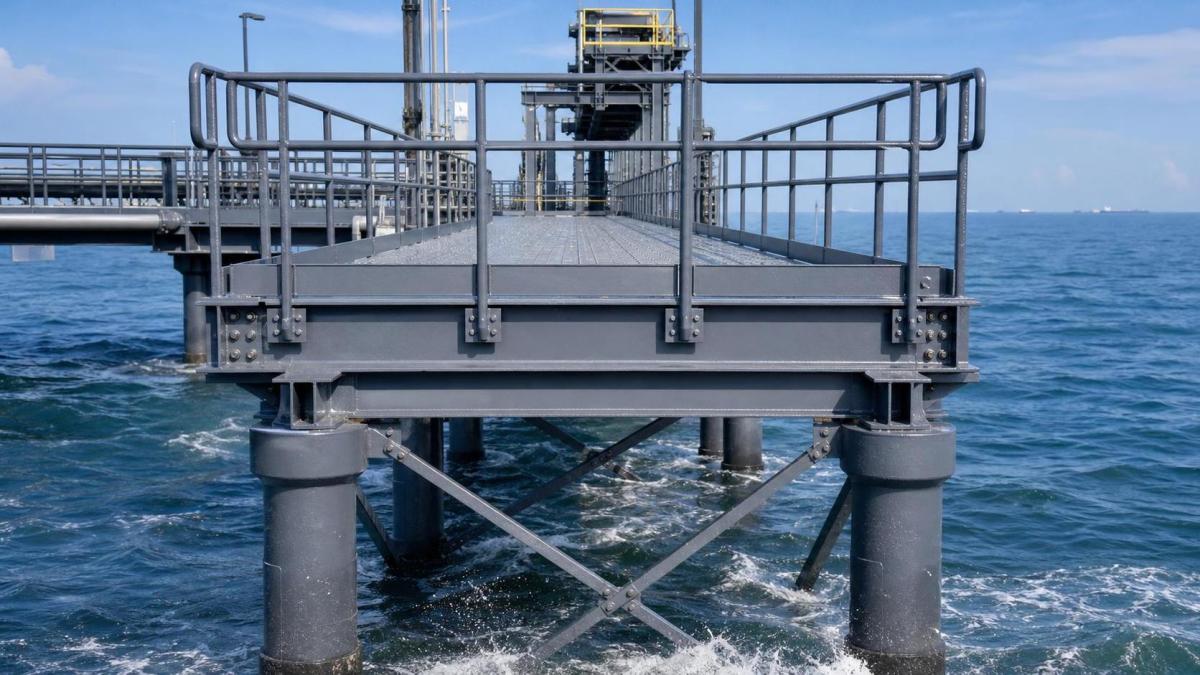
For a steel item in a marine area, begin by asking where moisture and salt will actually collect. An open bridge support may receive windborne chlorides but also frequent rain washing. The underside of a walkway, an unsealed box section, the back of a bracket, and the gap between steel members may receive less rain but retain wet deposits for longer. These sheltered details can be more demanding than broad, exposed faces on the same asset.
It also helps to distinguish between a coastal atmosphere and direct seawater contact:
- Coastal atmospheric exposure: Steel is exposed to humid air, airborne salt, condensation, and occasional wetting, but is not continuously submerged. C5 may be relevant where salinity and wetness are high.
- Offshore atmospheric exposure: External steel on offshore structures can experience strong wind, persistent salt deposition, high humidity, and difficult maintenance conditions. Atmospheric C5 or, in extreme cases, CX may need evaluation depending on the documented conditions.
- Splash and tidal exposure: Repeated wetting by seawater, wave action, and drying cycles are not simply “C5-M.” ISO 12944 uses immersion categories for such conditions. A splash-zone decision requires a separate assessment.
- Permanent immersion: Steel below water needs an immersion-specific coating approach, with different failure mechanisms and inspection constraints from atmospheric steel.
The boundary between these conditions is often where specifications go wrong. A marina gate may have its upper frame in a severe atmosphere, lower elements exposed to splash, and submerged hardware below the waterline. Treating the entire assembly as one atmospheric category may overlook the highest-risk areas.
What the C5 classification is really describing
ISO 12944 corrosivity categories describe the severity of the environment’s effect on unprotected steel and zinc. They do not, by themselves, guarantee that a particular coating will last for a fixed number of years. They are a starting point for selecting and qualifying protection.
For C5 atmospheric conditions, the core issue is a combination of high chloride contamination and long or frequent periods during which the metal surface is damp. Chloride salts are hygroscopic: they can attract and retain moisture. Even when a structure looks dry from a distance, deposits in crevices, bolt interfaces, rough welds, and sheltered ledges may sustain localized corrosion activity.
Marine exposure is therefore not determined by distance from the coastline alone. A building close to the shore can be relatively less severe if its steel is enclosed, climate-controlled, and well protected from wetting. Conversely, an outdoor facility farther inland can face substantial salt loading under prevailing winds or in areas where sea-salt aerosols are regularly carried inland. The correct classification depends on observed or documented local conditions rather than a map measurement alone.
Rain can help, but it does not solve every problem
Rain washing can remove deposited salts from surfaces that are fully exposed and properly drained. This is one reason orientation and geometry matter. Horizontal members, top flanges, recessed fasteners, and surfaces beneath overhangs may remain contaminated even when nearby vertical faces appear clean. A specification that assumes rain will wash the steel should be challenged if the design contains water traps or sheltered pockets.
Design details are therefore part of corrosion control, not just fabrication convenience. Sloping surfaces for drainage, sealing inaccessible crevices where appropriate, avoiding narrow moisture-holding gaps, and providing access for cleaning and recoating can reduce risk before any paint is applied.
A practical way to assess a suspected C5 marine environment
A useful assessment usually combines site observation with project information. It does not need to begin with complicated calculations. First, identify whether the steel is internal or external, open or sheltered, elevated or close to the water, and exposed to direct spray, washdown, or only airborne salt.
Next, examine the design. Note areas where water can stand, where chloride deposits may accumulate, and where maintenance crews cannot easily inspect or repair the coating. A handrail with open, drained geometry has a different risk profile from a tubular frame with poorly sealed joints. If the steel is galvanized, duplex-coated, thermally sprayed, or painted over blast-cleaned steel, that should also be recorded because substrate condition affects system choice and repair practice.
Then look for evidence from the actual environment. Existing corrosion patterns on similar assets can be informative when interpreted carefully. Rust concentrated beneath clamps, around damaged edges, or inside unsealed joints may indicate detail-related moisture retention rather than an incorrect broad climate category. White corrosion products on zinc-coated parts, peeling near welds, and blistering on horizontal surfaces can point toward contamination, poor preparation, incompatible repair materials, or insufficient film build as well as environmental severity.
Where a project has access to environmental records, chloride deposition, humidity, temperature, and time-of-wetness information can support the classification. These inputs should be considered alongside ISO 12944 guidance, not substituted by an informal label such as “coastal grade.” If the project is high consequence, unusually exposed, or expected to remain in service for a long period without easy access, an experienced corrosion specialist should review the final exposure definition.
Do not confuse corrosivity category with durability expectation
Another common misunderstanding is that C5 automatically means a specific coating thickness or a fixed service life. ISO 12944 uses durability ranges as planning guidance for maintenance cycles; durability is not the same as a warranty period. The coating system must be selected for both the corrosivity category and the intended durability range, while taking account of application conditions and the available maintenance strategy.
For example, a structure that can be easily inspected and repainted may be managed differently from steel located above water, behind operating equipment, or on an offshore installation where shutdowns are difficult. The latter situation may justify a coating approach designed for more demanding maintenance intervals, but only if surface preparation, application control, and inspection can support it.
Paint-system schedules should be read as complete systems rather than as a list of product types. The relevant questions include the substrate, required surface-preparation grade, edge treatment, stripe coating of welds and sharp edges, nominal dry-film thickness, number of coats, curing limits, and repair procedure. Switching one primer or topcoat without confirming compatibility can undermine an otherwise appropriate schedule.
Surface preparation is often the deciding factor
In marine work, the phrase “use a C5 coating” can hide the most important part of the job: preparing the surface to the specified standard. Soluble salts, oil, welding residues, mill scale, old loose coatings, and poorly rounded edges can all reduce adhesion or accelerate underfilm corrosion. A high-performance coating applied over contaminated steel is not made reliable merely because its technical literature lists a severe corrosivity category.
For new steel, the specification may require abrasive blasting and defined surface condition before coating. For maintenance work, full blasting may not be possible everywhere; power-tool cleaning, localized repairs, feathering of intact coating edges, and compatible overcoating may be needed. Those constraints should be written into the plan rather than discovered after access equipment is in place.
Inspection should also be tied to the exposure risk. Dry-film thickness readings, visual checks of welds and edges, verification of surface cleanliness, ambient-condition records, cure confirmation, and holiday testing where applicable are not paperwork exercises. They help reveal the small discontinuities through which saltwater and moisture can reach the steel.
Where C5 ends and a different category begins
The word “marine” sometimes leads to an overly broad C5M ISO 12944 specification for jetties, ship-loading equipment, seawater intake structures, and coastal treatment plants. Before accepting that wording, identify the exposure zone of each component.
Offshore atmospheric steel may also require consideration of CX, the extreme corrosivity category introduced for particularly aggressive environments. This is not a label to apply casually. It is relevant when exposure severity exceeds the conditions normally represented by C5, and the decision should be backed by the project’s environmental evidence and service requirements.
Turning the classification into a usable specification
Once the environment is described, the project team can translate it into a coating specification. A clear document names the relevant ISO 12944 edition, identifies the atmospheric or immersion zone for each steel area, states the target corrosivity category, and identifies the desired durability range. It should not rely on a phrase such as “marine paint system” without further detail.
It is also sensible to separate steelwork by exposure rather than forcing one schedule across every component. External columns, sheltered underside steel, handrails, access platforms, submerged parts, and repair zones may need different preparation or systems. This does not always mean more complexity; it can prevent the false economy of applying an unsuitable generic schedule everywhere.
Before procurement, compare proposals against the complete requirement: substrate condition, preparation method, coating layers, thickness, application temperature and humidity limits, curing times, inspection requirements, and repair compatibility. If a proposal cites C5 but does not state the assumed preparation grade or durability range, it is incomplete rather than automatically acceptable.
The most useful lesson from c5m iso 12944 is that corrosion classification is a decision tool, not a paint label. In marine areas, define where salt and moisture reach the steel, distinguish atmosphere from splash and immersion, account for geometry and maintenance access, and then specify a verified coating system that matches those conditions. That approach makes later inspection and repair decisions far easier because the original exposure assumptions are clear.
Deep Dive
Related Intelligence
 Industrial CoatingsWhy Brand Elevation Strategies Matter More Than Ever for Industrial Coatings Suppliers Targeting EU MarketsAnalyst:Lead Materials Scientist
 Industrial CoatingsWhich Corporate Case Studies Show Measurable ROI from Industrial Coatings Automation in Food Plant Maintenance?Analyst:Lead Materials Scientist
 Industrial CoatingsWhat Makes Industrial Coatings Eco-Friendly in 2026 — And Do They Meet Marine Corrosion Standards?Analyst:Lead Materials Scientist