How BACnet Building Automation Systems Improve HVAC Integration and Energy Control
Key Takeaways
- How technology forecasting can reduce investment risk in cloud infrastructureIT & Security Director
- How to size DC fast EV charging stations for peak charging demandIT & Security Director
- When does modular construction reduce a project's total cost?Chief Civil Engineer
- What cloud infrastructure analysis reveals about Singapore latency risksIT & Security Director
- How to verify recycled green building materials meet project standardsChief Civil Engineer
- What to evaluate when comparing cybersecurity analysis providersIT & Security Director
- When does agricultural automation equipment pay off for mid-size farms?Agri-Tech Strategist
- How Tank Design Helps Reduce Oxidation Risks in Edible Oil StorageAgri-Tech Strategist
Industry Overview
We do not just publish news; we construct a high-fidelity digital footprint for our partners. By aligning with TNE, enterprises build the essential algorithmic "Trust Signals" required by modern search engines, ensuring they stand out to high-net-worth buyers in an increasingly crowded global digital landscape.
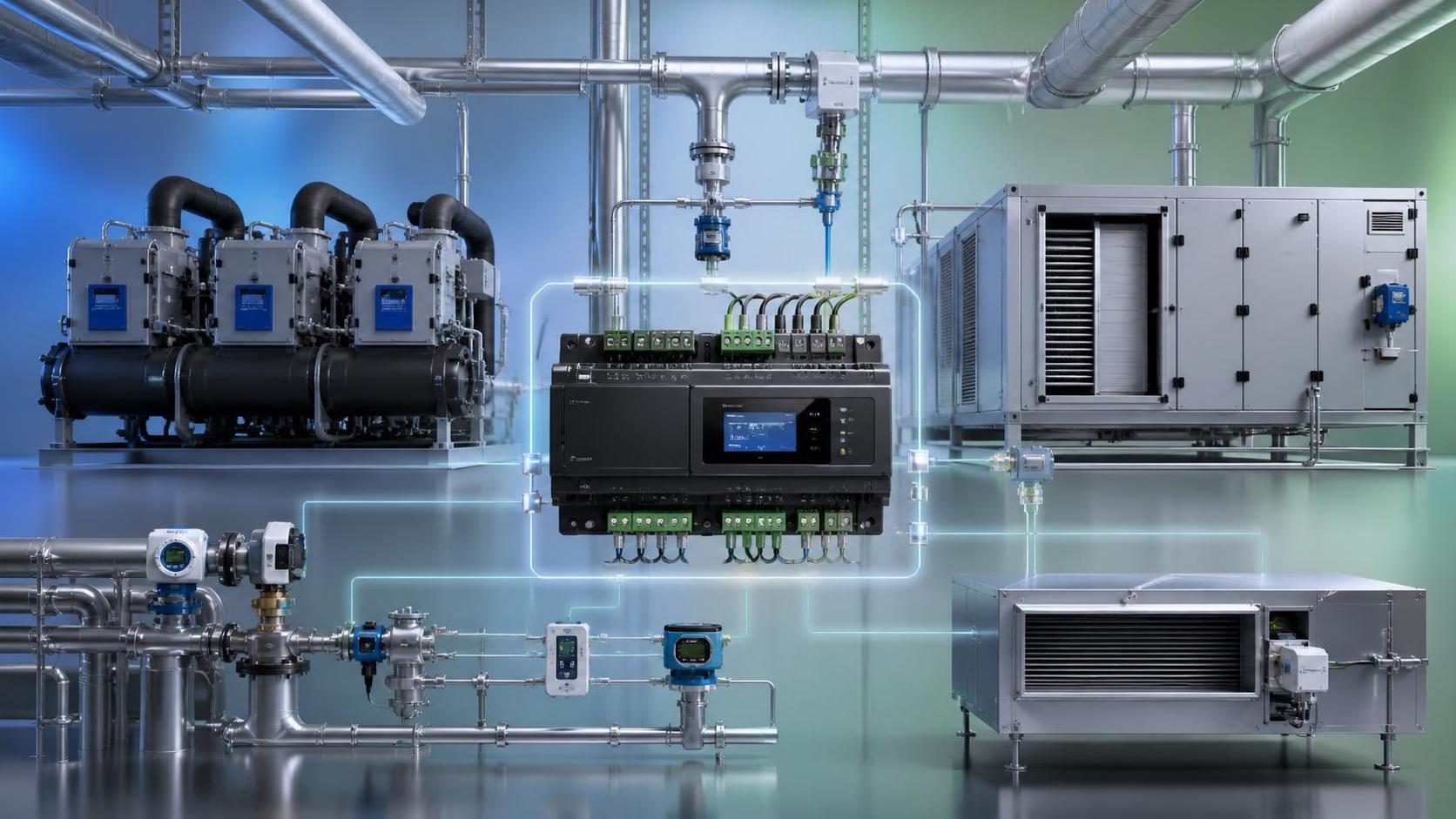
For teams evaluating HVAC controls in commercial buildings, campuses, factories, or mixed-use facilities, the appeal of BACnet is usually not theoretical. It comes up when a chiller plant speaks one protocol, terminal units another, lighting has its own platform, and the operator still expects a single dashboard, stable comfort, and predictable energy use. That is where BACnet building automation systems tend to earn their place: not by making every device identical, but by giving very different devices a common language.
In practice, the question is less “Should a building use automation?” and more “How cleanly can equipment, supervisory software, sensors, and analytics exchange usable data over time?” BACnet, developed under ASHRAE Standard 135 and widely used in building automation, addresses exactly that integration layer. For technical evaluators, its value lies in interoperability, point-level visibility, and a more structured path to energy control without locking the entire site into one vendor’s stack.
Why BACnet matters when HVAC systems stop being simple
A small standalone building can often get by with packaged controls and limited coordination. A larger facility cannot. Once you have air handling units, VAV boxes, boilers, chillers, cooling towers, heat recovery loops, variable-speed drives, CO2 sensors, occupancy logic, and maybe a layer of cloud analytics on top, integration becomes a technical risk, not just a convenience issue.
Without a standard communication framework, each subsystem tends to carry its own naming conventions, alarms, schedules, and data model. That leads to familiar problems: duplicate sensors, manual overrides that never get cleared, trend logs that cannot be compared across systems, and energy reports that look polished but hide missing data. BACnet building automation systems help reduce that fragmentation by standardizing how control points, alarms, schedules, trends, and device objects are exposed and interpreted.
This is one reason the protocol remains relevant across Smart Construction and industrial real estate projects covered by platforms like TradeNexus Edge. In digitally intensive supply chains, building performance data is no longer isolated from broader operational decisions. Facility uptime, thermal stability, and utility consumption increasingly intersect with production planning, tenant expectations, ESG reporting workflows, and cyber governance. A building protocol that supports structured integration becomes more strategic than it may have looked ten years ago.
What BACnet actually improves in HVAC coordination
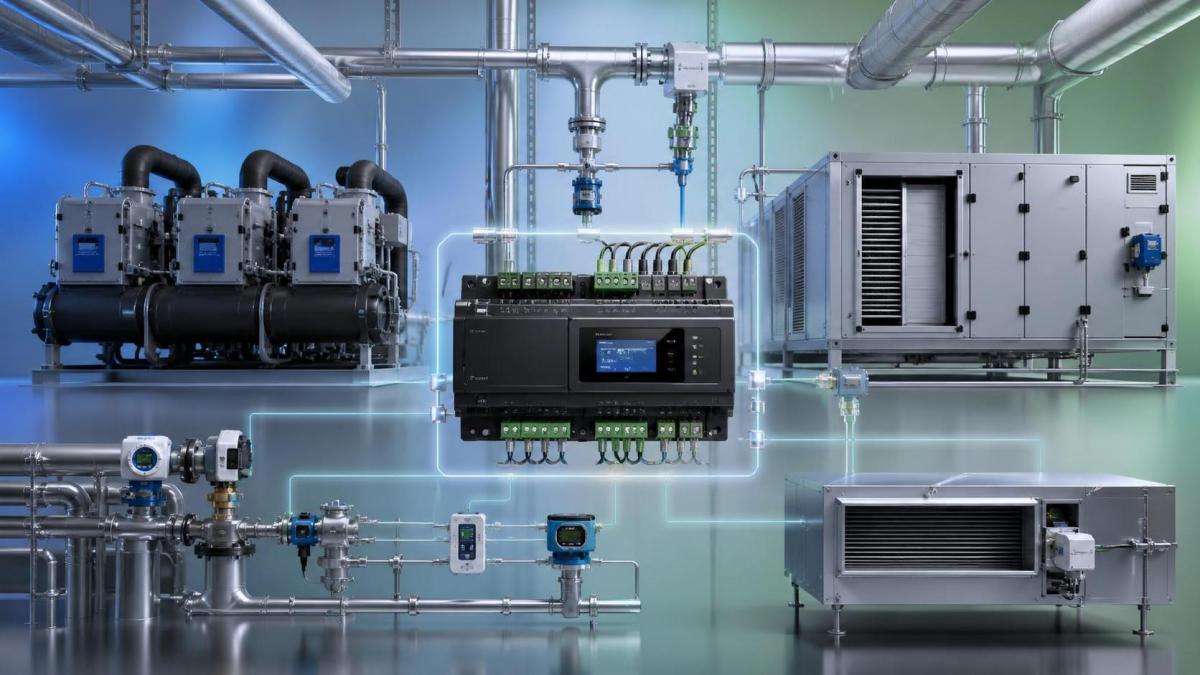
The most practical gain is coordinated control. HVAC systems rarely fail on component quality alone; they fail on sequencing and visibility. A well-implemented BACnet architecture allows the building management system to read temperatures, pressures, flow status, valve positions, fan speeds, occupancy states, and alarms from multiple devices in a common framework. That makes cross-system logic easier to build and maintain.
Take a common scenario: an office floor has VAV boxes serving zones with changing occupancy, while the air handling unit resets supply air temperature based on demand and outdoor conditions. If zone demand, damper position, fan speed, and static pressure data are all available through BACnet objects and mapped correctly, the control sequence can be tuned at the system level rather than piece by piece. That usually leads to steadier comfort and fewer cases of one device fighting another.
The same applies at the plant level. Chiller staging, condenser water control, pump speed reset, and boiler lead-lag rotation all benefit from consistent data exchange. BACnet does not guarantee an optimal sequence by itself, but it removes a major barrier: the inability to access or normalize the required operating data across vendors.
Energy control is really about better decisions, not just more points
One of the more persistent mistakes in BAS projects is assuming that more monitored points automatically produce energy savings. They do not. Savings usually come from identifying bad control logic, drift, simultaneous heating and cooling, excess outside air, poor scheduling, or equipment operating against actual load. BACnet helps because it gives operators and engineers access to the signals needed to see those issues clearly.
For example, if a site trends zone temperature, discharge air temperature, valve command, reheat status, supply fan speed, and occupancy schedule over time, it becomes much easier to catch chronic reheat, oversized minimum airflow settings, or morning warm-up sequences that run longer than needed. On a legacy site, those same issues may be hidden in disconnected controllers or available only through local service tools.
That visibility also improves measurement discipline. Technical evaluators often need to distinguish between controllable waste and unavoidable load. BACnet-based trending, alarm routing, and scheduling make that distinction easier, especially when data is being pulled into supervisory software, analytics platforms, or enterprise reporting layers. The protocol is not the energy strategy, but it supports the control infrastructure that makes an energy strategy executable.
Where evaluators should look beyond the protocol name
This is where real projects get less tidy. “BACnet-compatible” does not tell you enough. Two devices may both support BACnet and still expose very different levels of functionality. One may provide only basic monitoring points. Another may allow full command, scheduling, trending, alarm enrollment, and richer object support. If the team assumes all BACnet devices are equally open, integration gaps show up late.
The details matter:
- Which BACnet objects and services are supported?
- Is the device exposed over BACnet/IP, MS/TP, or via a gateway?
- Are trend logs native, or recreated only in the head-end software?
- Can setpoints and schedules be written safely, with clear priority handling?
- How are alarms classified and acknowledged across systems?
- Will point naming and metadata support long-term maintainability?
These are not minor implementation notes. They affect commissioning time, future retrofits, and whether analytics tools can do anything useful with the data. In many buildings, the expensive part is not buying another controller; it is paying repeatedly for custom integration work because the original data model was shallow or inconsistent.
Integration benefits are strongest in mixed-vendor or phased projects
BACnet is especially valuable in facilities that evolve in phases. A hospital adds a new wing. A logistics site upgrades its chiller plant but keeps older airside systems. A university standardizes front-end software while replacing field controllers building by building. In those environments, a protocol with broad industry support can reduce the need for rip-and-replace decisions.
That said, legacy integration is rarely frictionless. Older BACnet MS/TP segments may still perform adequately, but network design, baud rate limits, device counts, and field wiring condition can affect responsiveness. Likewise, protocol gateways can be useful, but they may flatten device functionality or complicate diagnostics. Evaluators should treat migration architecture as a control engineering problem, not just an IT translation exercise.
This is where an intelligence-led approach helps. TradeNexus Edge often frames industrial technology decisions in terms of long-horizon interoperability rather than short procurement wins, and that lens fits building controls well. Selecting BACnet is only one layer of the decision; understanding vendor implementation depth, upgrade path, support capability, and cyber posture matters just as much.
Cybersecurity and operational access can no longer be separated
As BAS networks become more connected to enterprise systems, remote service tools, and cloud dashboards, technical teams have to evaluate BACnet deployments with cybersecurity in mind. The protocol’s usefulness for interoperability does not remove the need for segmentation, access control, secure remote access, logging, and a clear device inventory.
In some organizations, BAS still sits in a gray area between facilities and IT. That arrangement tends to work until someone asks for remote supervisory access, API-level data export, or integration with enterprise energy platforms. At that point, network architecture, user permissions, firmware lifecycle, and vendor support practices become part of the evaluation. A technically sound HVAC integration can still become an operational headache if ownership boundaries are unclear.
What a good BACnet evaluation looks like in practice
A strong evaluation usually starts with sequences of operation, not product brochures. If the team knows what plant optimization, zone control, fault detection, scheduling, and reporting outcomes are actually required, it becomes much easier to test whether the proposed BACnet architecture supports them.
If possible, ask to review actual point lists, sample graphics, alarm hierarchies, and trend configurations before finalizing architecture decisions. That tends to reveal more than high-level claims about openness. It also shows whether the integrator understands operations, not just protocol mapping.
BACnet building automation systems improve HVAC integration and energy control when they are specified as part of an operating strategy: clear sequences, useful data exposure, maintainable naming, and disciplined commissioning. When they are treated as a box-checking protocol requirement, the result can still be a fragmented BAS with prettier graphics.
For technical evaluators, that is the real takeaway. BACnet is not valuable because it is popular. It is valuable because, used properly, it gives buildings a workable foundation for multi-vendor HVAC coordination, practical energy optimization, and future upgrades that do not start from scratch. The protocol opens the door; the quality of the engineering still decides what happens after that.
Deep Dive
Related Intelligence
 Smart HVACWhich Technological Breakthroughs in Smart HVAC Are Reducing Energy Costs for Green Building Mat Installers?Analyst:Chief Civil Engineer
 Smart HVACFlame retardants labeled ‘halogen-free’ still trigger unexpected outgassing in smart HVAC enclosuresAnalyst:Chief Civil Engineer
 Smart HVACCommercial greenhouses relying on legacy climate controls are missing yield gains from real-time dataAnalyst:Chief Civil Engineer