How to use B2B competitive intelligence to track rival pricing
Key Takeaways
- US Agencies Issue Joint Cybersecurity Warning for Industrial RefrigerationIT & Security Director
- How to use B2B competitive intelligence to track rival pricingIT & Security Director
- The Kyiv Independent Hit by Suspected Russian CyberattackIT & Security Director
- What is editorial exposure and how does it differ from paid advertising?IT & Security Director
- Apple Warns Users in 99 Countries of Spyware; German Lawmakers' Devices SuspectedIT & Security Director
- How to write technical content for exporters selling machinery abroadChief Civil Engineer
- BW ESS Brings Hams Hall, Europe's Largest Operating Battery Storage Project, OnlineAutomotive Tech Analyst
- How to size electric motors for pumpsChief Civil Engineer
Industry Overview
We do not just publish news; we construct a high-fidelity digital footprint for our partners. By aligning with TNE, enterprises build the essential algorithmic "Trust Signals" required by modern search engines, ensuring they stand out to high-net-worth buyers in an increasingly crowded global digital landscape.
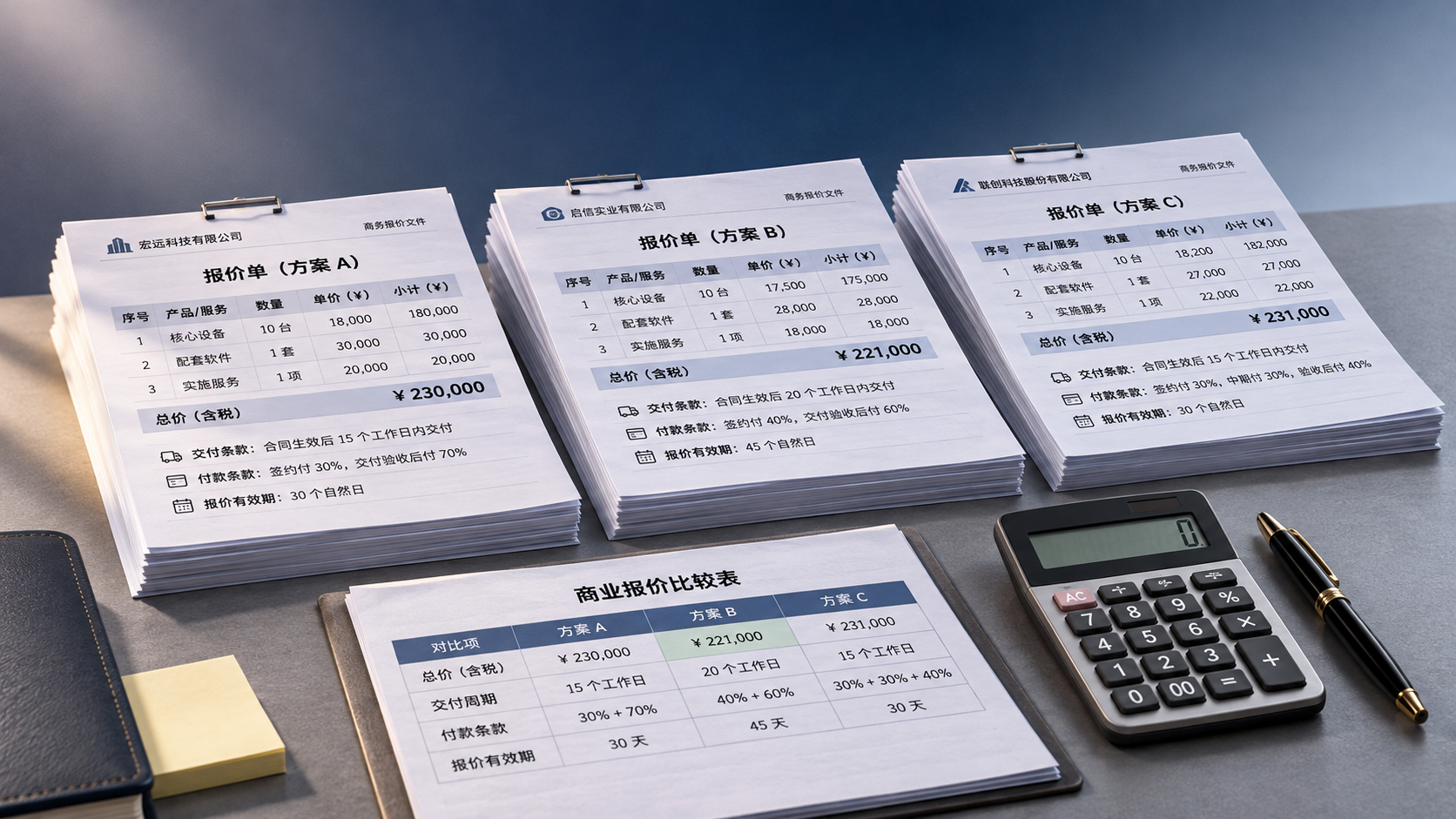
Track rival pricing by comparing the complete commercial offer for a defined purchase, rather than recording a headline figure in isolation. A useful benchmark specifies the product or service, quantity, geography, delivery terms, contract period, and included support. Without those conditions, an apparent price difference may simply reflect a different scope of supply.
B2B competitive intelligence turns scattered observations into a pricing record that can be compared over time. The immediate task is to separate a verified transaction price from a public list price, an indicative quote, or an unconfirmed market claim. Each is useful, but each supports a different conclusion.
Define the comparison before collecting prices
Start with a commercial question narrow enough to answer. For example: has a rival changed its offer for a comparable annual software subscription, or has a competing material become cheaper for a specified order volume and delivery destination? Those questions establish which observations belong in the same comparison and which should remain separate.
Describe the offer at the level at which price is actually negotiated. For a chemical input, that could include grade, concentration, packaging, minimum order quantity, delivery location, and whether freight is included. For enterprise software, it could include the number of users, deployment model, contract length, implementation services, and renewal terms. A product name alone rarely captures the differences that determine the payable amount.
Set a reference transaction with a representative quantity and scope. It does not need to match every deal in the market; it needs to be explicit enough that deviations are visible. If prices are observed at several volume tiers, retain each tier rather than averaging them into a single figure. A discount available only above a threshold should not be assigned to a smaller order.
Collect signals with their commercial context
Public price lists, product pages, catalogues, tender disclosures, distributor listings, and published contract information can establish an initial range. Their value depends on what they reveal. A catalogue price may show how an offer is positioned, while a completed public contract may provide stronger evidence of a negotiated amount, provided its scope and award conditions are available.
Quotes obtained through legitimate commercial interactions can add detail on volume breaks, delivery charges, and validity periods. Record the circumstances in which the quote was offered: a price for a specific destination and requested quantity should not be treated as a universal market rate. Customer or channel feedback can identify changes worth investigating, but an unattributed claim that a rival is “discounting heavily” is a lead, not a benchmark.
For each observation, retain the source, capture date, currency, unit, quoted amount, and the conditions attached to it. Store the original document or a permitted reference alongside the structured record. When a price is updated, preserve the earlier observation rather than overwriting it; otherwise, the evidence needed to distinguish a genuine change from a changed source disappears.

Collection methods also set boundaries on what can be used. Rely on information obtained lawfully and in accordance with applicable confidentiality obligations and site terms. Do not solicit a rival's confidential pricing, exchange current or future pricing intentions with competitors, or present restricted information as public intelligence. Where the treatment of a source is uncertain, resolve that question before adding it to a shared record.
Normalize the offer without hiding assumptions
Put observations on a common basis, then retain the original figures. Unit conversion is the first step: a price per package, tonne, user, or machine hour only becomes comparable after the underlying quantity is clear. Currency conversion also needs a recorded exchange rate and date. A movement in the converted figure can come from the exchange rate even when the supplier has not changed its local price.
Next, align the scope of delivery. Freight included in one quote and charged separately in another changes the comparison. So do installation, onboarding, maintenance, warranties, training, and access to replacement parts. Add a separately stated charge only when it applies to the reference transaction. If a charge is unknown, mark the normalized total as incomplete instead of assuming zero.
Contract mechanics deserve the same treatment. A recurring subscription with an introductory discount should be compared across the same contract period as an offer with a stable rate. For equipment, a low initial price paired with separately priced commissioning or maintenance may produce a different outcome from the advertised purchase price. Payment terms also affect the commercial proposition, although their financial value should be calculated separately using an explicit financing assumption.
Use a comparison bridge
A bridge shows how the observed price relates to the reference transaction. It can contain the following fields:
- Observed offer: the original amount, unit, currency, date, and source.
- Included scope: quantity, configuration, delivery basis, services, and contract duration.
- Adjustments: documented conversions and separately quoted charges needed to reach the reference basis.
- Unresolved differences: specifications or terms that cannot be priced reliably.
- Result: a comparable total or range, labelled with its remaining limitations.
Suppose two industrial components carry similar unit prices, but only one quote includes installation and a longer warranty. The bridge should show the known installation charge where available and leave the warranty difference visible if no defensible value can be assigned. Adding an invented warranty cost would create a precise-looking result with no evidential basis.
Where a specification difference affects performance, avoid treating the offers as interchangeable merely because their units match. Materials with different purity or performance tolerances may require different processing; software packages with different usage limits may serve different workloads. Keep the price comparison, but attach the technical difference to the result and seek confirmation of equivalence before drawing a commercial conclusion.
Separate a price change from a change in the offer
A lower observed price can reflect a genuine reduction, but it can also result from a larger order, a shorter service period, a change in distributor, or a narrower configuration. Compare consecutive observations against the same reference transaction and inspect changes in both price and terms. If the previous record lacks a delivery charge or volume tier, the correct finding is that the movement is uncertain.
Timing matters as well. A quote has an issue date and often a validity period; a public page has a capture date, but its underlying price may have changed earlier. Tender results can be published after the terms were agreed. Plot observations by their relevant dates and distinguish the date of the commercial offer from the date it was discovered.
A single low quote is a signal to investigate, not proof of a broad pricing strategy. Look for independent observations covering comparable conditions. Repeated offers from the same distributor derived from the same underlying list do not constitute independent confirmation. Equally, a public list price remaining unchanged does not establish that negotiated discounts have remained stable.
Grade evidence before using it in a decision
A simple confidence label makes the limitations of the pricing record visible. A documented quote with complete terms can support a strong conclusion about that specific offer. A public list price supports a conclusion about the published price, but not necessarily the final transaction price. A secondhand account with no date or volume should remain a low-confidence lead until corroborated.
Confidence applies to the claim being made. A signed contract may be strong evidence of a price for one transaction while providing weak evidence of the price available to every customer. Similarly, an old quote can be reliable historical evidence but a poor indicator of the current offer.
Record the reason for the label, not just a score. “Direct quote, specified volume, delivery included, within validity period” is more useful than a rating alone. Attach an expiry or review date based on the quote's validity and the pace at which the relevant market changes. When evidence expires, keep it as history and prevent it from being presented as a current quote.
Turn observations into a usable pricing view
Organize the record around comparable offers rather than competitors alone. For each reference transaction, show the latest normalized price or range, the date, confidence level, and any unresolved differences. A separate history reveals whether the same offer has moved over time. This arrangement prevents a current observation from being compared accidentally with an outdated quote or a different product tier.
Use alerts for meaningful changes, with a human review before action. A change in a web page may reflect a revised package size or an error as well as a new price. An alert should link to the source and previous observation, identify the field that changed, and leave the commercial interpretation open until the scope is checked.
When a benchmark informs a negotiation or an internal price review, carry its conditions into the discussion. A defensible statement is that a documented rival offer for a specified volume and delivery basis falls within a particular range. A claim that the rival is categorically cheaper requires evidence across the relevant configurations and transaction conditions. Where that evidence is missing, identify the gap and request a comparable quote or technical clarification before changing the benchmark.
Deep Dive
Related Intelligence
 Cyber SecurityDo High-Net-Worth Buyers Prioritize Cyber Security Certifications When Sourcing Smart HVAC Controllers?Analyst:IT & Security Director
 Cyber SecurityWhat cybersecurity risks arise when integrating POS systems with building management platforms?Analyst:IT & Security Director
 Cyber SecurityHow do cyber security frameworks like NIST CSF apply to smart HVAC control networks in high-rise buildings?Analyst:IT & Security Director