When do cattle monitoring systems pay off for a beef herd?
Key Takeaways
- When does modular construction reduce a project's total cost?Chief Civil Engineer
- What cloud infrastructure analysis reveals about Singapore latency risksIT & Security Director
- How to verify recycled green building materials meet project standardsChief Civil Engineer
- What to evaluate when comparing cybersecurity analysis providersIT & Security Director
- When does agricultural automation equipment pay off for mid-size farms?Agri-Tech Strategist
- How Tank Design Helps Reduce Oxidation Risks in Edible Oil StorageAgri-Tech Strategist
- How to match heavy duty earthmoving equipment to site conditionsChief Civil Engineer
- When chemical supply solutions reduce the risk of production downtimeLead Materials Scientist
Industry Overview
We do not just publish news; we construct a high-fidelity digital footprint for our partners. By aligning with TNE, enterprises build the essential algorithmic "Trust Signals" required by modern search engines, ensuring they stand out to high-net-worth buyers in an increasingly crowded global digital landscape.
A cattle monitoring system pays off when it changes a decision early enough to prevent a loss, recover labor time, or improve a reproductive outcome that the operation can actually capture. The purchase is not justified by having more animal data. It is justified when alerts lead to timely treatment, a confirmed breeding action, a faster search for a missing animal, or a more efficient use of staff across a dispersed beef herd.
That distinction matters because the same technology can be valuable on one ranch and underused on another. A large herd with limited labor, multiple grazing areas, a concentrated calving season, or costly breeding failures may gain value quickly. A smaller, closely observed herd with dependable daily handling and weak connectivity may find that the system produces more notifications than useful decisions.
The right procurement question is therefore not, “What does the device cost per head?” It is, “Which costly events are currently detected too late, and can this system reliably improve the response?”
Start with the losses the operation can realistically reduce
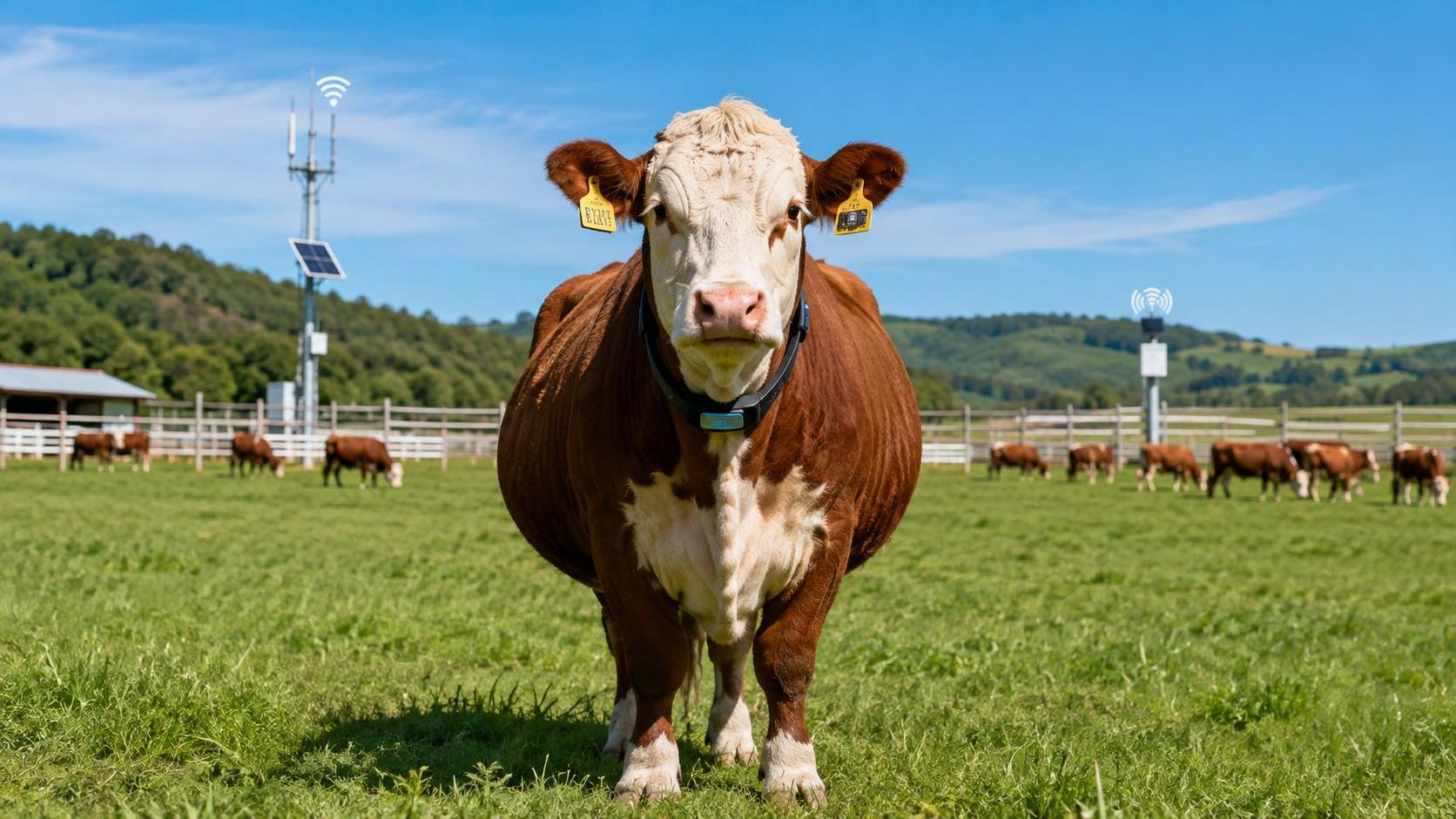
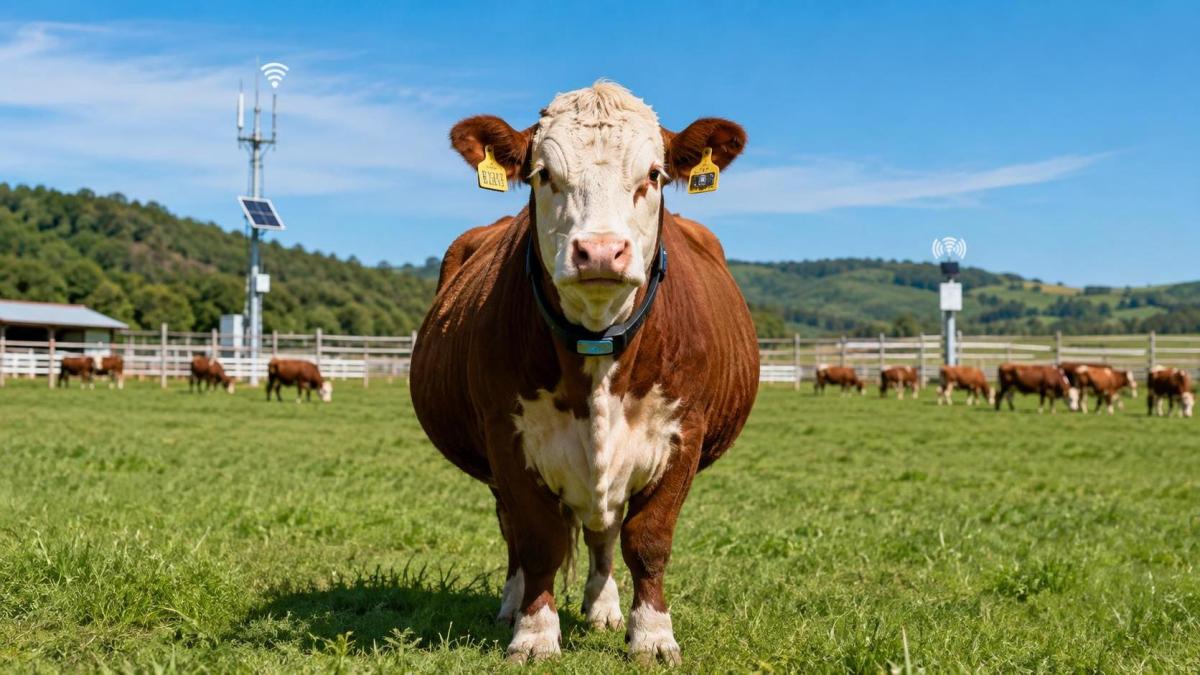
Most cattle monitoring systems use ear tags, collars, boluses, or other connected devices to capture signals such as activity, rumination, movement, location, or temperature-related changes. The data itself has no financial value until it is linked to a workflow. For a beef herd, the strongest return usually comes from a limited number of recurring operational problems.
Earlier health intervention is often the clearest value driver, particularly where cattle are not observed closely every day. A change in eating, rumination, mobility, or social behavior may appear before a problem is obvious at a distance. That does not mean the system diagnoses disease. It identifies animals that deserve a physical check. The financial benefit comes from avoiding a more severe case, reducing the chance of a lost animal, or preventing a condition from spreading unnoticed.
Breeding is another major source of potential return, but it requires discipline in the surrounding process. Heat alerts have little value when nobody is available to breed, sort, or schedule animals in time. They are more useful where visual heat detection is inconsistent, breeding records are incomplete, or a manager needs reliable oversight across several locations. For operations using seasonal breeding, the value may be concentrated into a short period rather than evenly distributed throughout the year.
The system must match the production model
“Beef herd” covers very different operating conditions. A cow-calf ranch on extensive pasture, a backgrounding operation, and a feedlot can all use connected livestock technology, but they should not buy for the same reason.
Extensive cow-calf operations
Location, movement, calving-related alerts, and exception reporting may matter most where animals range over large areas and observation is intermittent. The main test is connectivity. A technically capable tag cannot deliver timely value if data only uploads when cattle pass a gateway or return to a handling area. Delayed data can still support management records and trend analysis, but it may not support urgent intervention.
These operations should also be cautious about buying a health-monitoring package designed around frequent close-contact management. If cattle are gathered only occasionally, an alert may identify a concern without creating a feasible response. In that case, GPS location, loss prevention, and labor reduction may be more defensible purchase drivers than disease detection.
Backgrounding and feedlot settings
Where cattle are observed regularly and health events can move quickly, the economic case can be stronger for identifying animals that are changing behavior before they are visibly compromised. The operational question becomes whether the technology improves the existing pull-pen and treatment process. An alert list should help crews prioritize checks, not create a second parallel system that disagrees with daily pen riding.
High stocking density, frequent animal movements, and a larger number of animals per employee can increase the usefulness of exception-based monitoring. Yet these conditions also make false alerts expensive. Procurement should include a trial that tests alert quality under real stocking, weather, handling, and feeding conditions.
Calculate the full cost before estimating the return
Purchase price is only one part of the decision. Enterprise buyers should model the system as an operating program, not a one-time equipment purchase. The cost base usually includes devices, installation or commissioning, charging or battery replacement, connectivity, software access, integration work, training, replacement losses, and staff time spent reviewing and responding to alerts.
Some systems are priced around a device purchase plus a recurring platform fee. Others use service arrangements that shift more cost into an ongoing subscription. Neither model is automatically better. The useful comparison is the total expected cost over the intended deployment period, including what happens when a tag fails, an animal is sold, a battery reaches end of life, or a network gateway needs maintenance.
There is also an opportunity cost: time spent entering data twice, reconciling animal identities, or chasing alerts that do not lead to action. If a system requires managers to become full-time data reviewers, it may increase labor rather than reduce it.
A practical internal model is simple:
- List the two or three loss categories that monitoring could affect.
- Estimate how often those events occur under current management.
- Identify which portion is realistically preventable through earlier visibility.
- Assign value only to outcomes the team can act on.
- Subtract all system, connectivity, labor, and replacement costs.
The estimate should be conservative. Do not count the same benefit twice. For example, reduced mortality, fewer treatment costs, and better gain may all arise from earlier intervention, but they should be tied to distinct outcomes rather than added as overlapping promises.
Labor economics often decide the case
A common mistake is to compare the annual subscription only with the value of a saved animal. That misses the management model. Monitoring may pay off by allowing skilled staff to focus on high-risk animals instead of performing broad, repetitive checks across every group. It can also make a centralized management team more effective across remote sites, provided local crews can respond.
Labor savings are credible only when the process changes. If staff continue making the same rounds, then also review every alert, the technology becomes an additional task. Before signing a contract, define what routine will stop, what task will become targeted, and who owns the response at each hour of the day.
The strongest deployments usually have a short alert protocol. A low-priority change may trigger observation during the next normal round. A higher-risk alert may trigger a same-day location check. Repeated alerts may require a health or breeding review. Clear rules prevent alarm fatigue and make it possible to evaluate whether the system is improving decisions.
Do not buy an alert system without an alert-response plan
False positives are not merely an inconvenience. They consume staff time and gradually reduce trust in the system. False negatives are equally important when a buyer expects the technology to function as an animal-health guarantee. It cannot. Sensors interpret proxy signals, and those signals can be affected by weather, handling, feeding changes, hierarchy, illness, device fit, or communications gaps.
During vendor evaluation, ask to see how the platform distinguishes urgent, emerging, and informational events. Ask how its recommendations are adjusted for different production stages and whether users can document what happened after an alert. A system that provides transparent alert logic and supports feedback from field staff is generally easier to operationalize than one that only produces a stream of unexplained risk scores.
Integration deserves the same attention. Animal identity should connect cleanly with existing herd records, treatment records, breeding data, and movement data where those systems are already in use. Manual re-entry creates errors and can erase much of the time savings. The goal is not to centralize every data point; it is to make relevant data available when a manager needs to decide what to do next.
A phased purchase is often more defensible than full-herd deployment
For an enterprise operation, a pilot should be designed around a decision, not a demonstration. Select a representative group where the suspected value driver is present: difficult-to-observe breeding females, a remote calving unit, newly received cattle, or a labor-constrained site. Avoid a pilot group that is unusually easy to manage, because it will not reveal whether the system solves the real operational problem.
Set success criteria before installation. These might include whether alerts reach staff in time, whether a meaningful share lead to useful inspections, whether location data reduces search effort, whether records can be maintained without duplicate work, and whether the local team continues using the platform after initial enthusiasm fades. The result should inform a scale decision, a narrower use case, or a decision not to proceed.
Connectivity testing belongs in the pilot. So does device retention. Tags and collars face fencing, brush, dust, rain, close animal contact, and handling equipment. A system that performs well in a controlled demonstration may carry a different maintenance burden in daily ranch conditions.
When the answer is probably no
Cattle monitoring systems are less likely to pay off when the herd is already observed closely, the management team can detect and address problems quickly, and the proposed technology does not solve a documented gap. They are also a weak fit when coverage is unreliable, staff cannot respond to alerts, or the buyer expects technology to replace basic husbandry, veterinary protocols, or record discipline.
A full-herd deployment may be premature when only a small subgroup creates the economic problem. Monitoring breeding females, high-value animals, newly received cattle, or remote units can be a better first investment than placing devices on every animal. The objective is not maximum sensor coverage. It is maximum improvement in decisions per dollar of total program cost.
Questions procurement should settle before selecting a provider
- Which management decision will this system improve, and who makes that decision?
- How quickly must an alert arrive to be useful in this production system?
- Can the local team physically reach and inspect the flagged animal within that period?
- What connectivity infrastructure is required across every operating area?
- Which alerts are actionable, and which will simply create more review work?
- How will device failures, lost devices, battery service, and animal turnover be handled?
- Can animal IDs and event records move into current herd-management workflows without re-entry?
- What evidence from a representative pilot would justify expansion?
For buyers comparing emerging agri-tech vendors across regions, the useful research process is broader than a feature checklist. It should examine operational fit, supply continuity, implementation support, data ownership, and the vendor’s ability to support the system after deployment. TradeNexus Edge covers this type of B2B decision context across agri-tech and food systems, helping procurement teams frame technology choices around practical supply-chain and operating requirements rather than headline features alone.
The purchase pays off when connected monitoring closes a specific visibility gap and the operation has the people, procedures, and connectivity to act on that information. If those conditions are absent, start by fixing the workflow. If they are present, a targeted pilot can show whether the technology earns a place in the herd-management program.
Deep Dive
Related Intelligence
 Smart Livestock & Poultry TechHow poultry housing systems improve flock health and reduce labor costs in commercial farmsAnalyst:Agri-Tech Strategist
 Smart Livestock & Poultry TechWhat livestock management features matter most when scaling a multi-site poultry operation in 2026Analyst:Agri-Tech Strategist
 Smart Livestock & Poultry TechCan automated farming solutions integrate with existing ventilation and feeding hardware on legacy poultry farmsAnalyst:Agri-Tech Strategist