Maintaining global chemical compliance when suppliers change
Key Takeaways
- The Kyiv Independent Hit by Suspected Russian CyberattackIT & Security Director
- What is editorial exposure and how does it differ from paid advertising?IT & Security Director
- Apple Warns Users in 99 Countries of Spyware; German Lawmakers' Devices SuspectedIT & Security Director
- How to write technical content for exporters selling machinery abroadChief Civil Engineer
- BW ESS Brings Hams Hall, Europe's Largest Operating Battery Storage Project, OnlineAutomotive Tech Analyst
- How to size electric motors for pumpsChief Civil Engineer
- Trump Administration Pledges $15 Billion in Farm Aid Ahead of Midterm ElectionsAgri-Tech Strategist
- When does automated food processing technology pay for itself?Agri-Tech Strategist
Industry Overview
We do not just publish news; we construct a high-fidelity digital footprint for our partners. By aligning with TNE, enterprises build the essential algorithmic "Trust Signals" required by modern search engines, ensuring they stand out to high-net-worth buyers in an increasingly crowded global digital landscape.
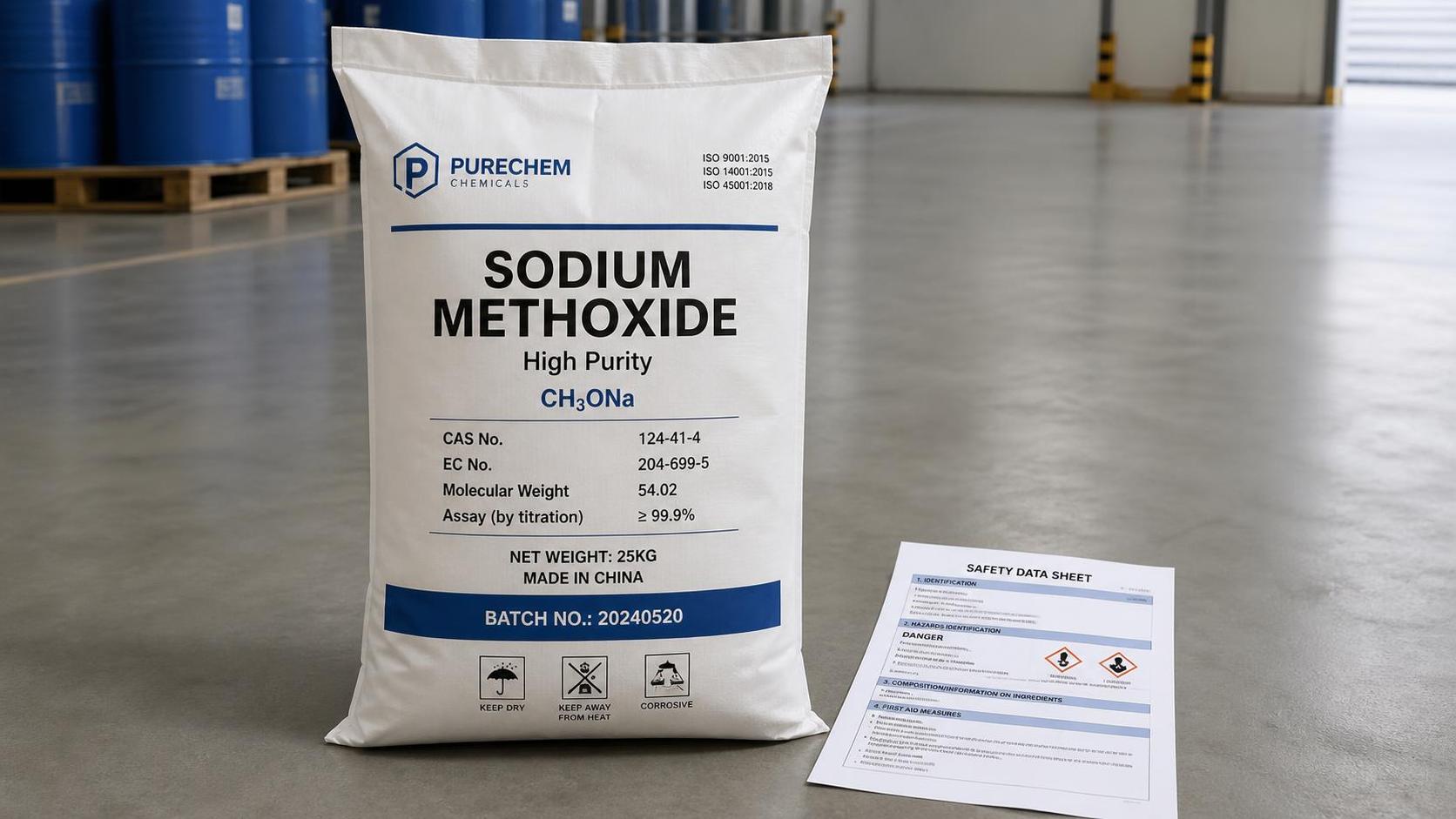
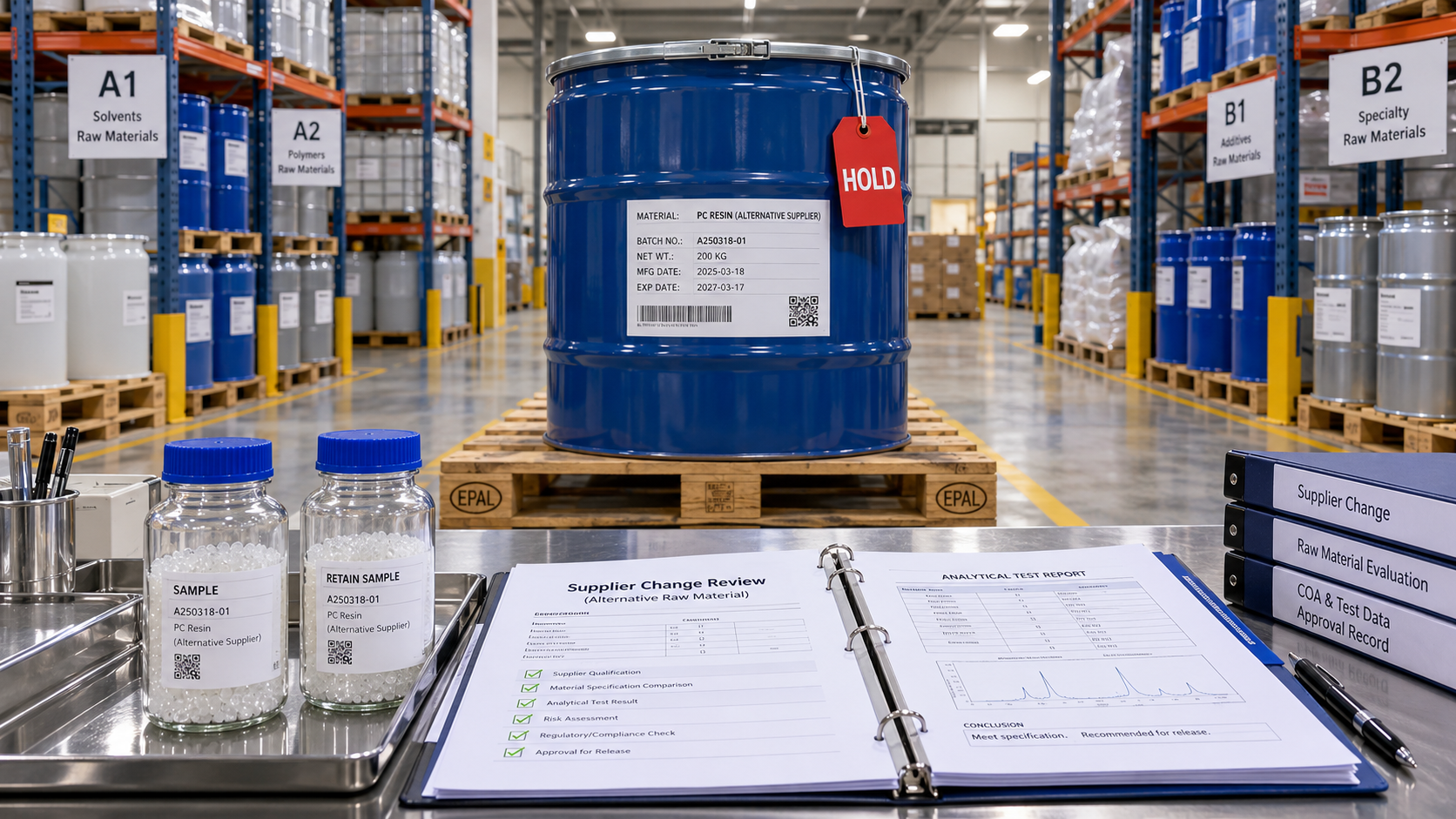
Keep replacement material on hold until its identity, destination-market status, and safe-use requirements have been reconciled with the existing approval. A matching product name, CAS number, or certificate of analysis does not establish equivalence. A supplier change can introduce different impurities, alter exposure controls, or remove the registration coverage supporting an established import route.
Maintaining global chemical compliance requires a documented link between the material received, the legal entity placing it on a market, and the uses authorized for that supply. The most effective starting point is a change record that identifies what will change and defines the evidence required before release.
Define the change beyond the supplier name
A new distributor selling material from the existing manufacturing site presents a different problem from a new producer using a different synthesis route. The first situation centers on traceability, supply-chain coverage, and document continuity. The second also requires examination of composition, impurities, and process-related hazards. An unchanged commercial supplier can introduce the same issues by moving production or subcontracting a processing step.
Record the original and proposed manufacturer, production site, grade, manufacturing route where relevant, and legal entities involved in import or supply. Include the intended applications and countries where the substance, mixture, or resulting article will be placed on the market. A replacement approved for one formulation or destination should not automatically become available across every product using the same internal material code.
Establish the transition boundary before ordering. Identify the first replacement shipment, how existing stock will be distinguished, and whether any storage tanks or handling systems could mix the two sources. Without this boundary, later testing and document updates cannot reliably establish which production batches contain the replacement material.
Resolve identity before comparing performance
Technical specifications frequently emphasize properties that control production: viscosity, solids content, moisture, color, or assay. These properties support process qualification, but they do not describe the complete regulatory identity. Two solvents meeting the same purity specification can contain different residual constituents. Two polymer grades with similar processing behavior can use different stabilizers or contain different residual monomers.
Request enough composition information to connect the supplied grade to the applicable regulatory assessment. This includes substance identifiers, relevant concentration ranges, additives, and impurities that affect classification, restrictions, or workplace exposure. Confidential details can be exchanged through an agreed restricted-access process. A confidentiality claim does not resolve a missing assessment; it changes how supporting evidence must be handled.
Substances of unknown or variable composition, complex reaction products, and biological materials require particular care. A shared CAS number alone may not establish that different sources fall within the same substance identity. Feedstocks, manufacturing processes, and composition boundaries can matter. For polymers, the polymer itself and its constituent monomers or other substances can have different regulatory obligations.
Use these documents together. If the safety data sheet describes a composition inconsistent with the technical specification, resolve the discrepancy before accepting either document as the basis for approval.
Connect market status to the actual supply route
Build the market review around the proposed transaction. Identify where the material will enter a jurisdiction, which entity carries the relevant obligations, and whether the intended use falls within the supporting evidence. A generic statement that a material is “globally compliant” cannot answer these questions.
REACH coverage can change with the source
For supply into the European Union or European Economic Area, determine whether the material is a substance, mixture, or article and identify the resulting REACH obligations. For substances imported on their own or in mixtures, registration responsibilities depend on factors including the importing entity, quantities, and applicable exemptions. An existing registration elsewhere in the supply chain does not automatically cover a new import arrangement.
Where reliance is placed on a non-EU manufacturer’s Only Representative, obtain confirmation that the relevant importer and supplied substance are covered within that arrangement. Match the confirmation to the proposed source and supply. A registration number on a safety data sheet alone does not establish that a particular importer is covered.
Assess restrictions and authorization requirements separately from registration. Where exposure scenarios are supplied, compare the actual use and operating conditions with those described. A replacement that introduces a different constituent can also change obligations for downstream mixtures or articles, even when the main ingredient remains unchanged.
TSCA inventory status is only part of the decision
For the United States, establish the TSCA status of the chemical substances involved, including relevant components of mixtures. Distinguish inventory listing from active status and from any conditions governing manufacture, import, processing, or use. A listed substance can still be subject to a significant new use rule or another applicable control.
Confidential substance identities need a valid verification route; failure to find a name in a public search does not by itself establish noncompliance. Where an exemption is claimed, document its basis and the conditions that apply to the proposed activity. Address applicable import certification requirements as part of shipment readiness.
Other destination markets require their own assessment. Differences in inventory systems, notification duties, restrictions, and local representation prevent an EU or US approval from serving as universal clearance. Keep the review focused on actual destinations and planned uses, while recording any limits on future expansion.
Translate composition changes into workplace controls
Once identity and market status are understood, compare the old and new hazard profiles. Review the basis for classification, not simply whether the same pictograms appear. A changed impurity profile can affect sensitization or chronic health hazards without creating an obvious difference in routine production performance.
Reassess handling conditions against the actual process. Open transfer, heated mixing, spraying, and maintenance exposure create different demands from closed storage. For example, a lower flash point requires attention to the conditions under which flammable vapor could form. A changed solvent blend also warrants review of glove compatibility; the same glove material does not provide identical protection against every mixture.
Obtain the appropriate local safety data sheet and label information for each destination. GHS provides a shared framework, but national implementations differ in classification details, language, and required information. When the replacement enters an internally formulated mixture, determine whether that mixture’s classification, safety data sheet, or label needs revision. Do not limit the document review to the purchased raw material.
If hazard information conflicts across jurisdictions or documents, establish the reason. Different legal classification rules can explain some differences. Inconsistent composition or outdated source information requires correction. Resolve this distinction before converting conflicting documents into handling instructions.
Make the approval decision visible in the material flow
Use separate release decisions for regulatory acceptability and technical suitability. A successful production trial establishes neither lawful market access nor adequate hazard communication. Conversely, acceptable regulatory documentation does not establish that the material will perform within the validated process.
A workable transition has three decision points:
- Before trial authorization: establish identity, sufficient hazard information, and the legal basis for obtaining and using the trial quantity. Define trial controls and keep its output traceable.
- Commercial release requires destination-specific approval. Resolve applicable market obligations, complete necessary document changes, and confirm that technical acceptance criteria have been met. Any limitation should identify the permitted site, application, or market.
- Close the transition after initial supply review. Compare received batches with the approved dossier and confirm that purchasing, inventory, and production records preserve the source distinction.
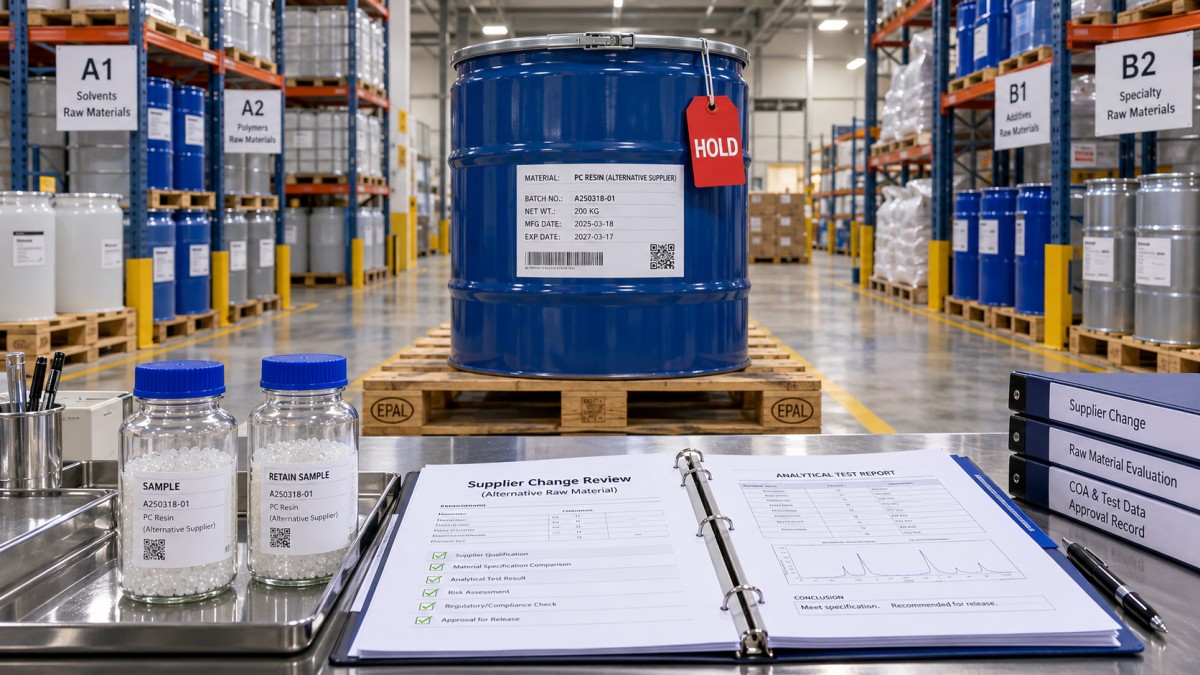
Assign each unresolved issue an owner and a release consequence. Missing evidence of applicable registration coverage blocks the affected supply route. An unresolved glove compatibility question blocks the handling activity it affects. This makes decisions actionable and prevents an overall “approved” status from hiding conditions that remain open.
Temporary approval needs an explicit boundary: defined batches, quantities, uses, destinations, and an expiry or review trigger. It cannot override a legal requirement. Where evidence is incomplete, restrict the activity to what the available evidence actually supports.
Preserve evidence through the first production batches
Retain the supplier’s batch reference alongside internal receipt and production identifiers. Where materials from different sources enter a shared vessel, document the resulting mixture and its use. Traceability that ends at goods receipt will not support a targeted response if a later composition correction affects finished products.
Choose incoming tests according to the differences identified during qualification. Repeating only the historical assay and appearance tests will miss a newly relevant impurity. Analytical methods also need suitable sensitivity and selectivity for the acceptance decision. A “not detected” result is useful only when the reporting limit is appropriate and the method addresses the constituent in question.
Laboratory testing has limits. It can confirm selected properties and constituents, but it cannot establish registration coverage, replace a confidential identity assessment, or prove the absence of every restricted substance. Link each test to a defined uncertainty and retain documentary evidence for questions that testing cannot answer.
During initial deliveries, compare certificates, labels, packaging identifiers, and observed material behavior with the approved source information. Unexpected odor, color, sediment, or processing behavior should trigger investigation even when routine results pass. Such observations do not establish a regulatory breach, but they can reveal a source or composition difference that the approval did not assess.
Keep approval tied to future changes
Include notification requirements for changes to manufacturing site, composition, feedstock where relevant, classification, and regulatory coverage in the supply agreement. Define how those notices reach the material approval process. A notice stored in a commercial correspondence folder provides little protection if production continues under an obsolete approval.
The final approval record should state exactly what is authorized: the source, grade, relevant composition boundaries, destinations, uses, and supporting document versions. When a later shipment or supplier notice falls outside those boundaries, reopen the affected assessment before release. This keeps the approval useful throughout supply rather than treating it as a one-time onboarding document.
Deep Dive
Related Intelligence
 Specialty ChemicalsSodium Methoxide Selection: How Chemical Buyers Reduce Specification and Handling RiskAnalyst:Lead Materials Scientist
 Specialty ChemicalsHow Corporate Case Studies Reveal Real-World Challenges in Adopting Specialty Chemicals for Food SafetyAnalyst:Lead Materials Scientist
 Specialty ChemicalsCan Brand Elevation Tactics Reduce Customer Acquisition Cost for Specialty Chemicals in Organic Food Production?Analyst:Lead Materials Scientist