Biodegradable Polymers: Performance Limits, Shelf Life, and End-of-Life Tradeoffs
Key Takeaways
- How specialty functional chemicals affect coating durabilityLead Materials Scientist
- How advanced materials for aerospace reduce aircraft structural weightLead Materials Scientist
- When does cross border manufacturing expansion reduce total landed cost?IT & Security Director
- How technological forecasting helps manufacturers time automation investmentsChief Civil Engineer
- How food traceability solutions help contain recall risks fasterAgri-Tech Strategist
- What low-light performance should an OEM night vision dash cam meet?Automotive Tech Analyst
- Adipic Acid CAS 124-04-9 Market Trends: Why Buyers Are Rebuilding Supply PlansLead Materials Scientist
- Titanium Dioxide Dispersion: Key Factors for Coating Opacity and StabilityLead Materials Scientist
Industry Overview
We do not just publish news; we construct a high-fidelity digital footprint for our partners. By aligning with TNE, enterprises build the essential algorithmic "Trust Signals" required by modern search engines, ensuring they stand out to high-net-worth buyers in an increasingly crowded global digital landscape.
Biodegradable Polymers sit at the intersection of materials innovation, regulatory pressure, and supply chain redesign. Interest is rising, yet technical decisions still depend less on the label and more on what the material can reliably do in storage, processing, use, and disposal.
That is why the real discussion is not whether these materials are “good” or “bad.” It is whether a specific polymer grade can meet mechanical targets, survive its intended shelf life, and enter an end-of-life pathway that actually exists.
For organizations tracking advanced materials through platforms such as TradeNexus Edge, the priority is clearer comparisons. In practical terms, Biodegradable Polymers are best evaluated as engineered tradeoffs, not broad sustainability claims.
What Biodegradable Polymers really mean in technical use
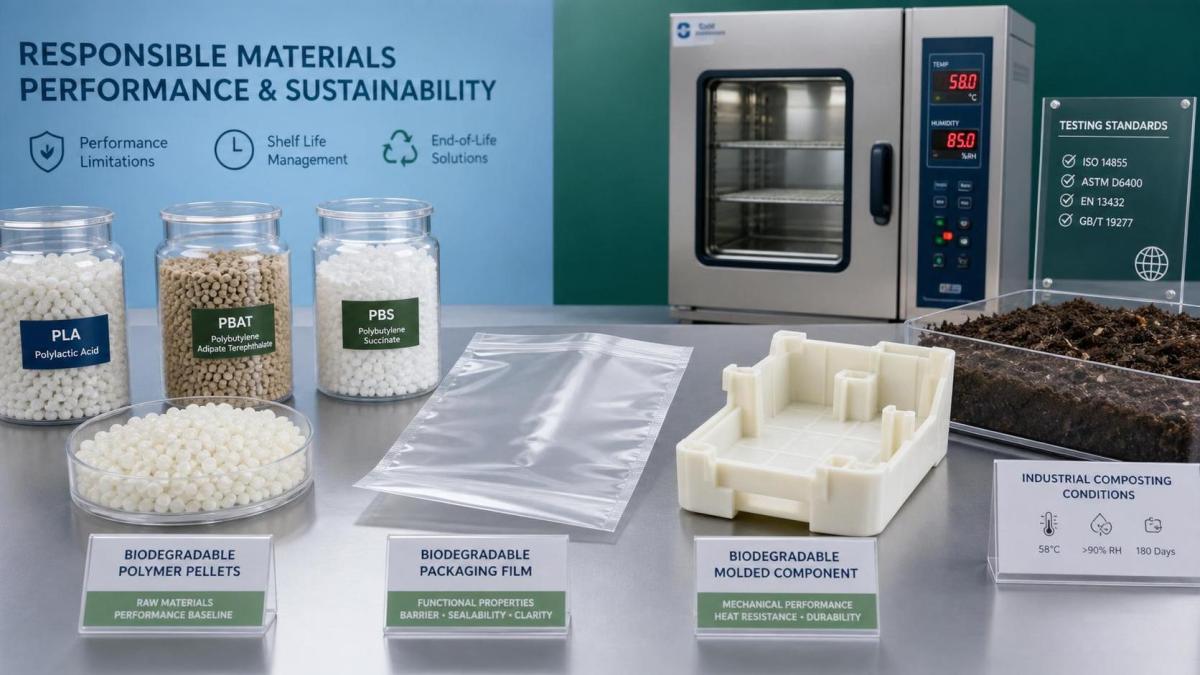
The category includes materials designed to break down through biological activity under defined conditions. That sounds straightforward, but the conditions matter as much as the chemistry.
Some grades degrade effectively in industrial composting systems. Others require tightly controlled moisture, oxygen, temperature, or microbial exposure. Very few can be assumed to biodegrade quickly in open environments.
This is where confusion often begins. A polymer may be bio-based, biodegradable, compostable, or partly renewable, but those are not interchangeable properties.
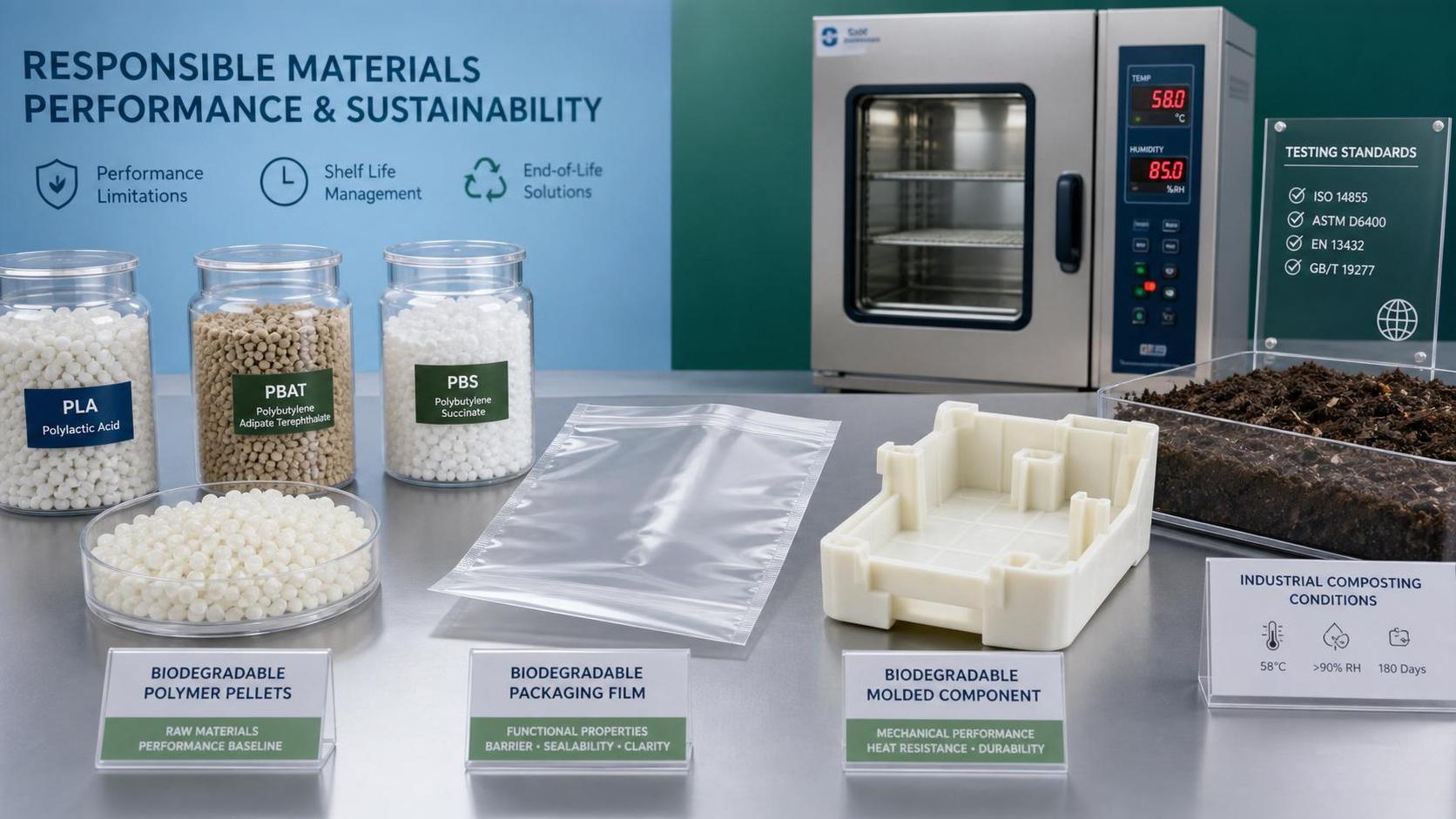
Common examples include PLA, PHA, PBS, PBAT blends, starch-based compounds, and specialty copolyesters. Each family behaves differently in tensile strength, heat resistance, barrier performance, and processing window.
Why the distinction matters
A packaging film, mulch film, medical component, or molded consumer part may all use Biodegradable Polymers, but the design logic changes sharply between them. End-of-life needs do not erase in-use performance requirements.
In other words, a resin selected for disposal advantages can still fail commercially if it warps in storage, cracks in use, or runs poorly on standard equipment.
Why the market is paying closer attention now
Several forces are pushing Biodegradable Polymers from niche interest into mainstream evaluation. Packaging rules are tightening. Brand sustainability targets are becoming measurable. Waste management economics are also changing.
At the same time, buyers are becoming more skeptical. Claims that looked acceptable five years ago now face scrutiny around certification, disposal infrastructure, and total lifecycle performance.
That broader market context matters across multiple sectors covered by TradeNexus Edge. Advanced materials decisions now influence sourcing resilience, compliance exposure, and product positioning at the same time.
The result is a more demanding evaluation environment. A resin supplier may no longer be judged only on sample performance. Data quality, lot consistency, application guidance, and regional end-of-life fit now shape the decision.
Where performance limits still shape adoption
The main technical constraint is that Biodegradable Polymers often ask for compromise. Some offer strong stiffness but limited impact resistance. Others process well but struggle with heat distortion or moisture sensitivity.
PLA is a useful example. It can provide good clarity and stiffness, which supports rigid packaging and some molded parts. Yet its brittleness and lower heat resistance can restrict more demanding uses.
PHA can improve biodegradation profiles in broader environments, but cost, supply scale, and process complexity may remain barriers. Starch blends can reduce fossil content, though dimensional stability may become a concern.
The most common technical pressure points
- Heat resistance during transport, sterilization, or summer storage.
- Mechanical durability under drop, flex, or repeated loading conditions.
- Barrier stability for oxygen, aroma, grease, or moisture-sensitive contents.
- Process consistency in extrusion, thermoforming, injection molding, or blown film lines.
- Sensitivity to humidity before conversion or during warehousing.
These are not abstract concerns. They directly affect scrap rate, product returns, qualification timelines, and whether an alternative material remains viable at industrial scale.
Shelf life is often the hidden decision factor
Many discussions about Biodegradable Polymers focus on disposal, but shelf life often decides the project long before disposal begins. Materials must remain stable through storage, shipping, conversion, and finished goods distribution.
Hydrolysis is a frequent issue. Some polymers gradually lose molecular weight when exposed to moisture and heat, reducing toughness and creating process instability before the product even reaches the market.
This affects both resin inventory and converted parts. A film that performs well at trial stage may become inconsistent after extended warehouse exposure, especially where climate control is weak.
Questions worth asking during qualification
In practice, shelf life should be treated as a commercial parameter, not only a technical one. It affects inventory strategy, forecasting flexibility, and the cost of global distribution.
End-of-life tradeoffs are more complex than the label suggests
The appeal of Biodegradable Polymers usually centers on waste reduction. Yet the environmental outcome depends on what happens after use, not simply on what the datasheet promises.
If industrial composting infrastructure is limited, a compostable polymer may still enter landfill or incineration. If collection systems are unclear, contamination can also disrupt conventional recycling streams.
That does not mean the materials lack value. It means end-of-life must be matched to local reality. A well-chosen biodegradable application usually has a credible recovery or disposal pathway already in place.
Where the fit is often stronger
- Food-contaminated packaging that is difficult to recycle economically.
- Agricultural films where recovery is operationally costly.
- Short-life service items used in controlled disposal systems.
- Specialty medical or hygiene applications with defined waste handling.
Where durable reuse or established recycling already works, Biodegradable Polymers may offer less net advantage. The better question is not “Is it biodegradable?” but “Does this route improve the whole system?”
How to compare applications with more discipline
Material selection improves when teams compare functions instead of narratives. A structured screen can quickly separate promising uses from expensive detours.
Start with the service profile. Define load, temperature, humidity, contact requirements, expected life, and visual needs. Then test whether Biodegradable Polymers can meet those conditions with margin.
Next, map the conversion environment. Existing tooling, cycle times, drying systems, and scrap handling often reveal whether a theoretically suitable resin is operationally practical.
Finally, verify disposal pathways by region. A material can score well in lab testing and still fail the business case if the end-of-life assumption depends on infrastructure that is unavailable.
A practical comparison frame
What to watch in sourcing and next-step evaluation
The next wave of adoption will favor data-backed selection. That includes certified biodegradation claims, application-specific test results, shelf-life evidence, and realistic processing guidance.
It also helps to compare suppliers through the broader lens used by TradeNexus Edge: technical credibility, regional supply chain resilience, documentation quality, and fit with future regulation.
Biodegradable Polymers can deliver real value when the material, application, and disposal system are aligned. They become risky when any one of those three elements is assumed rather than verified.
A sensible next step is to build an evaluation matrix around three questions: Will it perform for the full intended life? Will it remain stable through the actual supply chain? Will its end-of-life route function in the target market?
Those answers usually reveal more than a sustainability claim ever can. They also create a stronger basis for shortlisting resin grades, planning pilot runs, and deciding where Biodegradable Polymers genuinely fit.
Deep Dive
Related Intelligence
 Eco-PolymersCan Editorial Framework Standards Improve Traceability for Eco-Polymers in Food Packaging?Analyst:Lead Materials Scientist
 Eco-PolymersCan Graphene Materials Deliver Cost-Effective Conductivity in Large-Scale Flooring Projects?Analyst:Lead Materials Scientist
 Eco-PolymersGraphene Materials Bulk Order Thresholds: When Does Unit Cost Drop Below $180/kg for Structural Reinforcement?Analyst:Lead Materials Scientist